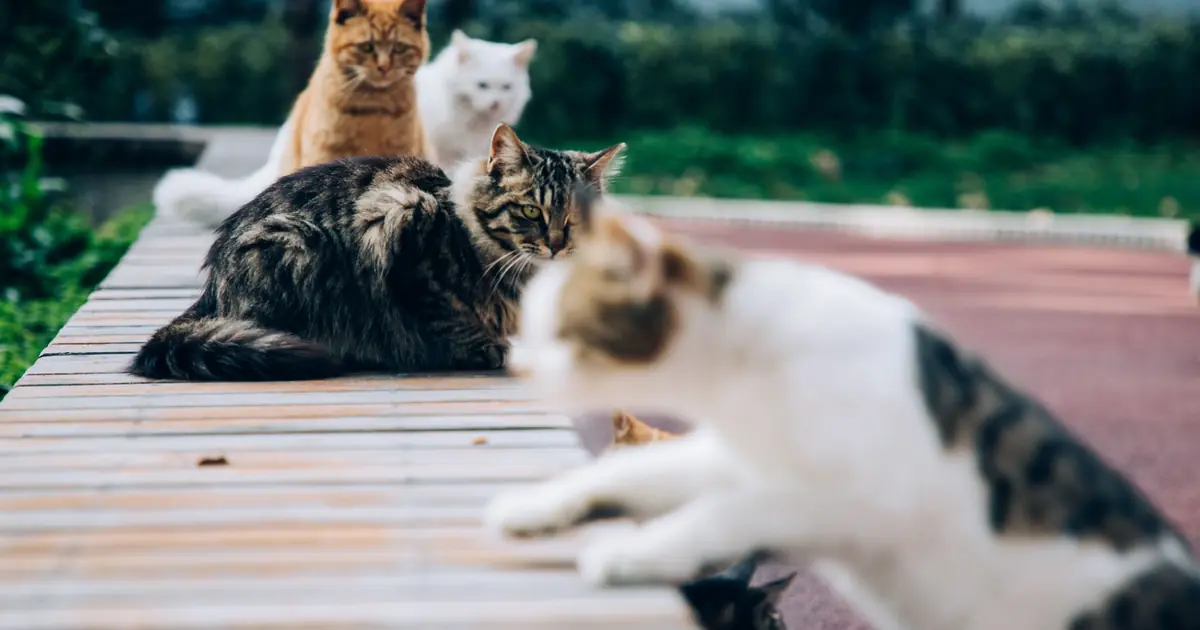
Dogs have packs, wolves have packs, so do cats team up too? Anyone who’s seen a group of strays hanging around a food source has probably wondered.
The answer is more interesting than a simple yes or no. Here’s how cats really socialize.
- Cats don’t form hierarchical packs like dogs or wolves, and they hunt alone.
- When food is abundant, cats form loose colonies, often related females sharing territory.
- Colony cats may share space, groom each other, and co-raise kittens cooperatively.
- Cats are “facultatively social,” meaning they can live alone or in groups depending on resources.
- House cats can bond into small social groups, but each still values its own space and routine.
Do cats form packs?
No, cats don’t form packs in the way dogs and wolves do. A true pack is a structured, cooperative hunting group with a strict hierarchy, and cats simply don’t work that way, they hunt solo. However, cats aren’t the total loners people assume. When resources allow, they form loose social groups called colonies. So the accurate picture is that cats are flexible: solitary hunters who can still live socially when it suits them.
What is a cat colony?
A cat colony is a loose social group of cats that share a territory, usually centered on a reliable food source. Colonies most often form around related females, mothers, daughters, and sisters, who tolerate and cooperate with one another. Unlike a pack, a colony has no rigid leader directing group hunts. Instead, it’s a fluid community where cats share space and sometimes cooperate, especially in raising the young. Feral and stray cats commonly live this way.
How do cats cooperate in a colony?
Colony cats cooperate in surprisingly caring ways, even without pack structure. Common behaviors include:
- Communal kitten care, females may nurse and guard each other’s kittens.
- Mutual grooming (allogrooming) to bond and share scent.
- Shared sleeping and resting spots among friendly cats.
- Scent marking that creates a group “colony smell.”
- Tolerance and communication to reduce conflict over resources.
Are cats social or solitary animals?
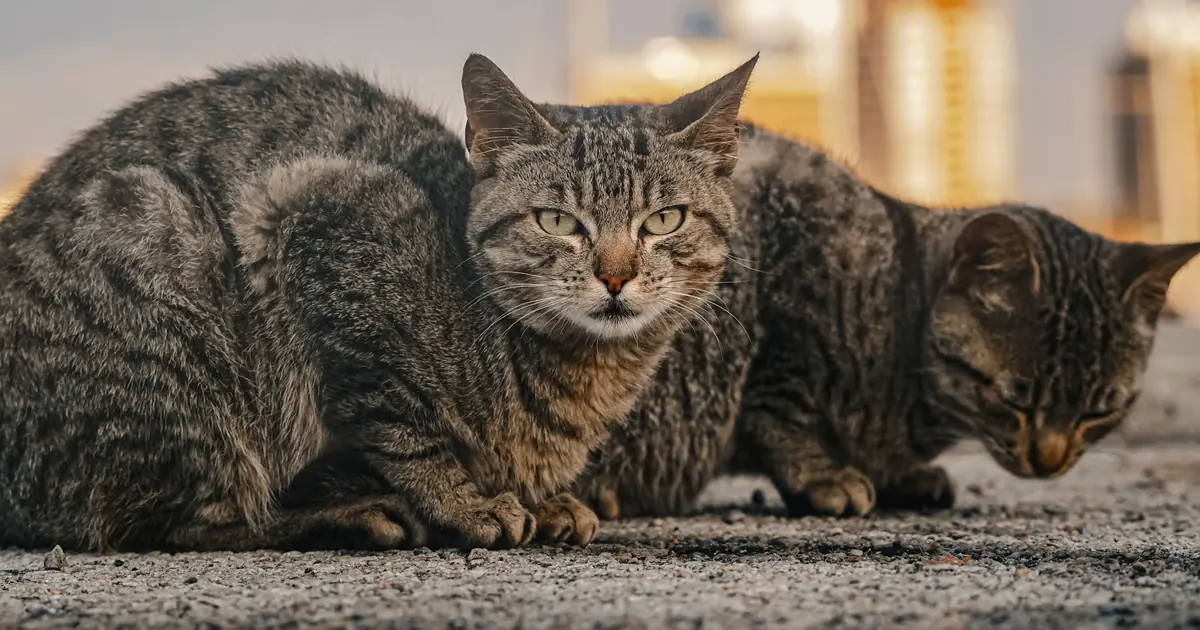
Cats are best described as socially flexible, or “facultatively social.” That means they can thrive alone or in groups depending on their environment, especially food availability. A single well-fed house cat is perfectly content solo, while cats around a shared food source form colonies. This flexibility comes from their wildcat ancestors, who hunted alone but could tolerate company when resources didn’t force competition. So cats aren’t antisocial, they’re adaptable, which is why some cats can also get lonely without companionship.
Pack vs colony: how cats differ from dogs
Here’s how a cat colony compares to a dog or wolf pack.
| Feature | Dog/wolf pack | Cat colony |
|---|---|---|
| Hunting | Cooperative, as a group | Solo, each cat alone |
| Structure | Clear hierarchy and leader | Loose, no fixed leader |
| Membership | Family and pack members | Often related females |
| Kitten/pup care | Group involvement | Shared among colony females |
| Formed by | Social instinct to hunt together | Access to shared resources |
Do house cats form social groups?
Yes, house cats can form small, friendly social groups, though each still values independence. Cats that grow up together or are introduced well often bond closely, grooming, sleeping in a pile, and playing, essentially a tiny colony. Success depends on proper introductions, enough resources (food, litter boxes, and space), and each cat’s personality. This article is educational; for multi-cat harmony tips see introducing a new cat and, when things go wrong, whether cats can seriously fight. Trusted background on feline social behavior comes from International Cat Care and the ASPCA.
Frequently Asked Questions
Q: Do cats live in packs like dogs?
No. Cats don’t form structured, cooperative hunting packs like dogs or wolves, and they hunt alone. They can, however, form loose social groups called colonies around shared food, so they’re flexible rather than pack animals.
Q: What is a group of cats called?
A group of cats is often called a colony, especially among feral or stray cats sharing territory. The formal collective noun is a “clowder.” Colonies are loose communities, not hierarchical packs, usually centered on related females.
Q: Are cats solitary or social animals?
Cats are socially flexible, or facultatively social. They can live happily alone or form groups depending on resources like food. This adaptability comes from wildcat ancestors who hunted solo but tolerated company when resources allowed.
Q: Do cats in a colony help each other?
Yes. Colony cats, often related females, may nurse and guard each other’s kittens, groom one another, share resting spots, and create a group scent. It’s cooperation without the strict leadership structure of a dog or wolf pack.
Q: Can my house cats form a social group?
Yes. House cats that are introduced well or raised together often bond, grooming, sleeping together, and playing like a small colony. Provide enough food, litter boxes, and space, and respect each cat’s need for some independence.
Q: Why do stray cats gather in groups?
Stray and feral cats gather around reliable food sources, forming colonies. Sharing territory and cooperating, rather than competing, helps them survive. These groups are usually built around related females and their offspring, not a hunting pack.

Hello and welcome to The Ideal Cat!
We are some passionate cat owners from different professions. We love our cats and have a lot of experience in how to care for our pets. We are incredibly excited to share our knowledge, experience, and research with you. So you can take good care of your loving cat. We will answer most of the common questions about owning cats, taking care of them, etc. If you have any question contact with us. Thanks for visiting! Enjoy the content.
