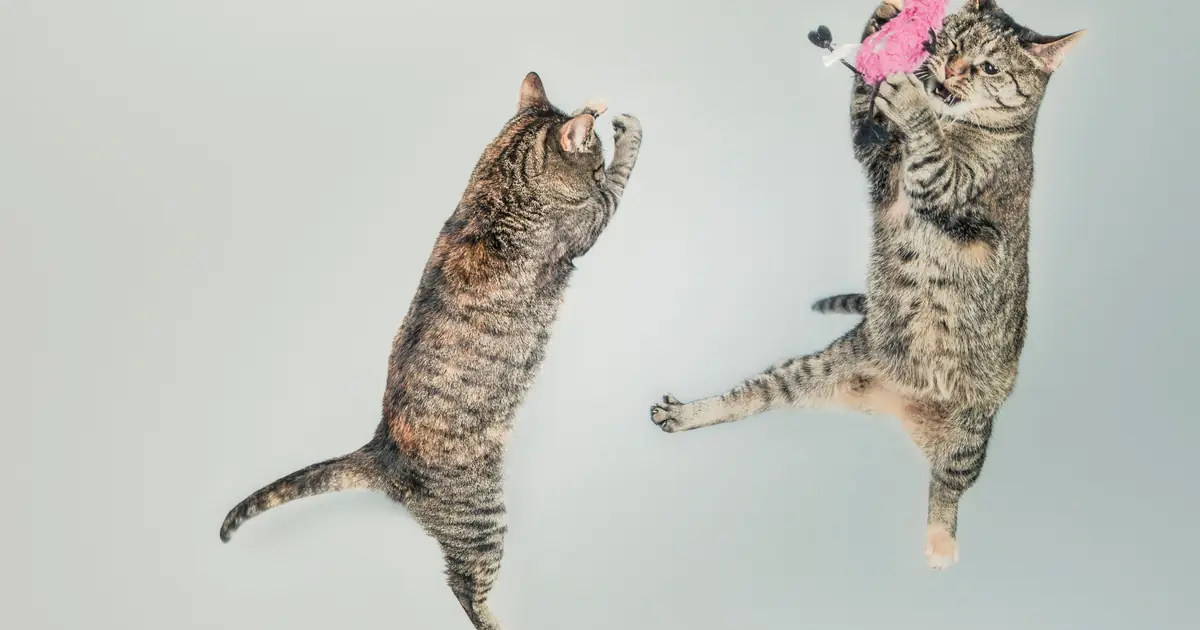
Your cat clears the kitchen counter like it’s nothing, then eyes the top of the fridge. Meanwhile the dog struggles onto the couch. It makes you wonder: are cats actually the better jumpers?
Here’s how feline hops really stack up against dogs, and why cats are built to launch.
- Most cats out-jump most dogs relative to body size, and often in raw height too.
- A healthy cat can jump about 5 to 6 times its own height, roughly 6 feet or more.
- Cats’ powerful hind legs, light frames, and flexible spines make them elite jumpers.
- Some athletic dog breeds can leap high, but few match a cat’s height-to-size ratio.
- Age, weight, and health affect jumping ability, a struggling jumper may need a vet check.
Can cats jump higher than dogs?
Yes, cats generally jump higher than dogs, especially for their size. A typical healthy cat can leap five to six times its own height, clearing about 6 feet (nearly 2 meters) from a standstill, an incredible ratio no average dog matches. In absolute terms, cats out-jump most small and medium dogs, and even rival many large ones. A few athletic dog breeds can jump impressively high, but pound for pound, cats are the superior jumpers.
How high can a cat actually jump?
A healthy adult cat can jump roughly 6 feet or more from a standing start, about five to six times its body height. That’s why counters, bookshelves, and the top of the fridge are all fair game. Cats achieve this in a single explosive push, without a running start, using stored energy in their muscles. Kittens, seniors, and overweight cats jump less, but a fit cat in its prime is a remarkable athlete.

Why are cats such good jumpers?
Cats are outstanding jumpers because of their anatomy. Several features combine to launch them upward:
- Powerful hind legs with strong muscles that store and release energy like springs.
- A light, compact body that’s easy to propel.
- A flexible spine that extends to add power and reach.
- Excellent balance and a tail that steers mid-air.
- Sharp depth perception to judge distance before they leap.
These same tools explain why cats can jump so high in the first place.
How do cats and dogs compare as jumpers?
Cats win on height-relative-to-size, while a few dogs compete on raw distance. Here’s the comparison.
| Trait | Cats | Dogs |
|---|---|---|
| Jump height vs body size | About 5 to 6x their height | Usually 1 to 3x their height |
| Typical vertical leap | Around 6 feet from standstill | Varies widely; most under 6 feet |
| Best at | Vertical, standstill jumps | Long-distance and running jumps |
| Body type | Light, springy, flexible | Heavier, breed-dependent |
Do some dogs jump higher than cats?
A few exceptional dogs can, but they’re the exception, not the rule. Athletic breeds like Greyhounds, Border Collies, and some working dogs can clear impressive heights, and trained dogs in sports set high records. Still, these dogs are much larger, so relative to their size they don’t match a cat’s leap. For everyday pets, the average cat easily out-jumps the average dog, especially straight up.
When should a cat’s jumping worry you?
A sudden drop in jumping ability can signal a health issue worth checking. If your cat starts hesitating to jump, misses landings, or avoids high spots it used to love, arthritis, injury, obesity, or vision problems could be the cause, especially in older cats. This article is educational and not a substitute for veterinary care; if your cat’s mobility changes, see your vet. For related behavior, see why cats jump on you and what it means when a cat is unusually jumpy. The ASPCA and VCA offer trusted health background.
Frequently Asked Questions
Q: Can cats jump higher than dogs?
Yes. Most cats out-jump most dogs, especially relative to size. A healthy cat leaps about 5 to 6 times its height, roughly 6 feet from a standstill. Only a few large athletic dog breeds come close in raw height.
Q: How high can a cat jump?
A healthy adult cat can jump about 6 feet or more from a standing start, roughly five to six times its own body height. That’s how they reach counters, shelves, and the top of the fridge with ease.
Q: Why are cats better jumpers than dogs?
Cats have powerful spring-like hind legs, light bodies, flexible spines, and excellent balance. This combination lets them launch straight up in one explosive push, giving them a far better height-to-size ratio than most dogs.
Q: What dog can jump the highest?
Athletic breeds like Greyhounds and Border Collies jump the highest among dogs, and trained dogs set impressive records. But because they’re much larger than cats, they don’t match a cat’s leap relative to body size.
Q: Do bigger cats jump higher?
Not necessarily. Jumping depends on fitness, muscle, and weight more than sheer size. A lean, athletic cat often out-jumps a heavier one. Large breeds like Maine Coons can jump well but may leap less than a lighter, agile cat.
Q: Why can’t my cat jump like it used to?
Reduced jumping can mean arthritis, injury, weight gain, or vision issues, especially in older cats. If your cat hesitates, misses landings, or avoids heights it once loved, have your vet check it for a treatable cause.

Hello and welcome to The Ideal Cat!
We are some passionate cat owners from different professions. We love our cats and have a lot of experience in how to care for our pets. We are incredibly excited to share our knowledge, experience, and research with you. So you can take good care of your loving cat. We will answer most of the common questions about owning cats, taking care of them, etc. If you have any question contact with us. Thanks for visiting! Enjoy the content.
