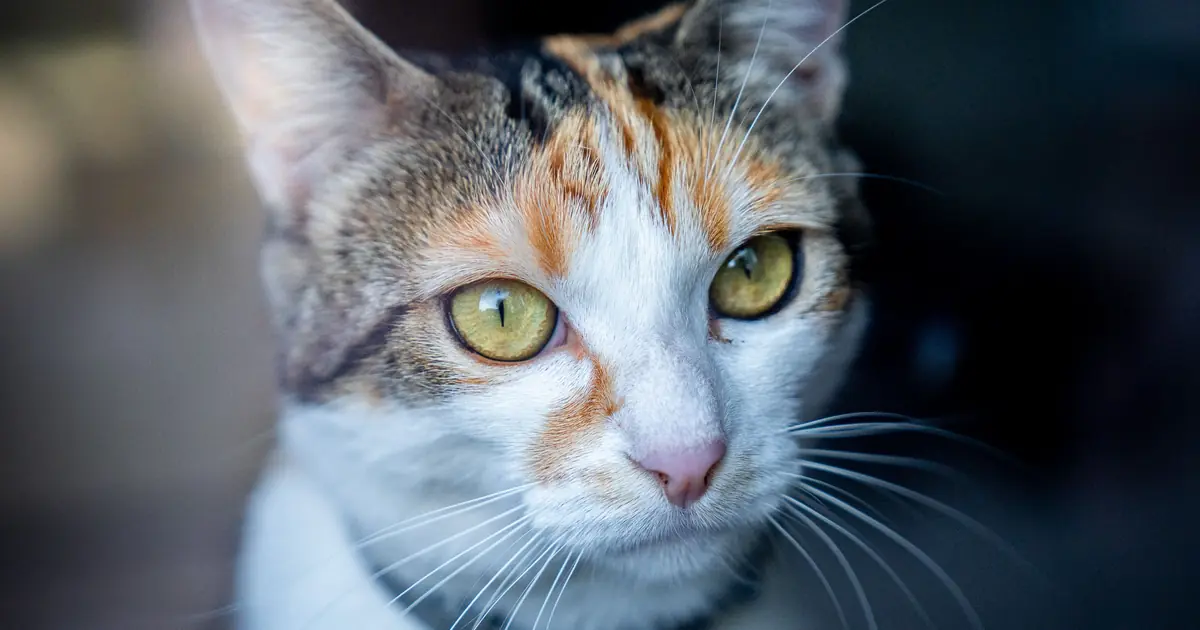
The toaster pops. Your cat launches sideways off the counter, skids across the floor, and disappears under the couch for twenty minutes. Sound familiar? If your cat startles at doorbells, dropped spoons, or you simply walking into a room too fast, you’ve probably wondered if something is wrong with her.
Here’s the thing: some cats are just wired to be jumpier than others, and on its own that’s usually not a red flag. But when jumpiness is constant, and your cat never really settles no matter how quiet her life is, that’s worth digging into. Let’s talk about why cats get like this, and what actually helps.
- Cats are prey animals as well as predators, so a fast startle reflex to sudden sound or motion is built into their nervous system.
- Kittens have a key socialization window between 2 and 7 weeks old; kittens handled and exposed to normal household sounds during that window tend to grow into calmer, less jumpy adults.
- A cluttered, noisy, or unpredictable home, or one with no vertical hiding spots, can keep an otherwise confident cat in a low-grade state of alert.
- Rescue cats, former strays, and cats with a rough early history often carry chronic wariness that looks like jumpiness long after they’re safe.
- A sudden increase in jumpiness, especially in a cat over age 10, can point to pain, hyperthyroidism, high blood pressure, or vision and hearing loss, and deserves a vet visit.
Why is my cat so jumpy in general?
Most cats startle easily because their brains are built to react to sudden sound or motion before they’ve had time to think about it. A cat is a small predator, but she’s also prey to bigger animals, and that combination shapes her whole nervous system. Evolution rewarded cats who flinched first and asked questions later.
Individual temperament varies too, the same way it does in people. Some kittens in the same litter are bold from day one, while a sibling raised in the exact same home bolts at a dropped phone. Genetics play a role here: kittens fathered by a bold, friendly tom tend to grow into friendlier, less fearful cats themselves, according to International Cat Care. A jumpy cat isn’t broken. She’s just wired toward caution over confidence.
Does early socialization affect how jumpy a cat stays?
Yes, a kitten’s socialization window between roughly 2 and 7 weeks of age has a lasting effect on how jumpy she’ll be as an adult. This is when a kitten’s brain is most open to learning that new sounds, people, and experiences are safe. A kitten who’s gently handled and exposed to household noise during those weeks usually grows into a cat who takes life’s little surprises in stride.
Miss that window, and the story often looks different. Kittens who spent those early weeks in a barn, a feral colony, or an under-socialized shelter litter frequently grow into adults who startle at ordinary things: the vacuum, a stranger’s voice, a hand moving too fast. VCA Animal Hospitals notes this window can’t really be reopened later, which is why an adult cat who missed it may stay a touch more jumpy. That doesn’t mean she can’t improve, just that patience matters more than speed. Building trust slowly is exactly what our guide on how to get a cat to trust you walks through.
Can my cat’s environment be making her jumpier than she needs to be?
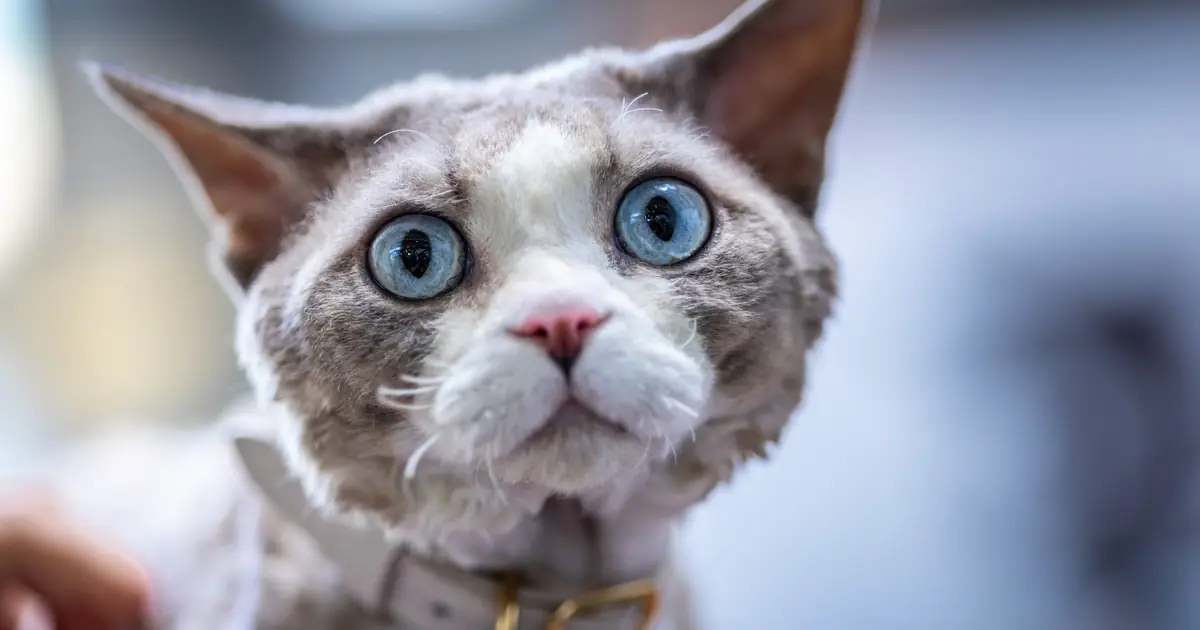
Yes, a chaotic or overstimulating home can keep a cat in a constant state of low-grade alert. Cats read their environment nonstop, and a house with loud kids, a boisterous dog, or nowhere quiet to retreat to gives a naturally cautious cat no chance to relax. Picture trying to nap where someone might slam a door any second. That’s what an under-resourced home feels like to a jumpy cat, all day.
A few triggers show up again and again: constant background noise, no high perches or hiding spots, recent moves or renovations, other pets who chase or corner her, and being picked up suddenly from behind. These overlap a lot with general feline stress, and it’s worth learning the broader signs of stress in cats so you can tell if her jumpiness is part of a bigger pattern. The fix is usually simple: give her more control over her own space.
Could past trauma or a feral background explain why my cat is so jumpy?
Yes, cats with a history of neglect, abuse, or feral or stray living tend to stay more jumpy than cats raised in stable homes, sometimes for life. A cat who spent months fending for herself outdoors learned, correctly, that sudden movement and unfamiliar sound could mean danger, and that lesson doesn’t switch off just because she’s safe on your couch now.
This shows up a lot in rescue cats. One adopted from a colony or a rough previous home may flinch at a raised hand or bolt when a broom comes out. It’s less about remembering one event and more that her nervous system learned “unpredictable equals unsafe,” which takes a long, calm routine to unlearn. Some cats with this history relax remarkably over time. Others stay a little more watchful forever, and that’s okay too.
Can a medical problem make a cat more jumpy?
Yes, and this is the one people miss most often: several medical conditions can make a cat noticeably more reactive, especially if the jumpiness is new rather than lifelong. Pain is a big one. A cat with arthritis, dental pain, or a hidden injury may startle more because she’s braced against anything that could jostle a sore spot. Hyperthyroidism, a common thyroid condition in middle-aged and older cats, revs up the whole nervous system and can make a previously mellow cat seem wired, per the Cornell Feline Health Center.
Sensory decline matters too. A cat losing her hearing or vision can’t predict approaching sounds the way she used to, so things that never bothered her suddenly make her jump. High blood pressure, which often develops alongside kidney disease or hyperthyroidism, can damage a cat’s retina and worsen her vision, according to VCA Animal Hospitals. Senior cats with cognitive decline, sometimes called feline cognitive dysfunction, can also become more anxious and disoriented, which often reads as jumpiness.
| Possible Cause | Other Signs to Watch For | What Helps |
|---|---|---|
| Natural temperament | Lifelong pattern, otherwise healthy | Routine, safe hiding spots, patience |
| Limited socialization | General wariness since kittenhood | Slow positive exposure, treats |
| Stressful environment | Hiding often, over-grooming | Less noise, vertical space, pheromones |
| Past trauma or feral background | Flinching at hands, specific triggers | Gentle handling, never forcing contact |
| Pain (arthritis, dental, injury) | Limping, reduced jumping | Veterinary exam and pain management |
| Hyperthyroidism | Weight loss, fast heart rate | Veterinary diagnosis and treatment |
| Vision or hearing loss | Bumping into things, “blind side” startles | Veterinary exam, consistent layout |
| Cognitive decline (seniors) | Vocalizing, confusion | Veterinary evaluation, consistency |
How can I help my jumpy cat feel calmer day to day?
The best way to help a jumpy cat is to give her more predictability and more control over her own space, not to force her to “get used to” things faster. Cats relax when they can see what’s coming and choose whether to engage, so your job is mostly to build a world that lets her do that.
- Add vertical space: a cat tree or shelf gives her a safe perch to watch the room from above.
- Give her at least one hiding spot per room, like a covered bed or a gap under furniture, so she’s never cornered.
- Keep a predictable routine for feeding, play, and quiet time.
- Handle her gently and announce yourself: talk before you touch, and never scoop her up from behind.
- Try a synthetic pheromone diffuser in her main rooms; many cat parents notice it takes the edge off.
- Build in daily play with a wand toy so she can burn off nervous energy.
- Never force interaction: let her come to you and reward her when she does.
None of this happens overnight. A genuinely jumpy cat is a work in progress for months, not days, and our guide on how to calm a scared cat has more ideas to layer on top of these. If your cat’s fear came out of nowhere recently rather than being long-standing, our guide on why a cat gets scared all of a sudden covers that separately.
When does jumpiness mean it’s time to see a vet?
See a vet if your cat’s jumpiness has clearly increased recently, if she’s a senior cat, or if it’s paired with new symptoms like weight loss, limping, or appetite changes. A cat who has always been a bit skittish and stays that way, while otherwise eating and playing normally, usually just has a cautious temperament. That’s a personality trait, not an emergency.
What’s different is a cat who used to be relaxed and is suddenly startling at everything, especially if she’s over 10. That pattern deserves a checkup: pain, hyperthyroidism, high blood pressure, and vision or hearing loss are all treatable once a vet identifies them.
This article is for general education and isn’t a substitute for veterinary care. If your cat’s jumpiness has increased suddenly, especially alongside other symptoms or in a senior cat, please have her examined by a licensed veterinarian rather than waiting it out.
Frequently Asked Questions
Q: Is it normal for cats to be jumpy?
Yes, a certain amount of jumpiness is normal. Cats are prey animals as well as predators, so a fast startle reflex to sudden sound or motion is built into their nervous system.
Q: Will my jumpy cat ever calm down?
Many cats get noticeably calmer with age, routine, and patient handling, though her underlying temperament rarely changes completely. A naturally cautious cat will likely always startle a bit more than a bold one, even once she’s fully comfortable at home.
Q: Can lack of socialization as a kitten make a cat jumpy forever?
It can contribute to lifelong wariness, since the key socialization window closes around 7 weeks of age and can’t fully reopen later. Cats who missed it can still improve a lot with patient, positive exposure.
Q: Does hyperthyroidism cause cats to be jumpy or hyper?
Yes, hyperthyroidism can make a cat restless and easily startled, along with classic signs like weight loss despite a hearty appetite. It’s common in middle-aged and older cats and is diagnosed with a simple blood test.
Q: Should I punish my cat for being jumpy or skittish?
No, never punish or scold a jumpy cat, since fear responses aren’t something she can control and punishment only makes her more anxious. Rewarding calm behavior and giving her control over her space works far better.
Q: Can rescue cats stay jumpy even in a safe, loving home?
Yes, cats with a rough early history, including feral colonies or neglect, often carry that wariness long after they’re safe. Some relax significantly over months or years of gentle care, while others stay a bit more watchful for life.
Q: What’s the difference between a jumpy cat and an anxious cat?
A jumpy cat startles easily at sudden sound or movement but otherwise behaves normally between those moments. An anxious cat shows more constant signs of stress, like hiding for long stretches or appetite changes, even without a specific trigger.
Q: Do certain cat breeds get jumpier than others?
Individual temperament matters more than breed, but breeds like the Abyssinian and Siamese are generally described as more alert and reactive, while the Ragdoll and Persian tend to be more laid back. Personality still varies a lot within any breed.

Hello and welcome to The Ideal Cat!
We are some passionate cat owners from different professions. We love our cats and have a lot of experience in how to care for our pets. We are incredibly excited to share our knowledge, experience, and research with you. So you can take good care of your loving cat. We will answer most of the common questions about owning cats, taking care of them, etc. If you have any question contact with us. Thanks for visiting! Enjoy the content.
