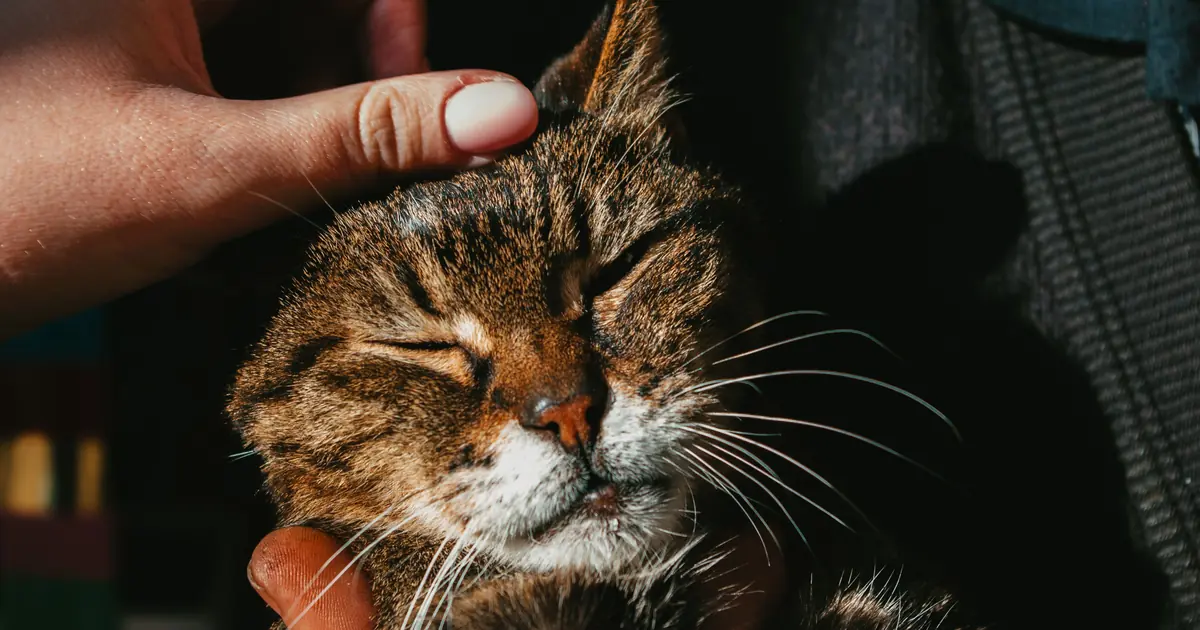
You’re mid-scratch behind the ears, your cat’s chin tipped up, and then it happens: those eyes drift shut like tiny curtains closing. Maybe there’s a little sigh. Maybe a paw starts kneading the blanket. It’s one of the most satisfying moments in cat parenthood, and it’s easy to wonder what’s actually going on behind those closed lids.
The short version is that your cat is telling you, in the clearest way a cat knows how, that this feels good and you are not a threat. But there’s more happening than simple bliss. Eye-closing during petting sits at the intersection of trust, biology, and pure sensory pleasure, and understanding it can help you spot the difference between a happy cat and one that’s actually squinting because something hurts.
- Cats close their eyes when you pet them because they feel safe and relaxed enough to let their guard down, something they don’t do around people or animals they don’t trust.
- Shutting out sight lets a cat focus entirely on the sensation of touch, similar to how people often close their eyes during a massage.
- Purring, kneading, drooling, and a loose, relaxed body often show up together with eye-closing as signs of deep contentment.
- Squinting caused by eye pain looks different from happy eye-closing: it usually affects one eye and comes with tearing, redness, or pawing at the face.
- A slow blink and closing the eyes during petting are related but not the same thing: a slow blink is a deliberate, repeated signal, while eye-closing during petting is more about full-body relaxation.
Why Do Cats Close Their Eyes When You Pet Them?
Cats close their eyes when you pet them because it’s a physical signal of relaxation and trust. In the wild, a cat’s eyes are its early warning system. Keeping them open and scanning means staying alert to danger. Shutting them means a cat has decided, at least for this moment, that nothing around it needs watching.
When your cat lets its eyelids drop while you’re stroking its back or scratching under its chin, its whole nervous system is telling you the same thing: this is safe, this feels good, and I don’t need to keep an eye on the room. It’s a small gesture, but it’s a real vote of confidence in you.
Is Closing Their Eyes a Sign of Trust and Vulnerability?
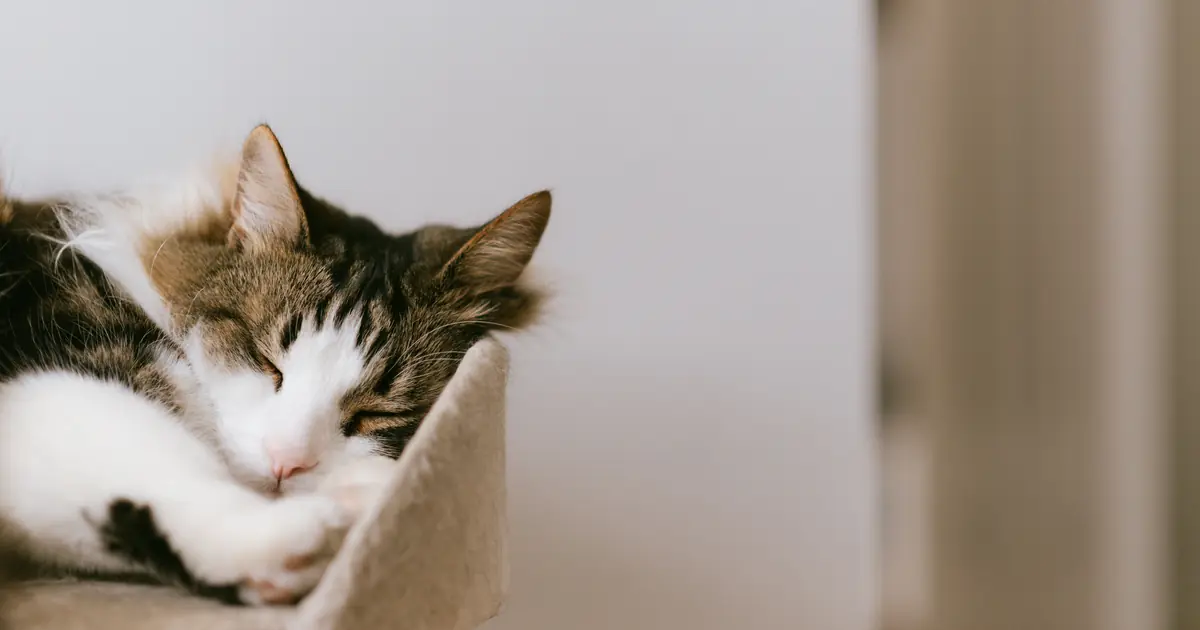
Yes. Closing the eyes is one of the more vulnerable things a cat can do, because it briefly gives up its main way of watching for threats. Cats are unusual animals in that they’re both predator and prey. They hunt mice and birds, but they’re also small enough to be hunted by dogs, coyotes, and larger predators. That dual identity makes them cautious by nature.
A cat that closes its eyes around you is choosing to drop that vigilance. It’s not something a nervous or unfamiliar cat does easily. If your cat only fully relaxes its eyes with you, or with a small circle of trusted people, take that as a compliment. According to International Cat Care’s guide to feline body language, a cat’s willingness to relax its posture and eyes around a person is one of the clearest signs that the cat views that person as safe rather than as a potential threat.
Does Closing Their Eyes Help Cats Focus on the Feeling of Being Petted?
Closing their eyes also helps cats tune into touch instead of sight. Vision takes up a huge share of a cat’s brainpower, constantly processing movement, light, and shape. Shutting that input down, even for a few seconds, frees up attention for the sensation coming from your hand.
Think about how people often close their eyes during a good back rub or a warm bath. Blocking out sight makes the physical feeling more intense, because the brain isn’t splitting its attention between two senses. Cats seem to get the same benefit. The gentle, rhythmic pressure of petting activates nerve endings across the skin, and a cat that’s shut its eyes can simply sink into that feeling instead of watching the world go by.
How Is This Different From a Cat’s Slow Blink?
Eye-closing during petting and the famous cat slow blink look similar but mean slightly different things. A slow blink is a deliberate, repeated squint-and-release, often done from across the room, that researchers have linked to positive feelings toward a person. A 2020 study out of the UK found that cats slow-blinked more often at their owners after the owners slow-blinked at them first, and that cats were also more likely to approach a stranger who used the same slow blink.
Eye-closing while being petted is a bit different. It’s less of a message aimed at you in that moment and more of a whole-body response to physical comfort, closer to a contented sigh than a wink. Both signals point to the same underlying trust, though. If you want to dig deeper into the blink itself, our guide on what it means when a cat slow blinks at you breaks down that specific behavior in detail, and we’ve also covered the related question of why cats wink with just one eye.
What Other Signs Show a Cat Is Truly Enjoying Petting?
Closed eyes rarely show up alone. A genuinely happy cat usually pairs it with purring, kneading, a loose and low body posture, and sometimes drooling. Purring is the most obvious tell, a low, steady rumble that most cats produce when they’re comfortable and content, though a small number of cats purr when stressed too, so it’s worth reading the whole picture rather than one signal alone.
Kneading, that rhythmic push-push-push with the front paws, is a leftover kitten behavior from nursing that many cats keep doing into adulthood whenever they feel cozy. We’ve covered that habit in more depth in our piece on why cats knead. A relaxed tail, loose whiskers, and a body that leans into your hand rather than away from it round out the picture. If you’re trying to figure out your cat’s overall feelings toward you, our article on how to tell if your cat loves you walks through the full list of affection signals, and our guide to why cats like being pet covers the bigger picture of why touch feels so good to them in the first place.
Drooling is the one that catches new cat parents off guard. Some cats drool a little when they’re deeply relaxed, especially during a long petting session with the eyes closed and the purr motor running. It’s often tied back to kittenhood, when nursing triggered saliva production alongside a feeling of safety and comfort. That association can carry into adulthood, so a cat that drools while being petted is usually just extremely content, not sick. If your cat drools regularly during pets, our article on why cats drool when you pet them covers when it’s normal and when it’s worth a vet visit.
When Is Eye-Closing NOT About Pleasure?
Not every closed or narrowed eye means happiness. Squinting caused by pain or irritation looks noticeably different from the soft, symmetrical eye-closing of a contented cat. Painful squinting usually affects just one eye, comes on along with tearing, redness, or a cloudy look, and is often paired with pawing at the face or avoiding touch near that eye altogether.
The table below breaks down the difference so you can tell the two apart quickly.
| Happy Eye-Closing (Petting) | Painful Squinting (Eye Problem) |
|---|---|
| Both eyes close evenly | Usually just one eye |
| Body is loose, relaxed, leaning into your hand | Body is tense, may pull away or flinch |
| Happens during or right after petting | Happens anytime, petting or not |
| No discharge, redness, or swelling | Often tearing, redness, cloudiness, or discharge |
| Cat seeks out more contact | Cat paws at the eye or avoids being touched near it |
If your cat is squinting one eye, pawing at its face, or has any discharge or swelling around the eye, that’s a sign of an eye problem, not contentment, and it’s worth a vet visit. Conditions like corneal scratches, conjunctivitis, and infections can all cause one-sided squinting and need proper treatment rather than a wait-and-see approach. According to VCA Animal Hospitals, corneal injuries in cats are painful and can worsen quickly without treatment, so squinting that shows up suddenly or affects only one eye shouldn’t be brushed off as normal behavior. This article is meant to help you understand normal cat behavior and isn’t a substitute for veterinary care. We’ve written a full guide on why cats squint one eye if you want to dig into causes and next steps.
How Can You Make Petting Even Better for Your Cat?
You can make petting more enjoyable by sticking to the spots most cats prefer and reading their body language as you go. Most cats love being scratched around the cheeks, chin, and base of the ears, areas packed with scent glands where they’d naturally rub against you anyway. Slow, gentle strokes along the back usually land better than quick pats.
Watch for the eyes-closing, purring combo as your green light to keep going. If your cat’s ears flatten, its tail starts flicking, or its skin twitches under your hand, that’s the cue to stop, not push through. The belly and the base of the tail are trickier spots for a lot of cats, so it’s worth easing into those only once you know your cat well. According to the ASPCA’s guide to cat behavior, letting a cat set the pace and stopping the moment it shows signs of irritation goes a long way toward building the kind of trust that leads to more relaxed, eyes-closed petting sessions down the road.
Q: Why does my cat close its eyes when I pet it?
Cats close their eyes during petting because they feel safe and relaxed enough to drop their guard. It also blocks out visual input so they can focus fully on the good feeling of your hand against their fur.
Q: Is it a good sign when a cat closes its eyes while being petted?
Yes, it’s one of the clearest signs of contentment and trust a cat can show. Cats only relax their eyes fully around people or situations that feel completely safe to them.
Q: Why does my cat squeeze its eyes shut tight instead of just closing them softly?
A soft, relaxed eye-closing usually means pleasure, while a tight, prolonged squeeze paired with pulling away can signal discomfort or overstimulation. If the squeezing only affects one eye or comes with tearing, it’s more likely an eye irritation than happiness.
Q: Why does my cat drool when I pet it with its eyes closed?
Mild drooling during deep relaxation is common and usually harmless, often tied to the same contentment response left over from nursing as a kitten. If drooling is frequent, heavy, or paired with bad breath, it’s worth a vet check to rule out dental issues.
Q: Is closing the eyes the same thing as a slow blink?
They’re related but not identical. A slow blink is a deliberate, repeated signal often aimed at a person from across a room, while eye-closing during petting is more of a full-body relaxation response happening in the moment of touch.
Q: Should I worry if my cat only closes one eye while I’m petting it?
Yes, that’s worth paying attention to. Happy eye-closing is almost always symmetrical, so one eye closing while the other stays open, especially with tearing or redness, points to an eye problem rather than contentment.
Q: Why does my cat close its eyes but then suddenly bite or swat at me?
This is often overstimulation, sometimes called petting-induced aggression, where repetitive touch tips from pleasant to irritating within seconds. Watch for skin twitching, tail flicking, or ears turning back as the eyes stay closed, since those are the early warning signs before a swat.
Q: Do all cats close their eyes when petted?
Not every cat does, and that’s normal. Some cats show contentment more through purring, kneading, or leaning into your hand, while eye-closing depends a lot on the individual cat’s personality and how much they trust the person petting them.

Hello and welcome to The Ideal Cat!
We are some passionate cat owners from different professions. We love our cats and have a lot of experience in how to care for our pets. We are incredibly excited to share our knowledge, experience, and research with you. So you can take good care of your loving cat. We will answer most of the common questions about owning cats, taking care of them, etc. If you have any question contact with us. Thanks for visiting! Enjoy the content.
