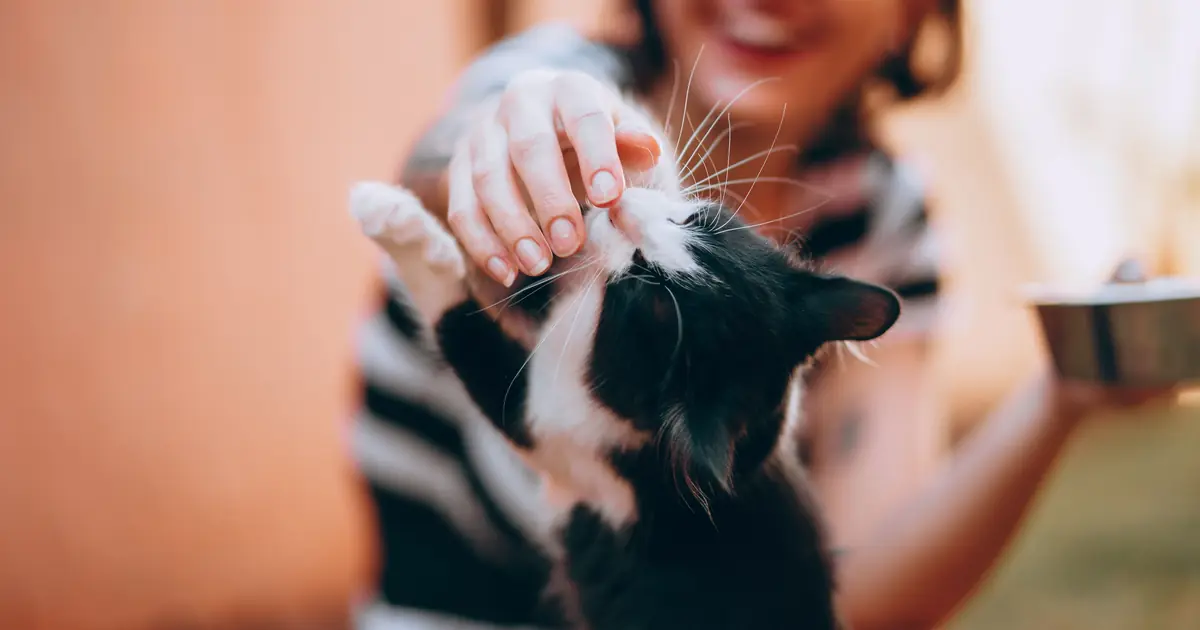
Watch a cat melt into a good chin scratch and you’ll swear they were part puddle. That slow blink, the little chin lift, the purr that starts up like an engine turning over: it’s not an act. Your cat genuinely likes this.
But why? Cats aren’t exactly known for needing anyone. So what’s actually happening in that small, fuzzy head when you run your hand down their back? It turns out there’s real biology behind the bliss, and also real limits on how much of it a cat wants. Here’s the full picture, spots included.
- Petting mimics allogrooming, the mutual grooming behavior cats use with trusted family members and bonded companions.
- Gentle petting can trigger the release of oxytocin and other feel-good hormones in cats, similar to what happens in humans during affectionate touch.
- Cats have scent glands concentrated around the cheeks, chin, forehead, and base of the ears, which is why they usually enjoy being touched there most.
- Overstimulation, sometimes called petting-induced aggression, happens when repeated touch turns from pleasant to irritating, often after 5 to 10 strokes.
- A cat’s tail, belly, and paws are common “red zone” spots because they’re sensitive or tied to self-defense instincts, not affection.
Why do cats like being petted in the first place?
Cats like being petted because gentle stroking recreates the grooming they experienced as kittens, a behavior called allogrooming. Allogrooming is when cats groom each other, using licks and gentle nudges, as a way to bond and build trust within their social group. A mother cat licks her kittens constantly in the first weeks of life, and littermates keep it going as they grow. When you pet a cat you’re plugging into that same wiring: touch equals safety, comfort, and belonging.
This is also why cats who missed out on that early socialization, kittens separated from their mother too young or strays with little human contact, sometimes struggle to enjoy petting at all. The behavior has to be learned as much as it’s instinctive, and the window for that learning is small. According to International Cat Care, cats that were well handled between 2 and 7 weeks of age generally grow into adults who are far more receptive to human touch.
What’s actually happening in a cat’s body when you pet them?
Petting a cat triggers a real physiological response: their heart rate can slow, their body relaxes, and their brain releases hormones tied to comfort and bonding. Purring itself is thought to be linked partly to this relaxed state, though cats also purr when anxious or in pain, so it’s not a foolproof happiness meter on its own.
The science lines up with what you already suspected: this isn’t just a cat humoring you. Gentle, low-frequency touch activates a set of nerve fibers in the skin associated with pleasant, affiliative touch in mammals generally, and researchers believe cats share this pathway. Combine that with a familiar scent and a relaxed posture, and you get the full-body slump you see on the couch every evening.
Where do cats most like to be petted, and why?
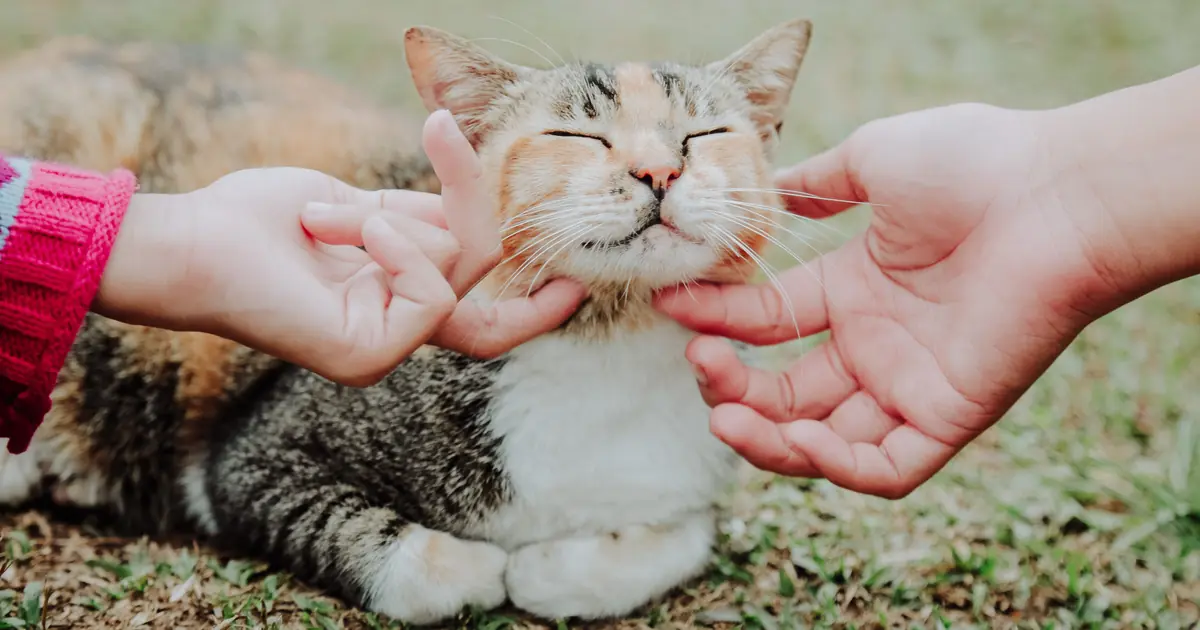
Cats most enjoy being petted around the cheeks, chin, forehead, and the base of the ears because these areas are packed with scent glands. When you stroke these spots, your cat is depositing their own scent onto you, essentially marking you as part of their territory and their trusted circle. It’s less “that feels nice” and more “now you smell like mine,” though for your cat those two things are basically the same feeling.
The base of the tail, right where it meets the back, is another spot many cats love, since it lines up with glands used in social scent-marking too. Some cats also enjoy long strokes down the back, as long as you don’t linger too close to the tail if they’re not the type to want that. That’s often why a cat raises her back into your hand.
Curious where cats stand on other classic pets? Most cats are surprisingly cool on belly rubs, and reactions to a good tail-base pat vary a lot by individual cat.
Why do some cats not like being petted at all?
Some cats dislike being petted because of limited early socialization, past negative experiences, general temperament, or simply personal preference, the same way some people aren’t huggers. A cat who wasn’t handled much as a kitten may never fully warm up to touch, and that’s not a reflection of how much they trust you otherwise.
Pain is worth ruling out too. A cat who suddenly avoids petting, especially around the back, hips, or belly, could be dealing with arthritis or another source of discomfort rather than a personality shift. If a normally affectionate cat starts flinching away from touch, that’s worth a vet visit rather than a shrug.
And plenty of cats simply like affection on their own terms: a quick cheek scratch, yes, a full-body cuddle session, absolutely not. That’s not “difficult.” That’s just a cat with preferences, and reading your specific cat’s body language tells you a lot more than any general rule ever will.
Why does my cat suddenly bite or swat after enjoying petting?
Cats sometimes bite or swat mid-pet because of petting-induced overstimulation, a real and well-documented reaction where pleasant touch tips over into irritating touch. The nerve endings under a cat’s skin can only take so much repetitive stimulation before they start signaling discomfort instead of pleasure, and your cat’s only way to say “that’s enough now” is a nip, a swat, or a sudden bolt off your lap.
This usually isn’t aggression in the way people picture it. It’s closer to the reflex if a friend keeps poking your shoulder past the point of ha-ha-stop. Common early warning signs include a tail that starts flicking or thumping, ears that flatten or swivel back, skin that ripples along the spine, and a stiffening body. Catch those signals and stop petting before the bite, and most cats never escalate at all. If you want to dig deeper into this exact pattern, our guide on why cats bite during petting breaks down the full timeline.
How do you pet a cat the right way?
- Let the cat approach you first, rather than reaching for them, so the interaction starts on their terms.
- Offer a finger near their nose and let them sniff before you touch, the feline version of a handshake.
- Start at the cheeks, chin, or base of the ears, the spots most cats enjoy most.
- Use slow, gentle strokes and watch their body language as you go.
- Stop after 5 to 10 strokes and pause, giving your cat a chance to ask for more (a head bump, a lean-in) or walk away.
- Avoid the belly, paws, and tail unless you already know this particular cat is fine with it.
- End the session the moment you see a warning sign, calmly, without scolding.
| Green-zone spots cats love | Red-zone spots to avoid |
|---|---|
| Cheeks: dense with scent glands, feels like mutual scent-marking | Belly: covers vital organs, guarded by instinct even in relaxed cats |
| Chin: another scent-gland hotspot, most cats lean into this one | Paws and toes: packed with nerve endings, sensitive rather than pleasant |
| Base of the ears: gentle scratches here mimic mutual grooming | Tail (especially the tip): tied to balance and communication, easily irritating |
| Forehead: another scent-gland area, calming for most cats | Lower back near the tail base: fine briefly for some cats, overstimulating fast for others |
| Base of the tail (light touch): scent-marking area many cats enjoy in short bursts | Whiskers and face (aside from cheeks/chin): easily irritating if touched directly |
How can you tell if a cat is actually enjoying being petted?
A cat who’s enjoying petting shows loose, relaxed body language: half-closed or slow-blinking eyes, a still or gently swaying tail, purring, kneading, and leaning into your hand. Ears stay forward or relaxed to the sides rather than pinned back or swiveling.
Compare that to a cat who’s tolerating it or losing patience: tail flicking or thumping against the floor, skin twitching along the spine, ears rotating back like little satellite dishes, pupils dilating, or a stiff, still body that’s braced rather than relaxed. According to the ASPCA, these subtle cues almost always show up before an actual bite or swat, which is exactly why watching for them matters more than waiting for the reaction itself.
Purring and headbutting are two of the clearest “keep going” signals a cat gives, and if you want the deeper story behind that headbutt specifically, it’s a whole gesture on its own worth understanding.
Frequently Asked Questions
Q: Do all cats like being petted?
No, not all cats enjoy being petted, and that’s normal. Preference depends on early socialization, individual temperament, and past experiences, so some cats are affectionate lap cats while others prefer quick head scratches on their own schedule.
Q: Why does my cat purr when I pet them?
Cats often purr during petting because they’re relaxed and content, though purring can also occur when a cat is anxious, in pain, or self-soothing. Context matters: a purring cat with loose, relaxed body language is almost always a happy one.
Q: Why does my cat bite me after I pet them for a while?
This is usually petting-induced overstimulation, where repetitive touch goes from pleasant to irritating, often after 5 to 10 strokes. Watch for tail flicking, skin twitching, or ears rotating back, and stop petting before those signs turn into a nip.
Q: Where do cats like to be petted the most?
Most cats prefer being petted on the cheeks, chin, forehead, and base of the ears, all areas rich in scent glands. These spots mimic mutual grooming and scent-marking behavior cats use to bond with trusted family members.
Q: Why do cats not like their belly touched?
A cat’s belly covers vital organs, so even relaxed, trusting cats often guard it instinctively. A cat rolling over to show their belly is usually a sign of trust, not an invitation to rub it.
Q: Is it bad if my cat doesn’t like being petted?
No, it doesn’t mean your cat doesn’t love you. Some cats show affection through proximity, following you room to room, or slow blinking, rather than through physical touch, and that’s just as genuine a bond.
Q: How many pets is too many for a cat?
There’s no universal number, but many cats start to get overstimulated after 5 to 10 strokes in one session. Watching body language, tail flicks, skin twitches, ears back, matters more than counting strokes.
Q: Can kittens learn to like being petted?
Yes, kittens handled gently and often between 2 and 7 weeks of age are much more likely to grow into adults who enjoy petting. This early window is a key part of feline socialization, according to feline behavior researchers.
None of this is a substitute for veterinary guidance. If your cat suddenly avoids touch they used to enjoy, seems painful when petted, or shows a big shift in behavior, it’s worth a check-in with your vet to rule out an underlying medical cause.

Hello and welcome to The Ideal Cat!
We are some passionate cat owners from different professions. We love our cats and have a lot of experience in how to care for our pets. We are incredibly excited to share our knowledge, experience, and research with you. So you can take good care of your loving cat. We will answer most of the common questions about owning cats, taking care of them, etc. If you have any question contact with us. Thanks for visiting! Enjoy the content.
