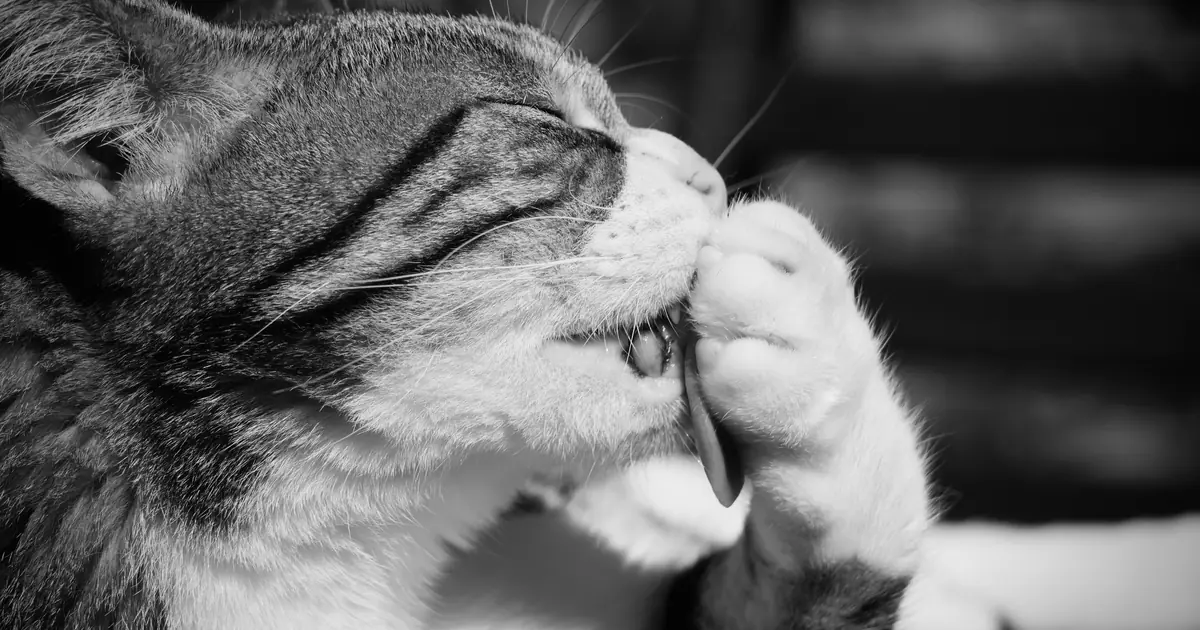
Pick up your cat and bury your face in their fur for a second. Warm bread. Sun-baked laundry. Something that smells suspiciously like cookies. It’s not your imagination, and you’re definitely not the only cat parent who does this (no judgment here).
Here’s the thing: cats aren’t actually perfumed. They just do an incredible job of staying clean on their own, and that clean baseline is what lets other scents, sunshine, your sheets, the couch cushion, settle into their coat. Once you know how a cat’s grooming routine works, the “why does my cat smell so good” mystery makes a lot more sense.
- Cats spend roughly 30 to 50 percent of their waking hours grooming, which is why dirt and odor rarely get the chance to build up.
- A cat’s rough, barbed tongue works like a built-in comb, distributing natural skin oils and removing loose fur, dust, and debris.
- Cats don’t have the same strong, musky body odor that dogs and some other mammals produce, partly because their oil glands work differently and they clean so often.
- Clean cat fur readily absorbs ambient smells, sunlight, fresh laundry, your own scent, which is why cats often smell like wherever they’ve been napping.
- A sudden change to a bad or unusual smell (fishy, sour, sulfur-like, or rotten) is not normal and is worth a vet visit, since it can point to dental, ear, skin, or anal gland problems.
Why do cats smell good in the first place?
Cats smell good because they groom themselves constantly and simply don’t generate much odor to begin with. A coat that naturally repels dirt, light rather than greasy skin oils, and hours of daily self-cleaning add up to a healthy cat’s default state: close to odorless. Add in fur that soaks up whatever pleasant scent is nearby, your blanket, the sunny windowsill, fresh laundry, and you get that warm, cookie-like smell so many cat parents notice.
It’s biology and habit, not magic. A cat who grooms less, an elderly or overweight cat who can’t reach every spot anymore, for instance, will smell noticeably muskier. So a good smell is really a sign that grooming, skin health, and coat condition are all working the way they should.
How does constant grooming keep cats smelling clean?
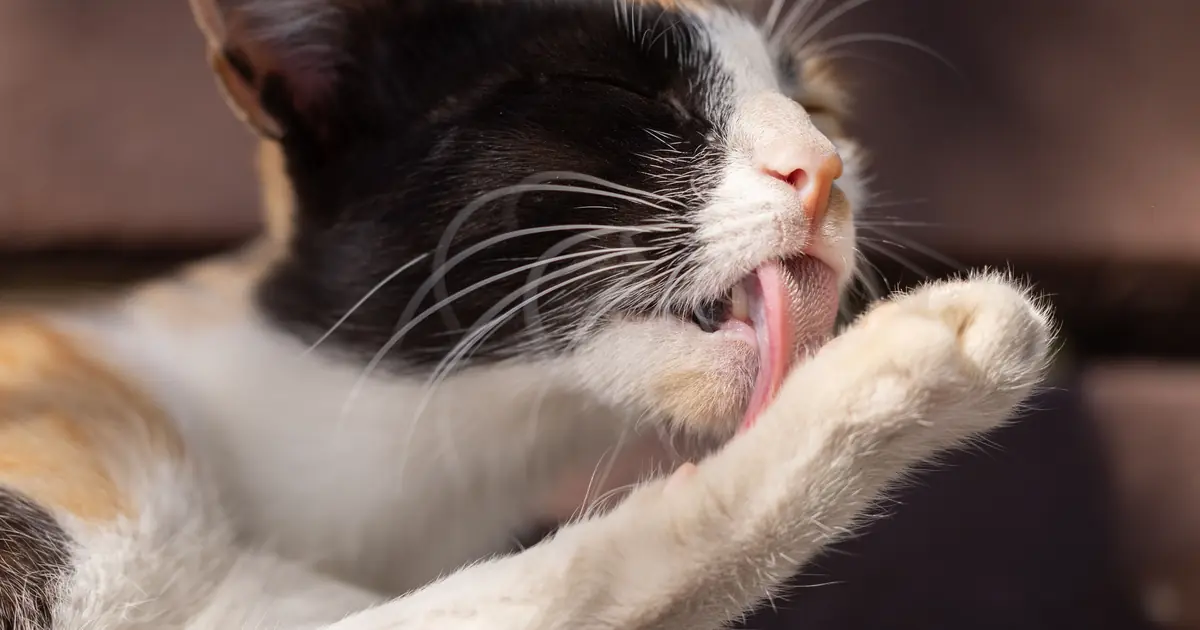
Grooming keeps cats smelling clean because it physically removes the dirt, loose hair, food residue, and skin debris that would otherwise sit on the coat and start to smell. A cat’s tongue is covered in tiny, backward-facing hooks called papillae, made of keratin, the same protein in your fingernails. Those hooks work like a fine-toothed comb, catching debris and spreading saliva evenly through the fur.
Saliva has mild antibacterial and cleansing properties, so a licking cat is doing a light rinse-and-comb in one motion. According to the Cornell Feline Health Center, cats typically spend 30 to 50 percent of their waking hours grooming, hours a day of near-constant upkeep. Want to pitch in? Grooming your cat at home with regular brushing does the same job your cat’s tongue does, minus the hairball risk.
Why don’t cats have strong body odor like dogs?
Cats don’t develop strong body odor the way dogs do because they groom far more often and their skin produces less oil overall. Dogs tend to have oilier coats and skin that supports more bacterial and yeast growth between baths, part of why “doggy smell” builds up over days. Cats keep resetting that clock with their tongues instead.
Cats also don’t sweat the way humans do. Their sweat glands are concentrated in a few small areas, mostly the paw pads, so almost no sweat-based odor spreads through the coat. Minimal sweating plus near-constant grooming means a healthy cat has almost no detectable body smell at all. Your own scent is a different story, which is part of why some cats are so drawn to armpits.
Why does my cat smell like sunshine, cookies, or wherever they napped?
Cats often smell like sunshine, fresh laundry, or something sweet because clean fur is excellent at absorbing whatever scent is nearby. A cat who naps in a sunbeam smells warm and toasty. A cat who curls up on fresh sheets smells like detergent. Think about where your cat has spent the last hour and the mystery usually solves itself, since fur acts like a soft sponge for ambient smells.
The “cookie” or “corn chip” smell some people notice on the paws is real and pretty well documented. It’s generally chalked up to naturally occurring skin bacteria interacting with sweat from the paw pads, producing a faint, warm, slightly yeasty scent. It’s harmless, and for most cat parents, oddly delightful.
One exception is worth flagging: a strong chemical smell, like cleaning product, gasoline, or paint, is never a cute quirk. Call your vet or the ASPCA Animal Poison Control Center right away, since some household chemicals are toxic if licked off the fur during grooming.
What does a good-smelling cat tell you about their health?
A cat who smells clean and neutral is telling you their grooming habits, skin, coat, and general health are in good shape. Grooming takes flexibility, energy, and a healthy mouth, no painful teeth getting in the way of a thorough self-clean, so a good-smelling cat is quietly checking a lot of boxes at once.
When grooming habits change, so does the smell. Senior cats with arthritis often can’t twist around to reach their back and hindquarters anymore, which shows up as a musky smell and visible mats. Overweight cats hit the same wall simply due to size. Greasy, dull, or matted fur alongside a new smell is a good cue to check in with your vet and step up brushing at home.
When is a cat smell a warning sign you should see a vet?
A cat smell is a warning sign when it’s new, strong, or unpleasant, especially coming from one spot, the mouth, ears, or rear end, rather than the whole coat. Since healthy cats are close to odorless, a sudden shift toward fishy, sour, sulfurous, or rotten smells usually points to a specific, fixable problem, not “just a cat thing.”
The most common culprits are dental disease, ear infections, skin infections, and anal gland issues. Bad breath deserves particular attention: VCA Animal Hospitals notes that halitosis in cats is most often caused by dental disease like gingivitis, tartar buildup, or tooth resorption, and most cats benefit from a professional oral health check once a year. If your cat’s breath has taken a sharp turn for the worse, see why a cat’s breath might stink. For kittens, breath that smells like poop deserves its own look at why kitten breath can smell like poop.
Ears and skin deserve attention too. A yeasty or sour ear smell, especially with head shaking, often points to a cat ear infection. Flaky or oddly scented skin can go hand in hand with cat dandruff. A fishy smell around the tail base is a classic sign of full or infected anal glands, a small but common problem the PetMD veterinary team says is easy for a vet to check and safely resolve.
It also helps to tell a real problem apart from stress-driven over-grooming. If your cat licks one spot raw or bald, see why a cat might over-groom to figure out what’s driving it.
| Normal cat smells | Smells that mean it’s time to see a vet |
|---|---|
| Warm, neutral, or faintly “cookie” like scent on fur and paws | Fishy or sour smell, especially near the tail base (possible anal gland issue) |
| Fur that smells like sunshine, fresh laundry, or you after napping together | Strong, sudden bad breath (possible dental disease or gum infection) |
| Faint, clean smell right after a grooming session | Yeasty, sour, or foul odor from one or both ears (possible ear infection) |
| Almost no detectable body odor on a healthy, well-groomed cat | Musty, greasy, or unusual skin smell, especially with flaking or hair loss (possible skin infection) |
| Mild “wet dog” smell briefly after a bath, gone once dry | Any new chemical, sulfur, or rotten smell that wasn’t there before |
A quick, calm note: this article is for general education, not a diagnosis. A sudden or strong bad smell is genuinely worth a vet visit, since it usually has a specific, treatable cause. Catching dental disease, an ear infection, or an anal gland problem early is almost always easier and cheaper than waiting.
How can you help your cat smell their best?
You can help a cat smell their best by supporting the grooming they already do, not replacing it. Brush a longhaired cat a few times a week and a shorthaired cat about once a week to cut down on loose fur and spread skin oils evenly. Keep the litter box scooped daily, since litter odor clings to paws and fur fast. Book routine vet checkups, including dental exams, so small problems get caught before they turn into a smell you can’t ignore.
Most cats don’t need baths, and over-bathing can strip natural oils and make skin (and smell) worse. Save baths for a real reason, a sticky spill, fleas, or a skin condition your vet wants treated with a medicated shampoo. The team at International Cat Care notes grooming should stay low-stress, since a stressed cat is more likely to overgroom or avoid grooming afterward.
Frequently Asked Questions
Q: Why does my cat smell like cookies or corn chips?
The sweet, slightly yeasty smell, often noticed on the paws, comes from harmless skin bacteria interacting with natural oils and sweat from the paw pads. It’s completely normal and doesn’t need any treatment.
Q: Do cats actually smell better than dogs?
Generally, yes. Cats groom themselves for roughly 30 to 50 percent of their waking hours and have less oily skin than dogs, so they build up far less body odor between baths. Dogs rely on owners for regular bathing, while a healthy cat mostly manages odor control on its own.
Q: Should I ever bathe my cat to keep them smelling good?
Most cats never need a bath, since daily self-grooming handles it. Bathe a cat only for a specific reason, like a sticky substance in the fur, fleas, or a skin condition your vet has recommended treating, and use a cat-safe shampoo so you don’t strip protective skin oils.
Q: Why does my cat suddenly smell bad?
A sudden bad smell usually has a specific cause: dental disease and bad breath, an ear infection, a skin infection, or full or infected anal glands are the most common. Because healthy cats are nearly odorless, any new strong smell is worth a vet visit rather than waiting it out.
Q: Why does my cat’s breath smell bad even though the rest of them smells fine?
Bad breath is most often caused by dental disease, like gingivitis, tartar buildup, or tooth resorption, according to VCA Animal Hospitals. It’s a mouth-specific issue, so the rest of the coat can still smell perfectly normal while the breath does not.
Q: Can stress make a cat smell different?
Indirectly, yes. Stressed cats sometimes overgroom one area until the skin gets irritated or infected, or they may groom less overall if they’re anxious or in pain, both of which can change how a cat smells. A change in grooming habits alongside a smell change is worth mentioning to your vet.
Q: Do all cats smell the same?
No. Individual scent varies with diet, environment, coat length, skin health, and even the specific bacteria naturally living on a cat’s skin. What stays consistent across healthy cats is the near-absence of strong body odor, not the exact scent itself.
Q: Why does my senior cat smell different than they used to?
Older cats often develop arthritis or extra weight that makes it harder to reach every part of their body while grooming, so odor and matting can build up in spots they can’t reach anymore. Stepping up brushing and mentioning the change at your cat’s next vet visit both help.

Hello and welcome to The Ideal Cat!
We are some passionate cat owners from different professions. We love our cats and have a lot of experience in how to care for our pets. We are incredibly excited to share our knowledge, experience, and research with you. So you can take good care of your loving cat. We will answer most of the common questions about owning cats, taking care of them, etc. If you have any question contact with us. Thanks for visiting! Enjoy the content.
