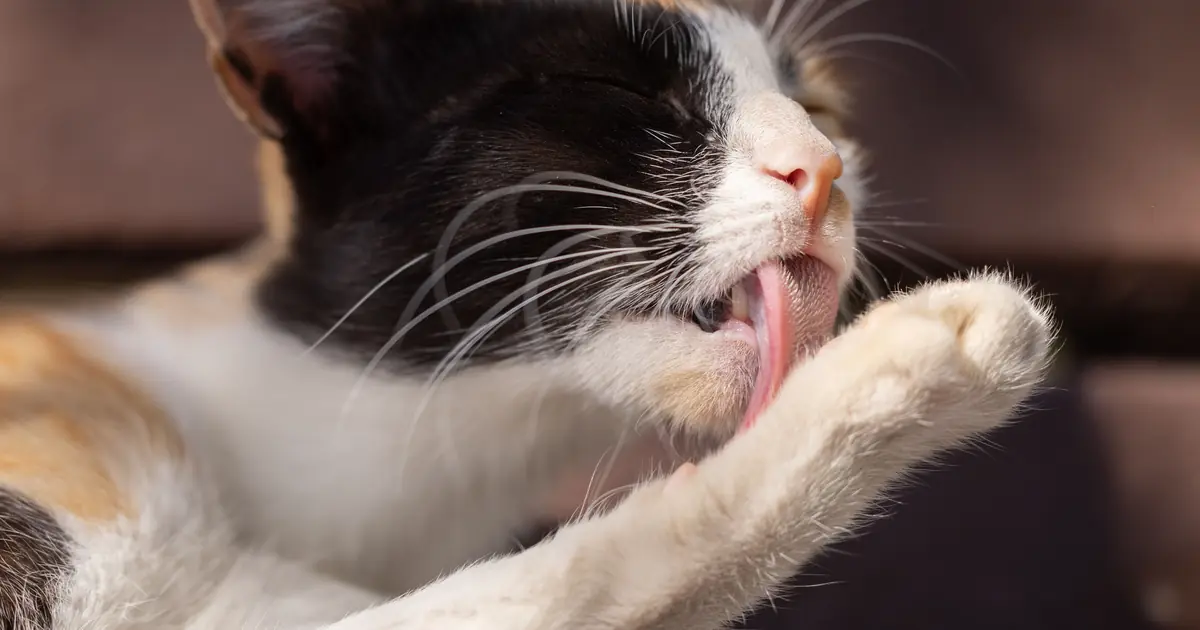
You catch your cat licking the same spot on her belly. Again. Then you notice it: a thin, bald patch where thick fur used to be. Or maybe it’s the sound. That endless, wet, rhythmic licking at 2am that you can’t unhear once you’ve heard it. If your cat suddenly seems obsessed with grooming, you’re right to pay attention. Something is usually driving it.
Over-grooming is one of those signals cats give that’s easy to miss until the fur is already gone. The good news is that most causes are treatable once you know what you’re dealing with. Let’s walk through why it happens, how to tell normal from too much, and when it’s time to call the vet.
- Cats normally spend about 30 to 50 percent of their waking hours grooming, so licking alone isn’t a problem until it causes bald patches or sores.
- Over-grooming (also called barbering) means licking or chewing hard enough to break, thin, or remove fur, often in a stripe down the belly, legs, or flanks.
- Itchy medical causes like fleas, food allergies, environmental allergies, and mites are the most common triggers, more common than stress.
- Psychogenic alopecia is over-grooming driven by stress or anxiety, but vets diagnose it only after ruling out medical causes.
- See a vet if you notice bald patches, red or broken skin, sudden intense licking, or over-grooming plus weight loss.
How much grooming is normal for a cat?
Normal cat grooming takes up a lot of the day. Cats spend roughly 30 to 50 percent of their waking hours cleaning themselves, according to behaviorists at the Cornell Feline Health Center. So a cat who licks a lot isn’t automatically over-grooming.
Healthy grooming has a rhythm to it. Your cat washes her face, works down her body, cleans her paws, then stops and moves on with her day. It’s calm and routine. She isn’t fixated on one spot, and her coat stays full and even. A little extra licking after a stressful vet trip or a hot afternoon is normal too.
The problem starts when grooming stops being casual and turns into a compulsion that damages the coat or skin.
What are the signs my cat is over-grooming?
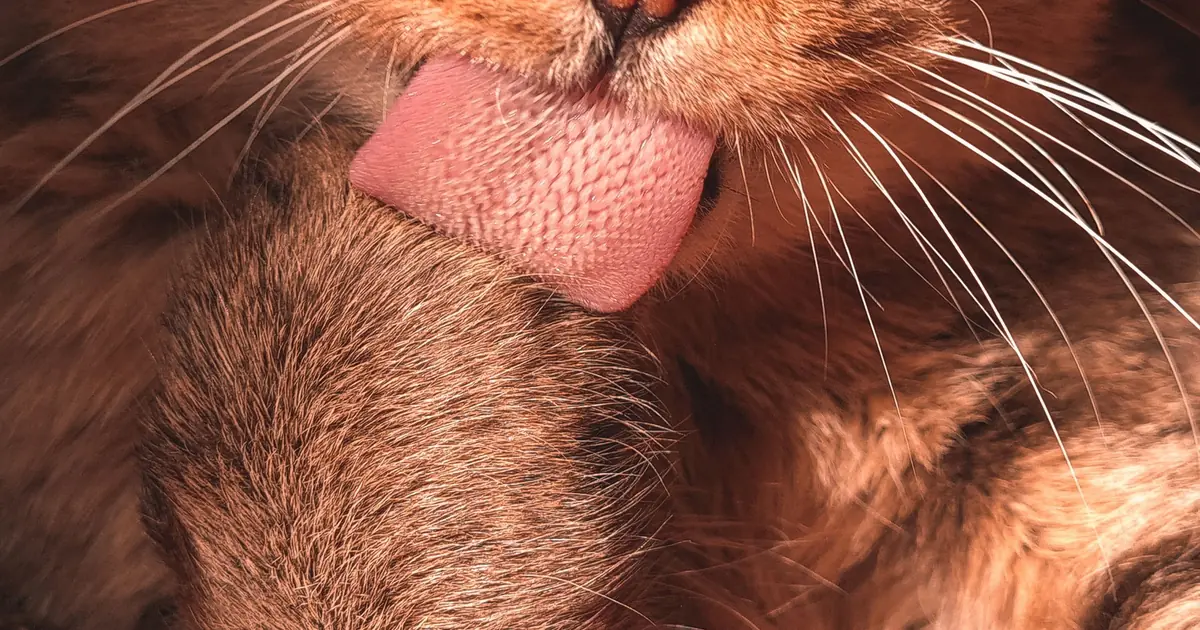
Over-grooming, sometimes called barbering, means your cat licks or chews so much that the fur breaks, thins, or falls out. The skin underneath may look stubbly, pink, or even raw. Here’s how normal grooming and over-grooming actually differ.
| Normal grooming | Over-grooming |
|---|---|
| Full, even coat | Bald patches, thinning, or a stubbly “barbered” look |
| Spread across the whole body | Focused on one area (often belly, inner legs, flanks, or back) |
| Calm, brief sessions | Intense, frantic, or hard-to-interrupt licking and chewing |
| Healthy skin underneath | Red, scabbed, broken, or irritated skin |
| Occasional hairballs | More hairballs than usual from swallowing extra fur |
A classic over-grooming pattern is a neat stripe of missing fur down the middle of the belly, or bald patches on the inner thighs and lower legs where a cat can easily reach. If you’re seeing patchy fur loss anywhere, our guide on why your cat is losing hair breaks down the wider list of causes too.
What medical problems make a cat over-groom?
Most over-grooming starts with itch or pain, not emotions. When something makes the skin itchy or a body part hurts, licking is a cat’s natural response. That’s why vets treat medical causes as the first suspect. The common ones:
- Fleas and flea allergy. This is the number one cause. Some cats are so allergic to flea saliva that a single bite triggers days of frantic licking, usually around the lower back, tail base, and belly. Not sure if fleas are the issue? Here’s how to tell if your cat has fleas.
- Food allergies. A protein in the diet (often chicken, beef, or fish) can cause itchy skin, especially around the head, neck, and belly.
- Environmental allergies (atopy). Pollen, dust mites, and mold can make a cat’s skin itch, much like hay fever in people.
- Mites and ringworm. Parasites and fungal infections irritate the skin and drive scratching and licking. Ringworm often leaves circular bald patches.
- Pain. Cats lick what hurts. Arthritis, a bladder problem, or anal gland trouble can cause a cat to over-groom the area right above the sore spot.
- Hyperthyroidism. This hormone disorder in older cats can cause restlessness and over-grooming, usually alongside weight loss and a big appetite.
Because so many of these overlap, the Merck Veterinary Manual notes that hair loss in cats almost always needs a proper exam to pin down the real cause. Two cats with the same bald belly can have completely different problems.
Can stress and anxiety cause over-grooming?
Yes. When a cat over-grooms because of stress rather than a physical problem, vets call it psychogenic alopecia. Grooming releases feel-good chemicals in a cat’s brain, so an anxious cat may lick to self-soothe, the same way a stressed person bites their nails. Over time that comfort licking wears the fur away.
Here’s the important catch, though. Psychogenic alopecia is actually over-diagnosed. Research and vet specialists agree that most cats first labeled as “stressed” turn out to have an itchy medical cause after all. So stress is a real answer, but it’s the one you land on after ruling the others out, not before.
Common stress triggers that can set off over-grooming:
- Moving to a new home or rearranging furniture
- A new baby, roommate, partner, or pet in the house
- Conflict or tension with another cat
- Changes in your schedule, or long stretches of being left alone
- Boredom and not enough play or stimulation
- A new noise, construction, or an outdoor cat visiting the yard
Learning to read your cat helps you spot stress early. The VCA Animal Hospitals guide points out that over-grooming often shows up on the belly and inner legs because those spots are easy to reach when a cat curls up to self-comfort.
How does a vet figure out why my cat is over-grooming?
A vet diagnoses over-grooming by ruling out medical causes step by step before ever settling on stress. It’s a process of elimination, and it matters because treating the wrong cause wastes time while your cat keeps licking. A typical workup looks like this:
- Physical exam and history. The vet checks where the fur is missing and asks about diet, other pets, and recent changes at home.
- Flea check and flea treatment. Even indoor cats get fleas, so many vets start with strict flea control to rule it out. Our guide on how to get rid of cat fleas covers this at home.
- Skin tests. Skin scrapings, tape samples, or a fungal culture look for mites, bacteria, and ringworm.
- Diet trial. If a food allergy is suspected, the vet may recommend a special elimination diet for 8 to 12 weeks.
- Bloodwork. For older cats, blood tests can check for hyperthyroidism and other internal causes.
- Behavioral review. Only once medical causes are cleared does the vet look at stress and anxiety as the driver.
This is exactly why “just stress” is never a safe assumption at home. Your cat can’t tell you her skin itches or her hip aches, so the licking looks the same either way.
What can I do to help a cat that over-grooms?
The real fix for over-grooming is treating the cause your vet finds, not just stopping the licking. Cones and bitter sprays only cover the symptom, and a still-itchy cat will lick again the moment the barrier comes off. Once you know the cause, these steps help:
- Stay on top of flea control. Use a vet-recommended product year-round, on every pet in the home, even indoor-only cats.
- Follow the allergy plan. Stick with the diet trial or allergy treatment your vet sets up. If allergies are the issue, these natural ways to ease cat allergies can support the plan.
- Lower the stress. Keep routines steady, add hiding spots and vertical space, and give each cat its own food, water, and litter box.
- Add enrichment. Daily play, food puzzles, window perches, and scratching posts give an anxious or bored cat something better to do than lick.
- Try calming aids if your vet agrees. Pheromone diffusers or calming cat treats can take the edge off for stress-driven cases.
- Keep up gentle grooming. Regular brushing removes loose fur and gives you a chance to spot skin changes early. Our guide on how to groom a cat at home walks through it.
Never give your cat human medications or leftover pet meds to stop the itching. Some are toxic to cats, and dosing is a job for your vet.
When should I take my cat to the vet for over-grooming?
Book a vet visit any time over-grooming leaves bald patches, broken skin, or scabs, since these point to a medical cause that needs treatment. Over-grooming is uncomfortable for your cat and usually gets worse, not better, on its own. Call sooner rather than later if you notice any of these red flags:
- Raw, red, bleeding, or oozing skin
- Sudden, intense licking or chewing that you can’t easily interrupt
- Over-grooming plus weight loss, increased thirst, or a change in appetite
- Signs of pain, limping, or licking at one specific spot
- Straining in the litter box while over-grooming the belly (can signal a urinary problem)
This article is here to inform, not to replace a real exam. A licensed veterinarian is the only one who can safely diagnose why your cat is over-grooming and rule out the medical causes that look identical from the outside.
Frequently asked questions about cats over-grooming
Q: Is my cat over-grooming or just cleaning normally?
Normal grooming keeps the coat full and even and is spread across the whole body. Over-grooming causes bald patches, thinning fur, or a stubbly look, usually focused on one area like the belly or inner legs. If you can see skin or broken hairs, it’s over-grooming.
Q: What is the most common cause of over-grooming in cats?
Itchy skin from fleas and allergies is the most common cause of over-grooming in cats. Flea allergy in particular can trigger frantic licking from just one bite. This is why vets rule out fleas and allergies before considering stress.
Q: Can stress alone make a cat lick its fur off?
Yes, stress can cause a cat to lick its fur off, a condition called psychogenic alopecia. But it’s over-diagnosed. Most cats first blamed on stress actually have an itchy medical cause, so a vet should rule those out before settling on anxiety.
Q: Where do cats usually over-groom?
Cats most often over-groom the belly, inner thighs, lower back, tail base, and legs, because these spots are easy to reach. A neat bald stripe down the belly is a classic sign. The location can hint at the cause, so tell your vet exactly where the fur is missing.
Q: Will the fur grow back after over-grooming?
In most cases fur grows back once the underlying cause is treated and the licking stops. Regrowth can take several weeks to a few months. If the skin was badly damaged or scarred, some patches may grow back slowly or unevenly.
Q: Should I use a cone to stop my cat over-grooming?
A cone only blocks the licking, it doesn’t fix why your cat is doing it. Vets sometimes use one short-term to let raw skin heal, but the real solution is finding and treating the cause. Talk to your vet before relying on a cone alone.
Q: Can indoor cats still get fleas that cause over-grooming?
Yes, indoor cats can absolutely get fleas. Fleas hitch rides on people’s clothes, on other pets, and through screens and doorways. Because flea allergy is such a common cause of over-grooming, vets often treat for fleas even in strictly indoor cats.
Q: Is over-grooming painful for my cat?
Over-grooming can become painful once the licking breaks the skin, causing raw patches, sores, and infection. The original cause, like itchy allergies or an aching joint, is uncomfortable too. That’s why it’s worth treating early rather than waiting to see if it stops.

Hello and welcome to The Ideal Cat!
We are some passionate cat owners from different professions. We love our cats and have a lot of experience in how to care for our pets. We are incredibly excited to share our knowledge, experience, and research with you. So you can take good care of your loving cat. We will answer most of the common questions about owning cats, taking care of them, etc. If you have any question contact with us. Thanks for visiting! Enjoy the content.
