
You part your cat’s fur and there it is. A tiny dark speck that moves. Then another. Your stomach sinks, and honestly, so does your afternoon.
Here’s the good news: you can absolutely win this. But fleas are sneaky, and the reason most people fail is they treat the cat and stop there. The cat is only the tip of the iceberg. Get rid of cat fleas the right way and you break the whole cycle, so they don’t come roaring back in two weeks.
This is your step-by-step plan to clear fleas off your cat and out of your home for good.
This article is educational and isn’t a substitute for veterinary care. Always check with your vet before starting any flea product, especially for kittens, pregnant cats, or sick cats.
- Only about 5% of a flea infestation lives on your cat. The other 95% (eggs, larvae, and pupae) is in your carpets, bedding, and floors.
- A single female flea can lay up to 40 eggs a day, so an infestation snowballs fast.
- Fully clearing fleas takes 3 months or longer because you have to outlast every stage of the flea life cycle.
- Treat your cat AND every other pet in the home at the same time, or the fleas just hop back.
- Never use dog flea products or permethrin on cats. Permethrin is highly toxic to cats and can cause tremors, seizures, and death.
- Kittens with heavy flea loads can develop life-threatening anemia and need a vet right away.
How do I know my cat actually has fleas?
You can confirm cat fleas by spotting live fleas or “flea dirt” in the coat. Fleas are small, fast, reddish-brown insects about the size of a sesame seed. They love the base of the tail, the belly, and the neck. Even if you never see one, you’ll often find flea dirt: little black specks that look like ground pepper.
Here’s the classic test. Comb some of those specks onto a damp white paper towel. If they smear rusty red, that’s digested blood, which means flea dirt, which means fleas. Case closed.
Other signs to watch for: nonstop scratching, over-grooming, tiny scabs, or thinning fur near the tail. If you want a full rundown, we cover the telltale clues in our guide on how to tell if your cat has fleas, and what the bites themselves look like in what a flea bite looks like on a cat.
Why is getting rid of cat fleas so hard? (The flea life cycle)
Getting rid of cat fleas is hard because the fleas you can see are only a fraction of the problem. The adult fleas jumping around on your cat make up roughly 5% of the total population. The rest are hiding in your home as eggs, larvae, and pupae, waiting to grow up.
Fleas go through four life stages, and understanding them is the whole game. Miss a stage and the infestation restarts.
| Flea life stage | Where it lives | Why it matters |
|---|---|---|
| Egg (about 50% of the population) | Falls off your cat into carpet, bedding, and cracks | A female lays up to 40 eggs a day, so they pile up fast |
| Larva (about 35%) | Burrows deep into carpet and dark corners | Feeds on flea dirt, then spins a cocoon |
| Pupa (about 10%) | Sealed in a sticky cocoon in your floors | Can survive for months and shrugs off most sprays |
| Adult (about 5%) | On your cat, feeding and breeding | The only stage you usually see |
The whole cycle can finish in as little as 14 to 28 days in a warm home, according to the CDC. But that stubborn pupa stage is the villain. Cocooned pupae can lie dormant for weeks or months, then hatch long after you thought you’d won. That’s why you have to keep treating for at least 3 months. You’re not just killing today’s fleas. You’re outlasting tomorrow’s.
How do I get rid of cat fleas? The step-by-step plan
To get rid of cat fleas, treat your cat, treat every other pet, and treat your home all at once, then keep it up for 3 months. Doing one without the others is why fleas keep coming back. Here’s the exact order.
- Start a vet-approved flea treatment on your cat. Modern prescription-strength topical (spot-on) and oral flea products are the fastest, safest way to kill fleas on a cat. Ask your vet which one fits your cat’s age, weight, and health. Some oral options start killing adult fleas within about 30 minutes. Our overview of the best cat flea treatments walks through the main types.
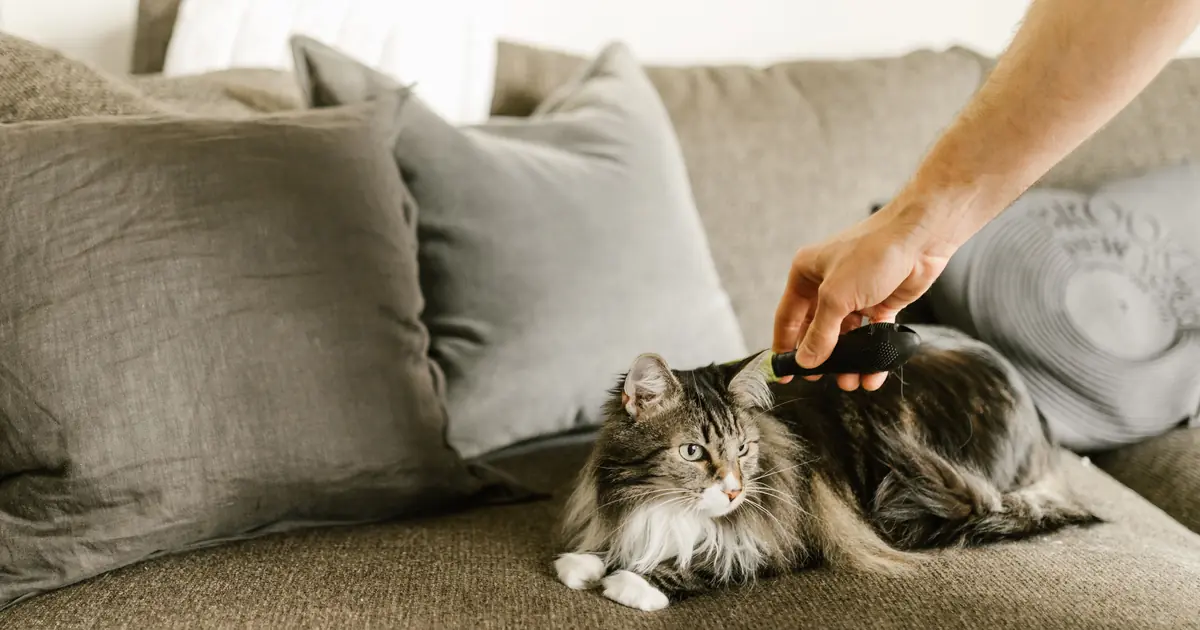
- Comb out live fleas with a flea comb. A fine-toothed flea comb physically drags fleas and flea dirt out of the coat. Comb over a bowl of warm, soapy water and dunk what you catch. It won’t clear an infestation on its own, but it’s gentle, safe for kittens too young for products, and great for tracking progress.
- Bathe only if needed, and carefully. Most cats hate water and don’t need a bath if they’re on a good flea product. If you do bathe, use a cat-specific flea shampoo, never a dog one. See our guide to the best cat flea shampoo and always ask your vet before bathing a kitten or a stressed cat.
- Treat every pet in the house on the same day. Fleas don’t respect boundaries. Dogs, other cats, rabbits, and ferrets all need their own species-appropriate, vet-approved treatment at the same time. One untreated pet keeps the whole cycle alive.
- Wash all bedding in hot water. Strip your cat’s beds, your bedding, blankets, and any washable covers. Wash on the hottest setting the fabric allows and dry on high heat. Hot water and high heat kill fleas at every life stage.
- Vacuum every day, everywhere. Vacuum carpets, rugs, upholstery, under furniture, along baseboards, and cat nap spots. The suction and vibration even coax pupae out of their cocoons. Empty the canister or toss the bag into an outside trash bin immediately so nothing crawls back out.
- Treat the environment with a vet-recommended product. For heavier infestations, ask your vet about a home flea spray or fogger with an insect growth regulator (IGR), which stops eggs and larvae from developing. Keep pets away during and after application exactly as the label says.
- Keep going for at least 3 months. This is the step everyone quits too early. Stay on monthly flea prevention and keep vacuuming and washing until you’ve gone weeks with zero fleas. You’re waiting out those late-hatching pupae.
How do I get fleas out of my house?
You get fleas out of your house by attacking the 95% of the population that never lives on your cat. Since eggs, larvae, and pupae hide in your floors and fabrics, home treatment is not optional. It’s half the battle.
Your home flea checklist
- Vacuum daily during an active infestation, then a few times a week until it’s gone.
- Wash all pet bedding and human bedding weekly in hot water.
- Steam-clean carpets if you can. The heat destroys eggs and larvae.
- Declutter floors so there are fewer dark hiding spots for larvae.
- Use a vet-recommended IGR-based spray or fogger for stubborn cases.
- Don’t forget the car, the cat carrier, and any spot your cat naps.
One heads-up: skip the DIY home remedies you see online. Salt, essential oils, and vinegar either don’t work or can actually harm your cat, and diatomaceous earth needs care too. Some essential oils are toxic to cats. Stick with vacuuming, hot washing, and vet-approved products.
What flea mistakes should I avoid? (This part is serious)
The most dangerous cat flea mistake is using a dog flea product on a cat. Many dog products contain permethrin, which is highly toxic to cats. A cat’s liver can’t break it down, so it builds up and attacks the nervous system.
According to International Cat Care, permethrin poisoning is one of the most common serious poisonings in cats worldwide. Signs like tremors, twitching, muscle spasms, and seizures can appear within a few hours, and there’s no antidote, only emergency supportive care. Cats can even be poisoned by rubbing against a recently treated dog.
If you think your cat contacted a dog flea product or permethrin, treat it as an emergency. Call your vet or an emergency clinic right away.
Other common mistakes to sidestep:
- Treating the cat but not the home. You’ll lose. Remember the 95%.
- Quitting after a week or two. Pupae hatch later. Stay the full 3 months.
- Treating one pet in a multi-pet home. Every pet, same day, every time.
- Splitting a large dog dose “down” for a cat. Even a tiny amount of permethrin can be deadly. Dose is not the issue. The chemical is.
- Guessing on dosage. Never estimate. Use the exact product and amount your vet approves for your cat’s weight.
When should I see a vet about cat fleas?
See a vet promptly if your cat is a young kitten, seems weak or lethargic, or has pale gums. Heavy flea infestations can drain enough blood to cause anemia, which is genuinely life-threatening, especially in kittens and small or senior cats.
The Cornell Feline Health Center notes that flea feeding can cause dangerous anemia in kittens carrying a heavy flea load. Call your vet right away if you see any of these red flags:
- Pale or white gums (a sign of anemia)
- Weakness, lethargy, or a kitten that won’t nurse or play
- A very young kitten with visible fleas
- Intense itching, scabs, hair loss, and raw skin, often flea allergy dermatitis
- Any signs of permethrin exposure: tremors, twitching, or seizures
Flea allergy dermatitis (an allergic reaction to flea saliva) is the most common skin disease in cats, per the Merck Veterinary Manual. For these cats, just one bite can trigger days of misery, so airtight flea control is the fix. Fleas can also carry other nasties, including the bacteria behind cat scratch disease, which is one more reason to take them seriously.
How do I keep fleas from coming back?
You keep fleas away by staying on year-round, vet-approved flea prevention, even for indoor cats. Fleas hitch rides on people, dogs, and secondhand furniture, so “indoor only” isn’t a force field. Prevention is far easier than another full infestation.
- Give a monthly (or as-directed) flea preventive all year, not just in summer.
- Keep vacuuming and washing bedding regularly.
- Comb your cat now and then to catch problems early.
- Treat every pet in the home on the same schedule.
- If you have a yard, keep it trimmed and ask your vet about outdoor control.
Cat fleas FAQ
Q: How long does it take to get rid of cat fleas?
Getting rid of cat fleas usually takes at least 3 months. You can kill adult fleas on your cat within a day, but you have to keep treating long enough to outlast eggs, larvae, and pupae hatching in your home. Pupae alone can survive dormant for weeks to months.
Q: Can I get rid of cat fleas without going to the vet?
You can manage a mild case with over-the-counter cat-specific products plus daily vacuuming and hot-water washing, but vet-approved treatments work faster and safer. See a vet if your cat is a kitten, is weak, has pale gums, or the infestation won’t clear.
Q: Do I really have to treat my house, not just my cat?
Yes. Only about 5% of fleas live on your cat. The other 95% are eggs, larvae, and pupae in your carpets, bedding, and floors. If you treat only the cat, those hatch and reinfest within days.
Q: Can I use a dog flea treatment on my cat?
No, never. Many dog flea products contain permethrin, which is highly toxic to cats and can cause tremors, seizures, and death. Cats can even be poisoned by contact with a recently treated dog. Only use products labeled and dosed for cats.
Q: Do fleas go away on their own?
No. Fleas won’t disappear without treatment. A single female lays up to 40 eggs a day, so an untreated infestation grows quickly. You have to break the life cycle with treatment on the cat and in the home.
Q: Are cat fleas dangerous to kittens?
Yes. A heavy flea load can suck enough blood to cause life-threatening anemia in kittens. Signs include pale gums, weakness, and lethargy. A kitten with visible fleas should see a vet promptly, since many flea products aren’t safe for very young kittens.
Q: Do natural flea remedies like essential oils work?
Not reliably, and some are dangerous. Several essential oils are toxic to cats, and salt or vinegar remedies rarely clear an infestation. Stick with vacuuming, hot-water washing, and vet-approved flea products for safe, effective results.
Q: Can indoor cats get fleas?
Yes. Fleas ride in on people’s clothes, on dogs, and on secondhand furniture. Indoor cats can and do get fleas, which is why year-round, vet-approved prevention is worth it even if your cat never goes outside.
Fleas feel overwhelming when you first spot them, but you’ve got this. Treat your cat with a vet-approved product, treat every pet, hit the house hard, and keep it up for 3 full months. Break the cycle once and stay on prevention, and you’ll get rid of your cat’s fleas and keep them gone.

Hello and welcome to The Ideal Cat!
We are some passionate cat owners from different professions. We love our cats and have a lot of experience in how to care for our pets. We are incredibly excited to share our knowledge, experience, and research with you. So you can take good care of your loving cat. We will answer most of the common questions about owning cats, taking care of them, etc. If you have any question contact with us. Thanks for visiting! Enjoy the content.
