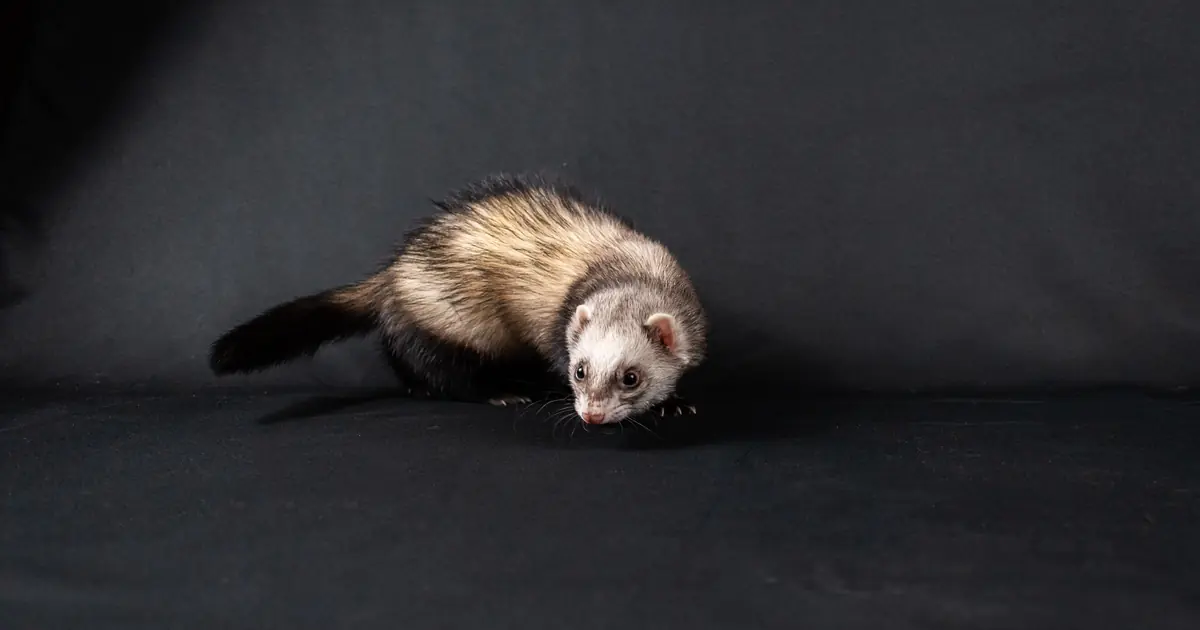
Picture this: you’re thinking about adding a ferret to a cat household, or the other way around, and worst-case scenarios keep looping in your head. A hissing standoff. A ferret bolting under the couch. Your cat treating the new arrival like a chew toy.
Take a breath. Cats and ferrets share a household more often, and more peacefully, than most people expect. Both are small predators that love chasing things, pouncing on things, then napping for twelve hours straight. That overlap is why so many of them end up curled up together instead of at war. The introduction just has to be done right.
- Cats and ferrets are similar in size and both are playful predators, which is the main reason they tend to bond well.
- A cat that’s much bigger than a ferret, or has a strong prey drive, poses the biggest safety risk.
- Ferrets need a rabies vaccine and a specific ferret-approved distemper vaccine (Purevax) before meeting other pets, since standard canine distemper vaccines can make ferrets seriously ill.
- Scent swapping and barrier meetings before any face-to-face contact cut down on fear and aggression during introductions.
- Never leave a cat and ferret alone together until you’ve watched multiple calm, supervised sessions with no aggression.
Do Cats and Ferrets Get Along?
Most of the time, yes. Cats and ferrets can build a real friendship, and plenty of multi-pet households have both species napping in the same sunny spot by the end of the first month. Success comes down to the specific personalities involved, not the species itself. A laid-back cat and a confident ferret often hit it off fast, while a skittish cat or a nippy ferret kit needs more patience.
There’s no guarantee here. Some pairs click almost instantly, others take weeks of supervised meetings, and a small number just never warm up to each other. That’s fine too. Not every cat needs a ferret roommate, and not every ferret needs a cat one.
Why Do Cats and Ferrets Often Bond So Well?
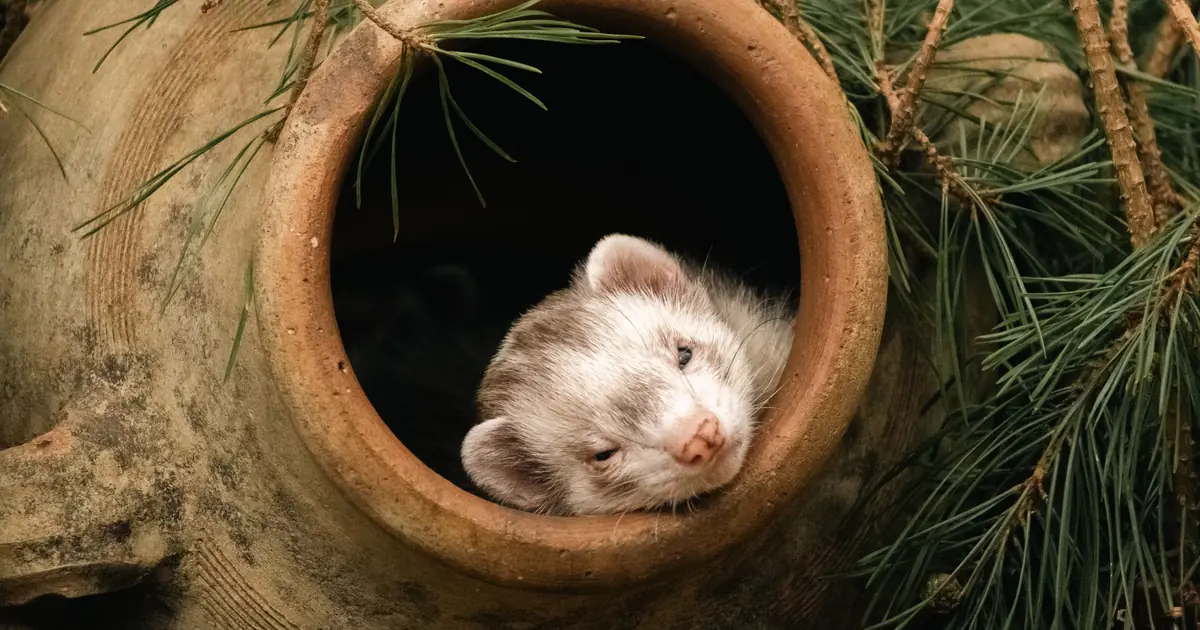
Cats and ferrets bond well because they’re built the same way, behaviorally speaking. Both are natural predators with a strong instinct to stalk, pounce, and wrestle, followed by long stretches of sleep. A ferret typically weighs between 1.5 and 4 pounds, putting a full-grown one in a similar size range to a small or average cat, so neither is automatically the underdog in a play session.
They also share a similar play style. Ferrets “war dance,” a hopping, sideways bounce that cats respond to the same way they respond to a wand toy, with intense interest. A lot of cat-ferret friendships start exactly there, with a game of chase both animals genuinely enjoy.
What Are the Risks of Keeping Cats and Ferrets Together?
The main risks are a size mismatch, rough play that goes too far, and disease or parasite spread if either pet isn’t up to date on preventive care. A large, confident cat can view a small ferret, especially a ferret kit, as something to chase and catch rather than a companion. That’s a real prey-drive risk, not a theoretical one, which is why size and temperament matter more than species here.
Ferrets bring their own risks too. They have sharp teeth and a nipping play style that’s normal toward another ferret but can startle or hurt a cat that isn’t expecting it. Because both are curious explorers, scratches or bites are possible on either side during an overly excited session, even between pets that generally like each other.
- A much bigger or higher-prey-drive cat may stalk or attack a smaller ferret.
- Ferret nipping, which is normal play with other ferrets, can injure a cat unused to it.
- Rough wrestling can escalate quickly if either animal gets overstimulated.
- Unvaccinated or unwormed pets can pass parasites or illness to each other.
- Ferrets can carry human influenza strains, which is a two-way health consideration in a mixed household.
How Do You Introduce a Cat and a Ferret Safely?
You introduce a cat and a ferret safely by going slow: scent first, then a visual barrier, then short supervised sessions. Rushing is the most common reason introductions go badly, so plan on days to a few weeks, not one afternoon.
- Get both pets vet-checked first. Confirm your ferret’s rabies shot and ferret-specific distemper vaccine series are current, and that your cat is up to date on vaccines and parasite prevention.
- Swap scents first. Rub a towel on one pet and place it near the other’s resting area for a few days, then switch, a method International Cat Care recommends for any new pet introduction.
- Add a barrier for the first look. A baby gate or cracked door lets them see and sniff without full contact.
- Keep the first session short. Five to ten minutes, both pets calm, with you right there.
- Give each animal an escape route so neither feels cornered.
- Increase time together gradually, only after several calm sessions in a row.
- Keep food, water, litter, and bedding separate so there’s nothing to guard.
If your household already has another cat, the process is similar to bringing a new cat home to another cat, just adapted for a ferret’s smaller size.
How Can You Tell If the Introduction Is Going Well or Badly?
A good introduction looks like curious sniffing, relaxed body posture, and play that pauses on its own. A bad one looks like stiff bodies, growling, cornering, or one animal repeatedly trying to flee. Reading cat body language correctly during these sessions tells you when to keep going and when to pause.
| Signs It’s Going Well | Signs It’s Going Badly |
|---|---|
| Relaxed tails, soft eyes, loose body posture | Puffed tail, flattened ears, crouched or stiff body |
| Mutual sniffing without flinching | Hissing, growling, or spitting |
| Play that includes breaks and rests | Chasing that doesn’t stop when the other pet retreats |
| Both pets return to the same room voluntarily | One pet consistently hides or won’t come out |
| Gentle batting or nose touches | Biting hard enough to yelp or draw blood |
If you’re seeing more of the right column, slow down. Separate them, go back a step, and give it more time. Some cats show signs of stress in cats like hiding or reduced appetite around a new ferret at first, and that’s normal for the first few days. It should ease up as they get used to each other.
What Are the Non-Negotiable Safety Rules?
The safety rules are simple: never leave them alone together early on, keep both pets current on veterinary care, and feed them separately. Skipping any of these is where most bad outcomes come from.
- No unsupervised time together until you’ve seen multiple calm sessions in a row, and some owners choose never to leave them fully unsupervised at all.
- Keep vaccinations current. Ferrets need annual rabies boosters and the ferret-specific distemper vaccine, not the standard canine one.
- Ferret-proof the space. Ferrets squeeze into tiny gaps and chew on things they shouldn’t, so block off vents, appliance gaps, and small toy parts.
- Feed them separately. Cats need a meat-based, taurine-rich diet, while ferrets need an even higher-protein, higher-fat diet formulated just for them. Neither food substitutes for the other long term.
- Keep litter boxes and bedding apart so neither animal feels the need to guard a resource.
If your cat seems unusually on edge around a new pet, it’s worth reading up on whether cats get jealous of new animals getting attention.
Which Situations Are Higher Risk for Cat-Ferret Introductions?
Higher-risk introductions involve kittens, very small or young ferrets, and cats with a strong hunting drive. A kitten and a ferret kit are both unpredictable and easily overstimulated, which can turn playful chasing into something rougher fast. A large adult cat with a history of hunting small animals outdoors also needs extra caution, since that instinct doesn’t switch off indoors.
A cat that’s already anxious or reactive is a bigger risk factor than most people expect too. If your cat startles easily or has needed help learning how to calm down when scared, add extra time to every stage and keep sessions shorter for longer.
A Quick Safety Note
This article is meant to help you plan a safer introduction, not replace advice from a licensed veterinarian. Talk to your vet before bringing a ferret into a cat household, especially about vaccination timing and any health conditions either pet has. If you see repeated aggression, an injury, or a pet that won’t eat or hide after a meeting, separate them and check in with your vet or a certified animal behaviorist.
Frequently Asked Questions
Q: Do cats and ferrets fight?
Cats and ferrets can fight, especially during a rushed introduction or if there’s a big size difference between them. Most fights happen when one animal feels cornered or when play escalates without a break, which is why supervision and a slow introduction matter so much.
Q: Can a ferret hurt a cat, or a cat hurt a ferret?
Yes, either one can hurt the other. Ferrets have sharp teeth and can nip harder than a cat expects, while a cat’s claws and bite can seriously injure a small ferret, particularly a ferret kit under a pound.
Q: How long does it take for a cat and ferret to get along?
Some pairs warm up in a few days, while others take several weeks of short, supervised sessions. There’s no fixed timeline. The right pace is however long it takes for both animals to stay calm and relaxed during their meetings.
Q: Do ferrets need special vaccines before meeting a cat?
Yes. Ferrets need an annual rabies vaccine and a ferret-specific distemper vaccine called Purevax, since regular canine distemper vaccines can make ferrets seriously ill. Confirm both are current before any introduction.
Q: Can cats and ferrets eat the same food?
No, cats and ferrets should not share food long term. Ferrets need an even higher-protein, higher-fat diet than cats do, and feeding one species the other’s food regularly can lead to nutritional deficiencies over time.
Q: Is it safe to leave a cat and ferret alone together?
Not at first, and many owners never do it at all. Wait until you’ve seen multiple calm, supervised sessions with zero aggression before even considering short unsupervised periods, and always ferret-proof the space first.
Q: Do kittens and ferret kits get along better than adults?
Not necessarily. Kittens and ferret kits are both unpredictable and easily overstimulated, so their play can escalate quickly. A calm adult cat paired with a well-socialized adult ferret is often an easier match than two babies together.

Hello and welcome to The Ideal Cat!
We are some passionate cat owners from different professions. We love our cats and have a lot of experience in how to care for our pets. We are incredibly excited to share our knowledge, experience, and research with you. So you can take good care of your loving cat. We will answer most of the common questions about owning cats, taking care of them, etc. If you have any question contact with us. Thanks for visiting! Enjoy the content.
