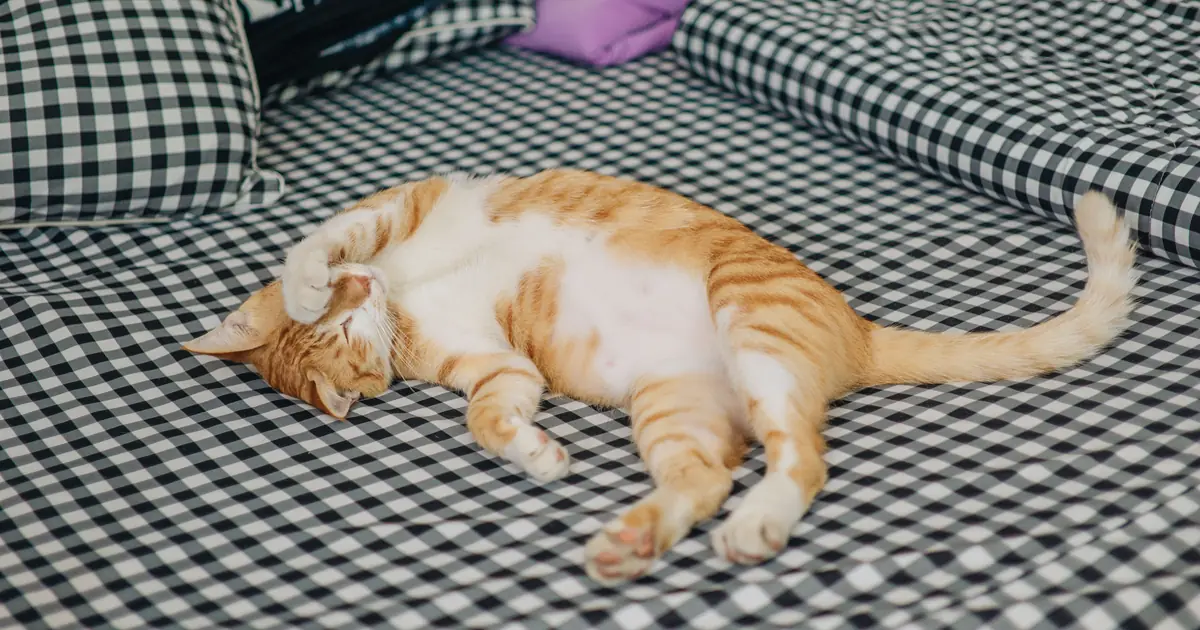
You glance over at the couch and there’s your cat, curled into a tight little loaf with one paw draped right over their eyes and nose. No head poking out, no face in sight. It looks almost theatrical, like they’re hiding from the world on purpose.
In a way, they are. Cats are surprisingly deliberate about how they sleep, and covering the face is one of their favorite tricks for getting comfortable. It’s not weird, and it’s not a red flag. It’s just a cat doing what cats do best: finding the coziest, darkest, safest spot possible and committing to it fully.
- Cats cover their face when they sleep mostly to block light and trap body heat around the nose and ears.
- An adult cat sleeps 12 to 16 hours a day, according to Cornell Feline Health Center, so a lot of face-covering happens during long daytime naps.
- A cat with its face tucked away in a curled sleep position is usually signaling comfort and a feeling of safety, not distress.
- Face-covering is only a concern when it comes with hiding for long stretches, skipping meals, or unusual lethargy.
- Cats seek out warmer spots than humans do, which is why blankets, heating pads, and a paw over the nose all show up together.
Why do cats cover their face when they sleep?
Cats cover their face when they sleep because it dims bright light, insulates the coldest parts of their body, and lets them curl into a smaller, more protected shape. It’s less one single reason and more three good ones working together.
A cat’s eyes are built to gather a lot of light, which is fantastic for hunting at dusk but not so great when a sunbeam is aimed directly at a napping face. Draping a paw or tail over the eyes works like a built-in sleep mask. At the same time, the nose and ears lose heat fast because they have thin skin and very little fur, so tucking them against a paw or the belly keeps a cat’s core temperature from dropping during a long nap. Add in the instinct to curl up small and protected, and you get that classic face-covered loaf position.
Is covering their face really about staying warm?
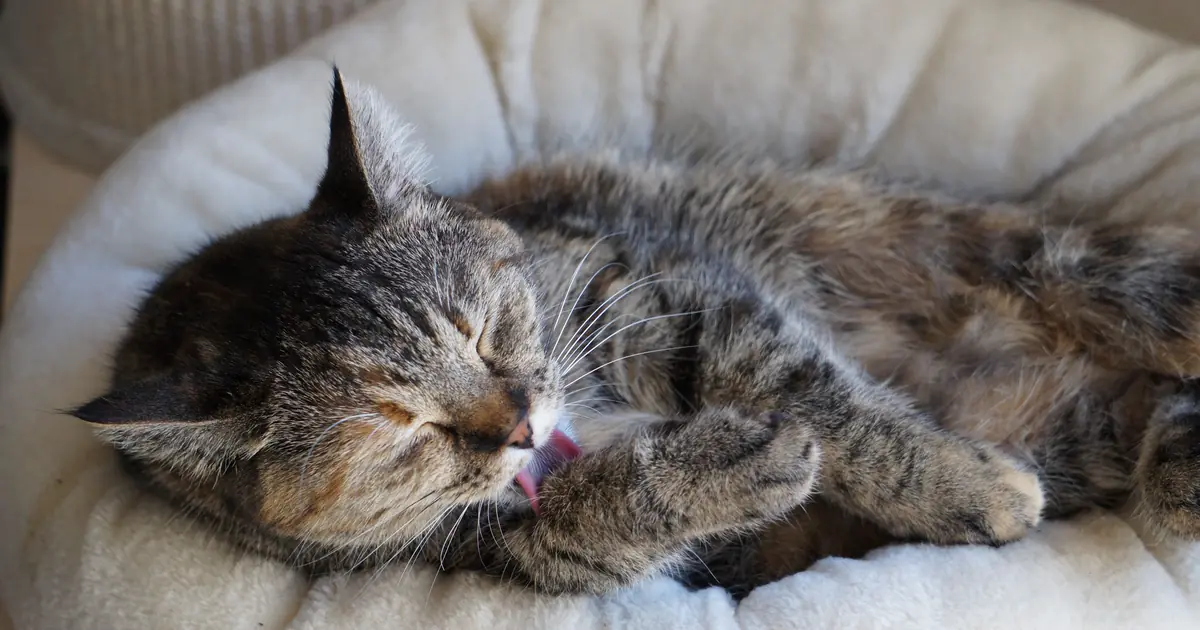
Yes, warmth is one of the biggest drivers of this pose. Cats run warmer than us and seek out toastier spots than most humans would ever choose, which is part of why cats gravitate toward heating pads and sunny windowsills in the first place.
When a cat curls into a ball with its face covered, it’s shrinking its surface area and trapping warm air close to its body, the same reason you curl up under a blanket on a cold night. The nose and ear tips are the first spots to feel a chill, so covering them is an easy way to hang onto body heat during a long sleep cycle. If you’ve ever wondered whether cats get cold the way people do, the short answer is yes, and this sleeping position is one of the clues they give you.
Is my cat hiding its face because it feels safe?
Mostly, yes. A relaxed cat that covers its face is usually telling you it feels secure enough to fully switch off. Cats are both predator and prey in the wild, so total vulnerability, like sleeping with your face exposed and your guard down, only happens when an animal trusts its surroundings.
Covering the eyes and nose blocks out visual stimulation and muffles some sound, which helps a cat drop into deeper sleep. It’s the same instinct behind a cat choosing to nap pressed against you or tucked between your legs. If your cat regularly picks that spot, you might enjoy reading about why cats sleep between your legs, since it comes from the same trust-driven comfort seeking. The same logic explains what it means when your cat picks a specific spot on your bed: location is almost always about feeling protected.
Does face-covering mean my cat is cold or stressed?
Usually not. Most of the time, a cat with a covered face is simply cozy and comfortable, not cold or anxious. This is just a preferred sleep posture, the feline version of pulling a blanket over your head.
But context matters. A cat that only covers its face when the house is chilly, and stops once the room warms up, is telling you it was cold. A cat that hides its face and also flattens its ears, avoids people, or startles easily might be dealing with stress instead of simple sleepiness. The pose itself is neutral. It’s the pattern around it, how often, how long, and what else is going on, that tells you which explanation fits.
Is this the same as a “do not disturb” signal?
Pretty much. Cats don’t cover their faces just to signal you specifically, but the effect is the same: it’s a clear sign they’re in deep rest mode and would rather not be bothered. Waking a cat mid-nap while its face is tucked away can startle it more than waking one that’s sleeping face-out and half-alert.
If your cat tends to burrow its whole head under a blanket rather than just a paw, that’s worth a quick mention too. It looks extreme, but cats can breathe just fine under a thin blanket as long as there’s enough loose fabric and airflow, so it’s rarely a suffocation risk in a normal home setup.
When is face-covering or hiding actually worth watching?
Face-covering during a nap is not a concern on its own. It becomes worth a closer look only when it shows up alongside other changes, like a cat that suddenly withdraws to hide for hours at a time, stops eating, seems unusually tired, or is sleeping far more than its normal pattern. According to the ASPCA, sudden shifts in sleep, appetite, or social behavior can be early signs a cat isn’t feeling well.
Cats are experts at masking pain and illness, so hiding can sometimes be a coping mechanism rather than pure comfort seeking. If your cat’s naps have stretched noticeably longer than usual, it’s worth reading up on why cats sleep so much to see what counts as normal versus a pattern that deserves a vet visit.
This article is educational and not a substitute for veterinary care. If your cat hides constantly, refuses food for more than a day, seems lethargic, or shows other red flags alongside the face-covering, call your vet.
Face-covering causes at a glance
| Reason for covering face | Other signs to expect | Normal or worth watching |
|---|---|---|
| Blocking bright light | Happens in sunbeams or well-lit rooms; cat wakes easily and acts normal after | Normal |
| Staying warm | Curled tight, tail wrapped around body, seeks blankets or heating pads | Normal |
| Feeling secure and relaxed | Deep sleep, loose body, sleeps near you or in an open spot | Normal |
| Stress or overstimulation | Flattened ears, avoiding people, hiding in unusual places | Worth watching |
| Hiding because of illness | Not eating, lethargy, hiding for hours, sleeping far more than usual | See a vet |
How can I make my cat’s sleep spot cozier?
You can make a sleep spot cozier by giving your cat a soft, enclosed bed, control over light and temperature, and a quiet corner away from foot traffic. Cats gravitate toward spots that check all three boxes at once.
- Offer a bed with raised, curved sides so your cat can tuck its face against something soft instead of just a paw.
- Place at least one bed somewhere warm, like near (not touching) a heating vent, a sunny window, or a safe heated pad made for pets.
- Keep a few sleep spots away from bright overhead lights, since dim corners get chosen more often for deep naps.
- Add a light blanket your cat can burrow into, remembering that cats breathe fine under loose fabric.
- Respect the “do not disturb” pose. If your cat’s face is covered and it’s snoring softly, let it sleep.
According to International Cat Care, giving cats choices over where and how they rest, warm versus cool, open versus hidden, supports both their physical comfort and their sense of control over their environment.
Frequently Asked Questions
Q: Why does my cat sleep with its paw over its eyes?
A paw over the eyes blocks light so a cat can sleep more deeply, especially in a bright room. It’s a comfort behavior, and most cats do it during long daytime naps rather than at night when the house is already dark.
Q: Is it bad for my cat to sleep with its face covered?
No, it’s a normal and healthy sleep posture. Cats cover their faces to block light and conserve heat, and it doesn’t restrict their breathing the way it might look like it could.
Q: Why does my cat cover its nose when it sleeps?
A cat’s nose has very little fur and loses heat quickly, so tucking it against a paw, tail, or blanket helps hold onto body warmth. This is especially common in cooler rooms or during the colder months.
Q: Does covering its face mean my cat feels safe?
Yes, in most cases. Fully relaxing into a curled, face-covered position takes a level of trust, since a sleeping cat with its eyes and nose tucked away can’t watch its surroundings. Cats generally only do this in spots where they feel secure.
Q: How much do cats actually sleep?
Adult cats sleep 12 to 16 hours a day on average, according to Cornell Feline Health Center. Kittens and senior cats often sleep even more, which means plenty of chances to catch that classic face-covered pose.
Q: Should I wake my cat up if its face is covered?
There’s no need to, unless it’s time for a meal or a scheduled activity. A covered face usually signals deep, restful sleep, and waking a cat abruptly from this state can startle it more than waking one sleeping lightly.
Q: Can face-covering be a sign my cat is sick?
On its own, no. But if your cat is hiding its face and also skipping meals, avoiding people for hours, or seeming unusually tired, that combination is worth a vet visit rather than the sleep position alone.
Q: Why does my cat sleep under a blanket instead of just covering its face?
Some cats prefer full blanket burrows for even more warmth and darkness than a paw provides. Cats can breathe comfortably under a loose blanket, so this is generally just a cozier version of the same light-blocking, heat-saving instinct.

Hello and welcome to The Ideal Cat!
We are some passionate cat owners from different professions. We love our cats and have a lot of experience in how to care for our pets. We are incredibly excited to share our knowledge, experience, and research with you. So you can take good care of your loving cat. We will answer most of the common questions about owning cats, taking care of them, etc. If you have any question contact with us. Thanks for visiting! Enjoy the content.
