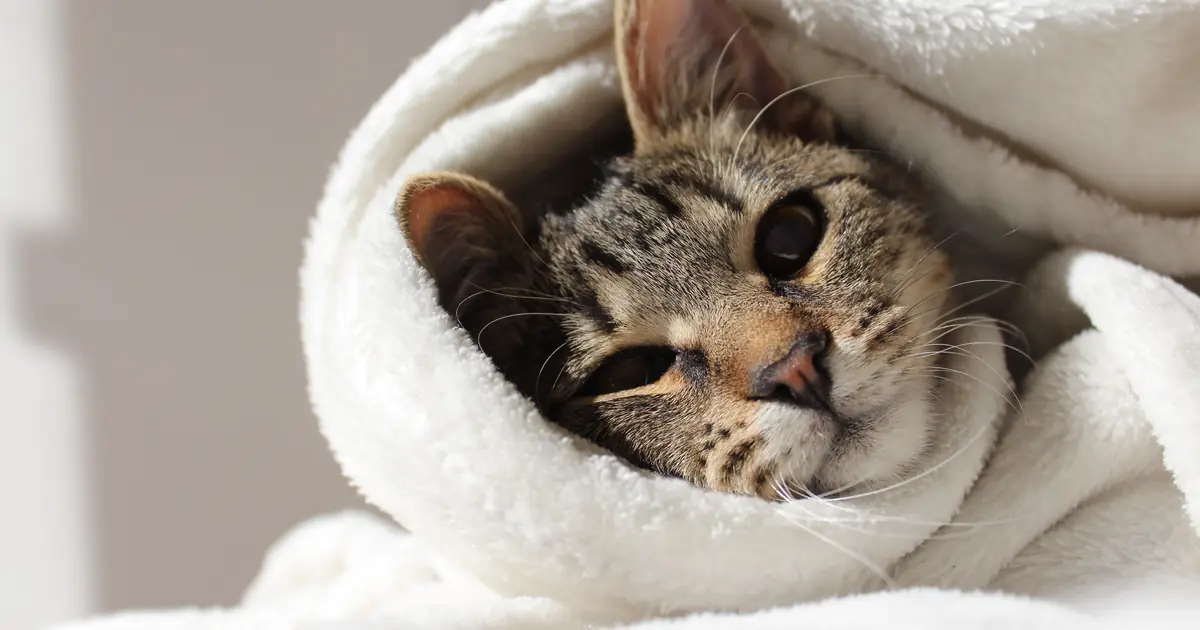
Picture this: it’s a chilly evening, you’re wrapped in a blanket on the couch, and your cat is doing everything possible to become part of your lap. Coincidence? Not really. If you’ve ever wondered whether your cat feels the cold the way you do, or whether that fur coat makes them basically immune to it, you’re not alone.
So, do cats get cold? Yes, they absolutely do. Cats run warmer than people, and their coats help, but insulated isn’t the same as immune. Your cat can feel chilly, seek out warm spots, and in bad enough conditions, get dangerously cold. Here’s what’s really going on under all that fur.
- A cat’s normal body temperature runs 100.5 to 102.5 F, warmer than a human’s average of 98.6 F.
- Vets generally advise keeping cats indoors once outdoor temperatures drop below 45 F for extended periods.
- Kittens, senior cats, thin or sick cats, and short-haired or hairless breeds like the Sphynx get cold faster than a healthy adult cat.
- Shivering, cold ears and paws, curling into a tight ball, and seeking heat sources are early signs your cat is cold.
- Hypothermia (a body temperature under 100 F) is a medical emergency that needs immediate veterinary care.
Do cats actually feel cold?
Yes. Cats feel cold the same basic way you do, though their bodies handle it a little better than ours. A cat’s fur traps a layer of warm air close to the skin, and their normal body temperature sits around 100.5 to 102.5 F, a couple degrees warmer than yours. That combination buys them some comfort in cool rooms and mild weather.
But warmer-than-you isn’t cold-proof. Once the temperature drops far enough, or your cat gets wet, or they’re outside longer than their coat can handle, that natural insulation stops being enough. That’s why you’ll catch your cat chasing every sunbeam across the floor or parked against a heating vent the second it gets chilly. They’re not being dramatic. They’re regulating.
What temperature is too cold for a cat?
Most vets point to roughly 45 F as the line where cats start to struggle if they’re outside for any real length of time. Below that, and especially under freezing (32 F), the risk of hypothermia and frostbite climbs fast, particularly on exposed skin like the ears, paws, and tail tip.
A quick dip into the low 40s overnight, with a warmer day on either side, usually isn’t a big deal for a healthy adult cat with a full coat. What matters more is how long your cat is exposed and whether they can get somewhere warm and dry. Indoor cats have it easier since you control the thermostat, but drafty rooms, cold floors, and unheated porches or garages can still chill a cat with nowhere else to go.
Which cats get cold the fastest?
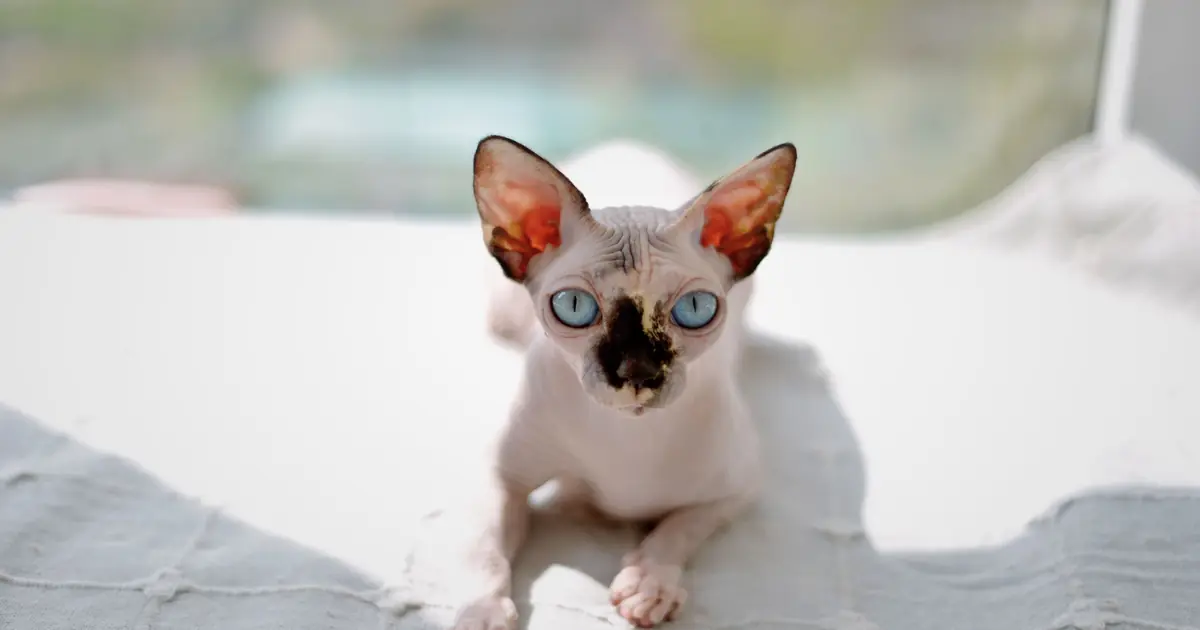
Some cats feel the cold much sooner than others, and it comes down to age, body condition, coat, and health.
- Kittens, whose small bodies lose heat fast and can’t self-regulate yet
- Senior cats, with less muscle and body fat plus slower circulation
- Thin or underweight cats, missing the fat layer that holds in warmth
- Sick or recovering cats, whose bodies are already working overtime
- Short-haired and hairless breeds, like the Sphynx, Devon Rex, or Cornish Rex
- Wet cats, since wet fur loses its insulating air layer almost instantly
If your cat falls into any of these groups, treat “a little chilly” as more urgent than you would for a healthy, full-coated adult. A Sphynx in a 60 F room can feel about as cold as a longhaired cat in a 45 F room, which is exactly why hairless breeds tend to gravitate toward heating pads.
What are the signs a cat is cold?
A cold cat usually tells you before things get serious. Watch for shivering, cold ears, paws, or tail, and a cat who curls into a tight ball with their tail wrapped around their body to conserve heat. You might also notice them chasing heat sources more than usual, whether that’s a windowsill, a radiator, or your lap.
A mildly cold cat is uncomfortable, not in danger. Curling up tighter and hunting down warm spots are normal cold-weather behaviors. The concern starts when those signs escalate.
Signs a cat is too cold or heading toward hypothermia
- Persistent, uncontrollable shivering
- Ears, paws, and tail that feel noticeably cold to the touch
- Lethargy or unusual sluggishness
- Weakness, stumbling, or trouble walking normally
- Confusion or slow responses
- Very cold skin, pale or bluish gums, or a body that feels cold all over
Those last few are red flags. A body temperature under 100 F counts as hypothermia in a cat, and it’s a genuine emergency, not a wait-and-see situation. If your cat is that cold and unresponsive or extremely weak, wrap them in warm, dry towels and get to a vet right away. Skip hot water bottles or heating pads unless a vet walks you through it, since warming a cat too fast can cause problems of its own.
How do you keep a cat warm in cold weather?
Give your cat warm, draft-free places to sleep, bring them indoors once it’s genuinely cold out, and watch the higher-risk cats a little closer. None of this needs to be complicated.
- Bring outdoor and indoor-outdoor cats inside once temperatures drop toward or below 45 F, especially overnight.
- Offer a warm, cozy bed away from drafts and off cold floors, like a warm, cozy cat bed with raised sides or a hooded design.
- Add extra blankets to favorite napping spots. Most cats know exactly how to breathe comfortably snuggled under covers, so don’t worry about one over a sleeping cat.
- Use safe supplemental heat for kittens, seniors, or thin cats, like a vet-approved heating pad on low with an escape route.
- Dry off wet cats immediately, since wet fur loses its insulating power fast.
- Build a simple outdoor shelter for community cats, using insulated materials and straw (not blankets, which freeze and hold moisture).
- Let your cat close to you. Cats often climb onto your chest purely to borrow body heat, part of why cats love laying on your chest once temperatures drop.
The International Cat Care charity notes that cats are naturally drawn to warmth and actively seek out heat sources, which tracks with every cat owner’s experience of a pet parked on the one warm laptop in the room.
Cold tolerance by coat type and age
| Cat type | Cold tolerance | What to watch for |
|---|---|---|
| Healthy adult, thick or double coat (Maine Coon, Norwegian Forest Cat) | Higher | Can handle brief cool exposure, still needs shelter below 45 F |
| Healthy adult, short coat | Moderate | Gets cold faster than a longhaired cat in the same conditions |
| Hairless breeds (Sphynx, Peterbald) | Low | Feels cold even indoors below about 70 F; needs sweaters or extra warmth |
| Kittens | Very low | Can’t regulate body temperature well until several weeks old |
| Senior cats | Low | Slower circulation, less muscle mass to generate heat |
| Thin, sick, or recovering cats | Low | Little to no fat insulation, body already under stress |
This article is educational and isn’t a substitute for veterinary care. If you’re ever unsure whether your cat is dealing with mild chilliness or something more serious, a quick call to your vet is always the safer move. The Cornell Feline Health Center and the ASPCA are both solid places to check symptoms or find a vet near you.
Frequently Asked Questions
Q: Do cats get cold at night?
Yes, especially in unheated rooms or once the temperature drops after dark. That’s part of why so many cats burrow under blankets or curl up next to their favorite person overnight.
Q: What temperature is too cold for indoor cats?
Most healthy indoor cats are comfortable between about 68 and 78 F. Once a home dips into the low 60s or below, thin-coated, senior, or hairless cats may start feeling cold even though the house still feels fine to you.
Q: Can indoor cats get hypothermia?
Yes, though it’s rare. It usually happens in drafty homes, unheated rooms, or if a cat gets wet and can’t warm back up, and it’s more likely in kittens, seniors, or cats with an underlying illness.
Q: Do short-haired cats get cold faster than long-haired cats?
Yes. A thinner coat holds in less warm air, so short-haired and hairless breeds like the Sphynx typically feel cold sooner than a longhaired breed such as a Maine Coon in the same conditions.
Q: How can I tell if my cat is shivering from cold or something else?
Cold-related shivering usually comes with cold ears and paws and eases once your cat warms up in a cozy spot. Shivering in a warm room, or shivering paired with lethargy or lost appetite, is worth a vet visit.
Q: Is it safe to leave an outdoor cat outside in winter?
Vets generally recommend bringing cats indoors once temperatures drop below 45 F for extended periods, and definitely before it hits freezing. A community cat you can’t bring inside needs an insulated shelter with straw bedding.
Q: What’s the normal body temperature for a cat?
A healthy cat’s normal body temperature runs from about 100.5 to 102.5 F. Below 100 F signals hypothermia, and above 102.5 F can mean a fever.
Q: Do kittens get cold faster than adult cats?
Yes, significantly. Kittens can’t fully regulate their own body temperature until they’re a few weeks old, so they can become dangerously cold much faster than an adult cat.

Hello and welcome to The Ideal Cat!
We are some passionate cat owners from different professions. We love our cats and have a lot of experience in how to care for our pets. We are incredibly excited to share our knowledge, experience, and research with you. So you can take good care of your loving cat. We will answer most of the common questions about owning cats, taking care of them, etc. If you have any question contact with us. Thanks for visiting! Enjoy the content.
