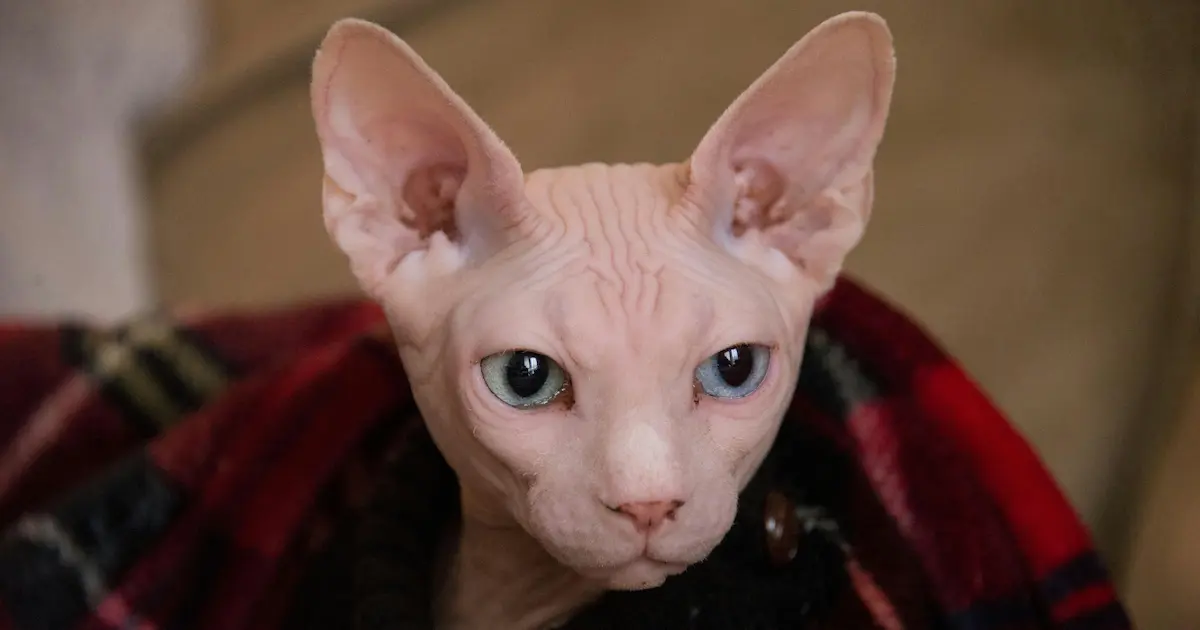
Picture this. You reach out to pet what you assume is a soft, furry cat, and instead your hand lands on warm, suede-like skin that feels almost like a peach. That’s a Peterbald. And the surprise doesn’t stop at the texture.
This is the cat that follows you to the bathroom, waits outside the shower, and chirps at you until you sit down so it can climb into your lap. If you’ve ever wanted a cat that acts a bit like a small, clingy dog, you’re in the right place.
But here’s the thing. Owning a Peterbald is genuinely different from owning a fluffy tabby, and a lot of guides skip the parts that actually matter. We’re not going to do that. Let’s talk about what life with this hairless beauty really looks like.
| Origin | Russia, 20th century (1994) |
| Weight (Male) | 8 to 12 lbs |
| Weight (Female) | 5 to 8 lbs |
| Lifespan | 10 to 15 years |
| Coat | Hairless to short; five types from bald to straight |
| Colors | All colors and patterns |
| Energy Level | High |
| Grooming Needs | High (skin care, not fur care) |
| Good With Kids | Yes, with gentle handling |
| Good With Other Pets | Yes |
| Average Price | $1,700 to $3,000 from breeders |
Where the Peterbald Came From
The Peterbald is a young breed with a clear birthday. In 1994, a Russian felinologist named Olga Mironova decided to mix two of her favorite cats in St. Petersburg.
She crossed a Donskoy (a hairless Russian breed, sometimes called the Don Sphynx) with an elegant Oriental Shorthair. The goal was simple: get the Donskoy’s hairless gene on top of the Oriental’s long, graceful body and chatty personality.
The first two litters gave her four kittens. Those four became the foundation of the entire breed. The name is a sweet little pun, “Peter” for St. Petersburg and “bald” for the obvious reason.
Recognition came fast for such a new cat. The International Cat Association welcomed the Peterbald in the late 1990s, the World Cat Federation followed in 2003, and FIFe in Europe recognized it in 2012. It’s still a rare breed outside Russia, which is part of why prices stay high.
What a Peterbald Actually Looks Like
If you’ve seen an Oriental Shorthair, you already know the body shape. Long, lean, and a little leggy, with a tail like a whip and ears that look almost too big for the head.
The face is a narrow wedge with a straight profile and almond eyes that give the cat a curious, alert expression. People often say Peterbalds look a bit like little aliens, and honestly, that’s part of the charm.
Now for the fun detail almost nobody mentions. Peterbalds have long front toes with a touch of webbing between them. This gives them surprising dexterity. Your cat can grip toys, pick things up, and yes, sometimes figure out how to paw open a lever-style door handle. Keep that in mind before you assume any room is off limits.
Kittens and adults can look quite different, mostly because of the coat. And that brings us to the part you really need to understand before you buy.
The Five Coat Types, Explained (and Why Your Kitten May Change)
Here’s the thing most breed pages gloss over. “Hairless” is not one single look on a Peterbald. There are five distinct coat types, and your kitten’s coat can actually shift during its first two years of life.
Let’s break them down from least hair to most:
- Bald: Completely hairless. The skin feels warm and slightly sticky, almost rubbery. Ultra-bald cats may have no whiskers or eyebrows at all.
- Flock: About 90 percent hairless, covered in an invisible fuzz so fine it feels like a soft peach.
- Velour: Roughly 70 percent hairless, with a slightly thicker, suede-like coat you can actually see in good light.
- Brush: A wiry, sparse, sometimes kinked coat. Brush-coat Peterbalds keep their hair and won’t go bald.
- Straight: A normal short coat with full whiskers. These cats look almost like a regular Oriental and don’t carry the hair-losing trait.
Why does this matter so much? Because a kitten born with a flock or velour coat can slowly lose that hair as it grows. The fuzzy baby you fall in love with at eight weeks might be nearly bald by age two. A good breeder will explain exactly what your kitten’s coat is likely to do, but no one can promise with total certainty.
So if you have your heart set on a specific look, ask the breeder direct questions and understand you’re working with probabilities, not guarantees.
Peterbald vs Sphynx vs Donskoy: Telling Them Apart
People lump all hairless cats together, and that’s an easy mistake. But these three breeds are genuinely different, and knowing which is which will save you confusion (and possibly money) when you’re shopping.
The Sphynx is the famous one. It’s the chunkier, more rounded hairless cat with a barrel chest, and its hairlessness comes from a recessive gene. Think pot-bellied gremlin energy.
The Donskoy (or Don Sphynx) is also Russian and also hairless, but its baldness comes from a dominant gene. It has a sturdier, more cobby body than the Peterbald.
The Peterbald took that Donskoy hairless gene and paired it with the slim, elegant Oriental body. So the easiest tell is the silhouette. If the cat is long, slinky, leggy, and has a wedge head with huge ears, you’re probably looking at a Peterbald. If it’s stockier and rounder, lean toward Sphynx or Donskoy.
What Living With a Peterbald Is Really Like
This is the heart of it. A Peterbald is not a decorative cat that ignores you from the top of the fridge. It’s a full-on companion that wants to be part of everything you do.
They follow you room to room. They greet you at the door. They crawl under the covers at night and sleep pressed against you, partly because they love you and partly because you’re warm. Owners often describe them as more like a dog than a cat, and that’s fair.
They’re smart, too. Many Peterbalds learn to play fetch, respond to their name, and figure out puzzle toys quickly. That intelligence is wonderful, but it also means a bored Peterbald will invent its own entertainment, usually involving your stuff.
And they talk. A lot. Like their Oriental cousins, Peterbalds are vocal and opinionated. If you want a silent cat, this isn’t your breed. If you want a cat that “answers” when you speak to it, you’ll adore this trait.
Is a Peterbald Right for You?
Let’s be honest, because this is where a lot of guides go soft. A Peterbald is a fantastic cat for the right home and a frustrating one for the wrong home.
A Peterbald is a great fit if you:
- Are home a lot, or have other pets to keep your cat company
- Want an affectionate, interactive, almost dog-like companion
- Don’t mind a chatty cat with opinions
- Are willing to handle weekly baths and skin care
- Keep your home reliably warm
A Peterbald is probably not for you if you:
- Work long hours away from home and can’t provide a companion
- Want a low-maintenance, independent cat
- Prefer a quiet pet
- Live somewhere cold and drafty without good heating
- Aren’t ready for the ongoing grooming and warmth costs
The biggest dealbreaker is loneliness. These cats bond hard and can get stressed or anxious when left alone for long stretches. If your house is empty ten hours a day, this is not a kind choice unless you get a second pet.
Health Issues to Know About
The good news is that Peterbalds benefit from a mixed background, so they tend to be reasonably healthy. The honest news is that the breed is so new that long-term health data is still thin. Here’s what to actually watch for.
Feline ectodermal dysplasia. This is the big one, and it’s worth understanding in plain English. The same gene that makes a Peterbald hairless can affect other things that form from the same layer of skin during development: teeth, nails, and the glands that should produce milk. In practice, this can mean missing or malformed teeth and, in breeding females, trouble nursing kittens. A responsible breeder screens for this and can talk you through it.
Skin and sun damage. No fur means no built-in sunscreen. Peterbalds sunburn easily and have a higher risk of skin issues from too much exposure. A sunny windowsill is fine in moderation, but they shouldn’t bake in direct sun.
Dental issues. Tied partly to that ectodermal dysplasia link, dental health deserves real attention. Brush their teeth regularly and keep up with vet dental checks.
Temperature sensitivity. A hairless cat gets cold fast. This isn’t a disease, but a chilly cat is an unhappy and potentially sick cat, so warmth is a genuine health need, not a cute accessory.
Get to know a vet you trust, keep up with wellness visits, and ask any breeder for health records on the parent cats.
The Daily Care Reality
People assume a hairless cat means zero grooming. It’s actually the opposite. You’re trading fur care for skin care, and skin care is more hands-on.
Normal cat fur soaks up the oils the skin produces. A bald Peterbald has nowhere for those oils to go, so they build up on the skin and can leave a slightly greasy film, brownish marks on bedding, and a faint odor. The fix is regular bathing, usually about once a week, with a gentle cat shampoo.
Between baths, a quick wipe-down with a damp cloth keeps things fresh. Those big ears collect oil and wax too, so add gentle ear cleaning to the routine. And in winter or air-conditioned summers, your cat will genuinely appreciate sweaters and warm bedding.
One product that earns its place in a Peterbald home is a heated cat bed, which gives your cat a warm retreat without you cranking the thermostat for the whole house.
Feeding and Diet
Here’s a quirk you’ll notice fast: Peterbalds eat well. Without fur to insulate them, they burn extra calories just staying warm, so they often have hearty appetites and a fast metabolism.
Aim for a high-quality, protein-rich diet, and split meals into a few smaller portions through the day rather than one big bowl. Cats are carnivores at heart, so look for food where real meat leads the ingredient list.
Keep an eye on body condition. A working metabolism doesn’t mean you can free-feed forever, and extra weight is hard on any cat. When in doubt, your vet can help you set portions for your specific cat.
Exercise and Enrichment
This is a high-energy, high-IQ cat, and it needs an outlet. A bored Peterbald is a destructive Peterbald.
Give them a tall cat tree to climb, a rotation of puzzle feeders, and plenty of interactive toys. Wand toys and fetch games are huge wins because they combine movement with the togetherness these cats crave.
Set aside real play sessions every day. Ten or fifteen focused minutes a couple of times a day does wonders for their mood and keeps that clever brain busy.
Living With Kids, Dogs, and Other Cats
Socially, the Peterbald is close to a dream cat. They’re friendly with kids, easygoing with dogs, and usually happy to share a home with other cats.
The one caution is gentleness. A hairless cat has no fur cushion, so rough handling hurts more and their thin skin is easier to scratch or bruise. Teach children to be calm and careful, and supervise play with bigger or boisterous dogs.
Because they hate being alone, a second compatible pet is often a gift, not a hassle. Many Peterbald owners say their cat is happiest with a playmate around when the humans are out.
Are Peterbalds Hypoallergenic?
Short answer: not really, and this myth catches a lot of buyers off guard.
Cat allergies are usually triggered by a protein called Fel d 1, which lives in saliva and skin oils, not in the fur itself. A hairless cat still produces it. In fact, with all that exposed, oily skin, some allergy sufferers react more, not less.
If you’re allergic and hoping a Peterbald is your loophole, do this first: spend real time around one before you commit. Many breeders will let you visit precisely so you can test your reaction in person. Don’t guess based on the hairless label.
Lifespan and Aging Tips
A well-cared-for Peterbald typically lives 10 to 15 years. To get the most of that, the priorities shift a little as they age.
Stay on top of dental health, since teeth are a known weak spot. Keep older cats warm, because aging bodies hold heat even worse than young ones. And don’t skip senior vet checks, where things like kidney and heart health get monitored as they would for any aging cat.
The payoff for all this attention is a devoted companion who’ll spend more than a decade treating you like the center of its universe.
How Much Does a Peterbald Cost?
Let’s talk real numbers, because the sticker price is only the beginning.
A Peterbald kitten from a reputable breeder usually runs $1,700 to $3,000, and show-quality or rare-colored kittens can climb toward $4,000 or more. They’re rare, often imported, and expensive to breed responsibly, which keeps prices firm.
Now for the part competitors leave out. The ongoing “hairless tax” adds up:
- Gentle cat shampoo and skin wipes for weekly bathing
- Sweaters, blankets, and a heated bed
- Slightly higher heating bills to keep your home warm
- Pet-safe sunscreen if your cat goes near windows or outdoors
- Quality high-protein food for that fast metabolism
- Routine vet care, with extra attention to teeth
Plan for somewhere around $100 to $200 a month in typical care, more if a health issue pops up. The Peterbald isn’t a budget cat, before or after you bring it home.
Where to Find a Peterbald Ethically
Because Peterbalds are rare and pricey, this breed attracts exactly the kind of careless breeders you want to avoid. So shop slowly and ask hard questions.
Green flags in a breeder: they health-screen parent cats, they’re honest about coat-type uncertainty, they let you visit, they raise kittens underfoot in the home, and they ask you plenty of questions in return.
Red flags: multiple litters always available, no health records, no questions about your home, pressure to pay fast, or shipping a kitten sight unseen with no vet guarantee.
And yes, rescue is possible. It’s worth knowing that even rare, expensive breeds end up needing homes. There have been real cases of Peterbalds being abandoned in groups and turning up sick in shelters, which is a sobering reminder that “expensive” doesn’t mean “always well cared for.” Check breed-specific rescues and shelters, where adoption fees tend to run lower than breeder prices.
Similar Breeds to Consider
- Sphynx: The classic hairless cat, a little stockier and just as affectionate.
- Donskoy: The Russian cousin that gave the Peterbald its hairless gene, sturdier in build.
- Oriental Shorthair: The Peterbald’s elegant, fully-furred parent breed, equally chatty.
- Cornish Rex: Not hairless, but a fine, low-shedding wavy coat and a similar playful streak.
- Siamese: If it’s the vocal, people-loving personality you want without the skin care.
Common Myths and Misconceptions
Myth: Hairless cats are dirty. They’re not, they just need help managing skin oils. A clean, well-bathed Peterbald is no dirtier than any other cat.
Myth: Peterbalds don’t need grooming. Wrong direction entirely. They need more hands-on care than a furry cat, just a different kind.
Myth: They’re cold and unfriendly because they look unusual. The opposite is true. Peterbalds are among the most loving, people-focused cats out there.
Myth: All hairless cats are the same. Sphynx, Donskoy, and Peterbald are three separate breeds with different genes and body shapes.
FAQ
Q: Are Peterbald cats truly hairless?
Not always. The breed has five coat types ranging from completely bald to a normal short straight coat. Many are partly furred with a fine fuzz, and a kitten’s coat can change during its first two years.
Q: Do Peterbald cats get cold?
Yes, easily. With little or no fur, they lose body heat fast and seek out warm spots and laps. Keep your home warm and provide sweaters, blankets, or a heated bed, especially in winter.
Q: How much does a Peterbald cat cost?
A kitten from a reputable breeder usually costs $1,700 to $3,000, and rare or show-quality kittens can reach $4,000 or more. Budget another $100 to $200 a month for ongoing care.
Q: Are Peterbald cats hypoallergenic?
No. The Fel d 1 protein that triggers allergies comes from saliva and skin oils, not fur, so a hairless cat still produces it. Spend time around one before buying if you have allergies.
Q: Do Peterbald cats need baths?
Yes, usually about once a week. Without fur to absorb skin oils, those oils build up and can cause irritation or odor. A gentle cat shampoo and regular wipe-downs keep their skin healthy.
Q: Are Peterbalds good with kids and dogs?
Very much so. They’re social and friendly with children, dogs, and other cats. The main rule is gentle handling, since their bare skin bruises and scratches more easily than a furry cat’s.
Q: How long do Peterbald cats live?
Typically 10 to 15 years with good care. Staying on top of dental health, keeping them warm, and regular vet visits all help them reach the upper end of that range.
Q: Can a Peterbald be left alone all day?
Not comfortably. They bond strongly and can become anxious when alone for long periods. If you’re out for long hours, a second compatible pet makes a big difference to their happiness.
Final Verdict: Should You Get a Peterbald?
The Peterbald is a remarkable cat, and not for everyone. If you want a quiet, independent pet that grooms itself and asks for little, keep looking. This cat will out-talk you, out-cuddle you, and turn the thermostat into a daily negotiation.
But if you want a warm little shadow who genuinely wants to be near you, who learns tricks, greets you at the door, and treats you like its whole world, the Peterbald is hard to beat. Just go in clear-eyed about the baths, the sweaters, and the price tag.
Give a Peterbald the attention, warmth, and care it needs, and you’ll have one of the most devoted companions in the entire cat world for years to come.

Hello and welcome to The Ideal Cat!
We are some passionate cat owners from different professions. We love our cats and have a lot of experience in how to care for our pets. We are incredibly excited to share our knowledge, experience, and research with you. So you can take good care of your loving cat. We will answer most of the common questions about owning cats, taking care of them, etc. If you have any question contact with us. Thanks for visiting! Enjoy the content.
