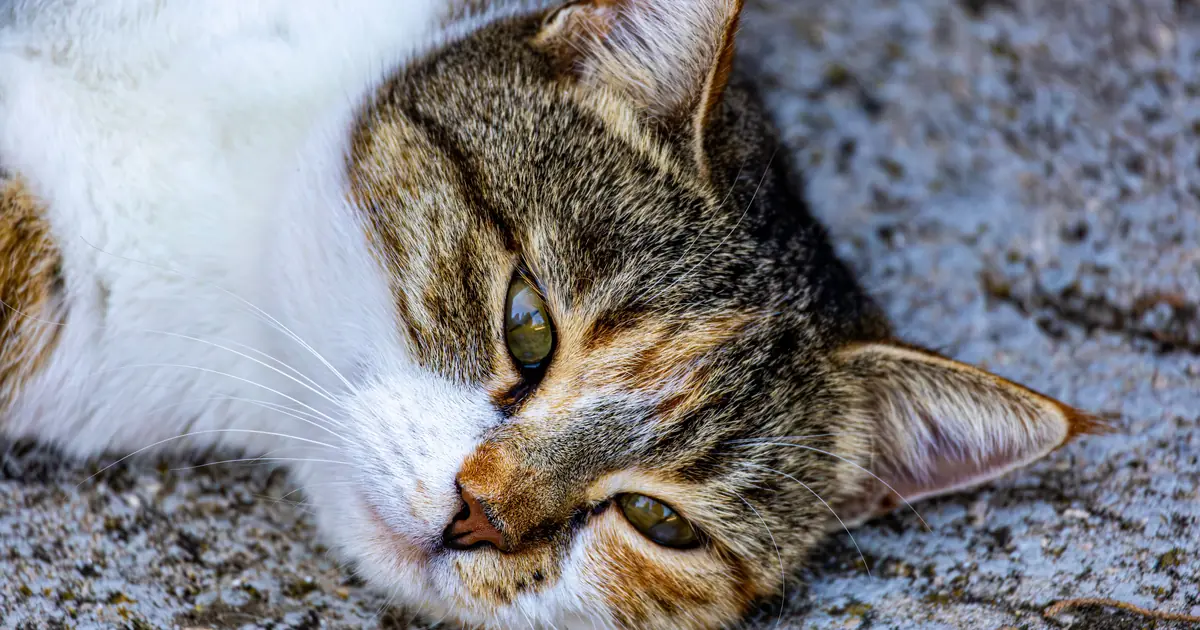
You’re on the couch, your cat is across the room, and you catch them looking at you. Then it happens: that slow, sleepy, half-closed-eyes blink. If you’ve ever wondered what it means when a cat slow blinks at you, here’s the short version. Your cat just told you they trust you. People call it the “cat kiss,” and there’s real science behind it.
- A cat slow blink is a soft, gradual closing and opening of the eyes that signals trust, calm, and affection.
- The slow blink is nicknamed the “cat kiss” because cats only do it around people and animals they feel safe with.
- A 2020 University of Sussex study published in Scientific Reports found cats are more likely to slow blink back at humans who slow blink first.
- You can answer a cat’s slow blink by softening your eyes and slowly closing them halfway, then gently reopening them.
- A constant squint, a held-shut eye, redness, or eye discharge is not a slow blink and needs a vet, since it can signal eye pain.
What does it mean when a cat slow blinks at you?
When a cat slow blinks at you, it means your cat feels relaxed and safe enough to lower their guard around you. The slow blink is a friendly, affectionate signal, not a sign of sleepiness or boredom. Cats are naturally watchful animals, so closing their eyes near you is a small act of trust.
Think about it from your cat’s point of view. In the wild, shutting your eyes means you can’t watch for danger. So a cat who slowly closes their eyes near you is saying, “I don’t need to keep an eye on you. You’re safe.” That’s why behaviorists often describe the slow blink as one of the clearest “I’m comfortable with you” signals a cat can give.
Cats slow blink at other friendly cats too. Among cats, soft, narrowed eyes mean “no threat here,” while a hard, unblinking stare is closer to a challenge. When your cat aims that soft blink at you, they’re treating you like a trusted member of their group.
Why is the cat slow blink called a “cat kiss”?
The cat slow blink is called a “cat kiss” because it’s an intimate gesture cats save for their favorite people and animals. A cat kiss is the slow blink given as a deliberate sign of affection, the feline version of a warm smile or a gentle hug. It’s one of the most reliable ways your cat shows love without making a sound.
Here’s the sweet part. You can kiss back. When you slow blink in return, many cats will hold the moment, blink again, or relax even more. You’re having a tiny, wordless conversation built entirely on trust.
What does it mean when a cat slow blinks at you, according to science?
Yes, there’s solid science behind cat slow blinking. A 2020 study from the University of Sussex and the University of Portsmouth, published in the journal Scientific Reports, showed that slow blinking is a real form of cat-to-human communication. The research team included Dr Tasmin Humphrey and Professor Karen McComb.
The study ran two experiments. In the first, 21 cats from 14 households took part while their owners slow blinked at them. Cats were more likely to slow blink back at an owner who had just slow blinked at them than when the owner sat nearby with a neutral face.
The second experiment used 24 cats and an unfamiliar person, not the owner. Cats were more likely to slow blink back at a stranger who slow blinked at them. Even better, the cats were more willing to approach that stranger’s outstretched hand after the slow blink than after a neutral expression.
The takeaway from the Sussex research is simple and powerful: slow blinking isn’t just something cats do at us, it’s something we can do back to build rapport, even with a cat we’ve never met.
Slow blink vs stare vs squint: how to tell them apart
A slow blink, a hard stare, and a painful squint look similar for a second but mean very different things. A slow blink is soft and relaxed, a stare is tense and fixed, and a constant squint can be a sign of eye pain. Reading the rest of your cat’s face and body tells you which one you’re seeing.
| Eye signal | What it looks like | What it usually means |
|---|---|---|
| Slow blink (“cat kiss”) | Eyes soften, half-close slowly, then gently reopen; relaxed face and body | Trust, calm, affection |
| Hard stare | Wide, fixed, unblinking eyes; tense body, maybe a flicking tail | Alertness, tension, or a challenge |
| Constant squint (one or both eyes) | An eye held partly or fully shut, pawing at it, redness or discharge | Possible eye pain or irritation, see a vet |
| Quick playful half-blink | A brief, soft blink during play or while relaxed | Comfort, friendliness |
The easy rule: a slow blink comes with a loose, comfortable body. If your cat is tense, frozen, or holding one eye shut, that’s a different message.
How do you slow blink back at your cat?
You slow blink back at your cat by relaxing your face, narrowing your eyes, and closing them slowly, then opening them again, just like your cat did. The key is to keep it gentle and unhurried, never a wide, fixed stare. Here’s the step-by-step.
- Catch a calm moment. Wait until your cat is relaxed and looking your way, not eating, playing hard, or hiding.
- Soften your gaze. Let your eyes go relaxed and a little droopy, the way they feel when you’re sleepy.
- Close your eyes slowly. Lower your eyelids gradually, almost like a slow-motion blink. Don’t snap them shut.
- Hold for a beat. Keep your eyes closed or half-closed for about one second.
- Open gently. Reopen your eyes slowly and keep your face soft and friendly.
- Wait and watch. Give your cat a few seconds to answer with a slow blink, a head turn, or a relaxed look. Don’t force a reaction.
If your cat blinks back, you nailed it. If they don’t, that’s okay too. Try again another time when they’re feeling settled.
Should you slow blink first, or wait for your cat?
You can absolutely slow blink first. The Sussex research found that humans who slow blinked at cats, including cats they didn’t know, were more likely to get a slow blink in return and were approached more readily. So starting the “conversation” yourself is a friendly, low-pressure way to connect.
Slow blinking first is especially handy with a shy, nervous, or new cat. A soft slow blink tells a wary cat you mean no harm, which can help them relax around you. Just pair it with calm body language: no looming, no sudden moves, no direct cornering.
Why does my cat slow blink but not want to be touched?
A cat can slow blink at you and still not want to be petted, and that’s completely normal. A slow blink means “I trust you and I’m comfortable,” not “please touch me right now.” Trust and a desire for hands-on contact are two separate things in cat language.
Plenty of cats prefer to show love from a comfortable distance. Your cat may slow blink across the room, enjoy your company nearby, and still pass on a cuddle. That’s not rejection. Respecting the gap actually deepens the trust your cat is showing you with that blink.
What does it mean when a cat slow blinks with one eye (winking)?
When a cat slow blinks with one eye, it’s usually just a casual, relaxed version of the full slow blink, and it carries the same friendly message of trust and contentment. A one-eyed “wink” often happens when a cat is sleepy, mellow, or only half paying attention to you.
There’s a line to watch, though. A one-time soft wink is friendly. A cat repeatedly holding one eye shut, squinting, pawing at it, or showing redness or discharge is a different story and points to possible eye discomfort. When in doubt, watch whether the eye opens normally and looks clear.
When is a “slow blink” actually a sign your cat needs a vet?
A real slow blink is relaxed and over in a second or two, but a constant squint, a held-shut eye, or excessive blinking can mean your cat is in pain and needs a vet. Vets call the involuntary, painful version blepharospasm, and it’s the body’s way of protecting a sore or irritated eye. This is the opposite of an affectionate cat kiss.
This article is educational and isn’t a substitute for veterinary care. If you notice the signs below, book a vet visit promptly, since eye problems can worsen quickly.
See a vet if your cat shows:
- One or both eyes held partly or fully closed for long stretches
- Frequent squinting, excessive blinking, or pawing and rubbing at the eye
- Redness, swelling, or visible third eyelid
- Watery, cloudy, green, or yellow eye discharge
- A cloudy or dull-looking eye, or obvious sensitivity to light
Common causes of painful squinting include corneal ulcers, conjunctivitis (inflammation of the pink tissue lining the eye), and foreign objects like dust or a grass seed stuck under the lid. For trustworthy background on feline eye health, the Cornell Feline Health Center and VCA Animal Hospitals are reliable starting points. When the eye looks clear and opens normally and the blink is soft and brief, you’re almost certainly just getting a cat kiss.
Other ways your cat says “I trust you”
The slow blink is one of several ways cats show trust and affection. Cats also signal love through body language and habits, not just their eyes, so the slow blink fits into a bigger picture of how your cat bonds with you. Spotting the cluster of signals tells you even more about your relationship.
- Head bumps and cheek rubs: rubbing against you spreads their scent and marks you as “family.”
- Purring near you: a relaxed purr in your company is a classic contentment signal.
- Showing their belly: exposing the belly is a vulnerable, high-trust pose (it’s not always an invitation to rub).
- Following you around: a cat who keeps you in sight enjoys being near you.
- A tail held up with a little curl: an upright tail is a friendly hello.
Frequently asked questions about cat slow blinking
Q: Does a cat slow blink always mean love?
A cat slow blink almost always means trust, calm, and affection, which is why it’s nicknamed the “cat kiss.” It signals your cat feels safe enough to lower their guard around you. Just make sure it’s a soft, brief blink and not a constant, painful squint, which is a vet issue rather than a sign of love.
Q: Should I slow blink back at my cat?
Yes, slow blinking back at your cat is a great way to return the affection and strengthen your bond. Soften your eyes, close them slowly for about a second, then gently reopen them. A 2020 University of Sussex study found cats are more likely to slow blink back and approach people who slow blink at them.
Q: Is it bad to stare at a cat?
Yes, a hard, fixed stare can feel threatening to a cat, since cats read unblinking eye contact as a challenge. Instead of staring, soften your gaze and slow blink to show you’re friendly. If your cat looks tense or looks away, give them space and let them set the pace.
Q: Why does my cat slow blink at me from across the room?
A cat who slow blinks at you from across the room is sending an affectionate “I trust you” from a distance they find comfortable. Many cats show love this way without wanting to be touched. The slow blink means they feel safe with you, even if they’re not in the mood for a cuddle right now.
Q: Do cats slow blink at each other?
Yes, cats slow blink at other cats to signal friendliness and “no threat here.” Among cats, soft, narrowed eyes ease tension, while a hard, unblinking stare can be a challenge. When your cat slow blinks at you, they’re treating you like a trusted member of their social group.
Q: My cat won’t slow blink back. Did I do something wrong?
No, a cat who doesn’t slow blink back hasn’t been wronged, and not every cat answers every time. Your cat may be distracted, sleepy, or simply not in the mood. Keep your blinks soft and unhurried, try again during calm moments, and let your cat respond on their own schedule.
Q: Can I slow blink at a cat I just met?
Yes, slow blinking at an unfamiliar cat is one of the friendliest first moves you can make. The Sussex study found that even strangers who slow blinked were approached more readily by cats. Pair the slow blink with calm, non-looming body language and let the cat choose whether to come closer.
Q: When should I worry about my cat’s blinking or squinting?
Worry when blinking or squinting becomes constant, when an eye stays partly or fully shut, or when you see redness, discharge, pawing, or light sensitivity. These signs can mean eye pain from issues like a corneal ulcer or conjunctivitis. Contact your veterinarian promptly, since eye problems can worsen fast.
So the next time your cat catches your eye and gives that slow, dreamy blink, you’ll know exactly what it means when a cat slow blinks at you: pure trust and affection. Go ahead and slow blink back. You’re speaking your cat’s language now, and that quiet little “cat kiss” is one of the best things about sharing your home with a cat.
This article is for educational purposes and is not a substitute for professional veterinary advice. If you have concerns about your cat’s eyes, behavior, or health, please consult a licensed veterinarian.

Hello and welcome to The Ideal Cat!
We are some passionate cat owners from different professions. We love our cats and have a lot of experience in how to care for our pets. We are incredibly excited to share our knowledge, experience, and research with you. So you can take good care of your loving cat. We will answer most of the common questions about owning cats, taking care of them, etc. If you have any question contact with us. Thanks for visiting! Enjoy the content.
)