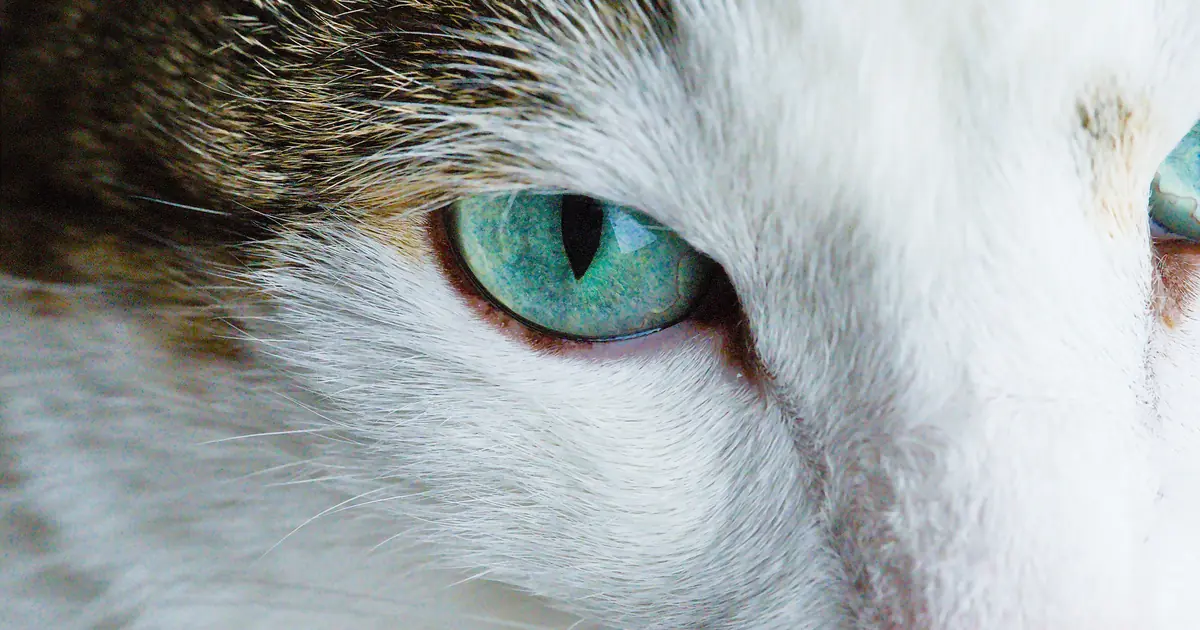
Your cat has a red, goopy, half-shut eye, and now you’re squinting at your own reflection wondering if you’re next. It’s a fair worry. You handle your cat, you rub your eyes, and pink eye spreads between people all the time. So can you get pink eye from a cat? Here’s the honest, vet-informed answer, including the rare cases where it actually can happen and the simple habits that keep you safe.
- Catching pink eye from a cat is rare, but it is possible in a small number of cases.
- Most feline conjunctivitis is caused by feline herpesvirus (FHV-1), calicivirus, Chlamydia felis, and Mycoplasma, and most of these do not infect humans.
- Chlamydia felis can occasionally spread from cats to people and cause conjunctivitis, with the highest risk for young children and people with weakened immune systems.
- Bartonella henselae, the bacterium behind cat scratch disease, can rarely cause an eye infection if it gets into your eye through a scratch or contaminated finger.
- Washing your hands after handling a cat with eye discharge, and not touching your own eyes, prevents nearly all the risk.
Can You Actually Catch Pink Eye From a Cat?
You can catch pink eye from a cat, but it’s rare. Most cases of feline pink eye are caused by germs that are specific to cats and do not infect people at all. Only a small handful of the bugs behind cat conjunctivitis are zoonotic, meaning they can pass from animals to humans, and even those spread to people uncommonly.
This is why you’ll see conflicting answers online. Many articles say “no, you can’t catch it,” because that’s true for the most common cause. But it’s not the full picture. A few feline eye infections are genuinely zoonotic, so the accurate answer is “rare, but possible.” The good news is that the risk is low and easy to manage with basic hygiene.
Pink eye, also called conjunctivitis, is inflammation of the conjunctiva: the thin pink membrane that lines the eyelids and covers the white of the eye. It’s the most common eye problem in cats, and many cats get at least one mild bout in their lifetime.
What Causes Pink Eye in Cats?
Pink eye in cats is usually caused by infections with cat-specific viruses and bacteria, though allergies, irritants, and eye injuries can trigger it too. Knowing the cause matters here, because the cause is what decides whether there’s any risk to you. Here are the main culprits:
- Feline herpesvirus (FHV-1): The single most common cause of feline conjunctivitis. It often causes recurring flare-ups. It’s a cat virus and does not infect humans.
- Feline calicivirus: A respiratory virus that can inflame the eyes. It’s species-specific to cats and does not spread to people.
- Chlamydia felis: A bacterium that causes conjunctivitis in cats, especially kittens. This is the one most often linked to rare human infections.
- Mycoplasma: Bacteria that can cause or worsen feline conjunctivitis. Human cases from cats are not a typical concern.
- Allergies and irritants: Dust, smoke, pollen, and chemicals can inflame a cat’s eyes. These are not contagious to anyone.
- Eye injury or foreign objects: A scratch, grass seed, or speck of debris can cause irritation that looks like pink eye but isn’t infectious.
So most of the time, your cat’s pink eye is either caused by a cat-only germ or by something that isn’t contagious at all.
Which Cat Pink Eye Causes Can Spread to Humans?
Only a few causes of cat pink eye can spread to humans, and they do so rarely. The table below breaks down each common cause and whether it poses any risk to you, so you can see at a glance where the real concern lies.
| Cause of Cat Pink Eye | Can It Spread to Humans? | Notes |
|---|---|---|
| Feline herpesvirus (FHV-1) | No | Species-specific to cats. Cannot infect people. |
| Feline calicivirus | No | A cat-only virus. No human eye risk. |
| Chlamydia felis | Rarely | Documented to cause conjunctivitis in humans in uncommon cases, mostly via close contact with an infected cat’s eye secretions. |
| Mycoplasma | Very rarely | Feline strains are not a typical human eye concern. |
| Bartonella henselae (cat scratch disease) | Rarely | Not a direct cause of pink eye, but can cause an eye infection if it enters the eye through a scratch or contaminated finger. |
| Allergies, irritants, injury | No | Not infectious at all. |
Chlamydia felis: The Main Zoonotic Worry
Chlamydia felis is the cat pink eye cause most clearly linked to human infection, though human cases stay rare. This bacterium mainly causes conjunctivitis in cats, especially kittens and cats in multi-cat homes. In uncommon cases, people in close contact with an infected cat have developed conjunctivitis from it, usually after handling the cat’s eye discharge and then touching their own eyes. Doctors have documented these human cases, but they are not common.
Bartonella and Cat Scratch Disease: An Eye Risk by a Different Route
Bartonella henselae is the bacterium behind cat scratch disease, and it can cause an eye infection through a different route than typical pink eye. It usually doesn’t cause conjunctivitis from your cat’s eye to yours. Instead, it can get into your eye if you’re scratched near the face, or if you rub your eye after touching a spot a cat scratched or licked. In some people this leads to a specific eye condition called Parinaud oculoglandular syndrome, with a red, irritated eye and a swollen gland near the ear. This shows up in only a small share of cat scratch disease cases.
Who Is Most at Risk of Catching Pink Eye From a Cat?
The people most at risk of catching pink eye from a cat are young children and anyone with a weakened immune system. For healthy adults, the odds of catching an eye infection from a cat are very low. But a few groups should be more careful around a cat with a goopy, red eye:
- Young children: Kids touch cats, then their faces, and wash their hands less reliably, which raises their exposure.
- People with weakened immune systems: Those on chemotherapy, organ transplant medications, or with conditions like HIV are more vulnerable to germs like Chlamydia felis.
- Older adults: Immune defenses can decline with age, so caution helps.
- Anyone in very close contact with the cat’s face: Letting a cat with an infected eye sleep on your pillow or nuzzle your face raises contact with eye secretions.
If you fall into one of these groups, it’s worth being extra mindful about handwashing while your cat’s eye heals.
What Does Pink Eye Look Like in a Cat?
Pink eye in a cat looks like a red, swollen, often watery or goopy eye that your cat may hold partly closed. Spotting it early helps you get your cat treated and reminds you to be tidy with hygiene. Watch for these signs:
- Redness and swelling of the pink tissue around the eye
- Squinting, frequent blinking, or holding the eye shut
- Watery, clear, yellow, or greenish discharge
- A swollen, more visible third eyelid in the inner corner
- Pawing or rubbing at the eye
- Sometimes sneezing or a runny nose, since eye and respiratory infections often go together
One eye or both can be affected. If you notice these signs, your cat needs a vet, not a wait-and-see approach, because some eye infections can damage vision if left untreated.
How to Protect Yourself From Catching Pink Eye From Your Cat
You can protect yourself from catching pink eye from your cat with simple hygiene that takes seconds. Because nearly all the human risk comes from getting a cat’s eye germs onto your own eyes, breaking that chain is what matters. Here’s how:
- Wash your hands with soap and water after touching your cat, especially after cleaning its eye or face.
- Keep your hands away from your own eyes until you’ve washed them.
- Use a fresh cloth or cotton pad for each eye when wiping discharge, then throw it away or wash it.
- Don’t share towels or pillows with a cat that has an active eye infection.
- Avoid face-to-face nuzzling with the cat until the eye clears up.
- Wash bedding and toys the cat uses while it’s infected.
Follow these and the already-low risk drops to almost nothing.
When Should You See a Doctor or a Vet?
You should see a doctor if your own eye becomes red, painful, or goopy, and a vet if your cat’s eye doesn’t improve quickly. These are two separate visits for two separate patients. For your cat, book a vet appointment if you see redness, discharge, squinting, or a swollen eye, since prompt treatment protects its vision and clears infections faster.
For yourself, contact a doctor if you develop eye redness, irritation, discharge, or pain, especially if you’ve been handling a cat with an infected eye. Seek care sooner if you have a weakened immune system, if a young child is affected, or if you also have a swollen gland near the ear after a cat scratch.
This article is for general education and isn’t a substitute for professional advice. A licensed veterinarian should diagnose and treat your cat, and a doctor should evaluate any eye symptoms in a person.
Frequently Asked Questions
Q: Is cat conjunctivitis contagious to humans?
Cat conjunctivitis is usually not contagious to humans, but it can be in rare cases. Most feline pink eye comes from cat-specific germs like feline herpesvirus that don’t infect people. A few causes, mainly Chlamydia felis, can occasionally spread to humans through close contact with eye discharge.
Q: Can I get pink eye from my cat sleeping on my face?
It’s unlikely but not impossible if your cat has an active eye infection. Letting an infected cat nuzzle your face puts you in close contact with eye secretions that could carry a zoonotic germ like Chlamydia felis. While your cat’s eye is infected, avoid face contact and wash your hands afterward.
Q: Does feline herpesvirus cause pink eye in humans?
No, feline herpesvirus (FHV-1) does not cause pink eye in humans. FHV-1 is species-specific, meaning it only infects cats. It’s the most common cause of feline conjunctivitis, but you cannot catch it from your cat.
Q: Can cat scratch disease affect your eyes?
Yes, cat scratch disease can affect the eyes in some cases. The bacterium Bartonella henselae can enter the eye through a facial scratch or a contaminated finger, sometimes causing a condition called Parinaud oculoglandular syndrome with a red eye and a swollen gland near the ear. This occurs in only a small share of cat scratch disease cases.
Q: How long is cat pink eye contagious?
Cat pink eye is generally contagious to other cats while the eye is actively inflamed and discharging, often for one to two weeks depending on the cause and treatment. The small human risk also exists mainly during this active phase. Once the infection clears and the eye looks normal, the risk drops sharply.
Q: Can kittens give you pink eye?
Kittens can rarely give you pink eye, and they’re a slightly higher concern than adult cats because Chlamydia felis is common in young kittens. The risk to a healthy adult is still low. Wash your hands after handling a kitten with eye discharge, and keep children’s hands clean and away from their eyes.
Q: Should I keep my cat away from my kids if it has pink eye?
You don’t need to fully separate them, but supervise closely and enforce handwashing. Young children are among the most at-risk groups for catching an eye infection from a cat because they touch their faces often. Have kids wash their hands after petting the cat and avoid touching their eyes until the cat’s infection clears.
Q: Can a human pass pink eye to a cat?
It’s very uncommon for a human to pass pink eye to a cat. Most human conjunctivitis is caused by germs adapted to people, not cats. The main shared risk involves a few zoonotic bacteria like Chlamydia felis that move between cats, so good hygiene protects both of you.
Bottom line: can you get pink eye from a cat? It’s rare, but yes, in uncommon cases you can, mostly from Chlamydia felis or the bacteria behind cat scratch disease. Wash your hands, keep them off your eyes, and get your cat to the vet, and both of you should come through it just fine.

Hello and welcome to The Ideal Cat!
We are some passionate cat owners from different professions. We love our cats and have a lot of experience in how to care for our pets. We are incredibly excited to share our knowledge, experience, and research with you. So you can take good care of your loving cat. We will answer most of the common questions about owning cats, taking care of them, etc. If you have any question contact with us. Thanks for visiting! Enjoy the content.
