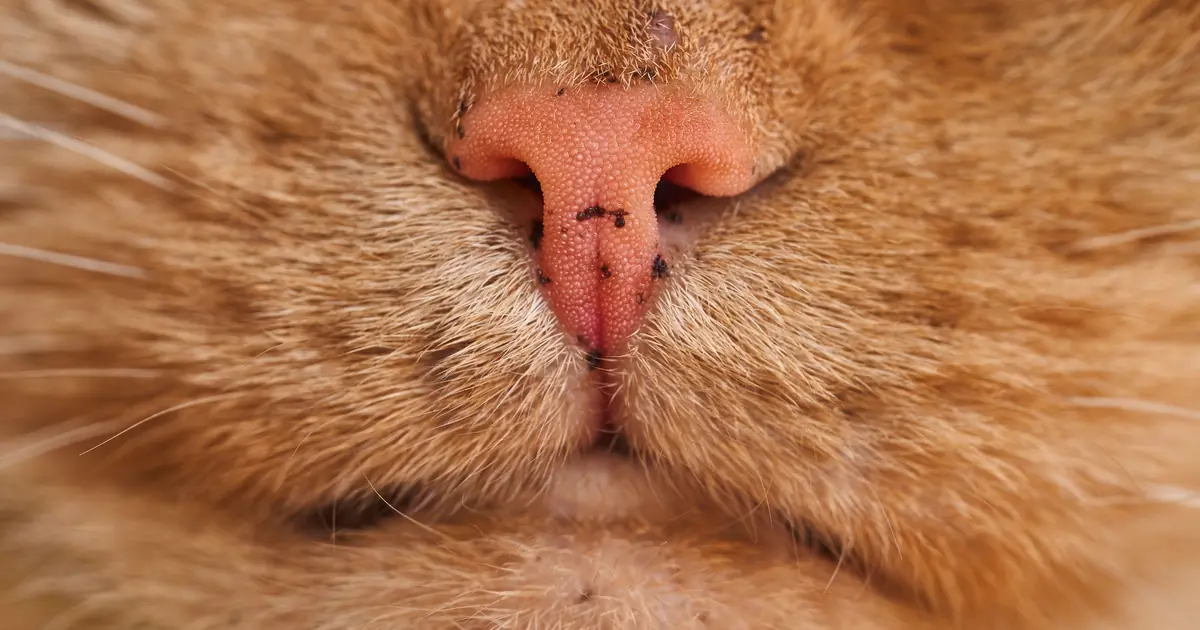
You lean in for a snuggle and notice it: a wet little smudge on your cat’s nose, or a crust that wasn’t there yesterday. Your first thought is probably somewhere between “aww” and “wait, is this bad?”
Here’s the thing: a runny nose in cats is common, and most of the time it’s nothing dramatic. But it can also be an early sign of something that needs treatment. This guide covers why cats get a runny nose, what the discharge color is telling you, and exactly when to stop watching and call the vet.
- Feline herpesvirus and calicivirus cause the large majority of upper respiratory infections in cats, and together they’re often called “cat flu.”
- Clear, watery nasal discharge usually points to a mild viral infection or an allergy and often clears up within a week to 10 days.
- Thick yellow or green discharge signals a secondary bacterial infection and needs veterinary attention.
- Bloody or one-sided (only one nostril) discharge is a red flag for a foreign object, fungal infection, dental disease, or a nasal growth, especially in cats over age 7.
- Kittens, senior cats, and cats that stop eating or struggle to breathe should see a vet promptly, not “wait it out.”
What Causes a Runny Nose in Cats?
A cat’s runny nose is almost always a sign of inflammation or infection in the nasal passages. The most common trigger by far is an upper respiratory infection, but a running or crusty nose can also come from allergies, irritating fumes or dust, dental disease, a stuck foreign object, or, less often, a growth inside the nasal cavity. A hard knock counts too, because cats can break their nose.
Nasal discharge is a symptom, not a diagnosis. Your cat’s body is producing extra mucus to flush out whatever is irritating the nose, whether that’s a virus, a stray blade of grass, or drifting pollen. A few clues usually narrow it down: how thick the discharge is, what color it is, whether it’s in one nostril or both, and what else is going on with your cat.
Can an Upper Respiratory Infection Cause My Cat’s Runny Nose?
Yes. Upper respiratory infections, often called “cat flu,” are the single most common reason cats develop a runny nose. According to the Cornell Feline Health Center, feline herpesvirus (FHV-1) and feline calicivirus (FCV) cause the vast majority of these infections, and both spread easily wherever cats live in groups, like shelters or multi-cat homes.
A viral infection usually starts with clear, watery discharge from the nose and eyes, sneezing, and sometimes a low fever or loss of appetite. If a bacterial infection sets in on top of the virus, which happens often, the discharge thickens and turns yellow or green over the following days. Kittens and unvaccinated cats are especially vulnerable, and herpesvirus tends to hide in the body and flare up again during stressful periods, even years later.
If sneezing is your cat’s main symptom rather than discharge, our guide on why your cat won’t stop sneezing covers that side in more detail. Hearing a whistling or raspy sound when they breathe? Take a look at why your cat might be wheezing, since congestion from a bad cold can sometimes sound like wheezing.
Can Allergies or Irritants Give My Cat a Runny Nose?
Yes, allergies and airborne irritants are a fairly common cause of a runny nose in cats. Litter dust is one of the most common household triggers, so a dust-free litter is worth trying. Unlike an infection, allergy-related discharge is almost always clear, thin, and watery, and it comes with sneezing fits or watery eyes rather than lethargy or fever.
Common triggers include cigarette or fireplace smoke, scented candles and air fresheners, household dust, strong cleaning products, seasonal pollen, and scented clumping litter.
Allergy-driven sniffles usually clear up once you remove the trigger. If your cat’s discharge flares up the same time every year, or right after you switch cleaning products or candles, allergies are a reasonable first suspect.
What Other Conditions Cause Nasal Discharge in Cats?
A handful of less common causes need a different kind of attention than a simple cold. Dental disease, foreign objects, and nasal growths can all produce a runny nose that looks similar to an infection at first glance.
- Dental disease: An infected upper tooth root sits close to the nasal passages, and infection can erode through the thin bone between them, causing one-sided, smelly, or blood-tinged discharge. Our cat dental care guide covers the warning signs.
- Foreign objects: Cats who explore tall grass or dusty corners can inhale a seed or bit of debris that lodges in the nose, usually causing sudden, intense sneezing and discharge from just one nostril.
- Nasal polyps or tumors: Growths are rare but more likely in cats over age 7. Per the Merck Veterinary Manual, discharge that starts in one nostril and spreads to both, or turns bloody, raises suspicion for a growth or fungal infection.
- Fungal infections: Organisms like Cryptococcus can infect the nasal passages, particularly in outdoor cats, often causing a swollen nose bridge.
Kennel cough (Bordetella) can occasionally overlap with nasal symptoms too, especially in shelter settings. See our piece on whether cats can get kennel cough for more.
What Does the Color of My Cat’s Nasal Discharge Mean?
The color and thickness of your cat’s nasal discharge gives you a useful, though not perfect, clue about what’s going on. Vets look at color alongside other symptoms, since color alone can’t confirm a diagnosis, but it’s still a helpful first read.
| Discharge Color/Type | Likely Meaning | What To Do |
|---|---|---|
| Clear, watery | Mild viral infection, early cold, or allergy | Monitor at home for a few days; keep the nose clean |
| Thick, yellow or green | Secondary bacterial infection, often following a virus | Schedule a vet visit, especially if it lasts more than 2 to 3 days |
| Bloody or brown-tinged | Trauma, fungal infection, dental disease, or a possible growth | See a vet promptly, sooner if bleeding is fresh or heavy |
| One nostril only | Foreign object, tooth root infection, or nasal mass | Vet exam needed; this pattern rarely resolves on its own |
How Can I Care for a Cat With a Mild Runny Nose at Home?
Home care is appropriate only for a mild runny nose: clear discharge, a cat who’s still eating, playing, and using the litter box normally, with no fever or lethargy. In that case, a few simple steps help your cat feel more comfortable while their body fights it off.
- Wipe discharge gently with a warm, damp cloth a few times a day so it doesn’t crust and block the nostrils.
- Run a humidifier, or let your cat sit in a steamy bathroom for 10 to 15 minutes, to loosen congestion.
- Warm wet food slightly to make it more aromatic. Cats rely on smell to want to eat, and a stuffy nose can kill their appetite.
- Keep the environment free of smoke, candles, and strong sprays until symptoms clear.
- Keep fresh water nearby, since mild dehydration can thicken mucus and make congestion worse.
Never give your cat human cold medicine, essential oils, or over-the-counter decongestants. Many are toxic to cats, and dosing should never be decided without a vet. If you’re unsure whether a symptom counts as “mild,” it’s fine to call your vet’s office and describe what you’re seeing.
When Should I See a Vet for My Cat’s Runny Nose?
You should see a vet if your cat’s nasal discharge is thick, colored, bloody, or coming from just one nostril, or if it lasts longer than a few days without improving. A runny nose paired with any of the following warrants a same-day or urgent visit rather than a wait-and-see approach.
- Not eating or drinking for more than 24 hours
- Labored, open-mouth, or noisy breathing
- Lethargy, hiding, or a swollen face
- Discharge lasting more than 3 to 5 days or getting worse
- Any nasal symptoms in a kitten under 6 months or a senior cat, since both can decline quickly
A cat who stops eating because they can’t smell their food risks a dangerous liver condition called hepatic lipidosis, so appetite loss alongside congestion is never something to shrug off. If your cat has also gone quiet and started avoiding you, our guide to why your cat is hiding and not eating can help you gauge how urgent it is.
This article is educational and isn’t a substitute for a hands-on exam. A licensed veterinarian can look inside your cat’s nose, check for fever, and run tests like a swab or imaging to pin down the exact cause. For general background on feline upper respiratory disease, the VCA Animal Hospitals overview is a solid, vet-reviewed resource.
Frequently Asked Questions About Cat Runny Nose
Q: Is a runny nose in cats contagious to other cats?
Yes, if the cause is viral, like feline herpesvirus or calicivirus, it spreads easily through sneezing, shared bowls, and grooming. Isolate a cat with active nasal discharge from other cats until a vet clears them.
Q: Can a runny nose in cats go away on its own?
A mild case caused by a virus or allergy often clears up in 7 to 10 days with basic home care. Discharge that’s thick, colored, or lasts longer needs a vet visit rather than more waiting.
Q: Why does my cat only have discharge from one nostril?
One-sided discharge often signals a localized problem, like a foreign object stuck in that nostril, a tooth root infection, or a nasal growth. It’s less typical of a simple viral cold and usually needs a vet exam.
Q: Can indoor cats get a runny nose from allergies?
Yes. Indoor cats can react to dust, scented candles, cleaning sprays, and scented cat litter. Clear, watery discharge without fever or lethargy points toward an irritant or allergy rather than an infection.
Q: Is yellow or green nasal discharge always an emergency in cats?
Not always, but it does mean a bacterial infection is likely and a vet visit is warranted soon. It becomes urgent if it’s paired with not eating, labored breathing, or lethargy.
Q: Can dental problems really cause a runny nose in cats?
Yes. A cat’s upper tooth roots sit close to the nasal passages, and an infected tooth can erode through the thin bone between them. This typically causes smelly, one-sided discharge that clears up once the tooth is treated.
Q: Should I take my kitten to the vet for a runny nose right away?
Kittens under 6 months have less mature immune systems and can decline quickly from an upper respiratory infection. Any nasal discharge in a young kitten, especially with reduced eating, is worth a prompt vet call.
Q: What’s the difference between a runny nose and sneezing in cats?
A runny nose is the discharge itself, while sneezing is the body’s reflex to clear the nasal passages, and the two often show up together from the same cause. If sneezing is the main symptom, our guide on a cat who won’t stop sneezing covers that angle.

Hello and welcome to The Ideal Cat!
We are some passionate cat owners from different professions. We love our cats and have a lot of experience in how to care for our pets. We are incredibly excited to share our knowledge, experience, and research with you. So you can take good care of your loving cat. We will answer most of the common questions about owning cats, taking care of them, etc. If you have any question contact with us. Thanks for visiting! Enjoy the content.
