If you’ve ever spotted little rice-like specks near your cat’s tail or watched them drag their bottom across the floor, you already know the sinking feeling. Worms are common, treatable, and honestly nothing to panic about. The tricky part is that there’s no single “best cat dewormer” for every situation. The right product depends entirely on which worm your cat has.
So we’ve organized this guide the way you actually need it: by worm type. Roundworm, tapeworm, hookworm, and broad-spectrum, with real over-the-counter picks you can buy plus one vet-prescription option for cats who refuse pills. There’s also a clear note on when your cat needs a vet instead of a guess.
- Different worms need different drugs, so there is no single over-the-counter dewormer that treats every feline parasite.
- Over-the-counter pyrantel pamoate treats roundworms and hookworms, the two most common intestinal worms in cats and kittens.
- Praziquantel is the active ingredient that treats tapeworms, and it is sold over the counter in products like Elanco Tapeworm Dewormer.
- Cats usually get tapeworms by swallowing infected fleas, so a tapeworm dewormer alone will not stop reinfection unless you treat fleas at the same time.
- A veterinary fecal test identifies exactly which worm your cat has, and prescription broad-spectrum dewormers cover more parasites than any over-the-counter option.
Related reading: best cat flea treatment. best cat flea shampoo. best cat food.
Our Top Picks
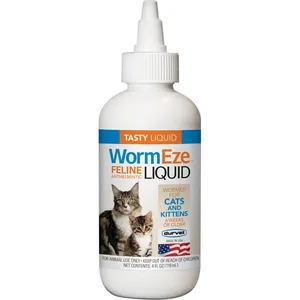
Durvet WormEze Feline Liquid Cat Dewormer, 4-fl oz bottle
Best OTC Dewormer
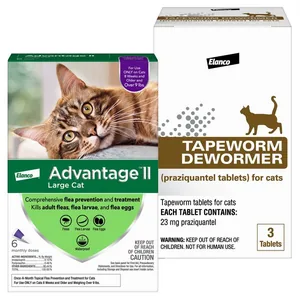
Advantage II Flea Spot Treatment, over 9-lbs + Elanco Tapeworm Cat De-Wormer
Best Flea + Tapeworm Combo
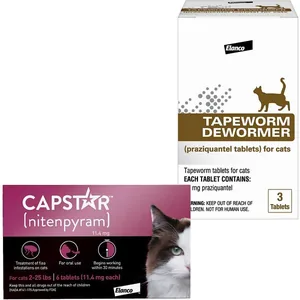
Capstar Flea Oral Treatment, 2-25 lbs + Elanco Tapeworm Cat De-Wormer
Best Fast-Acting Combo
Comparison Table
| Product | Best for | Price |
|---|---|---|
| Durvet WormEze Feline Liquid Cat Dewormer, 4-fl oz bottle | Best OTC Dewormer | ~$6.99 |
| Advantage II Flea Spot Treatment, over 9-lbs + Elanco Tapeworm Cat De-Wormer | Best Flea + Tapeworm Combo | ~$85.34 |
| Capstar Flea Oral Treatment, 2-25 lbs + Elanco Tapeworm Cat De-Wormer | Best Fast-Acting Combo | ~$59.95 |
How We Chose These Cat Dewormers
We focused on the things that actually decide whether a dewormer helps your cat or wastes your money. First, the active ingredient has to match the worm, so we mapped each product to the parasites it genuinely kills. Second, we leaned on guidance from veterinary and feline-health sources like the Cornell Feline Health Center and PetMD, plus the FDA approval status of each formula. Third, we read through large volumes of verified Chewy owner reviews to see how easy each product is to give and how cats really react to it. And we name the real downsides for every pick, because no dewormer is perfect and pretending otherwise helps nobody.
Durvet WormEze Feline Liquid Cat Dewormer: Best OTC Dewormer
WormEze Feline is a liquid dewormer with piperazine as the active ingredient, and it targets large roundworms in cats and kittens. At around $7, it’s about as cheap as deworming gets. You measure the dose, stir it into wet food, and walk away. No pill, no towel burrito, no scratched forearms.
Here’s the honest limit: piperazine handles roundworms and nothing else. It won’t touch tapeworms or hookworms. So this is the pick when you’ve actually seen spaghetti-like roundworms in your cat’s stool or vomit, or your vet’s fecal test came back positive for them. If you spotted rice-like segments near the tail instead, that’s tapeworm, and you need praziquantel.
Pros:
- Costs roughly $7, one of the cheapest dewormers you can buy
- Liquid formula mixes into food, so there’s no pilling fight
- Labeled for both adult cats and kittens
- Widely available over the counter with no vet visit required
Cons:
- Only treats large roundworms, not tapeworms or hookworms
- You have to measure the dose by weight, which is easy to get wrong
How to Choose the Best Cat Dewormer
Choosing the best cat dewormer comes down to one question first: which worm does your cat actually have? Get that right and the rest is easy. Here’s how to think it through.
Match the Dewormer to the Worm
This is the whole game. Praziquantel kills tapeworms. Pyrantel pamoate and piperazine handle roundworms (and pyrantel hits hookworms too). A piperazine roundworm liquid will do absolutely nothing to a tapeworm. If you’re unsure, a broad-spectrum tablet like Drontal, or a vet-confirmed diagnosis, saves you from treating the wrong thing.
Know What Each Worm Looks Like
Tapeworms show up as flat, rice-like or sesame-seed segments near the tail or in bedding. Roundworms look like spaghetti and may appear in vomit or stool. Hookworms are tiny and rarely visible, so they’re usually caught on a fecal test. When in doubt, a quick vet fecal exam removes the guesswork.
Pill, Liquid, or Spot-On?
Pick the form your cat will actually accept. Tablets like Drontal are efficient but bitter. Liquids mix into food and suit kittens and fussy cats. Spot-on topicals like Profender skip the mouth entirely, which is gold for cats who treat pilling like a wrestling match, though that one needs a vet prescription.
Consider Your Cat’s Age and Health
Kittens, pregnant or nursing cats, and cats with health problems are not candidates for a casual store-bought guess. They often need a vet-directed or prescription dewormer at a carefully calculated dose. Always check the minimum age on the label, and call your vet before deworming a pregnant or nursing cat.
Indoor vs Outdoor and Reinfection
Outdoor cats and hunters get reinfected more often, since prey and fleas carry worms. If your cat goes outside, plan on routine deworming and tight flea control rather than a one-and-done fix.
Common Cat Deworming Mistakes to Avoid
A few mistakes trip up well-meaning owners again and again. Dodging these saves money and gets your cat better faster.
- Using the wrong dewormer for the worm. Treating a tapeworm with a roundworm-only liquid does nothing. Match the active ingredient to the parasite.
- Skipping the vet for kittens and pregnant cats. These cats need vet-directed dosing. Don’t freelance it.
- Guessing the dose. Dewormer dosing is weight-based. Eyeballing it can underdose (no effect) or overdose (risk). Follow the label or your vet, exactly.
- Forgetting fleas. Tapeworms come from fleas. Deworm without treating fleas and the tapeworms will be back.
- Skipping the repeat dose. Many products need a follow-up about two weeks later to catch newly matured worms. One dose often isn’t the finish line.
- Treating only one pet. In multi-pet homes, parasites spread. Your vet may recommend treating everyone.
Should You Just Ask Your Vet for a Prescription Dewormer?
Honestly, for a lot of cats the answer is yes. Prescription dewormers like Drontal, Profender, and Revolution Plus cover more parasites in a single dose than any over-the-counter product can. Drontal combines praziquantel and pyrantel, so it handles tapeworms, roundworms, and hookworms together. Revolution Plus goes wider still, covering intestinal worms alongside fleas, ticks, ear mites, and heartworm. If your cat has more than one type of worm, or you have no idea which one it has, that broad coverage is the most reliable path.
And if your cat treats pill time like a personal insult, ask specifically about Profender. It’s a topical dewormer you apply to the skin at the back of the neck, no swallowing involved. For cats who hide under the bed at the sound of a pill bottle, that’s not a small detail. It’s the difference between a treated cat and a cat who spat the tablet behind the couch.
The step that makes all of this work is a fecal test. Your vet looks for worm eggs under a microscope, names the parasite, and picks the drug that actually kills it. That beats guessing at the pet store shelf every single time. We don’t sell prescription dewormers and we’re not linking to them here, so take this as what it is: our honest read that a vet visit is usually the better move. This article is educational, and your vet is the one who should make the call for your cat.
Deworming is a vet matter: the Cornell Feline Health Center and the Companion Animal Parasite Council recommend a fecal test to identify the parasite.
Frequently Asked Questions About Cat Dewormers
Q: What is the best over-the-counter dewormer for cats?
For broad coverage, Drontal is the best OTC cat dewormer because one tablet treats tapeworms, roundworms, and hookworms. If your cat has tapeworms specifically, the Elanco/Bayer Tapeworm Dewormer with praziquantel is the targeted OTC choice. Match the product to the worm your vet confirms.
Q: Can I deworm my cat without going to the vet?
You can buy OTC dewormers for adult cats, but a vet should confirm which worm your cat has first, since the wrong product won’t work. Kittens, pregnant or nursing cats, and sick cats should always be dewormed under veterinary guidance.
Q: How long does it take for a dewormer to work in cats?
Worms usually start dying within hours of deworming. Full clearance takes anywhere from about 3 days to 3 weeks, depending on the worm type, the product, and how heavy the infection is. You may see worms in the stool for several days afterward.
Q: What’s the difference between a roundworm and tapeworm dewormer?
Roundworm dewormers use piperazine or pyrantel pamoate, while tapeworm dewormers use praziquantel. They are not interchangeable. A roundworm liquid will not kill tapeworms, which is why identifying the worm before treating matters so much.
Q: Are over-the-counter cat dewormers safe?
OTC dewormers like Drontal and praziquantel tapeworm tablets are generally safe for healthy adult cats when dosed correctly by weight. Risk comes from wrong doses, wrong products, or using them on kittens and pregnant cats without vet input, so always read the label and ask your vet if unsure.
Q: How often should I deworm my cat?
Indoor-only adult cats often need deworming only when worms are found or once or twice a year. Outdoor cats and hunters need it more often because they’re reinfected more easily. Kittens follow a tighter schedule, so ask your vet for a deworming plan based on your cat’s lifestyle.
Q: Why does my cat keep getting tapeworms after deworming?
Cats get tapeworms by swallowing infected fleas while grooming. If you treat the tapeworm but not the fleas, your cat simply gets reinfected. Pair tapeworm dewormer with consistent flea control to break the cycle.
Q: Do I need a prescription for cat dewormer?
Many cat dewormers, including Drontal and praziquantel tapeworm tablets, are sold over the counter. Some, like the Profender topical spot-on and most hookworm-focused treatments, require a vet prescription. When a product is prescription-only, it’s because your vet should confirm the worm and the dose.
The Bottom Line on the Best Cat Dewormer
The best cat dewormer is the one that matches your cat’s worm. For most adult cats, Drontal is the smart broad-spectrum OTC pick, since it clears tapeworms, roundworms, and hookworms in a single tablet. If you’ve seen those telltale rice-like tapeworm segments, the praziquantel-based Elanco/Bayer Tapeworm Dewormer is the targeted, budget-friendly answer, just pair it with flea control. For kittens or roundworms, an easy OTC liquid like 8in1 Excel does the job, and for cats who refuse every pill and need hookworm coverage, the prescription Profender topical is worth a vet conversation.
If you only do one thing, do this: have your vet confirm the worm before you treat. It costs little, takes minutes, and makes sure the dewormer you buy actually works. Your cat will feel better, and so will you.
This article is educational and is not a substitute for professional veterinary advice. Always consult your veterinarian to confirm the parasite and the correct product and dose for your cat, and remember that kittens, pregnant or nursing cats, and sick cats may need a prescription or vet-directed treatment. Sources consulted include the Cornell Feline Health Center and PetMD.

Hello and welcome to The Ideal Cat!
We are some passionate cat owners from different professions. We love our cats and have a lot of experience in how to care for our pets. We are incredibly excited to share our knowledge, experience, and research with you. So you can take good care of your loving cat. We will answer most of the common questions about owning cats, taking care of them, etc. If you have any question contact with us. Thanks for visiting! Enjoy the content.
