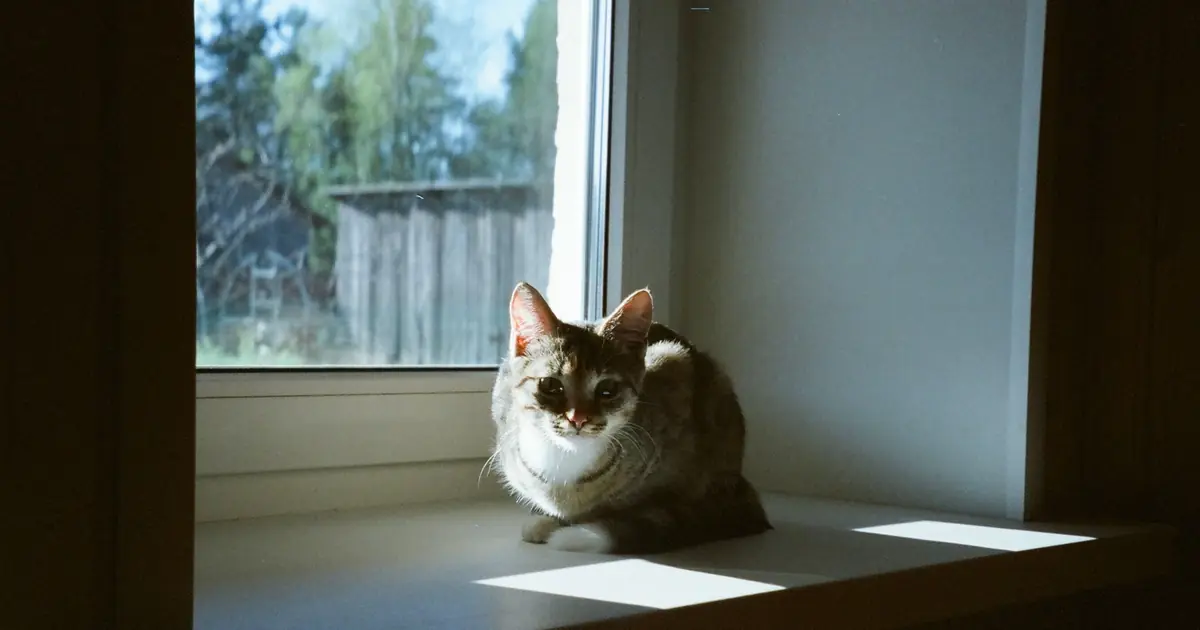
You’ve seen it. Your cat finds the one sun patch on the living room floor, flops down like a furry loaf, and stays put until the light moves. Ten minutes later, they’ve scooted six inches to the left, chasing that same warm rectangle across the carpet. It looks silly. It’s actually a smart survival habit borrowed straight from their wild ancestors.
Cats aren’t just being lazy or dramatic when they sunbathe (though, let’s be honest, a little drama is always involved). They’re doing something their bodies are built for: soaking up free heat instead of spending their own energy to make it. Here’s why sunbathing is basically a cat’s favorite form of self-care, and when it’s worth paying closer attention.
- A cat’s normal body temperature runs about 100.5 to 102.5°F, noticeably higher than a human’s average of 98.6°F.
- Sunbathing lets cats warm up passively instead of burning calories to generate heat internally.
- Domestic cats descend from African wildcats adapted to hot, arid climates, which is why they seek out warmth so readily.
- Cats get vitamin D from their food, not from sun exposure, so sunbathing is about warmth and comfort, not vitamin production.
- Excessive, constant sun-seeking can signal a cat who is cold-sensitive, arthritic, or dealing with an underlying illness.
Why do cats like to sunbathe?
Cats sunbathe because it’s an easy, free way to stay warm. Sunlight raises a cat’s skin and coat temperature without requiring the body to burn its own fuel to generate that heat. For an animal that already runs a naturally high internal temperature, a sunny windowsill is basically a heated blanket that costs nothing. If your sills are too narrow to stretch out on, a window hammock gives her the same warm spot with room to sprawl.
Warmth also relaxes muscles and joints, which is part of why a sunbathing cat often looks so blissed out, eyes half-closed, paws tucked or sprawled. Combine that physical comfort with the sense of safety a cozy spot provides, and you’ve got a habit that hits both the body and the mood.
Why are cats so obsessed with heat in the first place?
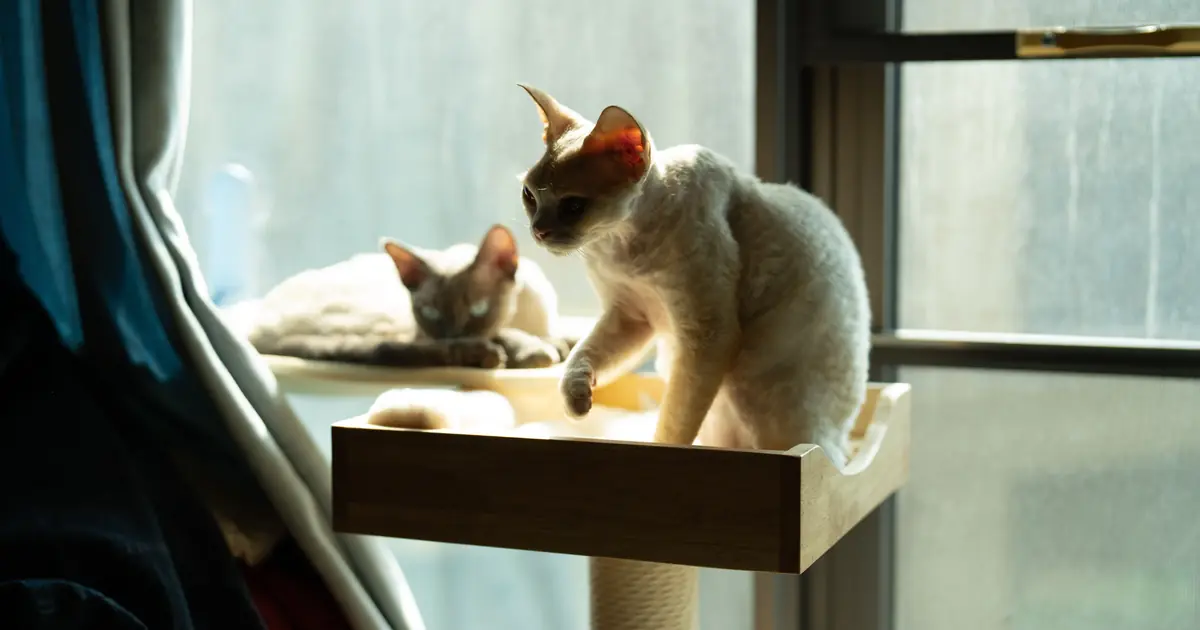
Cats are drawn to heat because their wild ancestors came from hot, dry environments. The domestic cat descends from the African wildcat (Felis lybica), a species built for desert and savanna life in North Africa and the Middle East. That evolutionary background wired cats to seek out and conserve warmth whenever they can.
On top of that history, cats simply run warmer than we do. A healthy cat’s body temperature sits around 100.5 to 102.5°F, compared to a human’s average of 98.6°F. Because their comfortable baseline is higher, a room that feels perfectly fine to you can feel a little chilly to your cat, which sends them straight to the nearest sun patch or, failing that, your favorite heating pad.
Why does sunning save a cat energy?
Sunbathing saves energy because it lets a cat’s body borrow heat from the environment instead of manufacturing it internally. Cats are mammals, so they generate their own body heat through metabolism, a process that burns calories. When a cat lies in a warm patch of sun, the environment does that work for them.
This is called thermoregulation, the process animals use to keep their internal temperature stable. Passive warming through sunbathing means a cat doesn’t have to shiver, hunt for extra food, or rev up its metabolism just to stay comfortable. It’s efficient. And cats, frankly, are experts at conserving effort wherever they can (they sleep 12 to 16 hours a day, after all).
Does sunbathing give cats vitamin D?
No, not the way it does for humans. Cats can’t make meaningful amounts of vitamin D through their skin from sunlight. Human skin converts a compound called 7-dehydrocholesterol into vitamin D when exposed to UVB rays, but a cat’s skin does this so inefficiently that sun exposure barely moves the needle. Instead, cats get the vitamin D they need directly from their diet, mainly from animal fats and organ meat in a complete, balanced cat food.
This is one of the most common myths about sunbathing cats, and it’s worth clearing up. According to the Cornell Feline Health Center, dietary intake, not sun exposure, is how cats meet their vitamin D needs. So when your cat suns themselves for twenty minutes, they’re chasing warmth and comfort, not a vitamin boost.
Why does my cat follow the sun around the house?
Cats follow the sun because they’re tracking the warmest available spot as it shifts throughout the day. A patch of sunlight moves across the floor as the sun’s angle changes, and a comfort-seeking cat will happily scoot every few minutes to stay centered in it. You’ll often see the same cat migrate from a spot near the window in the morning to a completely different room by early afternoon.
It’s not random wandering. It’s a cat doing quiet, ongoing math: warmest spot, softest surface, safest sightline. If your cat also has a favorite sunny patch of paper or cardboard to sprawl on, you’re watching two comfort instincts team up at once.
Is sunbathing safe for cats?
Mostly yes, but sunbathing does carry a couple of real risks worth knowing. The two biggest concerns are overheating (heatstroke) if a cat can’t get out of direct sun on a hot day, and sunburn, which over time can raise the risk of skin cancer on cats with white fur or thin coats, especially on the ears and nose.
Cats can’t sweat the way we do (they only have sweat glands on their paw pads), so their main cooling tools are panting, grooming, and simply moving to shade. If a sunny spot turns into a hot, stuffy corner with no escape route, that’s when a relaxing nap can turn into a real problem.
| Sunbathing benefit | Related risk | What to do |
|---|---|---|
| Passive warmth and relaxation | Overheating or heatstroke in a closed, hot space | Always leave a shaded escape route and fresh water nearby |
| Lower energy spent on internal heat production | Dehydration on very warm days | Keep water bowls in a couple of rooms, not just one |
| Comfort for white or light-coated cats | Sunburn and higher skin cancer risk on ears and nose | Limit peak midday sun exposure; ask your vet about pet-safe sunscreen |
| General contentment and stress relief | Trapped heat in cars or unventilated sunrooms | Never leave a cat in a parked car; crack windows or use blinds in sunrooms |
How can I keep my sunbathing cat safe?
You can keep a sun-loving cat safe by making sure warmth always comes with an exit. Give your cat a room to move freely between sunny and shaded spots, keep fresh water available in more than one spot, and pay closer attention if you have a white-furred, hairless, or thin-coated cat, since their skin is more exposed to UV damage.
- Crack a window, use sheer blinds, or leave a fan on in rooms that get intense direct sun.
- Never leave a cat in a parked car, even briefly. Interior temperatures climb fast, even with the windows cracked.
- Watch enclosed sunrooms and catios on hot days. Glass traps heat quickly and can turn a favorite lounging spot into an oven.
- Check white cats’ ears and nose for scabbing, redness, or crusty patches, which can be early signs of sun damage or skin cancer.
- Ask your vet about pet-safe sunscreen for cats with pale skin or thin fur if they spend a lot of time near windows or outdoors.
A quick safety note: this article is educational, not a substitute for veterinary care. Any scabby, non-healing, or unusual-looking spot on a cat’s ears or nose is worth a vet visit, since early treatment for skin cancer makes a real difference. For general background on feline skin health, VCA Animal Hospitals has a helpful overview of the warning signs to watch for.
When is my cat’s sun-seeking a sign of a bigger problem?
A cat who is constantly hunting for heat, well beyond normal cozy napping, could be cold-sensitive, arthritic, or dealing with an underlying illness. Older cats and cats with arthritis often gravitate toward warmth because heat eases stiff joints, so a sudden increase in heat-seeking behavior is worth mentioning at your cat’s next vet visit.
Some medical conditions, including hypothyroidism and certain metabolic issues, can also make a cat feel colder than usual. If your cat used to enjoy the occasional sunny nap and now seems to need to be near a heat source constantly, or if you notice other changes like reduced mobility or grumpiness when touched, that’s a pattern worth flagging to your vet rather than chalking up to personality.
Curious whether your home’s temperature is even part of the equation? It helps to know what temperature range cats actually prefer, and whether cats get cold more easily than we assume indoors.
Frequently Asked Questions
Q: Why does my cat sunbathe instead of using its bed?
Sunlight offers active, passive heat that a regular bed can’t match. Cats will often choose a sunny floor spot over a soft bed nearby simply because the warmth feels better than the cushioning, at least until the sun moves on.
Q: How long do cats usually sunbathe?
Most cats sunbathe in short stretches of 10 to 30 minutes at a time, then move, groom, or nap elsewhere. Cats sleep 12 to 16 hours a day overall, and sunny spots are simply one of their preferred napping locations.
Q: Can cats get sunburned through a window?
Yes, though the risk is lower than direct outdoor sun. Standard glass blocks most UVB rays but lets some UVA rays through, so cats with white fur or thin coats can still develop sun damage over months of regular window sunbathing.
Q: Do cats need sunlight to be healthy?
No. Cats get their essential vitamin D from a complete, balanced diet, not from sun exposure, since their skin converts sunlight into vitamin D very poorly. Natural light does support a healthy sleep-wake cycle, but it isn’t a nutritional requirement the way it is for humans.
Q: Is it bad if my cat sleeps in the sun all day?
Occasional all-day sun napping usually isn’t a concern as long as your cat has access to shade, water, and can move away from the heat whenever they want. Watch for signs of overheating like heavy panting, drooling, or lethargy, which mean it’s time to cool your cat down right away.
Q: Why do white cats need extra sun protection?
White and light-coated cats have less melanin, the pigment that helps protect skin from UV damage, so their ears, nose, and eyelids are more vulnerable to sunburn and, over time, skin cancer. Squamous cell carcinoma is the most common sun-related skin cancer seen in cats with pale, thin-furred skin.
Q: What temperature is too hot for a cat to be in direct sun?
Once ambient temperatures climb into the 85°F range and above, direct, unshaded sun exposure raises the risk of heat stress for cats, especially indoors near glass where heat can concentrate. Always make sure a shaded, ventilated spot is nearby.
Q: Do cats sunbathe more in winter than summer?
Many cats do seek out sun patches more noticeably in cooler months, when indoor temperatures drop and that warm spot on the floor becomes extra appealing. In summer, cats are more likely to alternate between sun and shade, or seek out cool tile and floors instead.

Hello and welcome to The Ideal Cat!
We are some passionate cat owners from different professions. We love our cats and have a lot of experience in how to care for our pets. We are incredibly excited to share our knowledge, experience, and research with you. So you can take good care of your loving cat. We will answer most of the common questions about owning cats, taking care of them, etc. If you have any question contact with us. Thanks for visiting! Enjoy the content.
