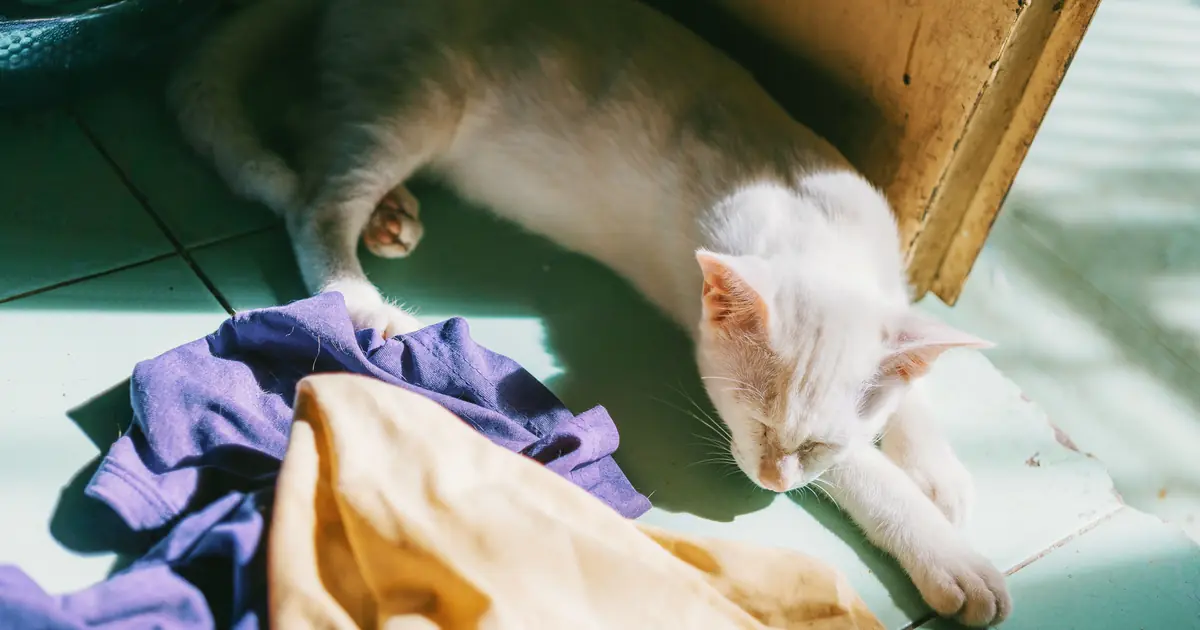
Watch your cat move through the house on a sunny afternoon and you’ll notice a pattern. She starts on the cool tile, drifts to the rug, then ends up curled in the one patch of sunlight crossing the living room floor. It’s not random. Your cat is running her own personal thermostat, and she’s set it higher than yours.
Most of us keep our homes around 68 to 72°F because that’s comfortable for a human body. Cats disagree. They’ll happily sprawl in front of a heating vent, camp out on a laptop, or fight you for the warm spot you just got up from. Understanding what temperature cats actually like helps you set up a home that keeps your cat relaxed instead of restless, and it can flag real trouble when the weather turns extreme.
- Cats feel most comfortable in room temperatures between 70 and 80°F (21 to 27°C), several degrees warmer than most people prefer.
- A cat’s normal body temperature runs 100.5 to 102.5°F (38.1 to 39.2°C), noticeably higher than a human’s average of 98.6°F.
- Rooms colder than about 60°F (15°C) put cats at risk of getting chilled, especially kittens, senior cats, and hairless breeds.
- Temperatures above 90°F (32°C) raise the risk of heatstroke, since cats cool down far less efficiently than people do.
- Hairless breeds like the Sphynx, plus very young, elderly, sick, or thin cats, need extra warmth year round.
What Temperature Do Cats Like Best?
Cats like a room temperature of about 70 to 80°F (21 to 27°C). That’s the sweet spot where most healthy adult cats stay relaxed, playful, and willing to nap anywhere instead of hunting for the warmest corner of the house. It sits a few degrees above the 68 to 72°F range most people find comfortable, which is exactly why your cat always seems to be chasing a warmer spot than you’d pick for yourself.
Cats can tolerate a wider range than that ideal window, especially for short stretches. But the further you drift from 70 to 80°F in either direction, the more your cat has to work to regulate her own body heat, and the less comfortable she gets.
Why Do Cats Prefer It Warmer Than Humans?
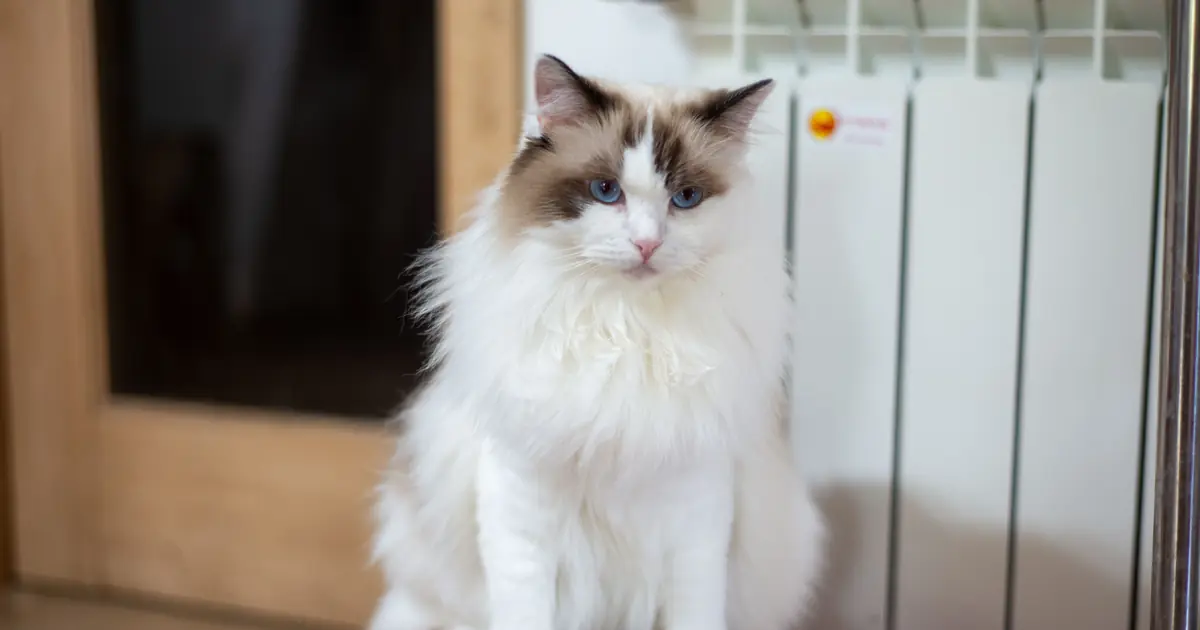
Cats prefer warmer temperatures because their normal body temperature runs higher than ours, and their wild ancestors came from the desert. A healthy cat’s internal temperature sits at 100.5 to 102.5°F (38.1 to 39.2°C), compared to about 98.6°F for a person. That higher baseline means a room that feels perfectly warm to you can still feel a bit cool to your cat.
There’s also history at play. The domestic cat descends from Felis lybica, the African wildcat, a species built for hot, dry climates. That heat-loving heritage never really left the modern housecat. It’s why she flops in a sunbeam like she’s been waiting for it all day (she probably has), and why heating pads and laptop keyboards are basically catnip for warmth. If you’ve ever wondered why cats love heating pads so much, this is the same instinct at work.
What Temperature Is Too Cold for a Cat?
Temperatures below about 60°F (15°C) start to feel chilly for most cats, and prolonged cold exposure can lead to hypothermia. A cat left in a cold room isn’t just uncomfortable. Her body has to burn extra energy just to hold her temperature steady, and if the room stays cold long enough, or she’s wet or elderly or very young, that effort can fail. According to the Cornell Feline Health Center, most cats grow uncomfortable once indoor temperatures drop into the high 50s, and outdoor cold combined with wind or wet fur raises the risk of frostbite and hypothermia fast.
If you’re wondering whether cats get cold the same way people do, the answer is yes, and often sooner than you’d expect given their fur coat. A single layer of fur isn’t the insulation people assume it is.
What Temperature Is Too Hot for a Cat?
Temperatures above about 90°F (32°C) put cats at risk of overheating, because cats don’t cool themselves nearly as well as people do. Humans sweat over most of their skin. Cats only have sweat glands on their paw pads, so on a hot day, panting and grooming (spreading saliva to cool through evaporation) are pretty much their only backup systems. If you’ve noticed your cat panting like a dog, a hot room is one of the most common triggers.
Heatstroke in cats is a real emergency. Once a cat’s internal body temperature climbs past 104°F, she’s in dangerous territory, and 106 to 107°F can be life threatening without fast veterinary care. Flat-faced breeds like Persians, and any cat that’s overweight, elderly, or has heart or lung disease, overheat faster than a lean, healthy adult cat.
Which Cats Need It Warmer Than the Average Cat?
Kittens, senior cats, sick cats, thin cats, and hairless breeds like the Sphynx all need warmer rooms than a healthy adult cat does. Kittens can’t regulate their own body temperature well until they’re several weeks old, so a cold room hits them much harder and much faster. Senior cats often lose muscle and body fat, and arthritis and slower circulation make it harder for them to stay warm on their own.
Here’s the quick rundown of who needs the extra degrees:
- Kittens under about 8 weeks old, who can’t shiver effectively yet
- Senior cats, especially those with arthritis or thyroid issues
- Sick or recovering cats, including any cat coming out of surgery or anesthesia
- Thin or underweight cats, who have less insulating body fat
- Hairless breeds like the Sphynx, and very short-haired breeds like the Cornish Rex
For any of these cats, a heated cat bed placed away from drafts is a simple, effective fix, and it’s part of why so many owners end up with a heated bed for their cat even in a warm house.
What Should You Set the Thermostat to When You Leave the House?
Set the thermostat between 68 and 78°F when you’re away, adjusting for the season and your cat’s health. In winter, don’t let the house dip much below 65°F, even if you’re trying to save on heating costs. In summer, don’t rely on open windows alone, since a closed-up house can climb into dangerous heat far faster than you’d guess, especially if the sun hits the windows directly.
A programmable thermostat is worth the money here. It lets you keep the house a bit cooler while you’re at work without leaving your cat sweltering by the time you walk in the door, and it protects against sudden outdoor temperature swings you can’t predict from your desk.
What Are the Signs Your Cat Is Too Cold or Too Hot?
A cold cat shivers, curls into a tight ball, seeks out warm spots, and may feel cool to the touch on her ears and paws. A cat that’s too hot pants, drools, seems restless or lethargic, and may have red gums or seem unsteady on her feet. Either set of signs is your cue to act, not wait and see.
You might also notice her ears feeling unusually warm or cool depending on the room, which ties into why a cat’s ears run hot or cold compared to the rest of her body. Ears are thin-skinned and close to the surface, so they often show temperature changes before the rest of her does.
| Temperature Range | How Your Cat Feels | What To Do |
|---|---|---|
| Below 60°F (15°C) | Chilled, shivering, seeking warmth | Add a heated bed, blanket, or raise the thermostat |
| 60 to 69°F (15 to 21°C) | Slightly cool, tolerable short term | Offer a warm spot or bed as backup |
| 70 to 80°F (21 to 27°C) | Comfortable, ideal range | No action needed |
| 81 to 89°F (27 to 32°C) | Warm, cat seeks cooler surfaces | Add airflow, fresh water, shade |
| Above 90°F (32°C) | Overheating risk, especially at-risk cats | Cool the room immediately, watch for panting |
A quick safety note: This article is for general education, not a substitute for veterinary care. Shivering and constant heat-seeking point to a cat that’s too cold, while heavy panting, drooling, and lethargy can signal overheating or heatstroke, which is a true emergency. Never leave a cat in a hot car, even for a few minutes, and never shut a cat in a room without fresh air or ventilation. If you suspect heatstroke or hypothermia, call your vet or an emergency animal hospital right away. The ASPCA and the Cornell Feline Health Center both warn that flat-faced and overweight cats overheat especially fast.
Frequently Asked Questions
Q: What temperature is too cold for a cat indoors?
Indoor temperatures below about 60°F (15°C) are too cold for most cats. Kittens, seniors, and thin or sick cats can start struggling even a bit above that, so it’s worth keeping the house warmer than 60°F if you have a vulnerable cat.
Q: Do cats prefer warm or cool rooms?
Cats prefer warm rooms, ideally between 70 and 80°F (21 to 27°C). Their higher body temperature and desert-cat ancestry both push them toward wanting more warmth than the average person picks for a thermostat setting.
Q: What is a cat’s normal body temperature?
A healthy cat’s normal body temperature is 100.5 to 102.5°F (38.1 to 39.2°C). That’s noticeably higher than a human’s average of 98.6°F, which explains a lot of a cat’s love for warm spots.
Q: Can cats get heatstroke indoors?
Yes, cats can get heatstroke indoors if a room climbs above roughly 90°F (32°C) with poor airflow, especially in a shut-up house during summer. Flat-faced breeds, overweight cats, and cats with heart or lung disease are at the highest risk.
Q: What temperature should I keep my house for my cat while I’m at work?
Keep the house between 68 and 78°F while you’re away, adjusting for the season. Avoid letting the temperature swing too low in winter or too high in summer, since an empty house can drift further from comfortable than you’d expect by the time you get home.
Q: Do kittens need a warmer room than adult cats?
Yes, kittens need a warmer room than adult cats, especially before about 8 weeks old when they can’t regulate their own body heat well. A warm, draft-free sleeping spot matters more for kittens than for a healthy adult cat.
Q: Why does my cat always sit right next to the heater or in the sun?
Your cat sits next to heat sources because her body runs warmer than yours and she’s instinctively drawn to warmth, a trait inherited from her desert-dwelling ancestors. Sunbeams and heating vents are simply the most efficient way for her to top off her body heat without spending any energy.
Q: Do hairless cats like the Sphynx need a warmer house?
Yes, hairless breeds like the Sphynx need a noticeably warmer house than a fully coated cat. Without a fur coat for insulation, Sphynx cats chill faster and often need sweaters, heated beds, or a home kept toward the higher end of the comfortable range.

Hello and welcome to The Ideal Cat!
We are some passionate cat owners from different professions. We love our cats and have a lot of experience in how to care for our pets. We are incredibly excited to share our knowledge, experience, and research with you. So you can take good care of your loving cat. We will answer most of the common questions about owning cats, taking care of them, etc. If you have any question contact with us. Thanks for visiting! Enjoy the content.
