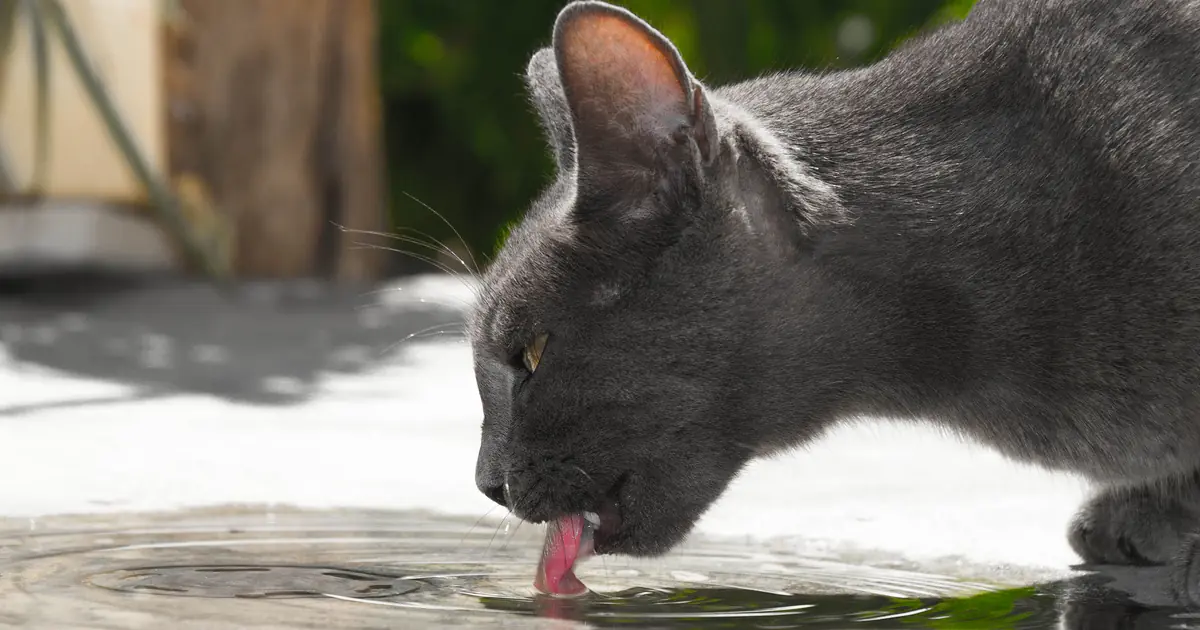
Picture this: your cat hops off the vet’s scale and leaves a trail of little wet paw prints behind her. You’d swear she just walked through a puddle. She didn’t. That’s sweat, and yes, cats really do sweat, just not the way you do on a hot afternoon.
If you’ve ever wondered do cats sweat while watching your cat pant after a scary car ride or stretch out flat on the bathroom tile in July, you’re asking the right question. Cats have sweat glands, but they’re tucked away in a few small spots, and that limited setup changes everything about how your cat handles summer heat. Here’s what’s actually going on under all that fur, and why it means you need to keep a closer eye on your cat than you might think.
- Cats sweat through eccrine glands in their paw pads and a few other hairless areas, not across their whole body like humans.
- Paw pad sweating barely makes a dent in cooling a cat down, so it’s not their main defense against heat.
- Cats cool off mainly by grooming (saliva evaporates like sweat), seeking shade and cool surfaces, drinking water, and slowing down.
- Panting in cats is not a normal cooling method. It can be an early sign of overheating or heatstroke.
- Heatstroke in cats is a medical emergency: heavy panting, drooling, bright red or purple gums, and wobbliness need a vet immediately.
Do Cats Sweat at All?
Yes, cats do sweat, just in a much smaller way than people do. Humans have sweat glands spread across almost the entire body, which is why a hard workout leaves your shirt soaked. Cats don’t have that luxury. Their sweating is limited to a handful of small, specific areas, so it barely registers compared to how we cool off.
This is worth clearing up early because it’s a common myth that cats don’t sweat at all. They do. It’s just quiet, small-scale, and not built to do the heavy lifting of temperature control.
Where Do Cats Actually Have Sweat Glands?
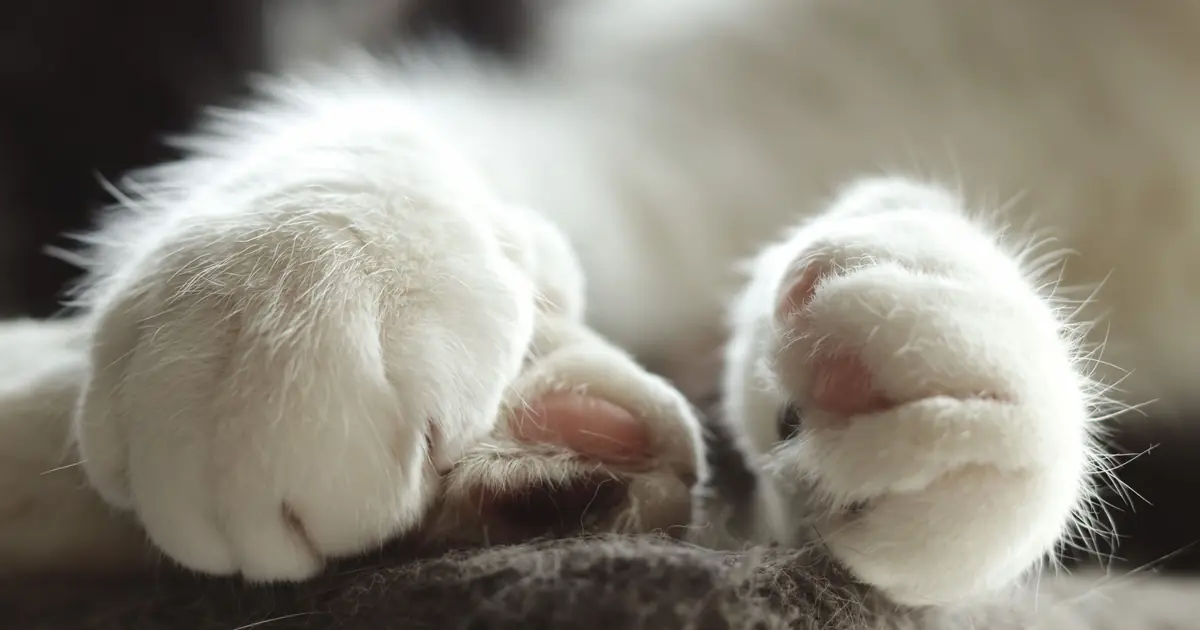
Cats have sweat glands mainly in their paw pads, and in a few other hairless areas like the nose, lips, and chin. These are called eccrine sweat glands, the same type humans have all over their skin, but in cats they’re packed into these small spots instead of spread everywhere.
That’s why the classic sign of a sweating cat is damp little paw prints on a cool, hard surface, like an exam table or your kitchen floor. If your cat is anxious at the vet (and honestly, who isn’t a little anxious at the vet), you might see those prints appear as she gets nervous. Stress sweating is real in cats, not just heat sweating.
Cats also have a second type of skin gland called apocrine glands, spread more broadly across the body. But these are mostly tied to scent marking, not cooling. So for actual temperature regulation, the paw pads are doing most of what little sweating your cat does.
How Do Cats Cool Down If They Barely Sweat?
Cats cool down mainly through grooming, shade-seeking, and staying still, not sweating. Since paw pad sweat isn’t enough to lower body temperature in any meaningful way, cats lean on a few other tricks instead.
- Grooming: A cat’s saliva evaporates off the fur the same way sweat evaporates off your skin. Watch a cat groom more than usual on a hot day and you’re watching her run her own personal cooling system.
- Seeking shade and cool surfaces: Tile floors, bathtubs, sinks, and shady spots under furniture all pull heat away from a cat’s body. This is why your cat suddenly loves the bathroom sink in summer.
- Drinking water: Staying hydrated helps a cat regulate temperature from the inside out. A cat water fountain can encourage more drinking during hot months, since a lot of cats prefer moving water to a still bowl.
- Slowing down: Less activity means less body heat generated in the first place. If your cat is extra lazy on a heat-wave day, she’s being smart, not lazy.
None of these methods work as fast as human sweating does. That gap is exactly why cats overheat more easily than a lot of people realize.
Why Does Limited Sweating Make Cats Prone to Overheating?
Cats overheat more easily than people because their main cooling tool, sweating, barely works for them. A person can sweat buckets on a hot day and stay reasonably cool. A cat can’t. Once the temperature climbs and grooming, shade, and rest aren’t cutting it, a cat’s body temperature can rise fast, and it has nowhere efficient to send that heat.
This matters even more for certain cats. Flat-faced breeds like Persians and Himalayans, senior cats, kittens, overweight cats, and cats with heart or respiratory conditions all have a harder time managing heat. So does any cat left in a parked car, even for a few minutes, or a cat with no access to shade outdoors. The International Cat Care team points out that cats can’t tell you they’re struggling in the heat, so it’s on us to watch for the signs before things get serious.
It also helps to think about the flip side. If you’ve read about whether cats get cold, you already know cats are built to hang onto body heat, not shed it. That’s great in winter and a real liability in a heat wave.
Is Panting Normal Cooling for Cats?
No, panting is not a normal cooling method for cats the way it is for dogs. Dogs pant constantly to regulate temperature. Cats almost never pant, and when they do, it usually means they’re overheated, stressed, in pain, or having trouble breathing. Open-mouth breathing in a cat is a red flag, not background noise.
If your cat is panting and it doesn’t stop within a few minutes after you move her somewhere cool, treat it as an emergency and call your vet. This one symptom alone is worth taking seriously every single time.
What Are the Warning Signs of Heatstroke in Cats?
Heatstroke in cats shows up as heavy panting, drooling, bright red or purple gums, lethargy, and sometimes vomiting
or wobbly walking. These signs mean a cat’s body temperature has climbed to a dangerous level and needs veterinary attention right away, not a wait-and-see approach.
| Stage | What You Might See |
|---|---|
| Early warning signs | Seeking cool tile or sinks, extra grooming, low energy, slightly faster breathing, warm ears |
| Getting serious | Panting that doesn’t stop, drooling, restlessness, faster heart rate |
| Heatstroke emergency | Heavy panting, bright red or purple gums, vomiting, wobbly walking, confusion, collapse |
Heatstroke in cats is a true medical emergency. A prolonged high body temperature can damage the kidneys, liver, heart, and brain, and kidney problems sometimes don’t show up until days later. If you see panting that won’t quit, drooling, bright or purple gums, wobbliness, or collapse, get your cat to a vet or emergency animal hospital immediately. This article is meant to help you spot the signs early, not to replace an actual vet visit when something looks wrong. When in doubt, call. According to the Cornell Feline Health Center, cats are experts at hiding illness, so subtle changes in behavior on a hot day deserve attention, not a shrug.
How Can You Help Your Cat Cool Down and Sweat Less?
You can help your cat stay cool by offering shade, fresh water, airflow, and cool resting spots, since her own cooling system can’t do the job alone. A few things that actually help:
- Keep fresh, cool water available in more than one spot, and consider a fountain if your cat is a picky drinker.
- Close curtains or blinds during peak sun hours to keep rooms from turning into ovens.
- Run a fan or air conditioning on hot days, especially for senior cats, kittens, or flat-faced breeds.
- Offer cool tile floors, a damp towel to lie on, or a shaded spot away from direct sun.
- Never leave a cat in a parked car, even briefly, and never leave a cat outside without shade and water.
- Brush long-haired cats regularly in summer. Less matted fur means better airflow to the skin.
- Watch for the early signs above and move your cat somewhere cooler the moment you notice them.
The ASPCA’s hot weather safety guidance echoes a lot of this: shade, water, and never leaving pets in hot cars are the basics that prevent most heat emergencies. It’s not complicated. It just takes a little attention.
Learning to read your cat’s body language helps here too. A cat who’s uncomfortable in the heat often flattens her ears, tucks her body low, or gets unusually still before panting ever starts. If you want to get better at catching those early cues, our guide to cat body language walks through what to watch for. And if you’ve ever noticed your cat glued to a heating pad in winter, it’s the same instinct working in reverse. Cats are just very committed to finding whatever temperature feels right, as our piece on why cats like heating pads explains.
Frequently Asked Questions
Q: Do cats sweat like humans?
No. Cats sweat only through the eccrine glands in their paw pads and a few hairless areas like the nose and lips, while humans sweat across most of the body. This makes a cat’s sweating far less effective at lowering body temperature.
Q: Why does my cat leave wet paw prints?
Wet paw prints usually mean your cat is sweating from heat or stress. Vet visits, car rides, and thunderstorms commonly trigger it, along with hot weather.
Q: Is it normal for cats to pant?
No, panting is not normal or common in cats the way it is in dogs. Cats that pant are usually overheated, stressed, in pain, or having a breathing problem, so it’s worth checking on right away.
Q: How do cats cool themselves down?
Cats cool down mainly by grooming, since saliva evaporates off the fur, along with seeking shade and cool surfaces, drinking water, and resting more during hot weather.
Q: What does heatstroke look like in a cat?
Heatstroke in cats can show up as heavy panting, drooling, bright red or purple gums, vomiting, wobbly walking, or collapse. Any of these signs call for immediate veterinary care.
Q: Can indoor cats get heatstroke?
Yes. Indoor cats can overheat if air conditioning fails, a room gets too warm, or a cat is left in a hot car or sunroom without airflow. Indoor living lowers the risk but doesn’t remove it.
Q: Which cats are most at risk of overheating?
Flat-faced breeds like Persians and Himalayans, senior cats, kittens, overweight cats, and cats with heart or respiratory conditions face a higher risk of overheating than healthy adult cats.
Q: Should I ever try to make my cat sweat more to cool down?
No, you can’t increase a cat’s sweating in any meaningful way, and it’s not the goal. Focus on shade, water, airflow, and cool surfaces instead, since those are what actually lower a cat’s body temperature.

Hello and welcome to The Ideal Cat!
We are some passionate cat owners from different professions. We love our cats and have a lot of experience in how to care for our pets. We are incredibly excited to share our knowledge, experience, and research with you. So you can take good care of your loving cat. We will answer most of the common questions about owning cats, taking care of them, etc. If you have any question contact with us. Thanks for visiting! Enjoy the content.
)