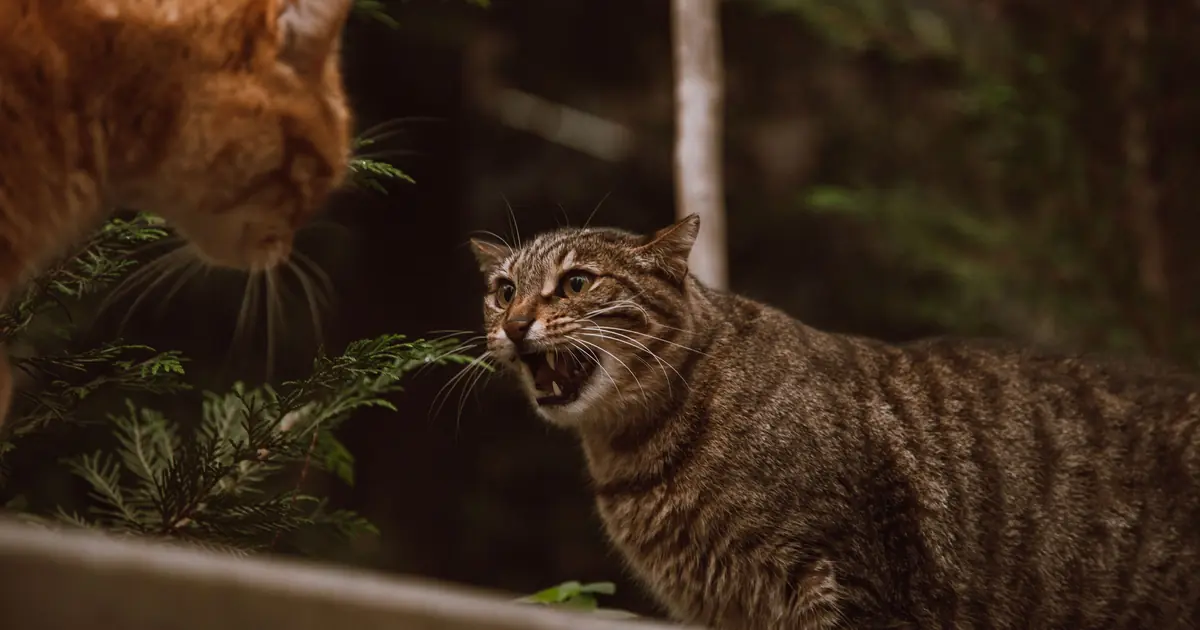
You’ve watched it happen. Your cat spots another cat, maybe through the window, maybe at the vet, maybe living in your own house, and something switches. Ears flatten. Tail puffs. A low growl starts somewhere deep in the chest. It can feel personal, like your sweet, cuddly cat has turned into a completely different animal.
Here’s the thing: it’s usually not personal at all. Cats aren’t wired the way dogs are. They didn’t evolve to live in packs or share territory happily with strangers, and for a lot of cats, another cat reads less like “potential friend” and more like “threat to my stuff.” Let’s get into why that happens, and what you can actually do about it.
- Domestic cats descend from solitary desert-dwelling ancestors, so unlike dogs, they don’t have an instinctive drive to live in groups.
- Kittens who spend time with other cats between roughly 2 and 7 weeks old, the peak socialization window, tend to grow up more tolerant of other cats.
- Resource competition (food, litter boxes, resting spots, and your attention) is one of the most common reasons cats in the same home dislike each other.
- Sudden aggression between cats who used to get along can point to pain or illness in one of them, so it’s worth a vet visit rather than assuming it’s just a personality clash.
- Some cats are genuinely happier as the only cat in the house, and forcing a friendship rarely works.
Why do cats hate other cats in general?
Most cats aren’t hardwired to want feline company, because their wild ancestors hunted and lived alone. The African wildcat, the closest relative to your house cat, is a solitary hunter that only interacts with other cats to mate or raise young, as International Cat Care explains in its guide to conflict between cats. Domestic cats kept a lot of that instinct even after thousands of years living alongside us.
That means a strange cat in your cat’s space isn’t read as a potential playmate by default. It’s read as competition: for food, for the best sunny windowsill, for your lap. Add in that cats communicate through subtle body language that’s easy for two unfamiliar cats to misread, and tension builds fast. Some cats do learn to enjoy feline company, especially with the right start in life, but “cats are pack animals like dogs” is a myth. They’re social on their own terms, not by default.
Is my cat’s hate really about territory and resources?
Yes, in a lot of cases, it’s exactly that. Cats are deeply territorial, and a shared home with too few resources practically guarantees conflict. Picture two cats and one litter box tucked in a corner. Or one food bowl on the counter. Every meal, every bathroom trip becomes a standoff.
Common resource flashpoints include:
- Food and water bowls, especially if they’re placed close together
- Litter boxes, particularly when there aren’t enough for the number of cats in the house
- Favorite resting spots, like a specific windowsill or the top of the cat tree
- Your attention and affection, which cats absolutely compete for
- Doorways and hallways, which a confident cat may “guard” without you realizing it
The general guideline from feline behavior experts is one litter box per cat, plus one extra, spread across different locations in the home. You can read more in our guide on how many litter boxes per cat you actually need. Spreading out food, water, and resting spots the same way takes a lot of pressure off a tense multi-cat household, a strategy the ASPCA recommends for easing aggression between cats sharing a home.
Does early socialization affect whether a cat likes other cats?
It really does. Kittens exposed to other friendly cats during their primary socialization window, roughly 2 to 7 weeks of age, are far more likely to grow up comfortable around other cats. This is the stage when a kitten’s brain is most open to learning that other cats are safe, not scary.
A kitten raised as a single cat with no feline contact during that window, or one that had a rough early experience (getting attacked by an adult cat, for instance), often grows into an adult who sees other cats as a threat first and asks questions later. This isn’t something you can fully undo later in life, but it does explain a lot. If your cat has always been jumpy or defensive around other cats, even ones being perfectly friendly, an incomplete socialization period is often the root cause.
Could fear or a bad past experience be behind it?
Fear is one of the biggest drivers of “hatred” toward other cats, and it can come from a single bad memory. A cat that got cornered by a bully cat as a kitten, was attacked in a shelter, or had a scary run-in with a neighborhood stray can carry that fear for years. What looks like aggression is often a fear response: the cat is trying to make the threat go away, not start a fight for fun.
A fearful cat generally needs more space and a slower pace than one that’s simply asserting territory. Flattened ears, dilated pupils, and trying to flee before swatting or hissing all point to fear leading the reaction. Our piece on why cats hiss covers more on how fear shows up in cat body language.
Is my cat’s dislike just personality, or a “single cat” temperament?
Sometimes, yes, it’s simply who your cat is. Cats have distinct, consistent personalities, and just like people, some are naturally more social and some are naturally more independent. A confident, easygoing cat might tolerate or even enjoy other cats. A cat that’s naturally more solitary, cautious, or particular about control over its environment often prefers to be the only cat, no matter how the introduction goes. Two littermates raised identically can grow up with completely opposite attitudes toward other cats, so breed matters less here than temperament.
Why does my cat react to cats outside the window?
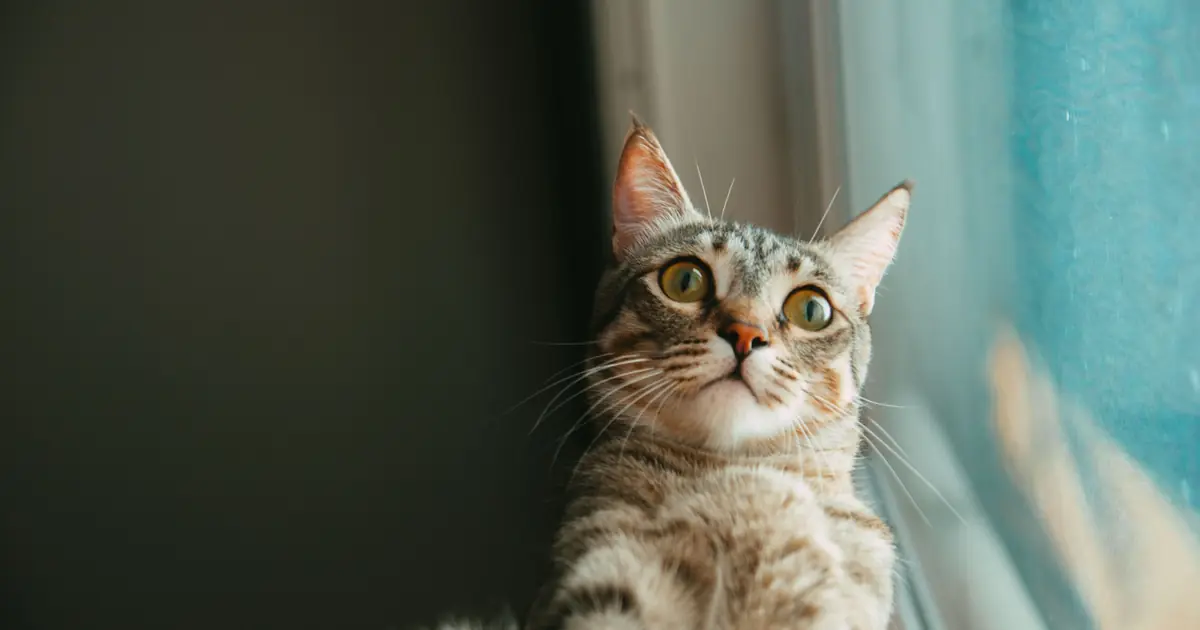
Seeing an unfamiliar cat outside triggers a territorial alarm, even though the intruder can’t actually get inside. Your cat sees another cat on “its” property (the yard, the porch, the space right outside the window) and reads it as a direct challenge to its territory. This is extremely common and has a name behaviorists use: redirected aggression, as VCA Animal Hospitals describes it, happens when a cat that’s worked up from watching a rival outside turns and takes it out on a nearby cat or person instead, sometimes hours after the original trigger is long gone.
Signs your cat is reacting to an outdoor cat include growling or chattering at the glass, a puffed-up tail, and sudden tension or swatting at a housemate cat or you right after the outdoor cat leaves. Closing blinds during peak outdoor-cat hours, using a motion-activated deterrent outside, or blocking the view from favorite window perches can calm this down a lot.
How can I tell normal tension from a real problem between cats?
Some friction between cats sharing a home is normal and doesn’t need intervention. A real, ongoing conflict does. The difference comes down to frequency, intensity, and whether either cat is getting hurt or too stressed to eat, use the litter box, or rest normally.
| Reason a cat dislikes other cats | Sign to watch for | What helps |
|---|---|---|
| Territorial instinct / not a “pack” animal | Stiff body, staring, blocking pathways | Plenty of vertical space and separate territory zones |
| Resource competition | Guarding food, litter box, or resting spots | Multiple bowls, boxes, and beds spread across the home |
| Poor early socialization | General wariness of any unfamiliar cat | Slow, positive exposure and patience, not forced contact |
| Fear or past bad experience | Flattened ears, fleeing, hiding before reacting | Letting the cat control distance and pace of interaction |
| Solitary personality | Calm alone, tense only around other cats specifically | Accepting a single-cat household may be the best fit |
| Outdoor cat sightings | Growling at windows, redirected swatting at housemates | Blocking window views and reducing outdoor cat access |
What actually helps when cats in the house dislike each other?
Slow reintroduction and resource management fix most cases of household tension between cats. Rushing cats back together after a fight, or expecting them to just “work it out,” usually backfires and makes things worse. A structured, patient approach gets far better results.
- Separate the cats completely for a few days to a week, each with their own food, water, litter box, and resting space.
- Swap scents by exchanging bedding or rubbing a cloth on each cat’s cheeks and placing it near the other cat’s food.
- Reintroduce visually through a cracked door or baby gate before allowing full contact.
- Add vertical space, like cat trees and shelves, so a less confident cat always has an escape route up and away.
- Provide separate resources long-term: enough litter boxes, feeding stations, and beds that no cat has to compete or pass by a rival to reach one.
- Consider a feline pheromone diffuser, which mimics calming facial pheromones and can take some edge off tense multi-cat households.
- Keep first supervised sessions short and end them on a calm note, not when tension is already rising.
If you’re currently in the middle of introducing a new cat to a resident one, our full walkthrough on bringing a new cat home to another cat covers the introduction process step by step in more depth than we can here.
Should I just accept my cat wants to be the only cat?
Yes, sometimes that’s the healthiest answer. If you’ve tried a slow, proper introduction more than once, given it real time (weeks, not days), and your cat is still consistently stressed, hiding, or aggressive around other cats, forcing the issue usually just makes every cat in the house miserable. Chronic stress in cats can also contribute to real health problems like urinary issues, so a permanently tense household isn’t a neutral outcome. Plenty of cats live perfectly happy, enriched lives as the only cat, especially ones that get plenty of play, attention, and vertical space from their humans. Wanting to be an only cat doesn’t mean something is wrong with your cat, it just means you know what kind of home they’re best suited to.
When should conflict between cats worry you enough to call the vet?
A sudden change in how two cats treat each other, especially if they used to get along fine, is worth mentioning to your vet. Pain, illness, arthritis, or sensory decline, like vision or hearing loss, can all make a normally tolerant cat snap at a housemate it never had a problem with before. This article is educational, not a substitute for veterinary care, so if your cat’s behavior around other cats changes abruptly, or a fight causes an actual injury, get your cat checked out.
Read our guide on why a cat might suddenly turn aggressive if the shift happened out of nowhere, since sudden and gradual aggression often have different root causes. If the conflict looks more like scuffles and quick swats than deep-seated hatred, our explainer on why cats slap each other covers that behavior specifically. Watching for broader signs of stress in cats can help you catch a brewing problem early.
Frequently Asked Questions
Q: Why does my cat hate all other cats, even ones it’s never met?
A cat that reacts negatively to every unfamiliar cat, without exception, usually missed out on positive socialization with other cats during kittenhood, roughly the 2 to 7 week window when that kind of learning happens most easily. Without early positive exposure, unfamiliar cats simply register as a threat by default.
Q: Can two cats that hate each other ever learn to get along?
Many cats improve significantly with a slow, structured reintroduction that includes scent swapping, gradual visual contact, and separate resources, though the timeline can stretch from a few weeks to several months. Some pairs settle into peaceful coexistence rather than true friendship, and that’s a completely reasonable outcome.
Q: Is it normal for cats in the same house to just tolerate, not love, each other?
Yes, this is actually the most common outcome in multi-cat homes. Many cats settle into peaceful, low-contact coexistence, sharing a home while keeping mostly separate routines, rather than becoming genuinely bonded companions, and that counts as a success.
Q: Why does my cat attack my other cat out of nowhere?
Out-of-nowhere attacks are often redirected aggression, where a cat gets worked up from seeing an outdoor cat, hearing a loud noise, or another stressor, then takes it out on the nearest cat since it can’t reach the real trigger. Sudden aggression can also signal pain or illness, so a vet check is a good idea if it’s a new pattern.
Q: Does bringing home a kitten fix an adult cat’s dislike of other cats?
Not automatically. A kitten’s playful energy can actually stress out an adult cat that already dislikes other cats, especially in the first few weeks. A slow introduction still matters even when one cat is young, and an adult cat with a strong single-cat personality may never fully warm up regardless of the newcomer’s age.
Q: How long does it take for cats to stop hating each other?
A gradual, well-managed introduction typically takes 2 to 8 weeks before cats reach a calm baseline, though some pairs need several months. Rushing the process is the most common reason introductions fail and have to start over from scratch.
Q: Are certain cat breeds less likely to hate other cats?
Breeds developed for sociability, like Ragdolls, Maine Coons, and Birmans, are generally reported as more tolerant of other cats, but individual personality and early socialization still matter more than breed alone. A well-socialized mixed-breed cat can be far more accepting of other cats than a poorly socialized purebred.
Q: Should I get my cat a companion if it already seems to hate other cats?
Generally, no. If your cat currently shows fear or aggression toward other cats, adding a new one is likely to create a stressful household rather than solve loneliness. A cat showing this pattern is usually happier and healthier as the only cat, with enrichment and attention from you filling that role instead.

Hello and welcome to The Ideal Cat!
We are some passionate cat owners from different professions. We love our cats and have a lot of experience in how to care for our pets. We are incredibly excited to share our knowledge, experience, and research with you. So you can take good care of your loving cat. We will answer most of the common questions about owning cats, taking care of them, etc. If you have any question contact with us. Thanks for visiting! Enjoy the content.
