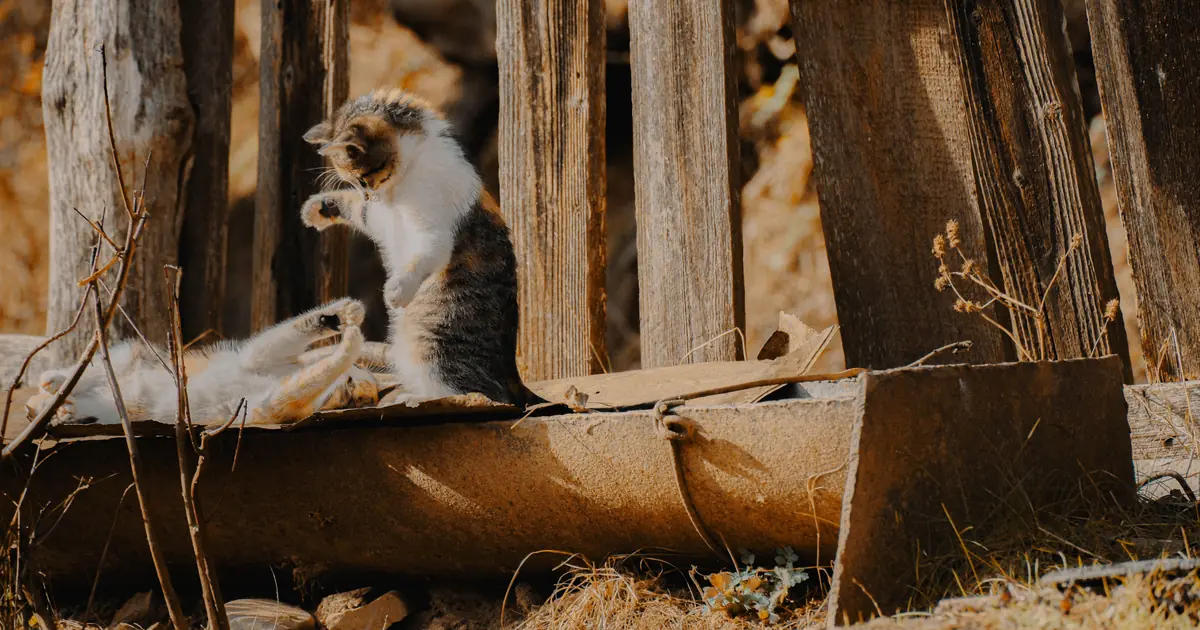
You’re minding your own business, coffee in hand, when your two cats suddenly go full boxing match on the living room rug. One paw whips out, the other cat ducks, and for a second you’re sure a fight is about to break out. Then, just as fast, they’re grooming each other like nothing happened.
This paw-boxing routine is one of the most common (and most confusing) things cat parents watch happen between their pets. Cats don’t have hands to shove each other with or words to say “back off.” A slap does a lot of that talking for them. Most of the time it’s harmless. Sometimes it’s not. Here’s how to tell which one you’re looking at.
- Cats slap each other during play, to enforce personal space, to negotiate territory or rank, when overstimulated, or to redirect frustration they can’t take out on the real source.
- Playful slaps usually come with claws sheathed, relaxed body language, and no sound.
- Real aggression usually includes hissing or growling, flattened ears, dilated pupils, and claws out.
- Mother cats routinely slap their kittens to teach bite inhibition and boundaries, and this is a normal part of kitten development.
- You should never separate fighting cats with your bare hands. A loud noise, a thrown towel, or a physical barrier is the safe way to break it up.
Why Do Cats Slap Each Other?
Cats slap each other because a paw swat is one of their main tools for communicating without words. A slap can mean “let’s play,” “back off,” “this spot is mine,” or “you’re too close, buddy.” Since cats can’t push each other away with hands or negotiate out loud, the paw does the job instead.
The reasons behind a slap usually fall into one of five buckets: rough play between cats who like each other, boundary-setting when one cat feels crowded, territory or hierarchy disputes in a multi-cat home, overstimulation from too much petting or activity, or redirected aggression, where a cat that’s worked up about something else (a bird outside the window, a strange noise) takes it out on the nearest cat instead. The trick is figuring out which bucket you’re watching in the moment, and body language is your best clue.
Is It Play or a Real Fight? How to Tell the Difference
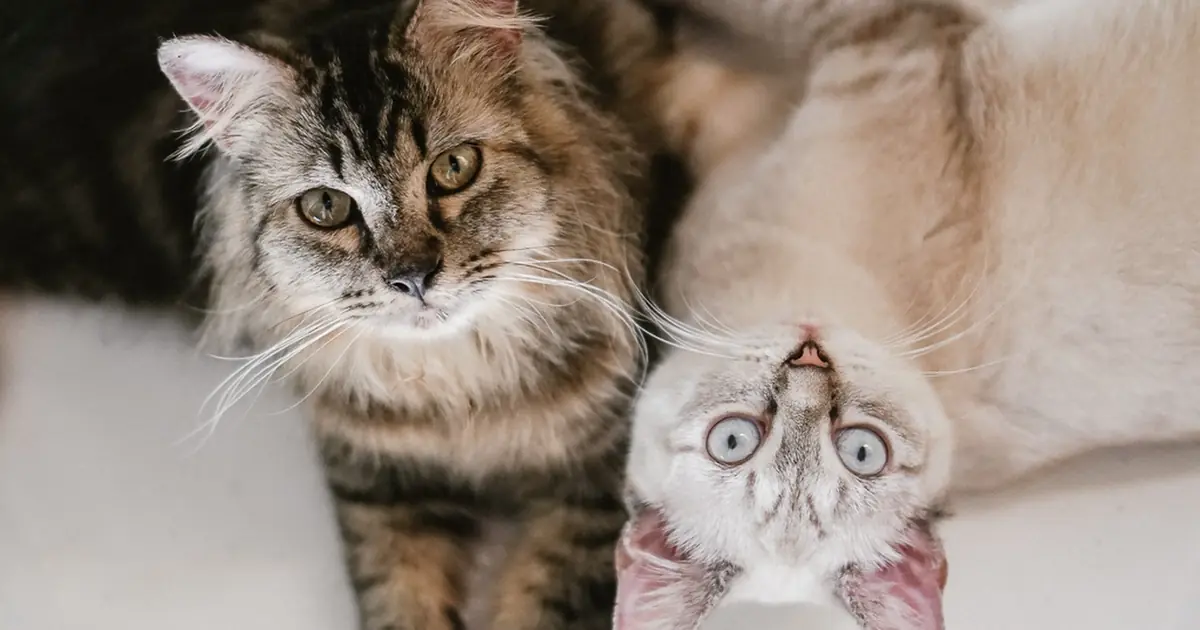
You can usually tell play from a real fight by watching the claws, the sounds, and who’s taking turns. Playful slapping is quiet, claws stay tucked in, and both cats keep swapping who’s on top. Real aggression is loud, claws come out, ears go flat, and one cat is clearly trying to end the interaction rather than continue it.
Play sessions also tend to include breaks. Cats will slap, chase, flop over, groom themselves for a second, then start again. A real fight doesn’t have that easy rhythm. It’s tense from the first swat, and the body language stays stiff the whole time, not loose and bouncy.
| Sign | Playful Slapping | Aggressive Slapping |
|---|---|---|
| Claws | Tucked in (sheathed) | Out and visible |
| Sound | Silent or soft chirps | Hissing, growling, yowling |
| Ears | Forward or relaxed | Flattened sideways or back |
| Turn-taking | Both cats swap roles | One cat is clearly on the attack |
| Body posture | Loose, bouncy, sideways hops | Stiff, crouched, tail puffed or lashing |
| Ending | Both cats relax or groom after | One cat flees, hides, or stays tense |
If you’re not sure whether your cats are playing rough or genuinely fighting, watching for hissing during play is a good gut check. Cats can hiss occasionally in a play session that’s getting a little intense without it turning into a real fight, but a steady stream of hissing and growling usually means it’s time to break things up.
Are Cats Slapping to Set Boundaries?
Cats often slap each other to set a boundary, the same way you might put a hand up and say “that’s close enough.” A slap tells another cat to stop grooming them, stop pouncing, or simply back off from their space. It’s less about anger and more about a cat protecting their own comfort zone.
This kind of slap is usually a single, fast swipe with claws in, aimed at the other cat’s face or shoulder. The recipient often backs off immediately, and that’s the whole interaction. No chasing, no noise, no drama. Think of it as a cat’s version of “personal space, please,” and honestly, most humans could use that skill too.
Why Do Cats Slap Each Other Over Territory and Hierarchy?
Cats slap each other over territory and hierarchy because multi-cat households don’t run on total equality. Even cats who share a home peacefully often work out an unspoken pecking order, and access to resources like the best sunny windowsill, the food bowl, or the litter box can trigger a quick slap from the cat who considers that spot theirs.
This is more common in homes with three or more cats, or when a new cat has recently joined the household. A slap in this context is a cat asserting rank, not necessarily starting a war. It tends to happen around doorways, food stations, and favorite resting spots, which is exactly why signs of stress in cats often show up first in multi-cat homes where resources feel limited. Giving each cat their own food bowl, litter box, and resting spot usually cuts down on this kind of friction fast.
Can Overstimulation Cause Cats to Slap Each Other?
Yes, overstimulation can absolutely cause a cat to slap another cat, even one they normally get along with. If a cat gets too worked up from play, a loud noise, or something outside the window they can’t reach, that pent-up energy has to go somewhere. Often it lands on whichever cat happens to be nearby.
This is called redirected aggression, and it’s one of the more confusing forms of cat-on-cat slapping because it seems to come out of nowhere. Your cat isn’t actually mad at their housemate. They’re mad about something else entirely and taking it out on the closest available target. If your cat has ever gone from calm to suddenly aggressive with no obvious trigger, redirected aggression is one of the most common explanations, according to the International Cat Care aggression guide.
Do Mother Cats Slap Their Kittens?
Yes, mother cats slap their kittens on purpose, and it’s a completely normal part of raising a litter. A mother cat will use a quick, controlled paw tap to teach kittens not to bite too hard, not to nurse too roughly, and to respect her space when she’s had enough.
These corrective slaps look sharper than they are. A mother cat has excellent control over her claws and rarely draws blood or causes real harm. It’s discipline, not cruelty, and kittens actually need this kind of feedback to learn bite inhibition before they’re around people and other animals. If you’ve adopted a kitten who still play-bites too hard, they may simply be missing out on lessons a mother cat would normally teach.
When Should You Step In, and How Do You Break Up a Cat Fight Safely?
You should step in when you hear hissing or growling, see flattened ears and claws out, or notice one cat trying to flee while the other keeps chasing. That combination means play has crossed into a real fight, and it’s time to interrupt it before someone gets hurt.
Understanding overall cat body language makes this call much easier, since a puffed tail, pinned ears, and a low growl together are a clear signal, even if you only catch part of the interaction. A single slap with claws in and no sound almost never needs your intervention. Let cats work out the small stuff on their own.
How to Break Up a Fight Safely
Never grab or reach between two fighting cats with your bare hands. Adrenaline makes cats fast and unpredictable, and redirected aggression can land squarely on you.
- Make a sudden loud noise, like clapping your hands or dropping a book, to startle both cats and break their focus.
- Toss a towel, blanket, or pillow over one cat to interrupt the fight without touching either cat directly.
- Use a chair, laundry basket, or piece of cardboard as a barrier to physically separate them if the noise doesn’t work.
- Once they’re apart, give both cats a separate room to cool down for at least 20 to 30 minutes before letting them near each other again.
- Check both cats for scratches or bite wounds once things have settled, since even minor puncture wounds from a cat bite can get infected.
How to Reduce Fighting in a Multi-Cat Home
You can reduce fighting between cats by making sure resources never feel scarce. The general guideline from feline behavior experts is one litter box per cat plus one extra, spread across different locations, along with separate food and water stations so no cat has to compete or pass through another cat’s territory to eat.
- Add vertical space like cat trees and shelves so cats can avoid each other when they want to.
- Introduce new cats slowly, using scent swapping and gradual, supervised visits rather than a sudden face-to-face meeting.
- Keep nails trimmed on all cats to lower the chance of injury during scuffles.
- Talk to your vet about pheromone diffusers or, in persistent cases, behavior support if tension keeps escalating.
If you’re bringing a new cat into a home that already has one, a slow introduction process does more to prevent slapping and hissing down the line than almost anything else you can do.
One more thing worth flagging: if two cats who’ve always gotten along suddenly start fighting, or if one cat seems to wince, flinch, or slap out of nowhere when touched, pain could be behind it. Cats hide discomfort well, and conditions like arthritis or dental pain can make a cat less tolerant of a housemate’s usual behavior. This article is educational, not a substitute for veterinary care, so a checkup is worth it if the sudden change in behavior doesn’t have an obvious explanation. The Cornell Feline Health Center notes that a sudden change in a cat’s aggression level toward a familiar housemate is one of the signals worth mentioning to your vet.
Frequently Asked Questions
Q: Is it normal for cats to slap each other?
Yes, it’s completely normal. Most slapping between cats who live together is play or a quick boundary reminder, and it usually happens with claws sheathed and no hissing involved.
Q: Why does my cat slap my other cat with claws out?
Claws out during a slap usually signals real annoyance or aggression rather than play. Pair it with flattened ears or hissing and it’s a sign the interaction has moved past friendly roughhousing.
Q: Should I let my cats slap each other?
You can let cats slap each other during normal play, since it’s how they communicate and burn energy together. Step in only if you see claws out, hissing or growling, or one cat clearly trying to get away.
Q: Why do cats sometimes hiss after slapping?
A hiss after a slap usually means the swat landed harder than intended or that the interaction tipped from play into irritation. An occasional single hiss during rough play isn’t unusual, but repeated hissing means it’s time to separate the cats.
Q: Can two cats who slap each other still be friends?
Yes, plenty of bonded cats slap each other regularly as part of normal play and communication. As long as claws stay in, there’s no chasing to escape, and both cats relax or groom afterward, the friendship is fine.
Q: Why does my older cat slap the kitten?
An older cat often slaps a kitten to set boundaries the same way a mother cat would, teaching the kitten not to pounce or bite too hard. A quick, quiet swat with claws in is normal discipline, not a sign the older cat dislikes the kitten.
Q: How do I stop my cats from constantly slapping each other?
Reduce constant slapping by giving each cat their own food, water, litter box, and resting spots so they aren’t competing for resources. Adding vertical space like cat trees also gives tense cats a way to avoid each other without a confrontation.
Q: Is tail-slapping the same as face-slapping between cats?
No, a cat slapping with its tail is different from a paw slap between two cats. Tail-slapping is usually a cat expressing irritation or overstimulation on its own, which you can read more about in a guide to why cats slap with their tail, while paw slaps between cats are direct communication with each other.

Hello and welcome to The Ideal Cat!
We are some passionate cat owners from different professions. We love our cats and have a lot of experience in how to care for our pets. We are incredibly excited to share our knowledge, experience, and research with you. So you can take good care of your loving cat. We will answer most of the common questions about owning cats, taking care of them, etc. If you have any question contact with us. Thanks for visiting! Enjoy the content.
