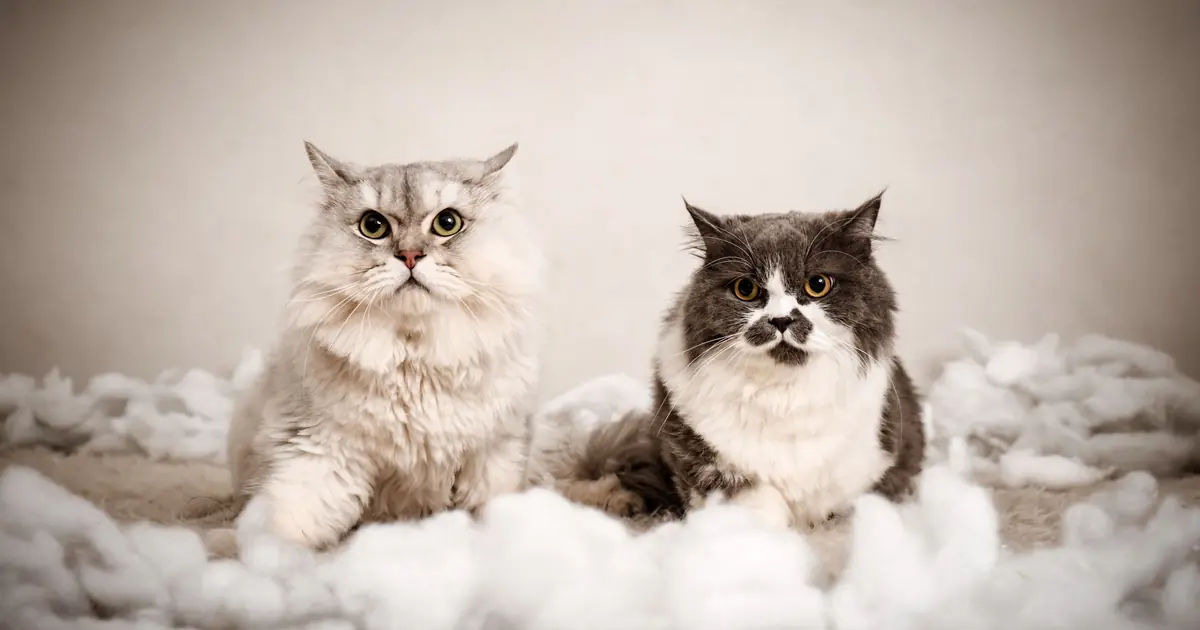
If you’ve ever run a hand down a Persian cat’s back and come away looking like you pet a small cloud, you already know the answer. These cats are gorgeous, but that flowing coat comes with a price: hair, on your couch, in your coffee, wedged into places you didn’t know hair could travel.
Here’s the thing though: Persian shedding is completely manageable once you build a grooming routine around it. This guide covers how much Persians shed, why their coat behaves this way, and what actually keeps the fur under control (spoiler: it’s not a fancy gadget, it’s a daily habit).
- Persian cats shed heavily year-round, with the heaviest shedding in spring and fall as their coat transitions.
- Persians have a double coat: a long topcoat plus a dense, insulating undercoat, which is why they shed so much more than short-haired breeds.
- No cat breed is truly hypoallergenic, including the Persian; allergies are triggered by the Fel d 1 protein in saliva and skin, not fur length.
- Daily brushing is non-negotiable for Persians; skipping even a few days can let mats form close to the skin.
- Sudden bald patches, skin-level matting, or a big jump in shedding can point to a health issue and are worth a vet visit.
Do Persian Cats Shed a Lot?
Persian cats shed a lot, more than the average cat breed. Their long, dense double coat is built to trap loose hair rather than let it fall away cleanly, so without regular brushing, hair piles up on furniture, clothing, and floors. It’s not a seasonal blip either. Persians shed year-round, and most owners notice tufts of undercoat coming loose almost daily.
Compare that to a short-haired cat like a Siamese, which sheds noticeably less, and the difference is obvious within a week. If shedding volume is your main worry, read our full Persian cat breed guide before committing, since coat care here is a daily part of life, not an occasional chore.
Why Do Persian Cats Shed So Much?
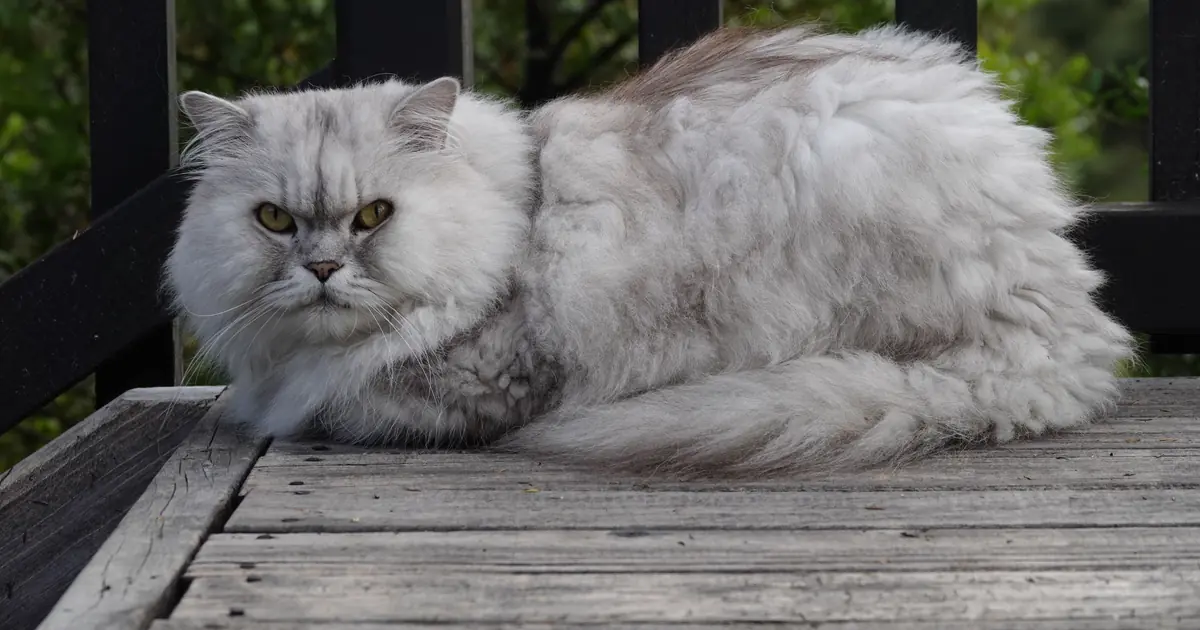
Persian cats shed heavily because they carry a double coat: a long, silky topcoat over a thick, wooly undercoat that’s meant to insulate. That undercoat constantly cycles through growth and shedding phases, and because the hair is so long, shed strands don’t fall away cleanly the way they do on a short-haired cat. Instead, they get caught in the surrounding coat and mat together if nobody intervenes.
This is also why Persians look deceptively fluffy even after a big shedding session; the topcoat hides how much undercoat has actually come loose underneath. According to International Cat Care, long-haired breeds rely on their owners to do the grooming work that a wild cat’s shorter coat handles on its own.
Does Persian Shedding Get Worse by Season?
Yes, Persian shedding gets noticeably worse during spring and fall coat changes. In spring, cats shed their thicker winter undercoat as days get longer and temperatures rise. In fall, many indoor Persians blow their coat again as their body preps for cooler weather, even if your house stays a steady 70 degrees. Indoor cats under artificial light shed on a less predictable schedule than outdoor cats, but spring and fall peaks are still the most common pattern owners report.
During these stretches, expect to brush more often, maybe twice a day, and don’t be surprised if your vacuum starts working overtime for a few weeks.
Are Persian Cats Hypoallergenic?
No, Persian cats are not hypoallergenic, and no cat breed truly is. Cat allergies come mainly from a protein called Fel d 1, found in a cat’s saliva, skin glands, and urine, not from the hair itself. Fur just carries that protein around the house as cats groom and shed. Because Persians shed so much, they can actually spread more allergen-coated hair through your home than a lower-shedding breed, making them a rough pick for allergy sufferers.
The ASPCA notes allergy severity varies by individual cat and individual person. If allergies are a real concern in your house, read up on which cat breeds shed less and produce lower Fel d 1 levels before falling for a Persian’s face at the shelter.
How Much Grooming Do Persian Cats Need?
Persian cats need daily brushing, full stop. That long double coat mats quickly if left alone for even two or three days, and mats close to the skin can become painful and need a vet or groomer to remove. A solid Persian grooming routine looks like this:
- Brush daily with a wide-tooth metal comb, working section by section down to the skin, not just over the top of the coat.
- Check the belly, armpits, and behind the ears every session; these spots mat first and are easy to miss.
- Wipe the eyes daily with a damp cloth, since Persians’ flat faces make many of them prone to tear staining.
- Bathe every 4 to 6 weeks with a cat-safe shampoo to remove oil buildup that plain brushing can’t fully reach.
- Book a professional groom every 6 to 8 weeks if mats are a recurring problem, or consider a shorter “lion cut” for the summer months.
Choosing the right shedding brush for your cat’s coat type makes this routine faster and more pleasant for both of you. A slicker brush plus a metal comb is the combo most Persian owners land on eventually.
How Do You Manage Persian Shedding and Hairballs?
You manage Persian shedding by combining daily brushing with good hydration, a quality diet, and the right tools, since loose hair left in the coat often gets swallowed and turns into hairballs. Cats groom themselves constantly, and a heavy-shedding Persian ingests far more loose hair than a short-haired cat during every session.
- Brush daily to physically remove hair before your cat swallows it.
- Keep fresh water available at all times; good hydration helps hair move through the digestive tract instead of balling up.
- Feed a quality diet with adequate fiber, which helps carry swallowed hair through rather than letting it sit and clump.
- Consider a hairball-control formula if your cat is coughing up hairballs more than once or twice a month.
- Use a deshedding tool designed for double coats, not a slicker brush alone, to reach the undercoat.
VCA Hospitals notes occasional hairballs are normal, but frequent vomiting or constipation tied to hairballs is worth mentioning to your vet. If your cat’s shedding suddenly spikes outside the normal spring or fall pattern, our guide on why cats shed more than usual covers the most common causes.
Persian vs. a Low-Shedding Breed: How Do They Compare?
A Persian’s coat and grooming needs look completely different from a naturally low-shedding breed. Here’s a side-by-side look using a Siamese as the comparison, since it’s one of the lowest-shedding common breeds:
| Trait | Persian | Low-Shedding Breed (e.g., Siamese) |
|---|---|---|
| Coat type | Long, double coat with dense undercoat | Short, single coat, minimal undercoat |
| Shedding level | Heavy, year-round with seasonal peaks | Light to moderate, less noticeable |
| Grooming needs | Daily brushing required | Weekly brushing usually enough |
| Matting risk | High if brushing is skipped | Very low |
| Bathing frequency | Every 4 to 6 weeks recommended | Rarely needed |
If daily brushing sounds like more commitment than you want, breeds like the Siamese or a shorter-coated cat are a lot more forgiving. Persians are worth it for a lot of owners, but honestly, they’re not the low-maintenance choice some people expect.
When Does Persian Cat Shedding Signal a Health Problem?
Persian shedding signals a health problem when it happens suddenly, unevenly, or comes with bald patches, skin irritation, or matting down at the skin that wasn’t there weeks earlier. Normal Persian shedding stays heavy but even across the body and roughly consistent with the season. Bald spots, red or flaky skin, sores under mats, or over-grooming one area are different from typical shedding and worth a vet visit.
Ringworm, flea allergy dermatitis, thyroid problems, and stress-related over-grooming can all show up as unusual hair loss. This article is educational, not a substitute for veterinary care, so if you notice these red flags, get your cat checked by a licensed vet. The Cornell Feline Health Center is a solid resource on feline skin and coat conditions.
Frequently Asked Questions
Q: Do Persian cats shed more than other cat breeds?
Yes, Persian cats shed more than most breeds because of their dense double coat. Short-haired breeds like the Siamese or Bengal shed noticeably less and are far easier to keep mat-free.
Q: How often should I brush my Persian cat?
Brush your Persian cat once a day, and twice a day during spring and fall shedding peaks. Skipping brushing for even a few days lets loose undercoat tangle into mats close to the skin.
Q: Are Persian cats good for people with allergies?
No, Persian cats are generally a poor choice for allergy sufferers. Their heavy shedding spreads more Fel d 1 protein-coated hair through the home compared to lower-shedding breeds.
Q: Do Persian cats need professional grooming?
Many Persian owners book a professional groom every 6 to 8 weeks, especially if mats become a recurring issue. A groomer can also give a shorter “lion cut” for summer, though daily home brushing is still needed between visits.
Q: Why does my Persian cat have mats even though I brush it?
Mats usually form in spots that get missed during brushing, like the armpits, belly, and behind the ears. Switching to a wide-tooth metal comb and working all the way down to the skin, not just over the topcoat, usually solves it.
Q: Do Persian cats get hairballs more than other cats?
Yes, Persian cats tend to get hairballs more often because they swallow more loose hair during self-grooming. Daily brushing, good hydration, and a fiber-appropriate diet all help reduce how often hairballs happen.
Q: Is it normal for a Persian cat to shed all year?
Yes, it’s normal for Persian cats to shed year-round, with noticeably heavier shedding during the spring and fall coat transitions. Indoor cats under artificial lighting may shed on a slightly less predictable schedule than outdoor cats.
Q: When should I worry about my Persian cat’s shedding?
Worry if you notice bald patches, red or irritated skin, sores hidden under mats, or a sudden jump in shedding outside the normal seasonal pattern. These signs are different from typical shedding and are worth a veterinary visit.

Hello and welcome to The Ideal Cat!
We are some passionate cat owners from different professions. We love our cats and have a lot of experience in how to care for our pets. We are incredibly excited to share our knowledge, experience, and research with you. So you can take good care of your loving cat. We will answer most of the common questions about owning cats, taking care of them, etc. If you have any question contact with us. Thanks for visiting! Enjoy the content.
)