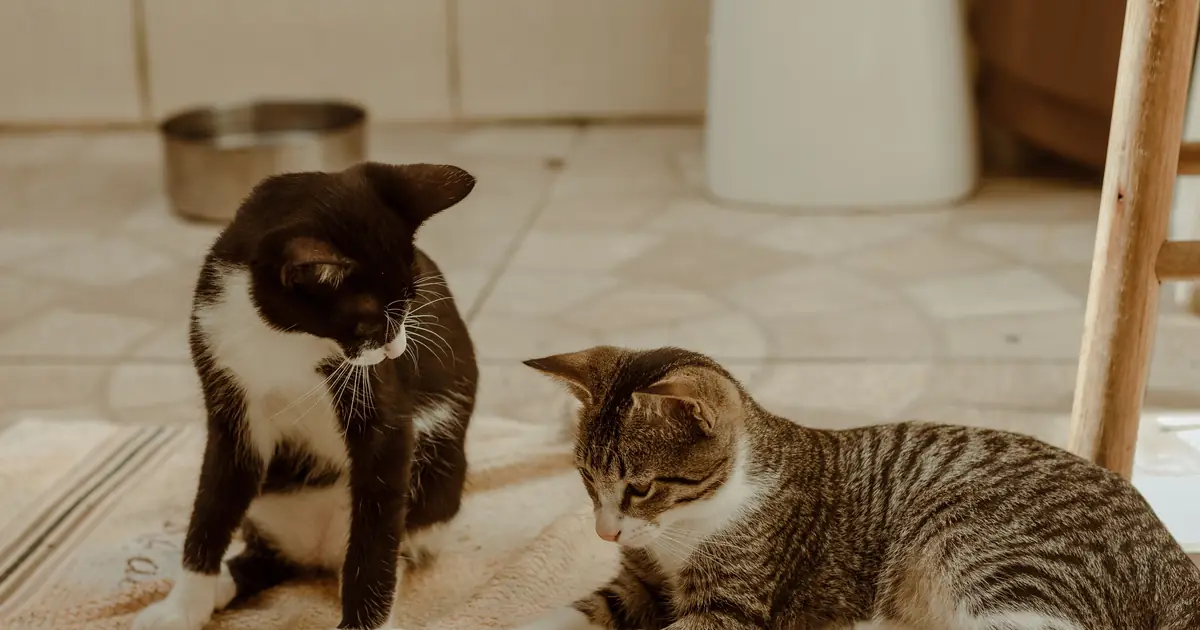
Picture this. Two cats are wrestling on the living room rug, a blur of paws and rolling bellies. Then out of nowhere, one lets out a sharp hiss. You freeze. Was that just the game, or did somebody just declare war on the carpet?
So, do cats hiss when they play? Sometimes, yes. But here’s the honest version most articles skip: a hiss is almost never the happy sound of play itself. It’s a little flag going up. It means one cat is getting overwhelmed, a bit scared, or trying to say “hey, ease off.” A single short hiss during a rowdy session is usually just a boundary. Frequent hissing is a red flag worth managing.
- Happy cat play is mostly silent; most cats do not vocalize when they are genuinely having fun.
- A hiss during play signals overstimulation, mild fear, or a “too rough” boundary, not enjoyment.
- An occasional short hiss between play partners is a normal way one cat says “back off.”
- Frequent hissing, growling, flattened ears, puffed fur, or one cat always pinning the other means play has crossed into real conflict.
- In real play, cats take turns, keep claws sheathed, and walk away without injuries or drama.
Do cats hiss when they play, and what does it actually mean?
Cats can hiss during play, but the hiss itself is a warning, not a sign of fun. Most cats stay pretty quiet when they are truly enjoying themselves. A relaxed, playful cat might chirp or trill, but a hiss is a defensive noise. It means air is being pushed out fast to say “give me space.”
Think of a hiss as your cat’s version of a raised hand. It’s not automatically a fight. During a fast, physical play session between two cats, one might hiss for a second when a wrestling move lands too hard or a bite pinches. That’s the cat setting a limit. If the game pauses and then resumes calmly, you just watched healthy communication in action.
The problem is when the hissing keeps coming. One hiss is punctuation. A string of hisses, especially with growling, is a sentence, and the sentence is “I am not okay with this.” If you want the bigger picture on this sound in general, our guide on why cats hiss and what it means breaks down every context, not just play.
How can you tell cat play from a real fight?
You tell play from a real fight by watching the whole body, not just the noise. Play is loose, bouncy, and fair. A real fight is tense, rigid, and one-sided. Cats reading as playful keep their fur flat, take turns being on top, and pause for little breaks. Cats in a genuine fight puff up, flatten their ears, and lock into a hard stare.
Sound is a big tell too. Playing cats are usually quiet or make cheerful chirps and trills. Fighting cats hiss, growl, and yowl. And the bites are different. Play bites are soft nips that don’t break skin. Fight bites are hard, with fur flying and sometimes fang marks left behind.
Learning to read these signals is a skill, and it gets easier fast. If you want to go deeper on postures and tails and ears, our full breakdown of cat body language is a handy companion to this one.
Playful hiss vs real aggression hiss: how do you tell them apart?
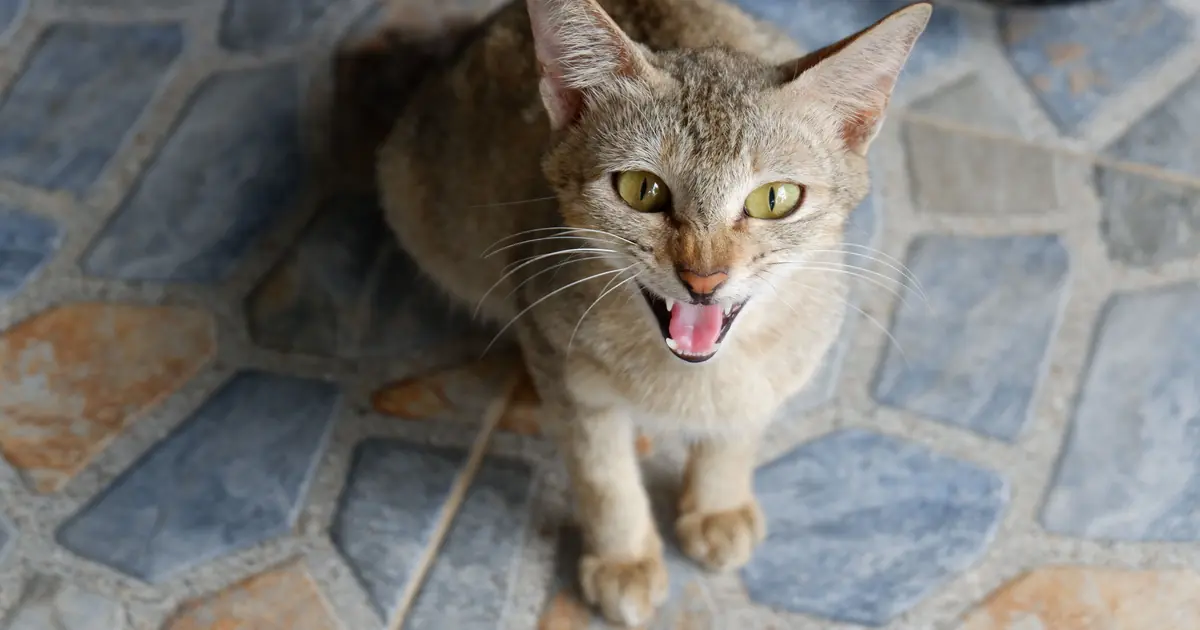
A playful-context hiss is short, one-off, and followed by the game continuing. An aggressive or fearful hiss is repeated, paired with a stiff body, and followed by chasing or hiding. The table below lays out the clues side by side so you can size up your own cats in about ten seconds.
| Clue | Play (or harmless boundary hiss) | Real aggression or fear |
|---|---|---|
| Sound | Mostly silent, chirps, trills, maybe one short hiss | Repeated hissing, growling, yowling, screaming |
| Fur | Flat and smooth | Puffed up, tail bottle-brushed |
| Ears | Forward or neutral | Flattened back against the head |
| Body | Loose, rolling, bouncy | Tense, rigid, low to the ground |
| Turn-taking | Both cats swap top and bottom | One cat always chases or pins the other |
| Claws and bites | Sheathed claws, soft nips | Claws out, hard bites, fur pulled, broken skin |
| Aftermath | Everyone calm, no injuries | Hiding, blocking, no injuries only by luck |
The single best clue is the aftermath. Cats who were really playing shake it off and often groom near each other minutes later. Cats who were fighting avoid each other, guard doorways, or bolt for the closet.
Why does a hiss show overstimulation or a boundary?
A play hiss usually shows overstimulation because cats have a shorter fuse for physical contact than we expect. Play winds a cat up. Their arousal climbs, their heart races, and at some point the fun tips into “too much.” The hiss is the release valve. It says “I need a second.”
You’ll see the same thing during petting. A cat purrs, enjoys the strokes, and then suddenly nips or hisses because the input piled up. That overstimulation dynamic is exactly what happens in rough play, and we cover the petting version in why your cat bites when you pet her. Same wiring, different trigger.
Boundaries matter here, and they’re healthy. When one cat hisses to say “you bit too hard,” and the other cat backs off, that’s good social behavior. It’s how cats negotiate. According to the feline behavior guidance from International Cat Care, hissing is a distance-increasing signal, a request for space rather than an attack. Let them have that conversation before you jump in.
Is kitten play different from adult play, and does that change the hissing?
Kitten play is rougher, faster, and noisier than adult play, so a stray hiss between kittens is very common and usually harmless. Kittens are still learning bite control and body signals. They pounce hard, overshoot, and get a boundary hiss from a sibling or an adult cat. That’s the lesson landing. It’s how they learn “that was too much.”
Adult cats tend to play with more restraint. They pace themselves and read each other better, so a hissing adult is more meaningful than a hissing kitten. When a normally chill adult starts hissing mid-play, take it seriously, because adults usually don’t cross that line unless something is genuinely off.
All that pent-up play energy has to go somewhere, and in young cats it often erupts as the pre-dawn sprints. If your cat’s play sessions come with wild laps around the house, our take on why cats get the zoomies explains where that arousal comes from and how to time it better.
When is play between two cats actually bullying?
Play between two cats has crossed into bullying when it stops being mutual. Real play is a fair trade: both cats chase, both get chased, both take a turn on the bottom. Bullying is one-directional. One cat always initiates, always pins, and never lets the other reset or walk away.
Watch for these red flags that the “game” has become one-sided pressure:
- The same cat is always the chaser, never the chased.
- One cat hisses, growls, or tries to flee repeatedly and gets pursued anyway.
- One cat starts avoiding food, water, or the litter box because the other guards them.
- Puffed fur, screaming, or broken skin shows up.
- The “play” always ends with one cat hiding.
If you’re seeing these, it’s not play, and it won’t fix itself. The ASPCA’s cat behavior resources recommend giving each cat their own space, resources, and escape routes to defuse this kind of tension. Vertical space, extra litter boxes, and separate feeding spots take the pressure off fast.
How do you keep cat play positive and hiss-free?
You keep play positive by burning off energy with toys instead of bodies, keeping sessions short, and stepping in before things boil over. The goal isn’t zero excitement. It’s channeling that excitement so nobody gets overwhelmed enough to hiss. A tired cat is a calm cat.
- Use wand toys, not your hands. Let cats chase and pounce on a feather wand or kicker toy. This drains prey energy without teaching them to attack skin. Our roundup of the best interactive cat toys has solid options for solo and multi-cat homes.
- Keep sessions short. Two or three ten-minute bursts beat one marathon. Stop while your cat is still having fun, before overstimulation kicks in.
- Watch for the tipping point. Flattened ears, a lashing tail, or the first hiss means pause. Give a cool-down break rather than pushing through.
- Separate when needed. If two cats keep tipping into conflict, split them into different rooms for a bit. A short breather resets everyone.
- Give each cat their own stuff. Enough beds, perches, toys, and litter boxes means less to compete over, and less to hiss about.
This article is educational and not a substitute for veterinary or behavioral advice. If two cats who used to get along suddenly start fighting, or a cat’s play turns aggressive out of the blue, check in with your vet. Sudden behavior changes can signal pain or illness. The Cornell Feline Health Center is a trustworthy starting point, and a vet can rule out a medical cause before you treat it as purely behavioral.
Frequently asked questions about cats hissing during play
Q: Is it normal for cats to hiss while playing?
An occasional short hiss during rough play is normal and usually means one cat is setting a “too rough” boundary. Most happy play, though, is quiet. Frequent hissing is not normal play and signals overstimulation, fear, or real conflict that needs managing.
Q: How do I know if my cats are playing or fighting?
Playing cats take turns, keep their fur flat, sheath their claws, and stay mostly quiet. Fighting cats puff up, flatten their ears, hiss and growl repeatedly, and one cat always chases or pins the other. Check the aftermath too: playmates stay calm, fighters hide or avoid each other.
Q: Why does my kitten hiss when playing?
Kittens hiss during play because they are still learning bite control and how to read each other. A boundary hiss from a sibling teaches a kitten that a pounce or bite was too hard. Occasional hissing between kittens is common and usually harmless as long as nobody gets hurt.
Q: Should I break up my cats when one hisses?
Not for a single short hiss followed by calm. That’s normal cat communication. Step in if the hissing repeats, escalates to growling or screaming, or one cat keeps chasing another that’s trying to flee. Never use your hands to separate fighting cats; clap, toss a soft toy, or block the view instead.
Q: Do cats hiss when they are excited or happy?
Cats do not hiss when they are happy. A hiss is a defensive, distance-increasing signal that means “back off” or “I’m overwhelmed.” Happy, excited cats chirp, trill, or stay silent. If your cat hisses during play, read it as overstimulation, not enjoyment.
Q: Why does one of my cats hiss but the other doesn’t?
Often the hissing cat is the one feeling overwhelmed or pressured, while the other is still in full play mode. This is common when one cat has a shorter tolerance for rough play. If the same cat always hisses and tries to escape, the play may be one-sided and drifting toward bullying.
Q: Can play fighting turn into a real fight?
Yes. Play can tip into a real fight when arousal climbs too high, one cat gets cornered, or a bite lands too hard. Warning signs are repeated hissing, growling, puffed fur, and one cat no longer taking turns. Cool things down with a break before it escalates.
Q: How can I stop my cats from getting too rough during play?
Redirect their energy with wand toys instead of hands, keep sessions short and frequent, and pause at the first sign of overstimulation like a lashing tail or flattened ears. Give each cat their own toys, perches, and space so there’s less to compete over.

Hello and welcome to The Ideal Cat!
We are some passionate cat owners from different professions. We love our cats and have a lot of experience in how to care for our pets. We are incredibly excited to share our knowledge, experience, and research with you. So you can take good care of your loving cat. We will answer most of the common questions about owning cats, taking care of them, etc. If you have any question contact with us. Thanks for visiting! Enjoy the content.
