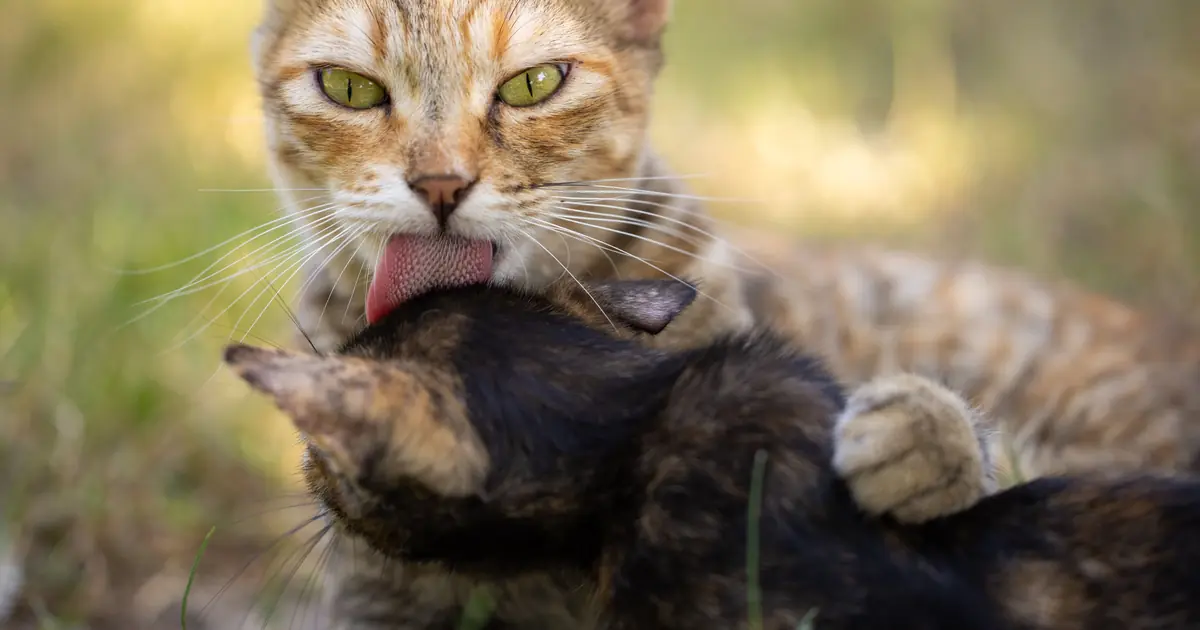
Picture this. Your cat finishes a long grooming session, all licks and little nibbles at the base of the tail. Looks perfectly innocent. But if a single flea was hiding in that fur, one quick swallow is all it takes. That’s the honest answer to how do cats get tapeworms: most of the time, it starts with a flea.
Here’s the thing. Tapeworms sound scary, and finding little rice-like bits near your cat’s rear is enough to make anyone panic. The good news is that this is one of the most common and most treatable parasites cats deal with. Once you understand the two ways cats pick them up, prevention gets a lot simpler.
- The number one way cats get tapeworms is swallowing an infected flea while grooming, usually the species Dipylidium caninum.
- The second route is hunting and eating infected prey like rodents, rabbits, or birds, which carry Taenia tapeworms.
- Cats cannot catch tapeworms directly from another cat; they need the flea or the prey as a middleman.
- The clearest sign is small, rice-like segments (about 12 mm long) near your cat’s tail, in their stool, or on bedding.
- Flea control is the single best prevention, and deworming should always be directed by your vet.
This article is educational and not a substitute for veterinary care. If you think your cat has tapeworms, your vet can confirm it and prescribe the right treatment.
How do cats get tapeworms from fleas?
Cats get tapeworms from fleas by swallowing an infected flea during grooming. The most common cat tapeworm, Dipylidium caninum, uses the flea as a stepping stone. A flea larva eats microscopic tapeworm eggs in the environment. That egg develops inside the flea into a stage that can infect your cat. When your cat licks their coat and swallows that flea, the young tapeworm is released and latches onto the wall of the small intestine, where it grows into an adult.
The cat flea, Ctenocephalides felis, is the main carrier here. So a flea problem and a tapeworm problem often travel together. According to the CDC’s parasite reference, this flea-based life cycle is the standard way both cats and dogs pick up Dipylidium. That’s why treating the worm without treating the fleas usually leads to reinfection. If your cat has fleas, getting on top of the right flea treatment is step one, not an afterthought.
And here’s the part that surprises people: even strictly indoor cats can get tapeworms this way. Fleas hitch rides on your shoes, on other pets, or through a screen door. It only takes one.
Can cats get tapeworms from hunting and eating prey?

Yes, cats can get tapeworms from hunting and eating infected prey. This is the second major route, and it usually involves Taenia tapeworms rather tha
n the flea-borne Dipylidium. When a cat catches and eats a rodent, rabbit, or bird carrying tapeworm larvae in its tissues, those larvae mature into adult worms inside the cat’s gut.
Skilled hunters and outdoor cats face the highest risk from this route. A cat who brings you “gifts” on the porch is also sampling whatever parasites that mouse was carrying. Farm cats and barn cats top the list, since rodents are on the daily menu.
So the two routes give you two very different worms with two very different sources. Fleas bring one kind. Prey brings another. Many outdoor, flea-prone hunters end up exposed to both.
What are the two main ways cats get tapeworms?
The two main ways cats get tapeworms are swallowing infected fleas and eating infected prey. The table below breaks down each route, how it happens, and how you stop it. Notice that prevention points back to the same two habits every time: control fleas and limit hunting.
| Transmission route | How it happens | Common tapeworm | How to prevent it |
|---|---|---|---|
| Swallowing an infected flea | Cat grooms, eats a flea carrying tapeworm larvae; larvae mature in the intestine | Dipylidium caninum | Year-round flea control on the cat and in the home |
| Hunting and eating prey | Cat catches and eats an infected rodent, rabbit, or bird; larvae in the tissue mature in the gut | Taenia species | Limit hunting, keep cats indoors or supervised, control rodents |
One thing worth clearing up: cats do not catch tapeworms straight from another cat, or from a shared litter box. The parasite needs an intermediate host, the flea or the prey animal, to complete its life cycle. So a healthy housemate isn’t a direct threat, though shared fleas certainly can be.
How do you know if your cat has tapeworms?
You usually know a cat has tapeworms by spotting small, rice-like segments near the tail, in the stool, or on bedding. These segments are actually pieces of the worm, called proglottids, that break off and pass out with the poop. Fresh ones are white and can even wriggle a little. As they dry, they harden and turn a yellowish color that looks a lot like a sesame seed or a cucumber seed.
Each segment runs about 12 mm long and 3 mm wide, so they’re visible without a microscope. Check the fur around your cat’s rear end and the spots where they sleep. If you’re not sure what you’re looking at, our guide on what cat worms look like walks through the differences.
Most cats with tapeworms act totally normal. Some scoot their bottom along the floor from the itch, and a heavy load can cause mild weight loss or a dull coat. Kittens and small cats are more vulnerable to the effects. If you spot segments, don’t panic, but do call your vet, since a fresh stool sample and a quick exam confirm it fast. VCA Hospitals notes that tapeworm segments are often the first and clearest clue owners notice.
Which cats are most at risk of getting tapeworms?
The cats most at risk of getting tapeworms are outdoor cats, flea-prone cats, and enthusiastic hunters. Any cat that spends time outside checks more than one of those boxes at once, which stacks the odds. Kittens are also more likely to carry fleas, and by extension, tapeworms.
- Outdoor and indoor-outdoor cats: more flea exposure plus more chances to hunt.
- Flea-prone cats: if fleas keep coming back, tapeworms often follow.
- Hunters: barn cats, farm cats, and any cat that eats rodents or birds.
- Kittens and multi-pet homes: fleas spread easily and young cats groom constantly.
Indoor-only cats sit at the lowest risk, but they’re not immune. A single flea carried in on a dog or a pant leg can still start the cycle. The Cornell Feline Health Center is a solid, trustworthy resource for understanding feline parasite risk in general.
How do you prevent cats from getting tapeworms?
You prevent cats from getting tapeworms by controlling fleas year-round and limiting your cat’s hunting. Since fleas drive the most common tapeworm, consistent flea prevention does the heaviest lifting. Skip a month or two and the door reopens.
- Use year-round flea control. Treat every pet in the home, not just the one with symptoms. Breaking the flea cycle is the core of prevention. Our guide to getting rid of cat fleas covers the home side of the job.
- Limit hunting. Keep cats indoors or supervise outdoor time, and keep rodents out of your home and yard.
- Clean up promptly. Scoop litter daily and wash bedding, which removes segments and flea eggs from the environment.
- Deworm on your vet’s schedule. Cats who hunt or battle fleas may need routine deworming. Ask your vet about the right dewormer and how often.
A quick, honest word on treatment: tapeworms need a specific medication (usually praziquantel), and dosing depends on your cat’s weight. Please don’t guess or grab a random over-the-counter product. Deworming should always be vet-directed so your cat gets the right drug at the right dose.
Can people get tapeworms from cats?
People can get tapeworms from cats, but it’s uncommon and it doesn’t happen from petting or cuddling. To catch Dipylidium, a person has to actually swallow an infected flea, which is why the rare cases mostly involve young children playing on the floor where fleas live. It’s a small risk, and it’s very avoidable.
The fix is the same thing that protects your cat: control the fleas. Wash hands after handling pets, keep your cat’s flea prevention current, and teach kids not to put hands in their mouths after playtime. Keep it in perspective, though. This is a rare event, not something to lose sleep over.
When to see a vet
Call your vet if you spot rice-like segments near your cat’s tail or in the stool, since a quick exam confirms tapeworms and gets the right treatment started. Also check in sooner if your cat has ongoing diarrhea, is losing weight, has a pot-bellied kitten look, or is vomiting. Younger kittens and cats with other health issues should be seen promptly. Your vet can match the medication to your cat’s weight and rule out anything else going on.
Frequently Asked Questions
Q: Can indoor cats get tapeworms?
Yes, indoor cats can get tapeworms. A single flea carried in on a dog, another pet, or your clothing is enough to start the cycle if your cat swallows it while grooming. Indoor cats are lower risk, not zero risk, so year-round flea control still matters.
Q: How long does it take for a cat to show signs of tapeworms?
After a cat swallows an infected flea, the tapeworm usually takes about three weeks to mature and start shedding segments. That’s typically when owners first spot the rice-like pieces near the tail or in the stool. Many cats show no other symptoms at all.
Q: Can cats get tapeworms without having fleas?
Yes, cats can get tapeworms without a current flea problem. Hunting and eating infected prey like mice, rats, rabbits, or birds passes on Taenia tapeworms with no flea involved. It’s also possible your cat swallowed a flea weeks ago that you never saw.
Q: Do cat tapeworms go away on their own?
No, cat tapeworms do not go away on their own. Adult tapeworms live in the intestine and keep shedding segments until treated with a proper dewormer, usually praziquantel prescribed by your vet. Clearing the fleas at the same time prevents quick reinfection.
Q: Can I get tapeworms from my cat sleeping in my bed?
You cannot get tapeworms just from your cat sleeping in your bed. Catching Dipylidium requires swallowing an infected flea, which almost never happens through normal contact. The rare human cases mostly involve young children who accidentally ingest a flea. Good flea control removes the risk.
Q: Are tapeworms dangerous to cats?
Tapeworms are usually not dangerous to healthy adult cats and rarely cause serious illness. Most cats show few symptoms beyond the visible segments. Heavy infestations can cause weight loss or digestive upset, and kittens are more vulnerable, so prompt treatment is still the right move.
Q: What do tapeworm segments look like in cat poop?
Tapeworm segments in cat poop look like small grains of white rice or cucumber seeds, roughly 12 mm long. Fresh ones may move slightly, and as they dry they turn hard and yellowish, like sesame seeds. You may also find them stuck in the fur near the tail.
Q: How often should I deworm my cat for tapeworms?
Deworming frequency depends on your cat’s lifestyle, so follow your vet’s advice. Outdoor hunters and flea-prone cats often need more frequent treatment than strictly indoor cats. Your vet can recommend a schedule and the correct product and dose for your cat’s weight.

Hello and welcome to The Ideal Cat!
We are some passionate cat owners from different professions. We love our cats and have a lot of experience in how to care for our pets. We are incredibly excited to share our knowledge, experience, and research with you. So you can take good care of your loving cat. We will answer most of the common questions about owning cats, taking care of them, etc. If you have any question contact with us. Thanks for visiting! Enjoy the content.
