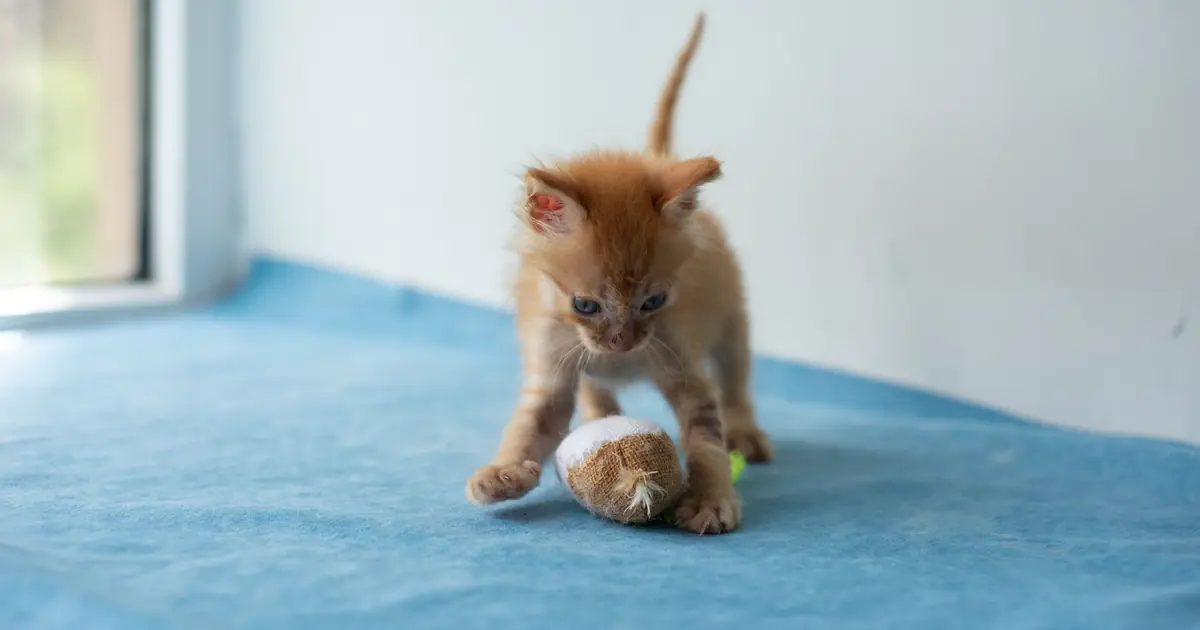
It’s 3am. Your cat has just used your face as a launchpad, sprinted the length of the hallway, knocked a glass off the counter, and is now staring at the wall like it owes them money. You’re lying there thinking one thing: can cats have ADHD? Because surely this level of chaos needs a name.
Here’s the honest answer. Your cat isn’t broken, and they almost certainly don’t have a disorder. What you’re watching is real behavior with a real cause, and once you know what’s actually going on, most of it is fixable. Let’s untangle what “cat ADHD” really means and what to do about the little tornado living in your home.
- ADHD is a human neurodevelopmental condition, and there is no recognized ADHD diagnosis or test for cats.
- Cats under about 2 years old are naturally wild and high-energy, so hyperactivity is often just youth.
- Boredom and too little play are the most common reasons for hyper behavior in healthy adult cats.
- Bengal, Abyssinian, and Siamese cats are bred for high energy and need far more stimulation than average.
- Sudden hyperactivity in a cat over 10 can signal hyperthyroidism and deserves a vet visit.
Can cats actually have ADHD?
No, cats cannot actually have ADHD. Attention deficit hyperactivity disorder is a human neurodevelopmental condition defined by human diagnostic criteria, and vets have no equivalent diagnosis, test, or medication protocol for cats. So when you Google “cat ADHD,” you’re really searching for a behavior pattern, not a medical condition your vet can confirm. The same goes for other human labels cat parents borrow, like Tourette’s and mental disabilities.
That doesn’t mean your cat is faking it. Cats genuinely show hyperactivity, impulsiveness, and a short attention span. They just don’t map onto a human brain diagnosis. The same way human labels don’t transfer neatly to cats, you’ll find the same logic with the question of whether cats can be autistic. A cat behaving unusually is a cat, being a cat, for a reason worth finding.
The trusted feline welfare charity International Cat Care frames most “problem” behavior this way: it’s normal cat behavior showing up in a home that doesn’t quite meet the cat’s needs. That’s the mindset shift. Your cat isn’t malfunctioning. They’re telling you something.
What behaviors make people think their cat has ADHD?
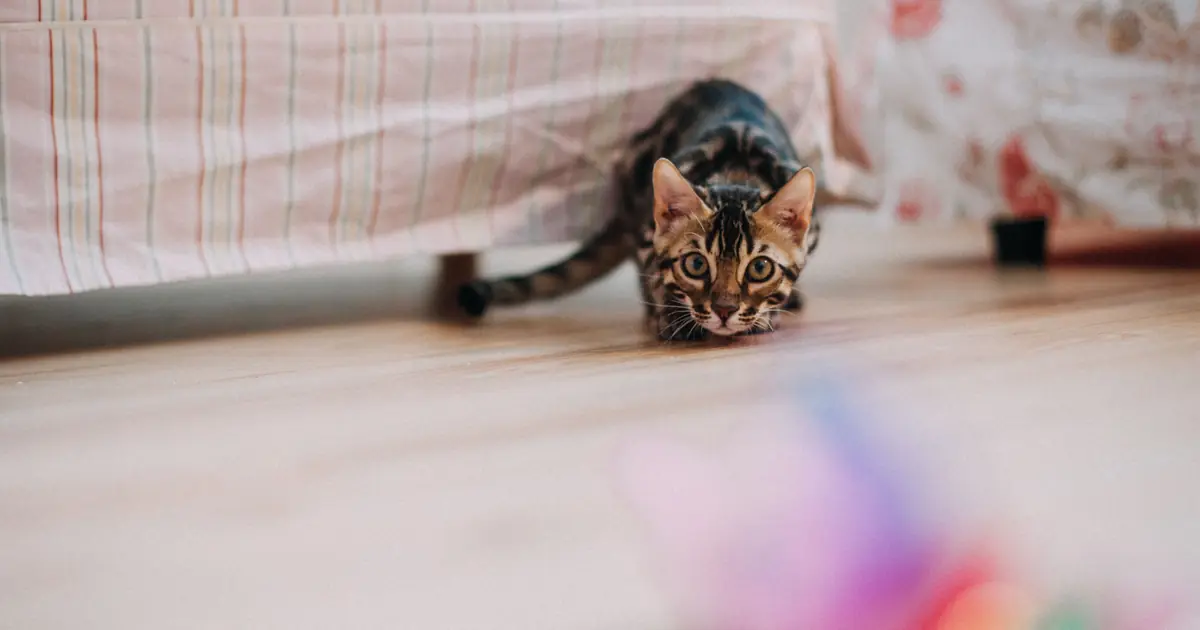
The behaviors people label as cat ADHD are usually bursts of frantic energy, trouble settling, and a scattered attention span. These look dramatic, especially at night, but on their own they’re rarely a sign of anything wrong. Most are textbook cat.
Here’s what typically sends owners searching:
- The 3am zoomies: sudden sprinting, wall-climbing, and general chaos, often after dark. This is so common it has its own name, and you can read why cats do it in our guide to the cat zoomies.
- Can’t sit still: pacing, jumping surface to surface, never quite settling.
- Short attention span: pouncing on a toy for ten seconds, then bolting off to attack a shoelace.
- Impulsive swatting: knocking things off tables, biting mid-cuddle, overreacting to small movements.
- Hyper-focus that flips fast: laser-locked on a bug, then completely distracted a moment later.
Sound familiar? Now here’s the reassuring part. Cats sleep 12 to 16 hours a day, which means their waking hours are compressed into intense bursts. All that stored energy has to go somewhere. When it erupts, it looks like hyperactivity. It’s really just a predator with a full tank and nowhere to spend it.
What really causes hyperactive behavior in cats?
Hyperactive behavior in cats usually traces to one of five explainable causes: young age, boredom, breed, an inconsistent routine, or a medical issue. Figuring out which one fits your cat is the whole game. Once you name the cause, the fix usually names itself.
| “Hyper” behavior you see | The likely real cause |
|---|---|
| Nonstop energy in a cat under 2 | Normal kitten and young-adult development |
| Zoomies, destructiveness, attention-seeking | Boredom and under-stimulation |
| Always “on,” needs constant play | High-energy breed (Bengal, Abyssinian, Siamese) |
| Wired at the same time every night | Pent-up energy and an unpredictable routine |
| Sudden new hyperactivity in a senior cat | Possible hyperthyroidism (see a vet) |
Young age
Kittens and cats under about 2 years old are naturally wild, and this is the single most common reason for “hyper” behavior. Their bodies are built for near-constant hunting practice: stalk, pounce, wrestle, repeat. A young cat tearing around the house isn’t disordered. They’re doing their job. Most calm down noticeably as they mature.
Boredom and under-stimulation
Boredom is the top cause of hyperactivity in otherwise healthy adult cats. A cat with nothing to hunt, climb, or chase will invent their own entertainment, and it’s usually your curtains. Indoor cats especially need daily outlets, or that unused energy comes out as frantic zoomies and 3am demolition.
High-energy breeds
Some cats are simply bred to be busy. Bengals, Abyssinians, and Siamese cats are famous for high intelligence and relentless energy, and they need far more play and enrichment than an average moggy. If you adopted a Bengal expecting a lap cat, that mismatch, not a disorder, is what you’re feeling.
Routine and stress
Cats thrive on predictability, and an erratic routine can leave them wired and restless. A cat fed and played with at random times has no rhythm to burn energy against. Sometimes what looks like hyperactivity is really an over-aroused, slightly anxious cat. Learning to read that tension helps, and our guide to cat body language shows you the early signs of overstimulation before a play session tips into biting.
A medical cause
Occasionally, real hyperactivity is a symptom of illness, most often hyperthyroidism in older cats. This one matters, so it gets its own section below.
How do I calm a hyperactive cat down?
You calm a hyperactive cat by giving that energy a proper outlet, mostly through structured daily play and a more interesting environment. You can’t switch off a cat’s drive to hunt, but you can channel it. Do that, and the chaos usually drops fast.
Here’s what actually works:
- Play with intent, twice a day. Two 10 to 15 minute sessions with a wand toy beat leaving toys on the floor. Let your cat stalk, chase, and “catch” the prey so they finish satisfied, not frustrated. Rotating a few interactive cat toys keeps it novel.
- Play before you sleep. A hard play session followed by a meal triggers the natural hunt-eat-groom-sleep cycle. This is your best weapon against 3am zoomies.
- Go vertical. Cats burn energy climbing, not just running. A tall cat tree or some wall shelves give a busy cat somewhere to go.
- Feed the brain. Puzzle feeders and food-hunting games make your cat work for meals, draining mental energy along with physical.
- Keep a rhythm. Feed, play, and wind down at roughly the same times daily so your cat’s body learns when to be “on.”
The ASPCA points out that a lot of feline “behavior problems” ease dramatically once a cat gets enough enrichment. If your cat also trails you everywhere demanding attention, that’s a related signal worth reading in our piece on why cats get clingy. Often the same enrichment fix helps both.
When is hyperactivity a medical red flag?
Hyperactivity becomes a medical red flag when it appears suddenly in an older cat, especially alongside weight loss despite a big appetite. That combination points to hyperthyroidism, an overactive thyroid gland that floods the body with energy-driving hormones. It’s the most common gland disorder in older cats.
Hyperthyroidism mostly affects cats over 10, with an average onset around age 12. The tricky part is that it can look like good news. Owners often think their senior cat is “acting younger” or perking up, when the restlessness is actually the disease. According to the Cornell Feline Health Center, untreated hyperthyroidism can lead to heart and blood pressure problems, so catching it early genuinely matters.
Call your vet if your cat shows hyperactivity plus any of these:
- Weight loss even though they’re eating more than usual
- Increased thirst and more frequent urination
- A ragged, unkempt, or greasy coat
- Vomiting or diarrhea
- A fast heart rate, pacing, or crying at night
- Any sudden behavior change in a cat over 10
A simple blood test can check thyroid levels, and hyperthyroidism is very treatable once diagnosed. This article is educational, not a diagnosis, so when something feels off, a licensed vet is always your best next step. Trust your gut. You know your cat’s normal better than anyone.
So does your cat have “cat ADHD”?
Almost certainly not, at least not as a diagnosis. What your cat has is energy, instinct, and a home that may not be feeding those needs yet. The phrase “cat ADHD” is a useful shorthand for a real, frustrating pattern, but the fix isn’t medication. It’s understanding.
Start with the basics. How old is your cat? What breed? How much real play do they get? Answer those, add a couple of solid daily play sessions, and watch what happens over two weeks. Most “hyper” cats settle into something much calmer. And if the wildness is sudden and your cat is older, get that vet check. Your cat isn’t broken. They’re usually just young, bored, or built for more than they’re getting.
Frequently asked questions about cats and ADHD
Q: Can cats be diagnosed with ADHD by a vet?
No, cats cannot be diagnosed with ADHD by a vet. ADHD is a human neurodevelopmental condition with human-specific diagnostic criteria, and there is no recognized feline equivalent or test. A vet will instead look for the real cause of hyperactive behavior, such as age, boredom, breed, or a medical issue like hyperthyroidism.
Q: Why is my cat so hyper and crazy at night?
Cats are naturally most active at dawn and dusk, and indoor cats often store up unspent energy that erupts as nighttime zoomies. A hard play session followed by a meal right before bed usually calms this, because it triggers the natural hunt, eat, and sleep cycle. Consistent evening routines help too.
Q: Do certain cat breeds act like they have ADHD?
Yes, high-energy breeds like Bengals, Abyssinians, and Siamese are often described as having “cat ADHD” because they are intensely active, curious, and playful. This is normal breed temperament, not a disorder. These cats simply need far more play, climbing, and mental enrichment than an average cat to feel content.
Q: At what age do hyper cats calm down?
Most cats calm down noticeably after about 2 years of age, once they leave the kitten and young-adult stage. Energy usually keeps easing gradually through adulthood. If a cat suddenly becomes hyperactive later in life, especially after age 10, that change is worth a vet visit to rule out hyperthyroidism.
Q: Can boredom really make my cat hyperactive?
Yes, boredom is one of the most common reasons healthy adult cats act hyperactive. A cat with no outlet for hunting, climbing, and chasing will create its own entertainment, often through zoomies or destructive behavior. Two short daily play sessions and vertical space usually reduce this quickly.
Q: Is there medication for a hyperactive cat?
There is no ADHD medication for cats, and you should never give a cat human stimulants or any medication without veterinary guidance. If hyperactivity is caused by a medical condition like hyperthyroidism, a vet will treat that specific condition. For behavioral hyperactivity, enrichment and play are the real solution, not drugs.
Q: How can I tell if my cat’s hyperactivity is a health problem?
Hyperactivity is more likely a health problem when it appears suddenly, especially in a cat over 10, and comes with weight loss despite a strong appetite, increased thirst, a poor coat, or vomiting. These signs suggest hyperthyroidism. A simple blood test can confirm it, and the condition is very treatable when caught early.
Q: Is a short attention span in cats normal?
Yes, a short and shifting attention span is completely normal in cats. As natural predators, cats are wired to notice sudden movement and switch focus instantly, which helps them hunt. Pouncing on one toy and then bolting to another is typical play behavior, not a sign of a disorder.

Hello and welcome to The Ideal Cat!
We are some passionate cat owners from different professions. We love our cats and have a lot of experience in how to care for our pets. We are incredibly excited to share our knowledge, experience, and research with you. So you can take good care of your loving cat. We will answer most of the common questions about owning cats, taking care of them, etc. If you have any question contact with us. Thanks for visiting! Enjoy the content.
