
Your cat walks with a wobble, or forgets where the litter box is, or stares at a wall like it owes them money. And somewhere in the back of your mind, a worried little question pops up: can cats have mental disabilities? It’s a fair thing to wonder. We love these animals, and when their brains seem to work differently, we want a name for it.
Here’s the honest answer. Cats can’t have human psychiatric or developmental disabilities, so a vet won’t diagnose your cat with autism, ADHD, or Down syndrome. Those are specifically human diagnoses. But cats can and do develop genuine neurological and cognitive conditions that change how their brains and bodies work. The label is wrong. The condition can be very real.
- Cats cannot be diagnosed with human conditions like autism, ADHD, or Down syndrome, because these are defined in and specific to humans.
- Cats have 19 pairs of chromosomes and no chromosome 21, so feline “Down syndrome” is biologically impossible.
- Feline cognitive dysfunction (cat dementia) is a real, vet-recognized condition, and behavior signs often appear in cats older than 10.
- Cerebellar hypoplasia, sometimes called “wobbly cat syndrome,” causes uncoordinated movement but does not lower a cat’s intelligence and does not get worse over time.
- Special-needs cats can live full, happy lives with a few simple home accommodations.
Can cats be diagnosed with human mental disabilities?
No. Cats cannot be diagnosed with human mental disabilities, because conditions like autism, ADHD, and Down syndrome are defined by human brains, human development, and in some cases human genetics. Vets don’t have a feline version of these diagnoses, and applying the human label to a cat isn’t accurate.
That doesn’t mean your cat’s odd behavior is imaginary. It means the framing is off. A cat who avoids eye contact, hates change, or gets overstimulated fast isn’t “autistic.” A cat who bounces off the walls at midnight isn’t “ADHD.” These are normal feline traits, or signs of a real medical or behavioral issue that deserves its own explanation. We dig into this idea more in our guides on whether cats can be autistic and whether cats can have ADHD.
Think of it this way. Human diagnoses come from studying human behavior against human norms. A cat isn’t a small, furry person. Cats have their own species-specific behavior, and reading that behavior correctly matters more than borrowing a human word for it.
What real brain and cognitive conditions can cats actually have?
Cats can have several genuine, vet-recognized conditions that affect the brain and behavior. These are neurological and cognitive, not psychiatric, and they’re diagnosed based on how a cat’s nervous system actually works.
The most common and well-documented ones include:
- Feline cognitive dysfunction (FCD): Age-related decline in memory, learning, and awareness, often compared to Alzheimer’s in people. Behavior signs usually show up in cats over 10.
- Cerebellar hypoplasia: A developmental condition where the cerebellum, the balance and coordination center, doesn’t fully form before birth. This is the “wobbly cat” you may have seen online.
- Congenital defects: Brain or nervous-system differences a kitten is born with, sometimes inherited, sometimes from problems during pregnancy.
- Brain injury: Trauma, infection, toxins, or stroke-like events that damage the brain and change behavior or movement.
- Chromosomal abnormalities: Rare in cats, and not the same as human chromosomal conditions.
Notice what’s missing from that list: autism, ADHD, and Down syndrome. The real feline conditions have their own names, causes, and treatments. Learning to read your cat helps you spot when something’s off, and our guide to cat body language is a good place to start.
What is feline cognitive dysfunction (cat dementia)?
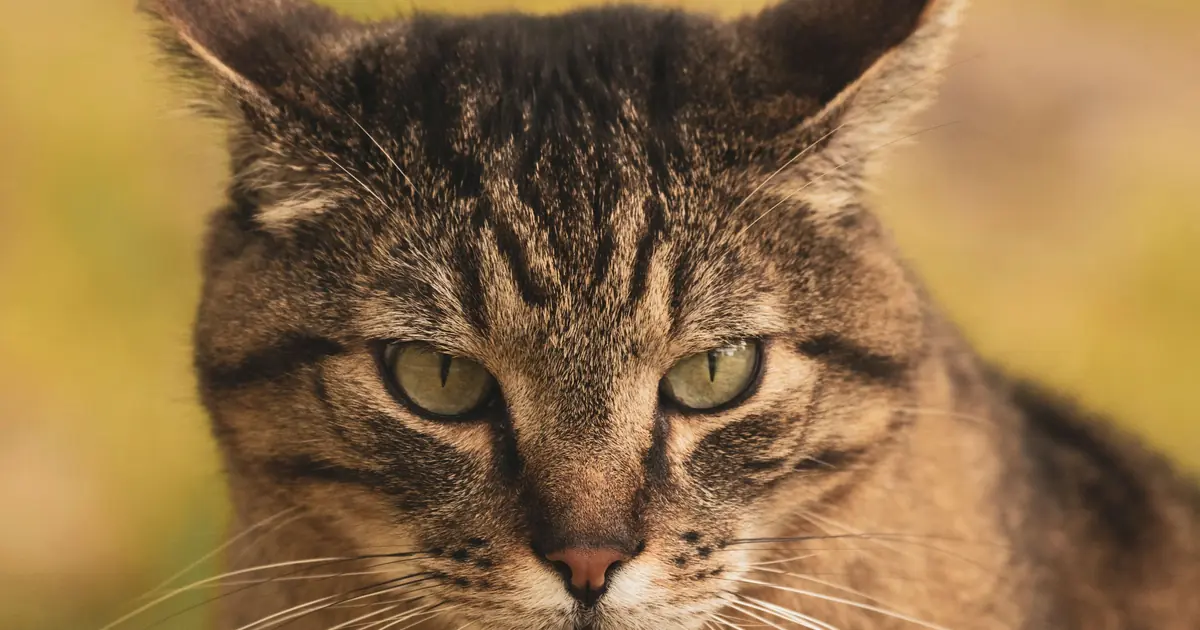
Feline cognitive dysfunction is an age-related decline in a cat’s brain function, and it’s the closest thing cats have to human dementia. It affects memory, learning, awareness, and sleep, and it tends to appear in senior cats, usually those older than 10.
Cats with cognitive dysfunction may seem confused or disoriented. They might yowl at night, forget familiar routines, miss the litter box, or stop recognizing people they’ve known for years. According to the Cornell Feline Health Center, changes in senior cat behavior always deserve a vet check, since many of these signs overlap with treatable medical problems.
There’s no cure, but there’s plenty you can do. Vets often recommend keeping routines steady, adding easy-access litter boxes and ramps, boosting environmental enrichment, and sometimes diet changes or medication that supports sleep and brain aging. Caught early, a lot of cats stay comfortable and content for a long time. If your senior cat also seems withdrawn or off, it’s worth reading up on cat depression symptoms, since mood and cognition can look similar.
What is cerebellar hypoplasia, the “wobbly cat” condition?
Cerebellar hypoplasia is a developmental condition where a kitten’s cerebellum, the part of the brain that controls balance and coordination, doesn’t fully develop before birth. It’s the reason behind those endearing, tipsy-looking “wobbly cats” you’ve probably seen in videos.
The most common cause is exposure to feline panleukopenia virus during pregnancy, which pauses the kitten’s cerebellum development. Affected cats walk with a wide, unsteady stance, have head tremors, and place their feet clumsily. Here’s the reassuring part: cerebellar hypoplasia does not affect a cat’s intelligence, it isn’t painful, and it doesn’t get worse over time. The wobble stays about the same for life.
The International Cat Care team and rescue groups widely agree these cats can live long, happy lives with a few tweaks at home. More on that below.
Why is the “Down syndrome cat” idea a myth?
“Down syndrome cats” don’t exist, and the reason is genetics. Down syndrome in humans is caused by an extra copy of chromosome 21. Cats have 19 pairs of chromosomes, and they don’t have a chromosome 21 at all, so the exact condition simply can’t happen in a cat.
So what are people actually seeing when they call a cat “Down syndrome”? Usually it’s a cat with wide-set eyes, a flat face, low muscle tone, or clumsy movement. Those features almost always trace back to something else: cerebellar hypoplasia, a birth defect, an infection, a neurological injury, or simply unusual but harmless facial structure. The ASPCA and most vets stress reading a cat’s actual behavior and health rather than reaching for a human genetic label that doesn’t apply.
The label matters, and not just for accuracy. Calling a cat “Down syndrome” can mask a real, diagnosable condition that needs care. Getting the right diagnosis is how your cat gets the right help.
Human label vs the real feline explanation
People reach for familiar human words when a cat seems different. Here’s what those labels usually mean in real feline terms.
| What people call it | The real feline explanation |
|---|---|
| “My cat has autism” | Normal feline traits (dislike of change, sensitivity to touch, low eye contact) or a stress or medical issue, not a human developmental disorder. |
| “My cat has ADHD” | Normal high energy, understimulation, or a young cat needing more play, not a human attention disorder. |
| “My cat has Down syndrome” | Biologically impossible; cats have no chromosome 21. Often cerebellar hypoplasia, a congenital defect, or unusual facial structure. |
| “My cat is wobbly / drunk” | Cerebellar hypoplasia, or a neurological issue that needs a vet, especially if the wobble is new. |
| “My senior cat is senile” | Feline cognitive dysfunction (cat dementia), a real, manageable age-related condition. |
Can special-needs cats live happy lives?
Yes, special-needs cats can live full, happy, affectionate lives, and most need only small adjustments at home. A cat with cerebellar hypoplasia or cognitive changes isn’t a cat in constant distress. They’re a cat who navigates the world a little differently.
Simple accommodations that make a big difference:
- Lower the litter box sides and place boxes on every floor so they’re easy to reach.
- Add rugs or carpet runners for grip so a wobbly cat has traction.
- Use ramps or steps instead of tall jumps, and pad sharp furniture corners.
- Raise food and water bowls slightly so a wobbly cat doesn’t tip forward.
- Keep routines and furniture layout steady, which especially helps cats with cognitive decline.
- Keep them indoors, since balance or awareness issues make the outdoors risky.
These cats often become the most beloved members of the household. Wobbly cats, in particular, tend to be cheerful, playful, and completely unbothered by their own tipsiness.
When should you see a vet about your cat’s behavior?
See a vet whenever your cat’s behavior or movement changes suddenly, because a new symptom is often the first sign of a treatable problem. Sudden wobbliness, disorientation, or personality shifts are worth a same-week visit, and some signs mean you shouldn’t wait.
Book a vet visit if your cat shows:
- New or worsening loss of balance, stumbling, or head tilt
- Seizures, tremors, or circling
- Sudden confusion, staring, or not recognizing you
- New litter box accidents in a previously trained cat
- Night yowling, restlessness, or big changes in sleep in a senior cat
- Vision changes or bumping into things
This article is educational and isn’t a substitute for veterinary care. Only a licensed vet can examine your cat, run the right tests, and tell you what’s actually going on. If something feels off, trust that instinct and make the call.
Frequently asked questions
Q: Can cats have autism?
No, cats cannot be diagnosed with autism, because autism is a human developmental condition with no feline equivalent. Behaviors people call “autistic,” like disliking change or avoiding eye contact, are usually normal cat traits or signs of stress. A vet can rule out any underlying medical issue.
Q: Can a cat have Down syndrome?
No. Down syndrome is caused by an extra copy of human chromosome 21, and cats have only 19 pairs of chromosomes with no chromosome 21. What looks like “Down syndrome” in a cat is usually cerebellar hypoplasia, a congenital defect, or simply unusual facial features.
Q: What is a wobbly cat?
A wobbly cat usually has cerebellar hypoplasia, a condition where the brain’s balance center didn’t fully develop before birth. These cats walk unsteadily and may have head tremors, but they have normal intelligence, feel no pain from it, and don’t get worse over time.
Q: At what age do cats get dementia?
Feline cognitive dysfunction, or cat dementia, typically shows behavior signs in cats older than 10, and it becomes more common with age. Signs include night yowling, disorientation, and litter box accidents. A vet visit helps rule out other medical causes first.
Q: Do wobbly cats suffer or feel pain?
No, cerebellar hypoplasia isn’t painful and it doesn’t cause suffering. Cats with the condition adapt well and generally live full, happy lives. They may need small home adjustments, like grippy flooring and low litter boxes, but they aren’t in distress from the wobble itself.
Q: Can cats be mentally disabled from birth?
Cats can be born with real neurological conditions, such as cerebellar hypoplasia or other congenital brain defects, that affect movement or development. These aren’t the same as human mental disabilities. A vet can diagnose the specific condition and explain what care your cat needs.
Q: Is my cat just weird, or is something wrong?
Many “weird” cat behaviors are completely normal, since cats have quirky, species-specific habits. Concern is warranted when behavior changes suddenly or is paired with physical signs like stumbling, seizures, or confusion. When in doubt, a vet check gives you a clear answer.
Q: How do I care for a special-needs cat?
Care for a special-needs cat with small home adjustments: low-sided litter boxes, grippy flooring, ramps, raised bowls, steady routines, and keeping them indoors. Work with your vet on a plan tailored to your cat’s specific condition. Most special-needs cats live happy, affectionate lives.
Bottom line: cats can’t have human mental disabilities, but the question “can cats have mental disabilities” points at something real. Cats do develop genuine brain-based conditions, from cognitive dysfunction to cerebellar hypoplasia, and understanding the right diagnosis is how you give your cat the best, happiest life.

Hello and welcome to The Ideal Cat!
We are some passionate cat owners from different professions. We love our cats and have a lot of experience in how to care for our pets. We are incredibly excited to share our knowledge, experience, and research with you. So you can take good care of your loving cat. We will answer most of the common questions about owning cats, taking care of them, etc. If you have any question contact with us. Thanks for visiting! Enjoy the content.
