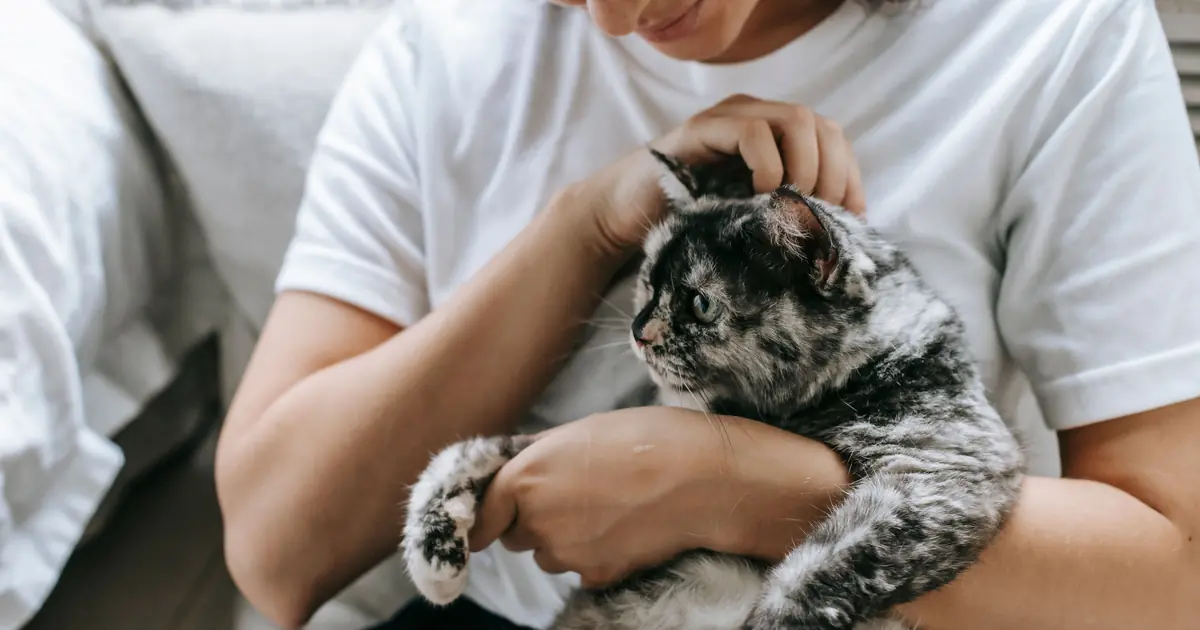
If your cat follows you from room to room, sits on your laptop, and cries the second you close the bathroom door, you might be living with a “velcro cat.” It’s sweet most of the time. But it can also leave you wondering, “why is my cat so clingy, and should I be worried?” The good news is that clinginess usually means your cat feels safe with you. Sometimes, though, it’s your cat’s way of telling you something has changed.
- A “velcro cat” is a cat with an unusually strong need to stay close to its person, following them around and seeking constant contact.
- Most clinginess is normal and reflects a healthy bond, boredom, or a recent change in your cat’s environment or routine.
- Siamese, Ragdoll, Burmese, Persian, and Maine Coon cats are more likely to be naturally clingy because they were bred for companionship.
- Kittens weaned or separated from their mother before 8 weeks are at higher risk of anxiety and clingy behavior as adults.
- Sudden clinginess in a previously independent cat can be an early sign of illness, since cats hide pain well, and warrants a vet visit.
What Does It Mean When a Cat Is Clingy?
A clingy cat, often called a “velcro cat,” is a cat that wants to stay physically close to its favorite person almost all the time. Clingy cats follow you from room to room, sit on or against you, wait outside doors, and meow for attention whenever you’re near. This behavior usually means your cat sees you as its safe base, the same way a kitten relies on its mother.
Here’s the thing: clinginess is a behavior, not a diagnosis. On its own, a cat that loves your company is a happy cat. What matters is the pattern. Clinginess that has always been part of your cat’s personality is very different from clinginess that appeared out of nowhere this week.
Why Is My Cat So Clingy? 8 Common Reasons
Cats get clingy for a handful of common reasons, ranging from pure affection to boredom to a medical issue. Knowing which one fits your cat is the first step to helping them feel secure. Here are the eight reasons that explain most velcro cat behavior.
1. A Strong Bond and Personality
Many cats are clingy simply because they love you and feel safe with you. Cats form real attachments to their people, and a confident, affectionate cat may just prefer your company to being alone. Newly adopted cats often go through an extra-clingy phase for the first few weeks as they decide their new home is safe. This kind of clinginess is normal and nothing to fix.
2. Boredom and Too Little Stimulation
A bored, under-stimulated cat often becomes clingy because you’re the most interesting thing in the house. Cats need play, climbing, and mental work, and without it they turn to you for entertainment. Indoor cats with no toys, perches, or daily play are especially likely to shadow their owners. More enrichment usually means a more independent, content cat.
3. Anxiety and Stress
Anxious cats cling to their person for safety and reassurance. Loud noises like fireworks or thunderstorms, construction, a new pet, house guests, or a recent move can all leave a cat feeling unsettled. When a cat is scared, staying close to its trusted human is a natural coping move. The clinginess often fades once the stressor passes.
4. A Change in Routine or Environment
Cats are creatures of habit, so a change in routine can make them suddenly needy. A new work schedule, a family member moving in or out, a new baby, the loss of another pet, or rearranged furniture can all trigger clingy behavior. Your cat is looking for the one thing that still feels stable: you.
5. Separation Anxiety
Some clingy cats have true separation anxiety, meaning they become distressed when their person leaves. Signs of feline separation anxiety include excessive meowing when you’re gone, hiding, refusing to eat alone, over-grooming, and house-soiling or scratching that only happens while you’re out. A cat with separation anxiety often shadows you closely even before you leave.
6. Early Weaning or Loss of Mom
Kittens taken from their mother and littermates too early are more likely to grow into clingy, anxious adults. Research suggests weaning before 8 weeks raises the risk of behavior problems, and that a weaning age of 12 to 14 weeks may be better for long-term emotional health. Orphaned and bottle-raised kittens often bond intensely with humans because they missed early nurturing. This early history can show up as lifelong velcro behavior.
7. Breed Tendencies
Some breeds are simply wired to be clingy. Siamese, Ragdoll, Burmese, Persian, and Maine Coon cats are known for forming strong, “follow you everywhere” attachments because they were bred for companionship. If you share your home with one of these breeds, a velcro personality is often baked in and perfectly healthy.
8. Illness, Pain, or Aging
Sudden clinginess can be a sign that your cat feels unwell. Cats instinctively hide illness, so a new behavior change is sometimes the only clue something is wrong. Conditions linked to clinginess include hyperthyroidism, kidney disease, diabetes, arthritis, and dental pain. In senior cats, declining vision, hearing, and memory can also drive a sudden need for closeness.
Is It Normal for My Cat to Be Clingy, or Should I Worry?
Clinginess is normal when it matches your cat’s usual personality and the situation. It’s worth a closer look when it appears suddenly in an independent cat or comes with other symptoms. The simplest rule: a long-time cuddle bug is rarely a concern, but a personality change is worth a vet’s attention. Use this table to tell the two apart.
| Usually Normal Clinginess | Worth a Vet Check |
|---|---|
| Your cat has always been affectionate and stays close | A previously independent cat suddenly becomes a shadow |
| A newly adopted cat clings for the first few weeks | Clinginess plus weight loss, vomiting, or diarrhea |
| Clinginess during a storm, then back to normal | Clinginess plus increased thirst or peeing |
| A naturally cuddly breed like a Ragdoll or Siamese | Clinginess plus excessive or different meowing |
| More closeness after a move, easing over time | Clinginess plus hiding, litter box changes, or appetite shifts |
| A bored cat that wants more play | Any sudden personality change in a senior cat |
Why Is My Cat Suddenly So Clingy All of a Sudden?
Sudden clinginess in a cat usually points to a recent change, either in their environment or in how they feel physically. If nothing in the home has changed, sudden clinginess is more likely to be health-related. Because cats are experts at masking pain, a shift in behavior may be the first and only visible sign that something is off.
Walk through these questions if your cat became clingy overnight:
- Has anything changed at home, like a new pet, person, move, or schedule?
- Were there recent loud or scary events, such as fireworks or repairs?
- Is your cat eating, drinking, and using the litter box normally?
- Are there other symptoms, like weight loss, vomiting, or hiding?
- Is your cat older, and is the clinginess worse at night?
If you can tie the change to a clear event and your cat seems otherwise healthy, give it a little time and extra reassurance. If you can’t, or you spot other symptoms, call your vet. Sudden, unexplained clinginess is one of the behavior changes vets take seriously.
Why Is My Older Cat Suddenly Clingy?
Older cats often grow clingier because aging brings physical and mental changes that make them lean on their trusted person. Reduced vision and hearing, sore joints from arthritis, and slowing minds can all leave a senior cat feeling vulnerable and seeking comfort. Sudden clinginess in a senior cat should never be brushed off as “just getting old.”
One common driver is feline cognitive dysfunction syndrome, a dementia-like condition. It affects an estimated 28% of cats aged 11 to 14 and more than 50% of cats over 15. Signs include increased clinginess, confusion, and more vocalizing, often worse at night. If your senior cat is newly needy, especially with night-time yowling, ask your vet to check for cognitive decline and treatable issues like hyperthyroidism or kidney disease.
How Do I Stop My Cat From Being So Clingy?
You don’t need to push a clingy cat away. The goal is to help your cat feel secure on its own, so closeness becomes a choice rather than a need. Start by ruling out medical causes, then build your cat’s confidence and independence with these steps.
- See your vet first. Before changing anything, rule out pain or illness, especially if the clinginess is new. A clean bill of health lets you address the behavior with confidence.
- Add daily play. Two short, active play sessions a day with a wand toy burns energy and reduces attention-seeking. A tired cat is a calmer, more self-sufficient cat.
- Enrich the space. Give your cat window perches, cat trees, scratching posts, and puzzle feeders so it has its own things to do when you’re busy.
- Reward calm independence. Quietly praise or treat your cat when it relaxes on its own, instead of only giving attention when it demands it.
- Make alone time low-key. Keep departures and arrivals calm and undramatic, so leaving feels routine rather than scary.
- Create safe, cozy spots. A warm bed in a quiet, sunny corner gives your cat a comforting place to settle that isn’t your lap.
For cats with true separation anxiety, ask your vet or a certified feline behaviorist about a tailored plan. They may suggest gradual desensitization, calming aids, or in some cases medication.
A Quick Note on Cat Health
This article is meant to help you understand clingy cat behavior, not to replace your veterinarian. Cats hide illness well, so any sudden behavior change deserves attention. Call your vet promptly if your clingy cat also shows weight loss, vomiting, diarrhea, increased thirst or urination, hiding, appetite changes, or litter box problems. When clinginess and other symptoms appear together, your cat is trying hard to tell you something.
Frequently Asked Questions
Q: Why is my cat so clingy to me specifically?
Cats often bond most strongly with the person who feeds them, plays with them, and gives them calm, gentle attention. Your cat is clingy to you because it sees you as its safe base and primary source of comfort. This is usually a sign of a healthy, trusting relationship.
Q: Is it bad if my cat is clingy?
No, clinginess is not bad on its own and often just means your cat feels safe with you. It’s only a concern when it appears suddenly in an independent cat, becomes extreme, or comes with other symptoms like weight loss or hiding. In those cases, a vet visit is a good idea.
Q: Can a cat be clingy because it’s sick?
Yes, illness can make a cat clingy as it seeks comfort while feeling unwell. Conditions like hyperthyroidism, kidney disease, diabetes, arthritis, and dental pain are linked to sudden clinginess. Because cats hide pain, a new behavior change is sometimes the first sign of a health problem.
Q: Do cats grow out of being clingy?
Newly adopted cats and kittens often become less clingy as they settle in and gain confidence, especially with regular play and enrichment. Cats that are clingy due to breed or early weaning may stay affectionate for life. If clinginess increases over time rather than easing, check with your vet.
Q: What breeds of cat are the most clingy?
Siamese, Ragdoll, Burmese, Persian, and Maine Coon cats are among the most clingy breeds. These breeds were developed for companionship and tend to form strong, affectionate attachments to their people. A velcro personality in these cats is usually normal and healthy.
Q: Why is my cat clingy and meowing a lot?
Clinginess paired with extra meowing can mean stress, boredom, or a medical issue. When a cat suddenly clings and vocalizes more, it’s often trying to communicate that something feels wrong. If the new meowing comes with appetite, thirst, or litter box changes, see your vet.
Q: Does early weaning make cats clingy?
Yes, kittens weaned or separated from their mother before 8 weeks are at higher risk of anxiety and clingy behavior as adults. Research suggests a weaning age of 12 to 14 weeks supports better long-term behavior. Orphaned, bottle-raised kittens often bond intensely with humans.
Q: How can I tell if my cat has separation anxiety?
Cats with separation anxiety become distressed when left alone. Common signs include excessive meowing, hiding, over-grooming, refusing to eat while you’re gone, and scratching or house-soiling that only happens in your absence. A vet or feline behaviorist can confirm it and suggest a plan.
So, why is my cat so clingy? Most of the time, it’s love, comfort-seeking, or a small change your cat is adjusting to, and that’s something to enjoy. Just keep an eye on the pattern: if a once-independent cat turns into a sudden shadow, or clinginess comes with other symptoms, let your vet take a look so you can keep your clingy cat happy, healthy, and close.

Hello and welcome to The Ideal Cat!
We are some passionate cat owners from different professions. We love our cats and have a lot of experience in how to care for our pets. We are incredibly excited to share our knowledge, experience, and research with you. So you can take good care of your loving cat. We will answer most of the common questions about owning cats, taking care of them, etc. If you have any question contact with us. Thanks for visiting! Enjoy the content.
)