
Picture this. Your cat is fine one minute, snoozing in a sunbeam. The next, they bolt under the bed and refuse to come out. No thunder, no vacuum, no visitor. Just a cat who suddenly looks at the world like it’s out to get them. If you’ve been asking yourself why is my cat scared all of a sudden, you’re right to pay attention.
Here’s the thing. Cats rarely spook for no reason. There’s almost always a trigger, even one you can’t see, hear, or smell. Sometimes it’s a change at home. Sometimes it’s a strange cat in the yard at 2am. And sometimes, this is the part people miss, it’s your cat quietly telling you something hurts. Let’s walk through both sides so you know what to look for and when to worry.
- Sudden fear in cats is usually a reaction to a specific trigger, even one you can’t detect, such as a new smell, an unfamiliar sound, or an outdoor cat.
- Cats learn fear fast through “one-trial learning,” so a single bad scare can create lasting fear that spreads to similar places, people, or objects.
- Medical causes of sudden fear include pain, vision or hearing loss, high blood pressure (often linked to hyperthyroidism or kidney disease), and cognitive decline in senior cats.
- Give a frightened cat space and a quiet hiding spot instead of forcing contact; let them come to you when they’re ready.
- See a vet if the fear is sudden, persistent, unexplained, or your cat is older, since new fear can signal a hidden health problem.
Why is my cat scared all of a sudden?
A cat that becomes scared all of a sudden is almost always reacting to a specific trigger, even when you can’t spot it. Cats have far sharper senses than we do, so they notice sounds, smells, and small changes that fly right past us. What looks like fear out of nowhere is usually fear of something.
The tricky part is that the trigger can be invisible to you. A new scent on your clothes. A high-pitched whine from a charger. A cat you never see slinking across the yard at night. Your cat reacts to all of it.
Broadly, sudden fear falls into two buckets: environmental or behavioral triggers (something in your cat’s world changed), and medical causes (something in your cat’s body changed). The mistake is assuming it’s always the first bucket. Reading your cat’s body language, flattened ears, crouched posture, wide eyes, tucked tail, helps you gauge how frightened they really are.
What everyday triggers make a cat suddenly fearful?
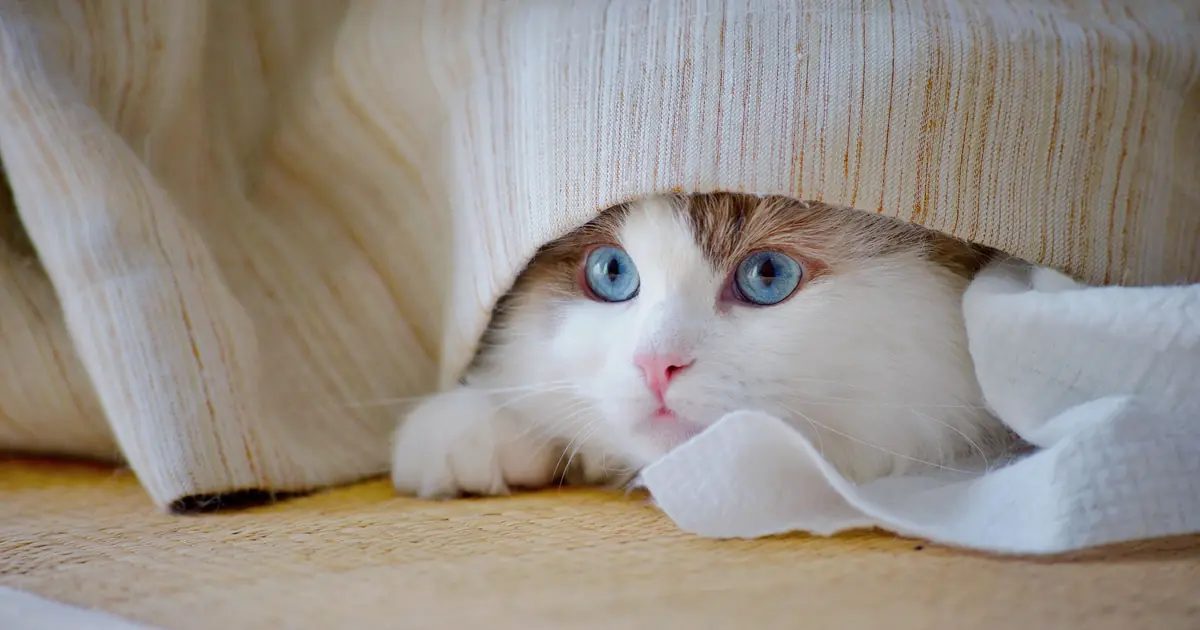
Most sudden fear traces back to a handful of common triggers that shift a cat’s sense of safety. Cats are creatures of habit, and their comfort depends on their territory feeling predictable. When that predictability cracks, fear rushes in.
Here are the usual suspects:
- New sounds or smells. A beeping smoke alarm, construction next door, a new cleaning product, or perfume on a guest can all read as “threat” to a cat.
- Changes in the home. A new pet, a new baby, moved furniture, houseguests, or even a rearranged litter setup can leave a cat feeling like their turf was invaded.
- A bad experience they’ve linked to a place or person. Cats connect fear to context fast. One scary vacuum encounter in the hallway, and the hallway itself becomes the enemy.
- A strange cat outside. This one is huge and often overlooked. A cat spotted through the window can leave your cat tense and jumpy for hours.
- Redirected fear. When a cat gets frightened but can’t reach the real trigger (that outdoor cat again), they may lash the fear onto whatever’s nearby, sometimes another pet or even you.
That last one, redirected fear, is a common reason a normally sweet cat suddenly seems spooked and prickly. If yours has flipped into hissing or swatting, our guide on fear-driven aggression breaks down what’s really going on. The ASPCA’s overview of common cat behavior issues is a solid extra read on how fear shows up at home.
Can a cat be scared for medical reasons?
Yes, and this is the piece people miss. Sudden fear can be a medical sign, not just a behavior quirk. When a cat feels unwell or vulnerable, the world becomes a scarier place, and hiding is their instinct. If your usually confident cat turns skittish with no obvious trigger, a health issue belongs at the top of your list, not the bottom.
The medical causes that deserve a vet’s attention include:
- Pain. Arthritis, dental disease, an injury, or belly trouble can make a cat flinch, hide, and startle. Pain lowers their tolerance for everything.
- Vision or hearing loss. A cat who can’t see or hear you coming gets startled far more easily. Senior cats especially.
- High blood pressure (hypertension). This one is sneaky. Feline hypertension often rides along with hyperthyroidism or chronic kidney disease, both common in older cats, and it can cause sudden vision changes and even blindness from retinal detachment. Roughly 1 in 5 hyperthyroid cats develops high blood pressure.
- Cognitive decline. In senior cats, feline cognitive dysfunction (a dementia-like condition) can cause confusion, disorientation, and new anxiety. They may forget where they are, or seem frightened in familiar rooms.
Notice the theme: many of these hit older cats. If your senior cat suddenly seems frightened, meows more at night, or stares like they can’t quite place you, that’s a vet visit, not a “wait and see.” The Cornell Feline Health Center is a trusted source on how these conditions show up.
Why does one scary moment stick with my cat for so long?
Cats hold onto fear because they learn it fast, sometimes from a single event. Behaviorists call this “one-trial learning.” One intense or traumatic scare can create a lasting fear, and there’s no gentle fade-out required. It just locks in.
Worse, cats generalize. A bad experience with, say, a small child chasing them can turn into fear of all small children. A frightening moment by the front door can become fear of the whole entryway. This is why your cat might seem scared of things that never bothered them before. The original scare spread outward, roping in anything that resembles it.
The good news is that fear built through learning can also be unlearned, slowly, with patience. That means never flooding your cat with the scary thing. Forced exposure usually deepens fear instead of fixing it. Small, calm, positive steps win. If you’re seeing ongoing jumpiness, our guide to the signs of stress in cats helps you tell a passing scare from a cat living in low-grade fear.
How do I help a cat that’s suddenly scared?
The fastest way to help a scared cat is to lower the pressure: give them space, a safe hiding spot, and time to settle on their own terms. Frightened cats don’t want to be scooped up and reassured. They want an exit and a quiet corner. Respect that, and you’ll earn their trust back faster.
Here’s what actually helps:
- Give them a safe retreat. A quiet room, a covered bed, a cardboard box, or a spot up high. Let them hide. Hiding is how cats self-soothe, not a problem to fix.
- Don’t force contact. Skip the chasing, cuddling, and coaxing. Sit nearby, stay calm, and let your cat approach you when they’re ready.
- Keep routines steady. Feed, play, and clean the litter box at the usual times. Predictability rebuilds a cat’s sense of safety.
- Remove or reduce the trigger. Close the blinds if an outdoor cat is the problem. Pause the loud project. Swap the strong-smelling cleaner.
- Try calming support. A calming pheromone diffuser mimics a natural feline “all safe” signal and can take the edge off a tense home.
- Go slow with the scary thing. If you must reintroduce a trigger, do it gradually and pair it with good stuff, like treats and praise, at a distance your cat can handle.
For a step-by-step approach to settling a frightened cat, our guide on how to help them settle walks through it in detail. For deeper behavior work, International Cat Care has excellent free guidance.
Sudden fear at a glance: trigger, how it shows, what to do
Different causes of sudden fear show up in different ways and call for different responses. This quick table helps you match what you’re seeing to a likely cause and a sensible next step.
| Trigger or cause | How it usually shows | What to do |
|---|---|---|
| New sound or smell | Startles, hides, then recovers once it stops | Identify and reduce the source; keep calm and steady |
| Change in the home | Hiding, less appetite, avoiding new person or pet | Give space, keep routines, reintroduce slowly |
| Bad experience linked to a spot | Avoids one room, door, or object specifically | Make that area positive again with treats and time |
| Strange cat outside | Tense at windows, hissing, redirected swatting | Block the view; deter the outdoor cat if possible |
| Pain or illness | Hiding, flinching when touched, off food, hunched | See a vet promptly to rule out a medical cause |
| Vision/hearing loss or cognitive decline (senior cats) | Startles easily, disoriented, night crying, confusion | Book a vet exam; ask about blood pressure and thyroid |
When should I see a vet about my cat’s sudden fear?
See a vet whenever your cat’s fear is sudden, persistent, or has no clear trigger, and especially if your cat is older. This article is educational and isn’t a substitute for a hands-on exam, so treat a hidden medical cause as the thing you’re ruling out, not an afterthought.
Book a vet visit soon if you notice any of these red flags:
- Fear that lasts more than a day or two with no obvious trigger
- Hiding paired with not eating, not drinking, or not using the litter box
- Flinching or crying when touched, or a hunched, guarded posture (signs of pain)
- Bumping into things, cloudy or wide dilated eyes, or startling at your approach (possible vision loss)
- A senior cat who seems confused, disoriented, or cries at night
- Any sudden fear in a cat over about 7, when hypertension, hyperthyroidism, and kidney disease become more likely
My honest take: hunt for the trigger, absolutely, but don’t skip the vet check. Sudden fear can be your cat’s way of saying something hurts, and cats are experts at hiding pain until it’s serious. A quick exam, often with a blood pressure and thyroid check, brings real peace of mind.
Frequently asked questions
Q: Why is my cat suddenly scared of everything for no reason?
Your cat almost certainly has a reason, even if you can’t detect it. Cats hear and smell things we miss, so a faint sound, a new scent, or an outdoor cat may be the culprit. Sudden, reasonless fear also warrants a vet check, since pain or illness can make a cat fearful.
Q: Can a cat be scared because it’s sick or in pain?
Yes. Pain and illness commonly make cats hide, flinch, and startle more easily, because feeling vulnerable puts them on high alert. Arthritis, dental disease, injuries, and internal problems can all trigger new fearfulness. If your cat seems scared and off, see a vet to rule out a medical cause.
Q: Why is my older cat suddenly scared and jumpy?
Senior cats become suddenly fearful most often due to fading vision or hearing, high blood pressure, hyperthyroidism, or cognitive decline. These make the world feel unpredictable and startling. Any new fear in an older cat deserves a vet exam, ideally including a blood pressure and thyroid check.
Q: Should I comfort my cat when it’s scared?
Let your cat come to you rather than forcing comfort. Frightened cats usually want space and a safe hiding spot, not to be picked up. Stay calm and nearby, keep your voice soft, and wait for your cat to approach when ready. Forced cuddling can deepen the fear.
Q: Can one bad experience make a cat scared long-term?
Yes. Cats can learn fear from a single intense event, an effect called one-trial learning, and that fear often generalizes to similar places, people, or objects. A single scare in the hallway can become fear of the whole hallway. Gradual, positive reintroduction helps them unlearn it over time.
Q: Can a cat outside make my indoor cat scared?
Absolutely. A strange cat seen or smelled through a window or door often leaves an indoor cat tense, jumpy, and even aggressive toward housemates through redirected fear. Block the view with blinds or window film, and try to deter the outdoor cat from your yard to reduce the stress.
This article is educational and not a substitute for veterinary care. If your cat’s fear is sudden, persistent, or unexplained, especially in an older cat, please consult a licensed veterinarian.

Hello and welcome to The Ideal Cat!
We are some passionate cat owners from different professions. We love our cats and have a lot of experience in how to care for our pets. We are incredibly excited to share our knowledge, experience, and research with you. So you can take good care of your loving cat. We will answer most of the common questions about owning cats, taking care of them, etc. If you have any question contact with us. Thanks for visiting! Enjoy the content.
