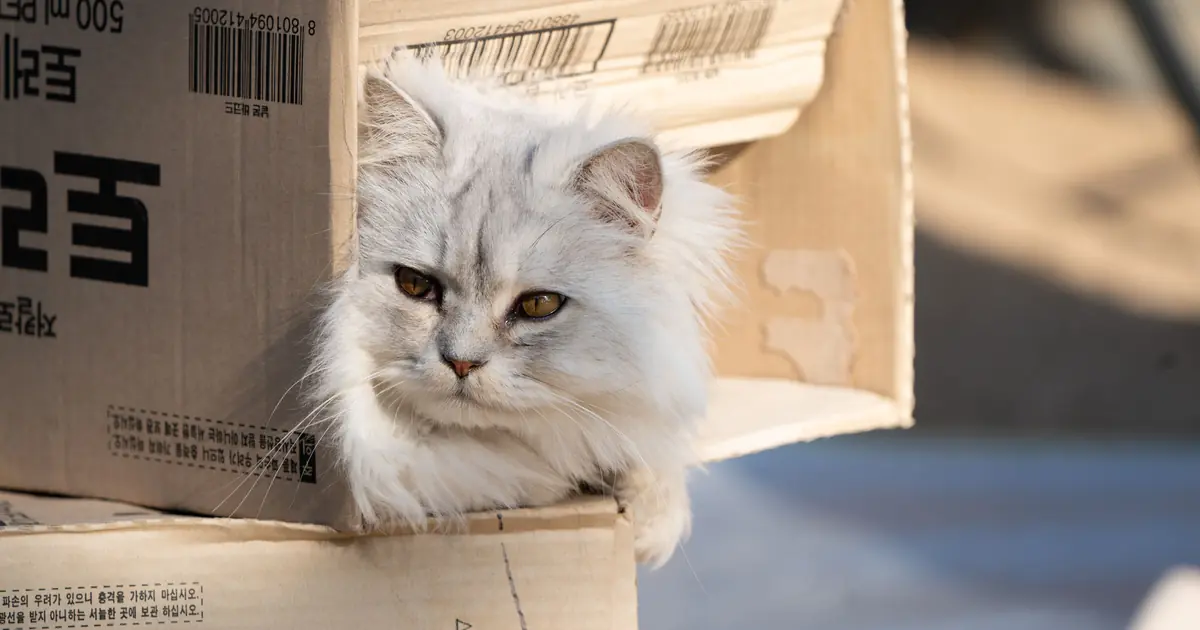
You bring home a package, and before the box even hits the recycling bin, your cat has claimed it. Ten minutes later there’s a corner missing and a small pile of cardboard confetti on the rug. Sound familiar?
Most of the time, this is just your cat being a cat. Chewing cardboard taps into some of their oldest instincts, and it usually doesn’t mean anything is wrong. But there’s a point where “cute box destroyer” crosses into “something’s off,” and knowing the difference matters for your cat’s health.
- Cats chew cardboard mainly for dental comfort, hunting-style play, boredom relief, and interesting scents, not because they’re trying to eat it.
- Occasional cardboard chewing that never gets swallowed is normal cat behavior and needs no intervention.
- Pica, the medical term for eating non-food items, can be linked to nutritional deficiencies, anemia, hyperthyroidism, GI disease, or early weaning from the mother.
- Swallowed cardboard pieces can cause choking or an intestinal blockage, which is a genuine emergency.
- Redirecting the behavior with chew toys, more playtime, and a dedicated scratcher usually solves it within a couple of weeks.
Why do cats chew on cardboard?
Cats chew cardboard because the texture feels satisfying against their teeth and gums, and the motion mimics tearing into prey. Cardboard gives a little under their teeth but pushes back just enough to feel like a job well done. Add in the fact that boxes carry outside smells, delivery trucks, other homes, other animals, and you’ve got a toy that hits several instincts at once. Vets generally consider light cardboard chewing a normal outlet, not a red flag on its own.
Is my cat teething or just soothing their gums?
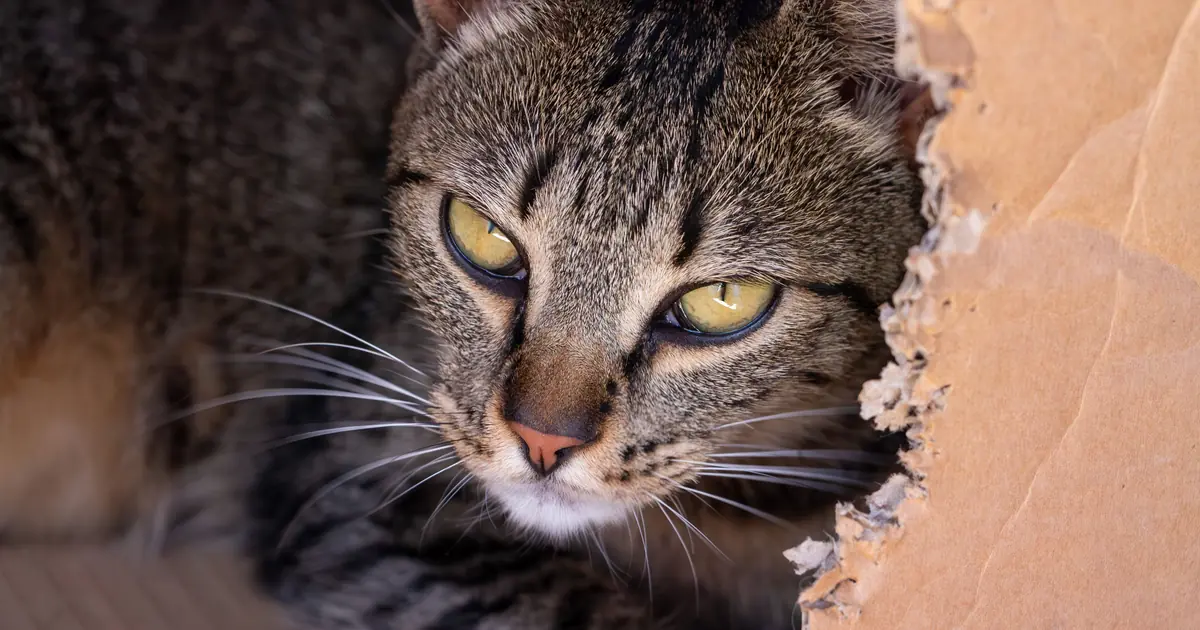
Yes, teething is a real driver of cardboard chewing, especially in kittens between about 3 and 7 months old who are losing their baby teeth and growing in adult ones. The pressure of chewing something with a bit of give, like cardboard, relieves the ache of new teeth pushing through.
Adult cats keep the habit even after their teeth are fully in, though. For grown cats, chewing cardboard can soothe mildly sore or itchy gums, or it’s simply become a comforting habit they picked up as a kitten and never dropped. If an adult cat suddenly starts chewing far more than usual, sore teeth or gum disease is worth ruling out with your vet, since dental disease is extremely common in cats and can make chewing feel better on inflamed gums.
Does cardboard chewing satisfy a cat’s hunting instinct?
Yes, shredding cardboard mimics the tearing and biting motions a cat would use on real prey. A cat’s jaws and teeth are built for gripping and tearing, not gentle nibbling, and cardboard gives them a legal outlet for that. It even “fights back” a little, resisting before it tears, which is the same drive behind a cat pouncing on a toy mouse or stalking a shoelace.
Can boredom or stress make a cat chew cardboard more?
Yes, understimulated or anxious cats often chew cardboard as a way to burn energy or self-soothe. Indoor cats especially can run short on things to do during the day, and repetitive chewing becomes a stand-in for hunting, exploring, and play they’re not getting enough of elsewhere. It’s the feline version of pacing or nail-biting.
Stress plays a role too. A new pet in the house, a move, a schedule change, or even boredom from being left alone for long stretches can push a cat toward repetitive behaviors like chewing. If you’re noticing other signs of stress in cats alongside the chewing, like hiding, overgrooming, or a change in appetite, the cardboard habit is probably a symptom rather than the whole story.
Why does cardboard smell and texture appeal to cats so much?
Cardboard appeals to cats because it’s porous enough to hold onto scents, and it has a texture, part rough, part springy, that’s satisfying to bite and claw. Boxes travel through warehouses, delivery vans, and other people’s homes before they reach yours, picking up a trail of smells along the way, and cats explore the world nose-first. The material’s resistance matters too, which is part of why cats chew on plastic for similar texture-driven reasons, even though plastic carries more risk if swallowed.
When is chewing cardboard a sign of pica?
Chewing cardboard becomes a concern when it turns into pica, the medical term for a compulsion to eat non-food items rather than just chew and abandon them. A cat with pica doesn’t just shred a box and walk away. They actually swallow pieces of it, or other odd items like fabric, hair ties, or plastic, on a regular basis.
Vets and researchers have linked pica in cats to several underlying causes, including:
- Nutritional deficiencies, especially not enough fiber in the diet
- Anemia or other blood abnormalities
- Hyperthyroidism, a common hormone disorder in older cats
- Gastrointestinal disease, including inflammatory bowel disease
- Being weaned too early from the mother cat
- Boredom, stress, or compulsive disorder in cats with no clear medical cause
International Cat Care notes that pica can show up in any breed, though it’s reported more often in Siamese and other Oriental breeds, which suggests a genetic piece to the puzzle as well.
Is it dangerous for a cat to chew on cardboard?
Chewing cardboard is usually safe as long as your cat isn’t actually swallowing it. Tearing, gnawing, and batting a box around carry no real risk. The danger shows up if your cat starts eating the pieces, since swallowed cardboard can cause choking or clump together in the stomach and cause a blockage, a real emergency that sometimes needs surgery to fix. The table below breaks down how to tell normal chewing apart from something that needs attention.
| Sign | Normal chewing | Concerning pica |
|---|---|---|
| Frequency | Occasional, in short bursts | Frequent, daily, or seems compulsive |
| Do they swallow it? | No, cardboard is torn but left behind | Yes, pieces are actually eaten |
| Other signs | None, otherwise normal appetite and energy | Vomiting, weight loss, lethargy, poor appetite, or chewing on many other non-food items |
| Recommended action | No action needed, offer a scratcher or toy for outlet | Schedule a vet visit to rule out an underlying cause |
How do I stop my cat from chewing cardboard?
You can redirect cardboard chewing by giving your cat better outlets for the same instincts: safe chew toys, more active play, and enrichment that keeps their mind busy. Most cats drop the habit once something more interesting is available.
- Offer cat-safe chew toys made of silicone or rubber designed for chewing, not just batting.
- Add 10 to 15 minutes of active play with a wand toy twice a day to burn off hunting energy.
- Set out a puzzle feeder so mealtime doubles as mental stimulation.
- Grow a small pot of cat grass, which gives cats something specifically meant to be nibbled.
- Keep one dedicated cardboard scratcher around so the urge to chew and claw has an approved target.
- Remove staples, tape, and heavily printed or glossy cardboard from any box your cat has access to, since ink and adhesives aren’t meant to be eaten.
If boredom looks like the main driver, rotating in a few interactive cat toys can make a bigger difference than you’d expect. Cats get bored of the same toy fast, so swapping options every week or two keeps things fresh.
When should I take my cat to the vet for chewing cardboard?
See a vet if your cat is swallowing cardboard, chewing obsessively, or showing other symptoms like vomiting, weight loss, or a change in appetite. These can point to pica with a medical cause behind it, worth catching early. It’s also worth a call if the chewing seems new and sudden in an adult cat, since that shift can flag dental pain rather than just habit.
This article is educational and isn’t a substitute for a vet’s exam. If your cat swallows a large piece of cardboard, plastic, or string and starts vomiting, straining, or acting lethargic, treat that as an emergency and call your vet or an emergency clinic right away. The ASPCA Animal Poison Control Center is also a useful resource if you’re worried your cat ingested something toxic along with the cardboard, like ink or adhesive residue.
Frequently Asked Questions
Q: Is it normal for cats to chew cardboard boxes?
Yes, it’s a very common behavior. Cats chew cardboard for dental comfort, play, and the interesting scents boxes carry, and it’s considered normal as long as they aren’t swallowing the pieces.
Q: Why does my kitten chew cardboard so much?
Kittens between roughly 3 and 7 months old are teething, and chewing something with a bit of give, like cardboard, relieves the discomfort of adult teeth coming in. The habit often continues into adulthood simply because it feels good.
Q: What is pica in cats?
Pica is the medical term for a cat compulsively eating non-food items, such as cardboard, plastic, fabric, or hair ties. It can stem from nutritional deficiencies, anemia, hyperthyroidism, GI disease, early weaning, or stress.
Q: Can eating cardboard hurt my cat?
Yes, if a cat actually swallows cardboard rather than just chewing it, the pieces can cause choking or clump together and create an intestinal blockage, which sometimes needs surgery to resolve.
Q: How do I know if my cat’s chewing is a problem?
Watch for whether your cat swallows what they chew, how often it happens, and whether other symptoms like vomiting, weight loss, or reduced appetite show up alongside it. Occasional chewing with no swallowing is normal; frequent swallowing with other symptoms warrants a vet visit.
Q: What toys can replace cardboard chewing?
Silicone or rubber chew toys made for cats, wand toys for active play, puzzle feeders, cat grass, and a dedicated cardboard scratcher all give cats a safer outlet for the same chewing and hunting instincts.
Q: Are certain cat breeds more likely to chew non-food items?
Siamese and other Oriental breeds are reported more often with pica than other cats, which points to a possible genetic factor, though pica can appear in any breed.
Q: Can stress cause my cat to chew cardboard more than usual?
Yes, stress and boredom are common triggers for repetitive chewing. Changes like a new pet, a move, or long stretches alone can push a cat toward chewing as a way to self-soothe.

Hello and welcome to The Ideal Cat!
We are some passionate cat owners from different professions. We love our cats and have a lot of experience in how to care for our pets. We are incredibly excited to share our knowledge, experience, and research with you. So you can take good care of your loving cat. We will answer most of the common questions about owning cats, taking care of them, etc. If you have any question contact with us. Thanks for visiting! Enjoy the content.
