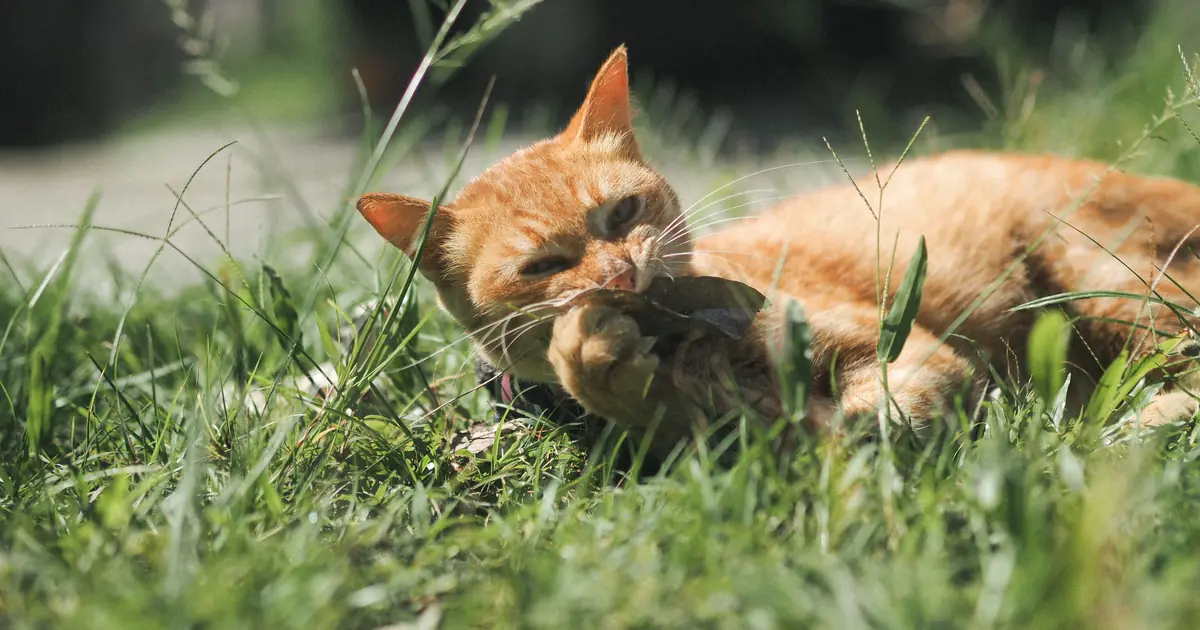
You hear that telltale crinkle from the kitchen, and there’s your cat, going to town on a grocery bag like it’s the best thing they’ve ever found. If you’ve ever asked, why does my cat chew on plastic, you’re far from alone. Some of the reasons are harmless quirks, and some are worth a vet visit. Either way, swallowing plastic can be genuinely dangerous, so this is one habit worth understanding.
- Cats chew plastic for sensory appeal: the crinkly sound mimics prey, the texture feels good on their teeth, and food residue or coatings smell edible.
- Pica is the medical term for repeatedly chewing or eating non-food items like plastic, fabric, or cardboard.
- Plastic chewing can be driven by boredom, stress, early weaning, dental pain, or medical problems such as anemia, hyperthyroidism, or gastrointestinal disease.
- Many plastic and grocery bags are coated with cornstarch, stearates, or gelatin (an animal byproduct), which makes them smell and taste like food to cats.
- Swallowing plastic can cause choking or an intestinal blockage, which is a surgical emergency that can be fatal within days if untreated.
- Siamese, Burmese, and other Oriental breeds are more prone to pica than other cats.
Why Does My Cat Chew on Plastic? The 8 Main Reasons
Cats chew on plastic for a mix of sensory, behavioral, and medical reasons, and the same cat can have more than one going on at once. Here are the eight most common causes, from totally normal to vet-worthy.
1. The Crinkle and Texture Are Satisfying
Plastic gives cats a sensory payoff that few household items match. The crinkly, rustling sound of a bag mimics the noise of prey moving through leaves, which switches on your cat’s hunting instincts. The smooth, slightly crunchy texture also feels good against teeth and gums, a bit like a chew toy. For many cats, that’s the whole story: plastic is just fun to mess with.
2. Plastic Smells and Tastes Like Food
One reason cats love plastic bags in particular is that many of them smell faintly edible. Grocery and produce bags pick up the scent of whatever they carried home. On top of that, lots of plastic bags are coated or made with cornstarch, stearates (salts of stearic acid), or gelatin, which is an animal byproduct. To a cat’s nose, that mix can read as “food,” so they lick and chew to investigate.
3. Boredom and Too Little Stimulation
Boredom is one of the most common reasons indoor cats chew plastic. Cats are hunters wired for daily activity, and without enough play, climbing, or things to investigate, they invent their own entertainment. A noisy, chewable bag is an easy target. Cats who are home alone for long stretches or live in a sparse environment are especially likely to pick up the habit.
4. Stress and Anxiety
Chewing can be a self-soothing behavior for an anxious cat, much like nail-biting in people. Stress chewing often shows up after a change: a move, a new pet or baby, a schedule shift, or even a new piece of furniture. Repetitive licking or chewing releases a little tension, so a stressed cat may return to the same bag or cord again and again.
5. Pica (Chewing or Eating Non-Food Items)
Pica is the medical name for repeatedly chewing, sucking, or eating non-food items such as plastic, wool, cardboard, or paper. Pica is more than a casual nibble; it’s a persistent compulsion to mouth or swallow inedible things. Pica can be purely behavioral, or it can be a symptom of an underlying medical problem, which is why a cat with true pica deserves a vet check.
6. Dental Pain or Discomfort
A cat in mouth pain may chew plastic to relieve the discomfort, the same way a teething kitten gnaws on everything. Dental disease, sore gums, or a loose tooth can all make a cat seek out something firm to chew. If your cat also drools, paws at their mouth, eats on one side, or has bad breath, dental trouble is worth ruling out with your vet.
7. A Diet That’s Missing Something
Some cats chew non-food items when their diet leaves a gap, though this is less common than boredom or stress. A diet low in fiber, certain minerals, or quality animal protein may push a cat to seek texture or nutrients elsewhere. Feeding a complete, balanced, vet-approved cat food usually rules this out, but it’s worth discussing with your vet if the chewing is constant.
8. An Underlying Medical Condition
Sudden or intense plastic chewing can be a red flag for illness, especially in an adult or senior cat who never did it before. Conditions linked to pica and odd chewing include anemia, hyperthyroidism (an overactive thyroid), diabetes, gastrointestinal disease, and parasites. Because the list of possible causes is long, any new or escalating chewing habit is worth a vet exam to be safe.
Why Is My Cat So Obsessed With Plastic Bags Specifically?
Cats are drawn to plastic bags more than other plastic because bags hit several feline buttons at once. The thin film makes a loud, prey-like crinkle, the surface holds food smells, and the coatings used to keep bags from sticking together often contain edible-smelling ingredients. Add the cool, smooth feel under their paws, and a bag becomes part toy, part snack, part fidget.
Biodegradable and “eco” bags can be even more tempting, since many are made with cornstarch or plant starch that genuinely smells like food. That appeal is exactly what makes bags so risky: a cat chewing a bag can swallow strips of thin plastic that bunch up in the gut, and bag handles can loop around a curious cat’s head or neck. Store bags zipped away in a drawer or closet, not draped over a chair.
Is It Dangerous if My Cat Chews or Swallows Plastic?
Yes, chewing plastic can be dangerous, and swallowing it is the real concern. Licking and gnawing alone can cut gums or wear teeth, but the bigger threat is ingestion. Swallowed plastic can lodge in the throat as a choking hazard or get stuck in the stomach or intestines, causing a blockage that stops food and water from passing.
An intestinal blockage is a surgical emergency. Left untreated, a complete blockage can damage the gut and turn fatal within a few days. Thin, stringy plastic and bag handles are especially dangerous because they can act like a “linear foreign body,” sawing into the intestine as it tries to push the material through. If you ever see plastic or string hanging from your cat’s mouth or rear, do not pull it; call your vet right away.
Why Does My Cat Chew on Plastic and When Should I See a Vet?
See your vet if the chewing is frequent, if your cat actually swallows plastic, or if a new chewing habit appears suddenly in an adult or senior cat. A vet visit helps rule out dental disease, anemia, thyroid problems, and other conditions that can drive the behavior. This article is educational and not a substitute for veterinary care, so when in doubt, call your vet.
Some signs mean stop reading and call an emergency vet now. Get urgent care if your cat shows any of these after chewing or swallowing plastic:
- Repeated vomiting or retching, or trying to vomit with nothing coming up
- Refusing food or water, especially for more than a day
- Straining to poop, or no stool at all
- A hard, swollen, or painful belly, or a hunched, tucked-up posture
- Lethargy, hiding, or sudden weakness
- Drooling, gagging, choking, or pawing at the mouth
- Any plastic or string visible from the mouth or anus (do not pull it out)
Catching a blockage early makes a big difference in how well treatment works, so don’t wait to “see if it passes.”
How Do I Stop My Cat From Chewing on Plastic?
You stop plastic chewing by removing access, fixing the root cause, and giving your cat better things to do. Most cats settle down once their day has more play and their environment has fewer tempting bags lying around. Here’s how the main causes line up with practical fixes.
| Likely Cause | What to Do |
|---|---|
| Sensory appeal and food smells | Store bags and food wrappers in closed drawers or bins; use a lidded trash can; throw away packaging right away. |
| Boredom and under-stimulation | Add daily play, puzzle feeders, a cat tree, window perches, and rotating toys to keep your cat busy. |
| Stress and anxiety | Keep routines steady, add hiding spots and vertical space, and ask your vet about calming pheromone diffusers. |
| Need to chew | Offer cat-safe chew toys, dental treats, or cat grass so chewing has a healthy outlet. |
| Dental pain | Book a dental exam; treating the sore mouth often ends the chewing. |
| Diet gaps or illness | See your vet to check for medical causes and confirm a complete, balanced diet. |
A few extra tips help the fixes stick. Never scold or chase your cat for chewing, since that can add stress and turn it into an attention game. Instead, calmly swap the plastic for a toy, then praise the toy. Cat-safe deterrent sprays can make plastic taste unpleasant, but they work best alongside more play, not on their own. Catnip toys can also redirect a bored chewer toward something safe.
Which Cats Are Most Likely to Chew Plastic?
Any cat can develop a plastic habit, but some are more prone than others. Siamese, Burmese, and other Oriental breeds show higher rates of pica, which may have a genetic link. Kittens explore the world with their mouths and often chew plastic out of curiosity, then usually grow out of it.
Cats weaned too early sometimes carry a sucking or chewing urge into adulthood, and bored single cats in low-enrichment homes are classic plastic chewers. Senior cats who suddenly start chewing deserve special attention, since the behavior can point to dental disease or conditions like hyperthyroidism that become more common with age.
The Bottom Line on Cats and Plastic
So, why does my cat chew on plastic? Usually it’s a blend of the crinkle, the food smells, and a bit of boredom, but it can also be stress, dental pain, or an underlying illness, which is why pica is worth taking seriously. The chewing itself is rarely the danger; swallowing the plastic is. Tidy up the bags, give your cat more to do, and loop in your vet if the habit is intense, sudden, or paired with any sign of a blockage. A little detective work keeps your plastic-loving cat safe.
This article is for educational purposes and is not a substitute for professional veterinary advice. If your cat has swallowed plastic or shows signs of illness, contact your veterinarian or an emergency clinic right away.
Frequently Asked Questions
Q: Why does my cat lick plastic but not eat it?
Cats lick plastic for the food smells, coatings, and texture without always wanting to swallow it. Many bags carry traces of cornstarch, stearates, or gelatin that taste mildly edible, so licking is your cat investigating. Licking is lower-risk than chewing, but watch closely, since lickers can become swallowers.
Q: Is it normal for kittens to chew on plastic?
Yes, kittens commonly chew plastic as they explore the world with their mouths, much like human babies. Most kittens grow out of it as they mature. Keep plastic bags and small parts out of reach while they’re young, since kittens are at high risk of choking or a blockage from swallowed pieces.
Q: Can chewing plastic make my cat sick?
Chewing plastic can make a cat sick if pieces are swallowed, causing vomiting, gut irritation, choking, or an intestinal blockage. Some plastics also carry chemical residues. Light licking is usually harmless, but repeated chewing and any swallowing warrant a call to your vet.
Q: What is pica in cats?
Pica in cats is the repeated chewing, sucking, or eating of non-food items such as plastic, wool, paper, or cardboard. Pica can be behavioral, driven by boredom or stress, or a symptom of medical problems like anemia or hyperthyroidism. A cat with persistent pica should be evaluated by a veterinarian.
Q: Why has my older cat suddenly started chewing plastic?
A senior cat that suddenly starts chewing plastic should see a vet, since new pica in an older cat can signal illness. Dental pain, hyperthyroidism, anemia, and gastrointestinal disease all become more common with age and can trigger the behavior. A check-up helps catch any underlying condition early.
Q: How do I get my cat to stop chewing plastic bags?
Store all plastic bags in closed drawers or bins so your cat can’t reach them, and use a lidded trash can. Then boost daily play, add puzzle feeders and a cat tree, and offer cat-safe chew toys. If the habit continues, see your vet to rule out a medical cause.
Q: My cat swallowed a piece of plastic. What should I do?
Call your vet or an emergency clinic right away, especially for larger pieces, bag strips, or stringy plastic. Do not pull on any plastic hanging from the mouth or rear, since that can injure the intestines. Watch for vomiting, not eating, straining, lethargy, or a painful belly, and treat those as an emergency.
Q: Are some plastic bags more dangerous for cats than others?
Thin grocery bags, produce bags, and biodegradable cornstarch bags are among the most tempting and dangerous for cats. They smell like food, tear into swallowable strips, and have handles that can loop around the neck. Keep all bags fully out of reach and discard packaging promptly.

Hello and welcome to The Ideal Cat!
We are some passionate cat owners from different professions. We love our cats and have a lot of experience in how to care for our pets. We are incredibly excited to share our knowledge, experience, and research with you. So you can take good care of your loving cat. We will answer most of the common questions about owning cats, taking care of them, etc. If you have any question contact with us. Thanks for visiting! Enjoy the content.
