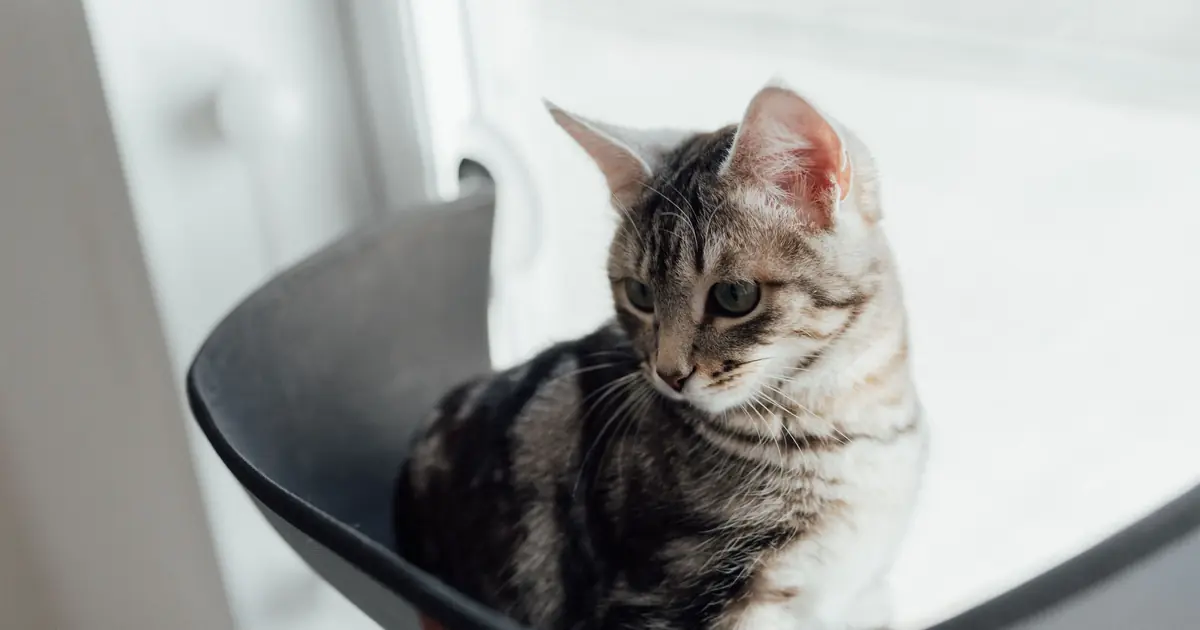
You’re standing at the door with your bag packed, and your cat is giving you that slow blink from the windowsill. And the guilt hits: how long can you leave a cat alone before it stops being okay? It’s one of the most common worries cat parents have, and the honest answer depends a lot on your cat’s age and what you set up before you go.
- A healthy adult cat can be left alone for 8 to 12 hours comfortably, and 24 to 48 hours is the safe maximum with a full food, water, and litter setup.
- Kittens under six months should not be left alone longer than 2 to 4 hours; kittens 6 to 12 months can manage up to 6 to 8 hours.
- Two days is the hard ceiling for any cat home alone, because a tipped water bowl, a jammed feeder, or a sudden illness can go unnoticed.
- For trips longer than 48 hours, a pet sitter or trusted person should visit at least once a day to refresh food and water, scoop litter, and check on your cat.
- Around 1 in 10 cats shows separation-related stress when left alone, so enrichment like window perches and puzzle feeders matters as much as food and water.
How long can you leave a cat alone, really?
A healthy adult cat can be left alone for 8 to 12 hours without any trouble, and up to 24 to 48 hours at the absolute most when you leave plenty of fresh water, enough food, and a clean litter box. Beyond two days, even a self-sufficient cat needs a human to check in. That’s the line vets draw, and it holds whether your cat is a cuddly lap cat or a confident loner.
Here’s the thing most articles blur together: there’s a difference between the longest a cat can be alone and the longest it’s comfortable being alone. A workday of 8 to 12 hours is routine and fine. A full 48 hours is survivable with the right setup, but it’s the ceiling, not the goal. The good news is that with a bit of prep, the gap between “okay” and “happy” is easy to close.
| Cat age or stage | Comfortable alone time | Safe maximum alone time |
|---|---|---|
| Kitten under 4 months | 1 to 2 hours | 2 to 3 hours |
| Kitten 4 to 6 months | 2 to 4 hours | 4 to 5 hours |
| Kitten 6 to 12 months | 4 to 6 hours | 6 to 8 hours |
| Healthy adult cat (1 to 7 years) | 8 to 12 hours | 24 to 48 hours |
| Senior cat (7+ years) | 4 to 8 hours | 12 to 24 hours, with check-ins |
| Cat with a medical condition | Varies, ask your vet | Often only a few hours |
This article is educational and not a substitute for veterinary advice. If your cat has a health condition, takes daily medication, or you’re unsure, your vet can give you a limit tailored to your cat.
How long can you leave a kitten alone?
Kittens should be left alone far less than adult cats, because they eat more often, get into more trouble, and can’t regulate their own routine yet. A kitten under four months should not be alone longer than 2 to 3 hours. By six to twelve months, a kitten can usually manage 4 to 6 hours during a normal day.
Young kittens are basically furry toddlers with claws. A kitten under six months needs frequent small meals and supervision, so a long workday alone is too much. If you adopt a kitten and work full time, line up a midday visit from a friend, a sitter, or a neighbor for those first months. Kitten-proofing the space helps too, since a bored kitten will find the one cord or houseplant you forgot about.
Can you leave a cat alone overnight?
Yes, you can leave a healthy adult cat alone overnight, since 8 to 12 hours is well within a normal cat’s comfort zone. One night away is usually fine as long as your cat has fresh water, enough food, and a clean litter box waiting at home. An automatic cat feeder takes the guesswork out of the food part. You don’t need a sitter for a single overnight with a healthy adult cat.
An overnight gets trickier with kittens, seniors, and cats on medication. A kitten or a senior cat that eats several small meals a day, or a diabetic cat that needs insulin on schedule, can’t safely skip those hours. For those cats, even one night calls for someone to stop by. Don’t panic if your healthy adult cat is alone for a night, but do double-check the food, water, and litter before you head out.
Can you leave a cat alone for a weekend or 2 days?
A healthy adult cat can be left alone for a weekend of up to 48 hours, but only with a careful setup and ideally one mid-trip check-in. Two days is the realistic ceiling for leaving a cat fully alone. Past that, the odds of something small going wrong, and nobody being there to fix it, climb fast.
Forty-eight hours sounds doable, and it is, until you picture the things that can fail. A water fountain can stop running. An automatic feeder can jam. Your cat can develop a urinary blockage or stop eating, and there’s no one to notice. That’s why vets treat two days as the limit even when you’ve left a buffet of dry food out. The food isn’t the problem; the lack of eyes on your cat is. If you can get a friend to swing by once on day two, a weekend away gets a lot safer.
Can you leave a cat alone for 3 days or a week?
No, you should not leave a cat completely alone for 3 days or longer, no matter how much food and water you leave out. Any absence past 48 hours needs a pet sitter, a trusted person, or a boarding facility to step in. A week alone is never safe for a cat.
Cats are independent, but they’re not self-cleaning or self-monitoring. Over several days a litter box becomes filthy enough that many cats will stop using it and go elsewhere. Water gets dusty or spills. Most importantly, a cat can get sick or hurt on day one and suffer for days before anyone finds out. For trips of 3 days to a week, the safe options are a daily sitter visit, a stay-over sitter, or boarding. A second cat at home is company, but it is not a substitute for a human checking in.
What are the risks of leaving a cat alone too long?
The biggest risk of leaving a cat alone too long isn’t loneliness, it’s that a real problem can go unnoticed. When no one is home, a health emergency, a failed feeder, or an empty water bowl has no backup. Boredom and stress matter too, but the silent dangers are what make long solo stays risky.
- Water running out or spilling. Cats are prone to dehydration, and a single tipped bowl or a stalled fountain can leave your cat without water for a dangerous stretch.
- A feeder failing. Automatic feeders jam, lose power, or dump everything at once. If you rely on one alone, a malfunction means no food.
- Illness going unnoticed. A urinary blockage, especially in male cats, can become life-threatening within a day. Vomiting, not eating, or straining in the litter box needs fast attention your cat won’t get if you’re away.
- Litter box problems. A dirty box leads many cats to pee or poop elsewhere, and a stressed cat may hold it in, which causes its own health issues.
- Stress and separation behavior. Around 1 in 10 cats shows separation-related stress, with signs like excessive meowing, scratching, or accidents outside the box.
- Household hazards. A bored cat alone for long stretches is more likely to chew a cord, knock something over, or get into a hazard you missed.
See a vet right away if, when you return or hear from a sitter, your cat is straining to urinate with little or nothing coming out, hasn’t eaten in more than 24 hours, is vomiting repeatedly, is hiding and lethargic, or is breathing hard. A male cat straining in the litter box is an emergency. When in doubt, call your vet or an emergency clinic.
How do I keep my cat happy and safe while I’m gone?
To keep your cat happy and safe while you’re away, set up reliable food and water, a clean litter box, and enough enrichment to fight boredom. The goal is to cover both survival needs and your cat’s need for stimulation, so the time alone feels short rather than endless.
Pre-departure checklist
- Put out fresh water in two or three spots. Use sturdy, wide bowls that won’t tip, and consider a pet water fountain as a backup, not the only source.
- Leave enough food for the whole trip, the right way. For short trips, measured portions work. For 24 to 48 hours, pair an automatic feeder with a backup bowl of dry food in case the feeder jams.
- Scoop and refresh the litter box, and add a second one. One clean box per cat plus one extra is the rule, so your cat always has a clean option.
- Cat-proof the space. Tuck away cords, secure windows and screens, move toxic plants, and close off rooms with hazards.
- Set up enrichment. A window perch, a puzzle feeder, rotating toys, and a cardboard box give your cat something to do.
- Leave familiar scent and sound. A worn t-shirt on the bed and a TV or radio on low can make the house feel less empty.
- Set up a pet camera if you have one. A camera lets you check in, and treat-dispensing models let you interact.
- Confirm your backup person. For anything near or past 48 hours, make sure your sitter or check-in person knows the plan and your vet’s number.
Enrichment is the part people skip, and it’s the part that turns “tolerable” into “fine.” A puzzle feeder makes your cat work for food and burns mental energy. A window with a bird feeder outside is hours of free entertainment. Background TV made for cats can help some cats settle, too.
If your cat tends to get stressed when you leave, a calming pheromone diffuser can take the edge off. A pheromone diffuser is a plug-in that releases a copy of the natural facial pheromone cats use to mark a space as safe, which can help an anxious cat feel calmer at home. It’s a gentle first step for a cat with mild separation stress, and it pairs well with the enrichment above.
When should you get a cat sitter instead?
You should get a cat sitter any time you’ll be away longer than 48 hours, or sooner if your cat is a kitten, a senior, or has medical needs. A sitter who visits daily covers the gaps that food and water alone can’t: fresh litter, a health check, and human contact. For trips past two days, a sitter isn’t a luxury, it’s the safe choice.
| Length of trip | Best care option |
|---|---|
| Up to 12 hours (a workday) | Cat alone with food, water, clean litter |
| One overnight (healthy adult) | Cat alone with a full setup |
| 24 to 48 hours | Cat alone, ideally one mid-trip check-in |
| 3 days to a week | Daily sitter visits or a stay-over sitter |
| More than a week | Stay-over sitter, in-home pet care, or boarding |
| Kitten, senior, or medical-needs cat | Daily care from day one |
A drop-in sitter visits once or twice a day to feed, scoop, and spend a little time with your cat. That daily set of eyes is the whole point: it’s how a small problem gets caught before it becomes a big one. Most cats do better staying home with a sitter than being moved to a boarding facility, since cats are deeply tied to their territory.
How long can you leave a cat alone if you have two cats?
Two cats can keep each other company, but having a second cat does not extend the safe time limit for leaving cats alone. The same 24 to 48 hour maximum applies, because two cats can’t refill water, scoop litter, or call the vet either. Companionship helps with boredom, not with the practical risks.
If your cats are bonded and get along, they’ll likely groom, play, and nap together while you’re out, which genuinely cuts down on stress and boredom. That’s a real plus. Just remember the math doesn’t change on safety: two cats need two clean litter boxes plus a spare, more water stations, and a human check-in past 48 hours, same as one cat. And keep an eye on tension, since some cats squabble more when their routine is off.
Frequently asked questions about leaving a cat alone
Q: Can I leave my cat alone for 12 hours a day for work?
Yes, a healthy adult cat can be left alone for 12 hours during a workday as long as it has fresh water, food, and a clean litter box. Add a window perch, a puzzle feeder, or toys to ease boredom. Kittens and senior cats need a midday check-in for a shift that long.
Q: Will my cat be sad or lonely when I’m gone?
Some cats do feel stress when left alone, and around 1 in 10 cats shows separation-related behavior like excessive meowing, scratching, or accidents outside the litter box. More social breeds such as Siamese and Burmese tend to want company more. Enrichment and a familiar scent help a lonely cat cope.
Q: Is it cheaper to leave food out or hire a sitter?
Leaving food out is cheaper, but it only works for trips up to 48 hours and doesn’t cover litter, water refills, or health monitoring. For any absence longer than two days, a sitter is the safe and responsible choice, not an optional upgrade. The cost of a sitter is small next to a missed emergency.
Q: Can automatic feeders replace a person?
Automatic feeders help for short absences but should never be your only plan for trips past 48 hours. Feeders can jam, lose power, or dispense everything at once, and they can’t refill water or scoop litter. Always pair a feeder with a backup food source and, for longer trips, a human check-in.
Q: How long can a senior cat be left alone?
A healthy senior cat (7+ years) can usually be left alone for 4 to 8 hours, with 12 to 24 hours as a stretch only if someone checks in. Senior cats often have conditions or medications that need a regular schedule, so they need closer monitoring than younger adults. Ask your vet for a limit specific to your cat.
Q: Do cats get bored when home alone all day?
Yes, cats can get bored home alone all day, and a bored cat may overgroom, scratch furniture, or get into hazards. Enrichment fixes most of this: a window view, puzzle feeders, rotating toys, and cat-friendly TV give your cat something to do. Boredom is easy to prevent with a little setup before you leave.
Q: Should I leave the TV or a light on for my cat?
Leaving a TV or radio on low can comfort some cats by making the house feel less empty, and cat-specific videos with birds or fish can hold their attention. A light isn’t necessary, since cats see well in dim conditions, but it doesn’t hurt. Match it to what your cat seems to enjoy.
Q: What’s the absolute longest a cat can be left alone?
The absolute longest a healthy adult cat should be left fully alone is 48 hours, and only with plenty of water, food, and a clean litter box. Beyond two days, a cat needs a sitter or trusted person visiting daily. Kittens, seniors, and cats with medical needs have much shorter limits.
So, how long can you leave a cat alone? For a healthy adult, 8 to 12 hours is easy and 24 to 48 hours is the safe ceiling, while kittens and seniors need far less. The real key isn’t just the clock, it’s the setup: fresh water, food, a clean box, a little enrichment, and a sitter for anything past two days. Get those right, and you can head out the door without the guilt, knowing your cat is genuinely okay until you’re back.

Hello and welcome to The Ideal Cat!
We are some passionate cat owners from different professions. We love our cats and have a lot of experience in how to care for our pets. We are incredibly excited to share our knowledge, experience, and research with you. So you can take good care of your loving cat. We will answer most of the common questions about owning cats, taking care of them, etc. If you have any question contact with us. Thanks for visiting! Enjoy the content.
