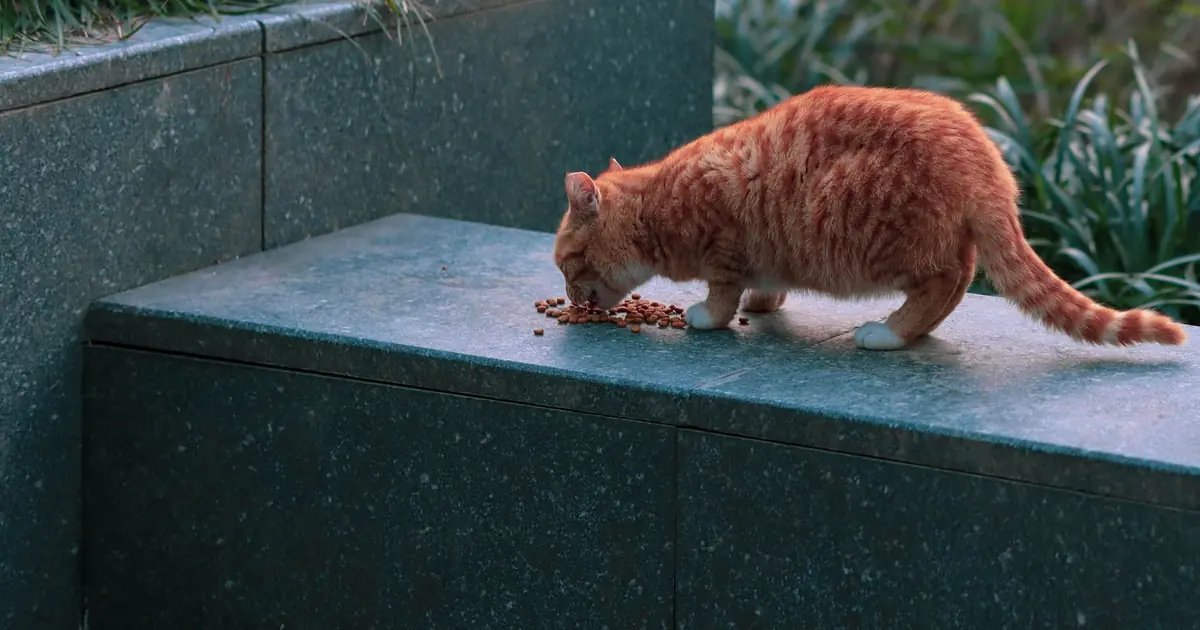
If your cat circles your ankles at 5am like you’ve never fed them in your life, you’re not alone. Figuring out how many times a day a cat should eat is one of the first things new cat parents Google, and honestly, the answer is simpler than it feels. Most adult cats thrive on two meals a day, spaced about 12 hours apart. But the right number changes with your cat’s age, weight, and habits, so let’s walk through it together.
- Most adult cats (1 year and older) do best on two meals a day, roughly 12 hours apart.
- Kittens under 6 months usually need 3 to 4 meals a day because of their fast growth and tiny stomachs.
- A cat’s stomach starts sending hunger signals to the brain after about 8 to 10 hours empty, which is why two meals beats one for many cats.
- Free-feeding dry food all day can lead to overeating and weight gain in many cats, raising the risk of diabetes and joint disease.
- Feeding at the same times each day gives cats a routine that supports digestion, behavior, and easier health monitoring.
How many times a day should a cat eat?
Most adult cats should eat two meals a day, about 12 hours apart, for example breakfast and dinner. According to the Cornell Feline Health Center, feeding an adult cat once or twice a day is appropriate in most cases. Two meals is the sweet spot for the majority of cats because a cat’s stomach is small, and an empty stomach starts triggering hunger signals after roughly 8 to 10 hours.
That said, “two meals” is a starting point, not a rule carved in stone. Some cats do better with three or four smaller meals spread across the day. Cats are natural grazers and hunters who, in the wild, eat many tiny meals (think small prey, not one big bowl). So if your cat seems hungry and unsettled on two meals, splitting the same daily amount into smaller portions can help, as long as the total stays the same.
Cat feeding frequency by life stage (chart)
How many times a day a cat should eat depends heavily on age. Kittens, adults, and seniors all have different needs, and the table below breaks down the typical schedule for each life stage. Always adjust portion sizes to keep your cat at a healthy weight, and ask your vet if you’re unsure.
| Life Stage | Meals Per Day | Notes |
|---|---|---|
| Newborn to 8 weeks | Nursing / bottle, then weaning | Kittens nurse frequently; weaning onto solids starts around 4 weeks. |
| 8 to 16 weeks | 3 to 4 meals (or free-fed kitten food) | Rapid growth and tiny stomachs mean frequent small meals. |
| 4 to 6 months | 3 meals | Cornell notes kittens do best on three meals a day until 6 months. |
| 6 months to 1 year | 2 to 3 meals (transition toward 2) | Twice-daily feeding is generally best in this window. |
| Adult (1 to 7 years) | 2 meals | About 12 hours apart; some cats prefer smaller, more frequent meals. |
| Senior (7 to 10+ years) | 2 or more smaller meals | Keep the same rhythm; smaller, frequent meals help cats with digestive or appetite changes. |
How often should you feed a kitten?
Kittens should eat 3 to 4 small meals a day until they’re about 6 months old. Kittens grow fast and burn through energy quickly, but their stomachs are tiny, so they can’t eat much at once. The Cornell Feline Health Center recommends three meals a day until 6 months, then twice-daily feeding from 6 months to 1 year. Many vets are fine with free-feeding kitten-formula food for very young kittens, since they rarely overeat at that age.
How often should you feed an adult cat?
Adult cats (1 year and older) should eat two meals a day in most cases, spaced about 12 hours apart. This keeps your cat from going too long on an empty stomach, since hunger signals kick in after roughly 8 to 10 hours. If your adult cat is very active or seems unsatisfied, you can split the same daily portion into three smaller meals instead. The total amount matters more than the exact number of meals.
How often should you feed a senior cat?
Senior cats should generally keep the same two-meals-a-day schedule, though many do better with two or more smaller meals. Cornell advises that cats 10 years and older maintain their usual feeding routine unless a vet directs otherwise. Older cats sometimes have dental issues, reduced appetite, or trouble absorbing nutrients, so smaller, more frequent meals can be gentler. If your senior cat suddenly eats much more or much less, that’s worth a vet visit.
Free-feeding vs. scheduled meals: which is better?
Scheduled meals are usually better than free-feeding for most cats, mainly because they make it far easier to control how much your cat eats. Free-feeding means leaving food out all day so your cat grazes whenever they want. Scheduled feeding means measured portions at set times.
The Cornell Feline Health Center cautions that free-feeding dry food may work for some cats but causes overeating and weight gain in others. That matters a lot, because overweight cats face real health risks. Cornell cites research showing overweight cats are about 4.5 times more likely to develop diabetes and roughly 7 times more likely to need vet care for joint problems. Here’s the thing: with food always available, many cats eat out of boredom, not hunger.
| Feeding Method | Best For | Main Drawback |
|---|---|---|
| Scheduled meals (portioned, 2 to 3 times a day) | Most cats, especially those prone to weight gain | Requires you to be home or use a timed feeder. |
| Free-feeding dry food | Hard-to-fatten cats, some kittens, multi-cat homes (with caution) | Easy overeating; you can’t tell how much each cat ate. |
| Portion-controlled grazing (measured daily amount left out) | Cats who like to nibble but need calorie limits | Still risks weight gain if portions creep up. |
A good middle ground: measure your cat’s full daily portion in the morning, then offer it in two or three feedings rather than topping up a bowl whenever it empties.
Does wet or dry food change how often you feed?
Wet and dry food can follow the same two-to-three-meals-a-day schedule, but they’re handled differently once they hit the bowl. Wet food spoils within a few hours at room temperature, so it should be served as fresh meals and not left out to graze on. Dry food stays safe out longer, which is the only food that works in most timed feeders. Many cat parents feed wet food at scheduled meals for hydration and serve a small measured amount of dry food in between.
Whichever you choose, the meal frequency stays roughly the same. What changes is portion size, since wet and dry foods have very different calorie densities. For a deeper breakdown of amounts, check the linked feeding guides below.
Should you use a timed or automatic feeder?
An automatic feeder is a great tool if your cat wakes you for food or you’re away during meal times, and it works best with dry food. Timed feeders dispense measured portions at set times, which keeps your cat on a steady routine without the 4am wake-up calls. They’re especially handy for cats who like to eat early in the morning while you sleep.
A few things to know before you buy one. Most basic feeders only handle dry food, so wet-food fans will need a refrigerated model or a different plan. And a feeder doesn’t replace watching your cat eat, since a skipped meal is often the first sign something’s wrong. If you do try one, set it to dispense the same total daily amount you’d feed by hand, just split across more drop times.
Is feeding a cat once a day ever okay?
Feeding a healthy adult cat once a day can be acceptable, and one study even suggests it may help with satiety, but two meals a day suits most cats better. A 2020 University of Guelph study of eight healthy young cats found that those fed one larger daily meal showed higher levels of appetite-regulating hormones and less food-begging than cats fed four times a day. The researchers framed it as one more tool for managing weight, not a must-do rule.
For everyday life, two meals is still the safer default for most cats. A long gap on an empty stomach can leave some cats nauseous or extra hungry, and kittens, seniors, and cats with health conditions usually need more frequent feeding. If you’re considering once-a-day feeding, talk it over with your vet first.
Should you feed your cat at the same time every day?
Yes, feeding your cat at the same times every day is one of the best things you can do for them. Cats thrive on routine, and predictable meal times support healthy digestion, calmer behavior, and a steadier sleep pattern. A regular schedule also makes it obvious when something’s off, because a cat who suddenly ignores a meal they normally love is telling you something.
Pick times that fit your life and stick with them, give or take an hour. Many cat parents do breakfast and dinner around their own. If you feed near bedtime, keep that last portion small so your cat can settle for the night.
When to talk to your vet about feeding
This article is educational, and your veterinarian is always the best source for advice tailored to your individual cat. Reach out to your vet if you notice any of these:
- Your cat suddenly eats much more or much less than usual.
- Your cat is gaining or losing weight without a clear reason.
- Your cat skips meals, vomits often, or seems lethargic.
- You’re feeding a kitten, senior, pregnant, or sick cat and aren’t sure of the right schedule.
- Your cat has a condition like diabetes or kidney disease that affects feeding.
So, how many times a day should a cat eat? For most adult cats, two meals about 12 hours apart is the simple, vet-backed answer, with kittens needing more and seniors often preferring smaller, frequent meals. Match the schedule to your cat’s age and habits, keep portions consistent, and you’ll have a happy, well-fed cat.
Frequently Asked Questions
Q: How many times a day should an adult cat eat?
Most adult cats should eat two meals a day, spaced about 12 hours apart. Some cats do well with three smaller meals. The Cornell Feline Health Center notes that feeding an adult cat once or twice a day is appropriate in most cases.
Q: How many times a day should a kitten eat?
Kittens under 6 months should eat 3 to 4 small meals a day to support fast growth. From 6 months to 1 year, two to three meals a day is generally best as you transition toward an adult schedule of two meals.
Q: How long can a cat go without eating?
A cat’s stomach starts sending hunger signals after about 8 to 10 hours, and healthy cats generally shouldn’t go more than 12 hours between meals. A cat that refuses food for 24 hours or more should see a vet, since not eating can quickly cause serious liver problems in cats.
Q: Is it bad to free-feed a cat?
Free-feeding can work for some cats but leads to overeating and weight gain in many others, especially with dry food. Overweight cats face higher risks of diabetes and joint disease, so portioned, scheduled meals are usually the safer choice.
Q: Should I feed my cat in the morning or at night?
Feed your cat both, ideally as breakfast and dinner about 12 hours apart. If you feed near bedtime, keep that meal small. The most important thing is consistency, so your cat eats at the same times each day.
Q: Can I feed my cat just once a day?
Feeding a healthy adult cat once a day can be acceptable, and one University of Guelph study suggests it may improve satiety. Still, two meals a day suits most cats better, and kittens, seniors, and sick cats need more frequent feeding. Check with your vet first.
Q: How often should I feed my cat wet food?
You can feed wet food on the same two-to-three-meals-a-day schedule as dry food. Because wet food spoils within a few hours at room temperature, serve it as fresh meals rather than leaving it out for grazing.
Q: Why does my cat act hungry all the time?
Constant hunger can come from too-small portions, boredom, or learned begging, but it can also signal health issues like hyperthyroidism, diabetes, or parasites. If your cat seems truly insatiable or is losing weight while eating more, see your vet.

Hello and welcome to The Ideal Cat!
We are some passionate cat owners from different professions. We love our cats and have a lot of experience in how to care for our pets. We are incredibly excited to share our knowledge, experience, and research with you. So you can take good care of your loving cat. We will answer most of the common questions about owning cats, taking care of them, etc. If you have any question contact with us. Thanks for visiting! Enjoy the content.
