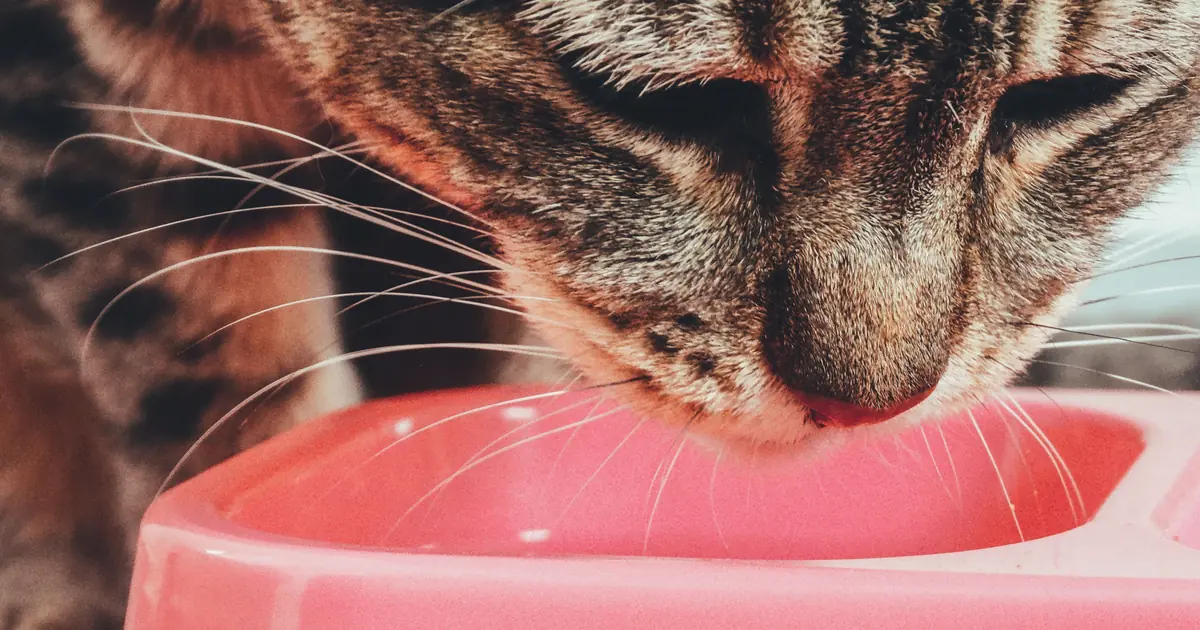
You stand in front of the cabinet, can opener in hand, and your cat is doing that loud, urgent meow. And you think: wait, how much wet food am I actually supposed to give? One can? Two? A little more because those eyes are very convincing? I get it. Figuring out how much wet food to feed a cat trips up almost every cat parent, because cans come in different sizes and every brand says something different.
Here’s the good news. There’s a simple way to get this right, and it comes down to calories, not guesswork. Let’s sort it out.
- An average adult cat needs about 24 to 35 calories per pound of body weight per day, which works out to roughly 200 calories for an 8 lb cat and 250 calories for a 10 lb cat.
- A 3 oz can of pâté wet food usually holds about 80 to 100 calories, and a 5.5 oz can usually holds about 150 to 180 calories, but the exact number is printed on the can.
- On a wet-food-only diet, a typical 10 lb cat eats about three 3 oz cans or one and a half 5.5 oz cans per day.
- Feed wet food in two or three measured meals a day rather than leaving it out, since canned food spoils after about two to four hours at room temperature.
- Neutered, senior, and indoor cats need fewer calories, while kittens, pregnant cats, and nursing cats need far more, so adjust the amount to your cat’s life stage and body condition.
How Much Wet Food Should I Feed My Cat by Weight?
How much wet food you feed a cat depends on calories, and most adult cats need about 24 to 35 calories per pound of body weight each day. The chart below turns that into real numbers: daily calories, ounces of wet food, and how many cans that is. These amounts assume wet food only and a healthy adult cat at a normal weight.
| Cat’s weight | Calories per day (neutered adult) | Wet food per day | 3 oz cans per day | 5.5 oz cans per day |
|---|---|---|---|---|
| 5 lb | ~125 kcal | ~4 oz | ~1.5 cans | ~0.75 can |
| 8 lb | ~200 kcal | ~6 oz | ~2 to 2.5 cans | ~1 to 1.25 cans |
| 10 lb | ~250 kcal | ~7.5 oz | ~3 cans | ~1.5 cans |
| 12 lb | ~300 kcal | ~9 oz | ~3 to 3.5 cans | ~1.75 cans |
| 15 lb | ~375 kcal | ~11 oz | ~4 cans | ~2 to 2.5 cans |
A quick but important note: this chart uses common pâté calorie counts (about 85 calories per 3 oz can and about 165 calories per 5.5 oz can). Your brand may differ, so treat these as a starting point. The calorie target for each weight comes from standard veterinary feeding guidance, and you can see those daily calorie numbers reflected in PetMD’s cat calorie chart.
If your cat is intact (not spayed or neutered), bump the calories up by about 40%, since intact cats burn more. If your cat is overweight, feed for the weight you want them to be, not the weight they are now, and do that with your vet.
How Many Calories Does My Cat Actually Need?
An average adult cat needs roughly 24 to 35 calories per pound of body weight per day, with most healthy indoor cats landing near the lower end. That range exists because every cat is a little different. A lazy senior who sleeps 20 hours a day burns less than a young cat tearing around the house at 2am.
If you want the precise version, veterinary nutritionists use a two-step formula endorsed by AAHA, AAFP, and WSAVA. First you find Resting Energy Requirement (RER), the calories a cat burns just existing:
- RER = 70 × (body weight in kg)^0.75. To get kilograms, divide your cat’s weight in pounds by 2.2.
- Then multiply RER by a life-stage factor to get daily needs: about 1.2 for a neutered indoor adult, 1.4 for an intact adult, 1.0 to 1.2 for a cat prone to weight gain, 2.5 for a growing kitten, and 2 to 4 for a nursing mom.
Here’s a worked example. A 5 kg (about 11 lb) cat has an RER of about 234 calories. Multiply by 1.2 for a neutered indoor cat and you get roughly 280 calories a day. That’s the same ballpark as the “24 to 35 calories per pound” shortcut, so either approach works.
Honestly, you don’t need to do math every day. Pick a starting amount from the chart, then watch your cat’s body and waistline over a few weeks. That tells you more than any calculator.
How Many Cans of Wet Food Per Day Should a Cat Eat?
A typical 10 lb cat on wet food alone eats about three 3 oz cans or one and a half 5.5 oz cans per day. The reason the can count changes so much is simple: cans hold different amounts of food, and brands pack different calories into the same size can.
Here’s roughly how the common can sizes stack up:
| Can size | Typical calories per can | Best for |
|---|---|---|
| 3 oz (about 85 g) | ~80 to 100 kcal | Small cats, kittens, precise portioning, picky eaters |
| 5.5 oz (about 156 g) | ~150 to 180 kcal | Average to large adult cats, multi-cat homes |
| 12.5 oz (about 354 g) | ~360 to 450 kcal | Multiple cats or large-volume feeding |
To get your own exact can count, use one line of math: daily calories ÷ calories per can = cans per day. So a 10 lb cat needing 250 calories, eating a 3 oz can that holds 85 calories, needs 250 ÷ 85, which is just under 3 cans. Same cat on a 5.5 oz can at 165 calories needs 250 ÷ 165, which is about 1.5 cans.
The calorie number you need is printed right on the can, usually near the ingredients, listed as “kcal/can” or “calorie content.” If you can’t find it, the brand’s website or a quick call to the company will have it. This one habit, feeding by calories instead of by the can, fixes the most common feeding mistake out there.
Why the can’s own feeding guide often says too much
Cat parents on Reddit complain about this all the time, and they’re not wrong: the feeding chart on many cans tends to suggest more than the average indoor cat needs. Those guides are general and lean generous. If you follow the can’s chart and your cat starts gaining weight, trust your cat’s body over the label and scale the portion down.
How Much Wet Food for a Wet-and-Dry (Mixed) Diet?
If you feed both wet and dry food, the total daily calories stay the same, you just split them between the two. A common, easy split is to cover about half the calories with wet food and half with dry, but any ratio works as long as the total adds up.
Say your 10 lb cat needs 250 calories a day and you want a 50/50 mix:
- Give 125 calories from wet food. At about 85 calories per 3 oz can, that’s roughly 1.5 cans a day.
- Give the other 125 calories from dry food. Dry food is calorie-dense, so check the bag’s “kcal/cup” and measure with an actual measuring cup, not a scoop.
- Count treats too. Treats should stay under 10% of daily calories, so trim the meals a little on heavy-treat days.
One warning worth repeating: many people leave dry food out all day and serve wet food on top. That “free feeding plus wet meals” combo is a fast track to a chubby cat. Measure the dry portion into the bowl and don’t top it up until the next day.
How Often Should I Feed My Cat Wet Food?
Feed wet food in two or three measured meals a day, since cats do well with smaller, regular meals and canned food shouldn’t sit out for long. Once a cat reaches adulthood, around one year old, two meals a day suits most cats, while kittens need more frequent feeding.
A simple wet-food schedule looks like this:
- Kittens (under 6 months): 3 to 4 small meals a day, since they grow fast and have tiny stomachs.
- Adult cats (1 to 7 years): 2 meals a day, morning and evening, is the easy default. Three smaller meals is great if your schedule allows.
- Senior cats (7+): 2 to 3 smaller meals, which can be gentler on digestion and appetite.
Wet food can’t be left out the way kibble can. Toss any uneaten canned food after about two to four hours at room temperature, and keep opened cans covered in the fridge for up to about three days. If your cat is a slow grazer, serve smaller portions more often so the food stays fresh.
How Do I Know If I’m Feeding the Right Amount?
The best way to know you’re feeding the right amount of wet food is to check your cat’s body condition every few weeks, not to obsess over the number on the can. Your cat’s shape is the real report card. Vets score this on a 9-point Body Condition Score scale, where 5 is ideal.
Run a quick hands-on check at home:
- Ribs: You should feel them easily with light pressure, like the back of your hand, but not see them sticking out.
- Waist: Looking down from above, you should see a slight tuck behind the ribs, an hourglass, not a sausage.
- Belly: A small abdominal fat pad is normal. A swinging belly that sways side to side usually means too much.
If your cat is gaining, cut the daily amount by about 10% and recheck in two to four weeks. If they’re getting bony, add about 10%. Make changes slowly, and loop in your vet for anything beyond a small tweak.
How Much Wet Food for Kittens, Seniors, and Pregnant Cats?
Life stage changes the amount of wet food a cat needs a lot, so the same cat can need very different portions over its life. Kittens and pregnant or nursing cats need far more calories per pound than a calm adult, while seniors and “easy keepers” usually need less.
| Life stage | Calorie need vs. adult | What that means for wet food |
|---|---|---|
| Kitten (under 1 year) | Up to 2x more per pound | Feed kitten-formula wet food often, 3 to 4 meals a day, until full at the youngest ages |
| Healthy adult (1 to 7) | Baseline (~24 to 35 kcal/lb) | Follow the weight chart above, 2 to 3 meals a day |
| Senior (7+) | Often slightly less; varies | Watch weight closely; extra moisture from wet food helps aging kidneys |
| Pregnant or nursing | 1.5x up to 4x more | Increase gradually, offer kitten or all-life-stage food, let her eat freely under vet guidance |
Pregnant and nursing queens are the big exception to the “measure everything” rule. Their needs climb so high that vets often allow free feeding of a high-calorie food during late pregnancy and nursing. If you’re feeding a pregnant cat, ask your vet to set the plan.
A Quick Word on Health and Your Vet
This guide is here to teach and reassure, not to replace your veterinarian. Feeding amounts are a starting point, and your vet knows your cat’s weight, age, and health history. Call your vet promptly if your cat suddenly stops eating, eats far more or less than usual, loses weight without you changing the food, or seems hungry all the time despite normal meals. Big appetite changes can be the first sign of a health problem worth checking.
Frequently Asked Questions
Q: How much wet food should I feed my cat per day in ounces?
Most adult cats need about 5 to 9 ounces of wet food per day, depending on their weight and calorie needs. A typical 10 lb cat eats about 7.5 ounces a day on a wet-only diet. The exact amount depends on the calories in your specific brand, which are printed on the can.
Q: How many cans of wet food should a cat eat a day?
A typical 10 lb cat eats about three 3 oz cans or one and a half 5.5 oz cans per day on wet food alone. Smaller cats need fewer and larger or intact cats need more. Divide the daily calories by the calories per can to get the exact count for your food.
Q: Is one can of wet food a day enough for a cat?
One can a day is usually not enough on its own for an average adult cat. A single 3 oz can holds only about 80 to 100 calories, while most adult cats need 200 to 300 calories per day. One 5.5 oz can covers more, but most cats still need additional food, either more wet food or some dry, to meet their daily calories.
Q: Can a cat live on wet food only?
Yes, a cat can thrive on wet food only, as long as the food is labeled complete and balanced for your cat’s life stage. Wet food is about 70 to 80% water, so a wet-only diet also boosts your cat’s hydration. Many vets favor wet or mixed diets for that extra moisture.
Q: How do I read the calories on a can of cat food?
Look for “calorie content” or “kcal/can” on the can, usually near the ingredient list or guaranteed analysis. That number tells you exactly how many calories one can provides. Divide your cat’s daily calorie target by that number to find how many cans to feed each day.
Q: Should I feed my cat wet food in the morning or at night?
Both, ideally. Splitting wet food into a morning and an evening meal matches how cats like to eat and keeps the food fresh. Two meals a day works for most adult cats, and three smaller meals is even better if your schedule allows.
Q: Why does my cat still act hungry after eating?
A cat acting hungry after meals is often just food-motivated, but it can also mean the portion is slightly low or meals are too far apart. Try splitting the same daily amount into more frequent meals first. If your cat seems genuinely ravenous all the time or is losing weight, see your vet, since constant hunger can signal a health issue.
Q: Does wet or dry food have fewer calories?
Wet food has fewer calories by weight than dry food, mainly because it’s mostly water. That makes wet food helpful for weight management, since your cat can eat a satisfying volume for fewer calories. Dry food is calorie-dense, so small amounts add up fast and need careful measuring.
Getting how much wet food to feed a cat right really does come down to one habit: feed by calories, then watch your cat’s body. Start with the weight chart above, check that little waistline every few weeks, and adjust by about 10% when you need to. Do that, and you’ll keep your cat at a happy, healthy weight, meal after satisfying meal.

Hello and welcome to The Ideal Cat!
We are some passionate cat owners from different professions. We love our cats and have a lot of experience in how to care for our pets. We are incredibly excited to share our knowledge, experience, and research with you. So you can take good care of your loving cat. We will answer most of the common questions about owning cats, taking care of them, etc. If you have any question contact with us. Thanks for visiting! Enjoy the content.
