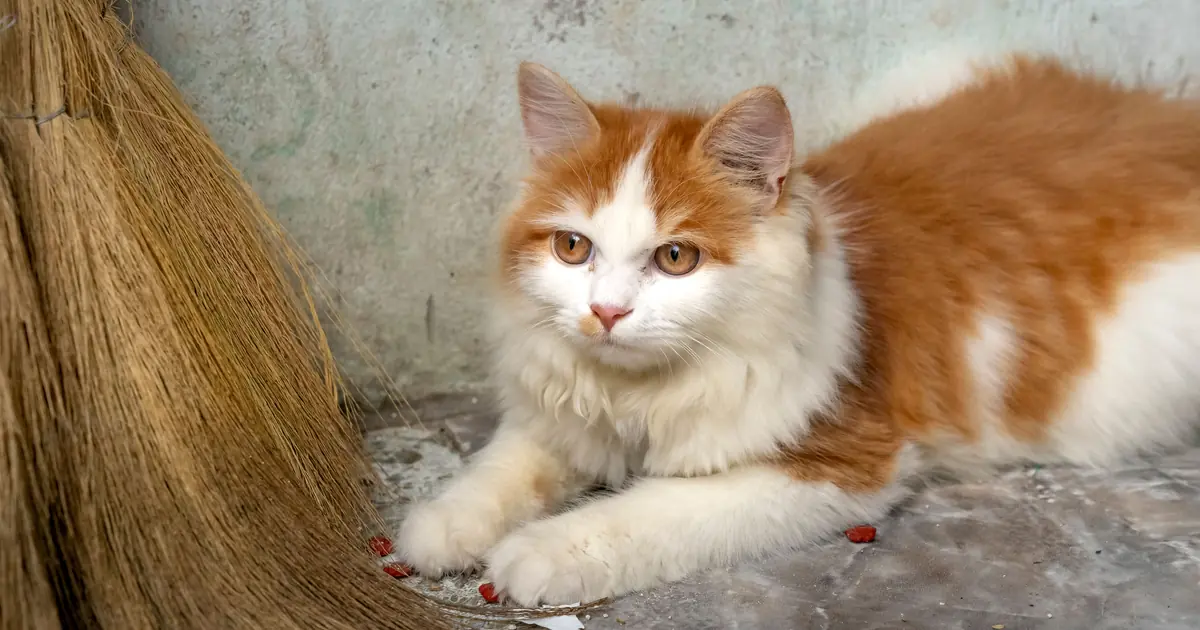
You pour bleach into the mop bucket, turn around for two seconds, and there’s your cat: head down, eyes half closed, rubbing her cheek against the bucket rim like it’s the best thing that’s happened to her all week. Maybe she’s rolling on the freshly cleaned floor. Maybe she’s drooling a little. It looks a lot like her catnip face, and that’s not a coincidence.
It’s a strange thing to watch, and it makes a lot of cat parents nervous, for good reason. Bleach smells amazing to plenty of cats, and it’s also a genuine health hazard. Here’s what’s actually going on, and how to keep your cat safe around it.
- Cats are drawn to bleach because its chlorine smell resembles compounds in cat urine and pheromone marking scents, not because bleach is safe or appealing on purpose.
- The bleach reaction (rolling, drooling, rubbing, the flehmen response) looks a lot like a catnip response, but it comes from a completely different chemical trigger.
- Bleach is toxic to cats. Fumes irritate the eyes, nose, and lungs, and licking or swallowing it can cause chemical burns, vomiting, and serious poisoning.
- Never induce vomiting if your cat licks or swallows bleach. Rinse the mouth with water and call your vet or an animal poison control line right away.
- You can still clean with bleach in a cat household. Dilute it properly, ventilate the room, keep your cat out until the area is completely dry, and rinse surfaces well.
Why do cats like the smell of bleach?
Cats like the smell of bleach because chlorine, its main active ingredient, produces an odor that resembles chemical compounds found in cat urine and feline pheromones. Pheromones are natural scent signals cats use to communicate with each other, marking territory or signaling they feel safe in a spot. Bleach’s chlorine notes apparently hit some of the same scent receptors, so your cat’s brain reads “familiar cat smell” instead of “harsh cleaning chemical.”
It’s the same instinct behind why some cats go wild for lavender, and it echoes what catnip does to a cat: a pleasure response triggered by scent, just from a different compound (nepetalactone instead of chlorine).
What does a cat’s reaction to bleach actually look like?
A cat’s bleach reaction usually looks like rolling on the floor, rubbing the face and cheeks against the source, drooling, and briefly zoning out. Some cats add the flehmen response: that odd open-mouthed grimace where the upper lip curls back. It happens when a cat pushes air across the vomeronasal organ, a scent-processing structure in the roof of the mouth, to get a fuller “read” on an interesting smell.
The display usually lasts seconds to a couple of minutes, and cats snap out of it on their own. It’s not a medical event by itself. The real risk is what comes next: your cat licking the floor, rubbing against a surface that’s still wet, or trying to get closer to the source.
Is bleach dangerous or toxic to cats?
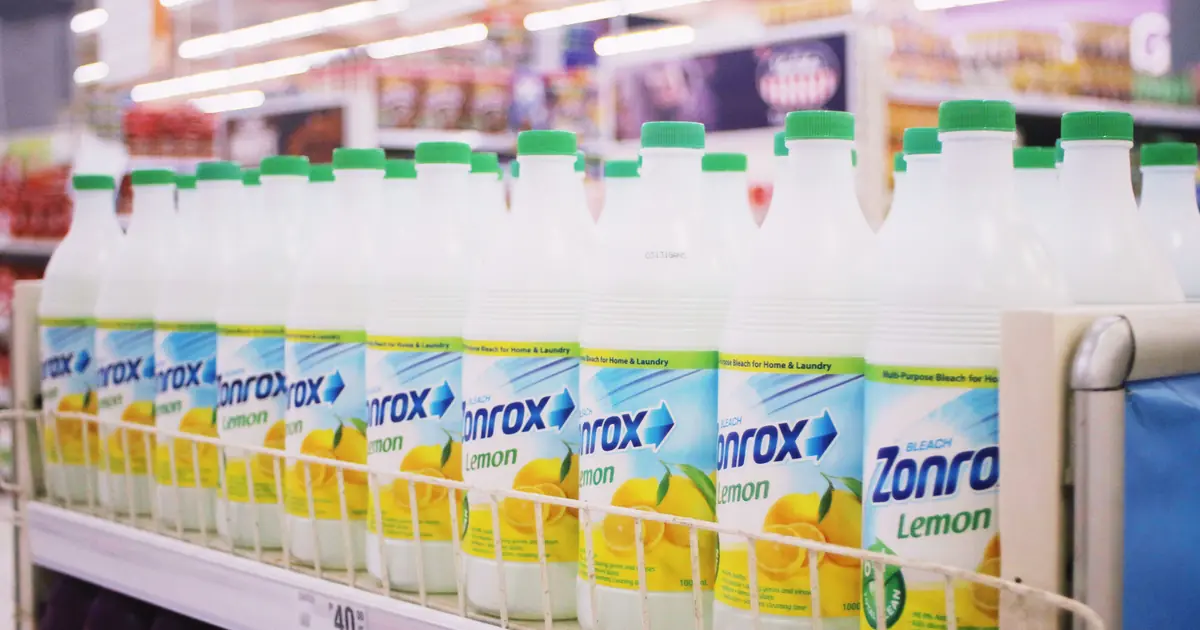
Yes. Bleach is toxic to cats, whether it’s inhaled as fumes, licked off a surface, or swallowed directly. Household bleach is a chlorine-based disinfectant, and even diluted, it’s corrosive enough to irritate skin, eyes, and airways. Concentrated bleach, or bleach that’s actually been swallowed, is a genuine medical emergency.
The ASPCA Animal Poison Control Center lists chlorine bleach as a common household hazard for pets, with exposure ranging from mild irritation to serious chemical injury depending on concentration and contact. The Pet Poison Helpline notes it’s among the cleaning products that most often prompt calls about cats and dogs, since pets are curious about the smell with no way of knowing it’s harmful.
The table below breaks down the three most common ways cats encounter bleach, and what each one means for their health.
| Type of Exposure | Risk Level | What to Do |
|---|---|---|
| Breathing in bleach fumes (freshly cleaned room) | Mild to moderate: can irritate eyes, nose, throat, and lungs, especially in a poorly ventilated space | Move your cat to fresh air immediately, watch for coughing or watery eyes, call your vet if symptoms don’t clear up fast |
| Licking diluted bleach residue off a floor or surface | Mild to moderate: mouth irritation, drooling, possible vomiting | Rinse your cat’s mouth gently with water, offer plain water to drink, call your vet or poison control for guidance |
| Ingesting concentrated or undiluted bleach | Severe: chemical burns to the mouth, throat, and stomach, possible internal damage | This is an emergency. Do not induce vomiting. Call your vet or an animal poison control line right away |
What are the symptoms of bleach exposure in a cat?
Symptoms of bleach exposure in cats include drooling, pawing at the mouth, vomiting, watery or red eyes, coughing, and labored breathing. You might also notice redness or visible burns on the lips, tongue, gums, or paws if your cat walked through a spill, plus lethargy or repeated retching in more serious cases.
Fume exposure tends to cause eye and throat irritation within minutes. Skin or mouth contact with concentrated bleach can take a little longer to show its full effect as a chemical burn develops. Either way, don’t wait to see if symptoms pass on their own.
What should you do if your cat licks bleach or a bleached surface?
If your cat licks bleach or a freshly bleached surface, rinse their mouth out with plain water and call your veterinarian or an animal poison control line right away. Do not induce vomiting. Bringing bleach back up can cause additional chemical burns to the esophagus and throat on the way out, which is worse than leaving it where it is.
- Move your cat away from the bleach source and into a well-ventilated room.
- Rinse their mouth gently with water if they’ll allow it (don’t force it).
- Check for drooling, pawing at the face, redness, or burns around the mouth and paws.
- Call your vet, or an animal poison control line, and describe what happened and roughly how much was involved.
- Follow their instructions exactly. Don’t give home remedies, milk, oil, or anything else without a professional telling you to.
The VCA Hospitals guidance on bleach poisoning in cats notes that treatment depends heavily on concentration and route of exposure, which is exactly why a phone call to a vet or poison control matters more than guessing at home.
How can you clean with bleach safely when you have a cat?
You can clean with bleach safely around a cat by diluting it properly, ventilating the room, keeping your cat out of the space while it’s wet, and rinsing and drying every surface before letting them back in. Bleach fumes are strongest right after application, and residue stays a hazard until it’s fully rinsed away.
- Dilute bleach according to the label, never use it at full strength on surfaces your cat can reach.
- Open a window or run a fan while cleaning and for a while afterward.
- Keep your cat in another room until the area is dry, not just until it looks dry.
- Rinse mopped floors and wiped counters with plain water afterward to remove residue.
- Store bleach bottles capped and out of reach, cats have knocked over plenty of unattended containers.
The same goes for laundry: run an extra rinse cycle on bleached cat bedding before it goes back in your cat’s space. If the real goal is a lingering smell rather than disinfecting, an enzymatic cleaner for cat urine is often the better tool, especially if you’re working out how to get rid of cat pee smell for good.
Are there safer alternatives to bleach for cleaning around cats?
Yes. Pet-safe cleaners, diluted white vinegar for some surfaces, and enzyme-based cleaners are all safer alternatives to bleach for households with cats. Enzymatic cleaners break down the compounds in urine and other organic stains, rather than just masking them the way bleach does, so there’s less lingering odor for your cat to obsess over, and less risk if they get curious.
Not every strong smell is a bleach situation. If your cat reacts oddly to candles or diffusers, it’s worth knowing whether incense is bad for cats. And if your cat ever seems unusually wobbly or “drunk” after sniffing something in the house, that’s worth a closer look too. Some cats really can act drunk from certain smells and substances, and it’s not something to brush off as funny.
A quick safety note: this article is educational and isn’t a substitute for veterinary care. If your cat licks bleach, has burns around the mouth or paws, or shows drooling, vomiting, or breathing trouble after any bleach exposure, contact your veterinarian or an animal poison control line right away. Never induce vomiting after bleach exposure, and never give a cat medication or a home remedy without a vet’s direction.
Frequently Asked Questions
Q: Why does my cat roll around in bleach?
Your cat rolls around in bleach because the chlorine smell resembles feline pheromones and compounds in cat urine, which triggers a pleasurable scent response similar to catnip. It’s an instinctive reaction, not a sign the bleach is safe for your cat to be around.
Q: Is it normal for cats to love the smell of bleach?
It’s fairly common. Many cats show a strong, catnip-like interest in chlorine bleach because of its chemical similarity to feline scent markers. Common doesn’t mean harmless though, and bleach still poses a real poisoning and irritation risk.
Q: Can the smell of bleach hurt my cat?
Yes, bleach fumes can irritate a cat’s eyes, nose, throat, and lungs, especially in a small or poorly ventilated room. Symptoms from fume exposure include watery eyes, coughing, and sneezing, and they usually improve once your cat is moved to fresh air.
Q: What happens if a cat licks bleach off the floor?
A cat that licks diluted bleach residue off a floor may drool, paw at its mouth, or vomit from mouth and throat irritation. Rinse the mouth with water and call your vet or an animal poison control line, since even diluted bleach can cause more damage than it looks like at first.
Q: Should I make my cat throw up if it swallowed bleach?
No, never induce vomiting after bleach exposure. Bleach can cause chemical burns on the way down, and bringing it back up risks burning the esophagus and throat a second time. Call your vet or poison control immediately instead.
Q: How long should I keep my cat away from a bleached surface?
Keep your cat away from a bleached surface until it’s fully rinsed with plain water and completely dry, not just until it looks dry to the eye. Residue and fumes can linger longer than expected, especially on porous surfaces like grout or unsealed wood.
Q: What are the signs of bleach poisoning in cats?
Signs of bleach poisoning in cats include drooling, pawing at the mouth, vomiting, red or watery eyes, coughing, breathing trouble, and visible burns on the lips, gums, or paws. Any of these signs after a bleach exposure calls for a vet or poison control right away.
Q: Are there cleaning products that smell appealing to cats but aren’t dangerous?
Pet-safe and enzyme-based cleaners are a safer option, since they break down odors like urine without the corrosive fumes bleach produces. They won’t trigger the same catnip-like reaction chlorine does, which is actually a plus when you’re trying to keep your cat away from a wet, freshly cleaned surface.

Hello and welcome to The Ideal Cat!
We are some passionate cat owners from different professions. We love our cats and have a lot of experience in how to care for our pets. We are incredibly excited to share our knowledge, experience, and research with you. So you can take good care of your loving cat. We will answer most of the common questions about owning cats, taking care of them, etc. If you have any question contact with us. Thanks for visiting! Enjoy the content.
)