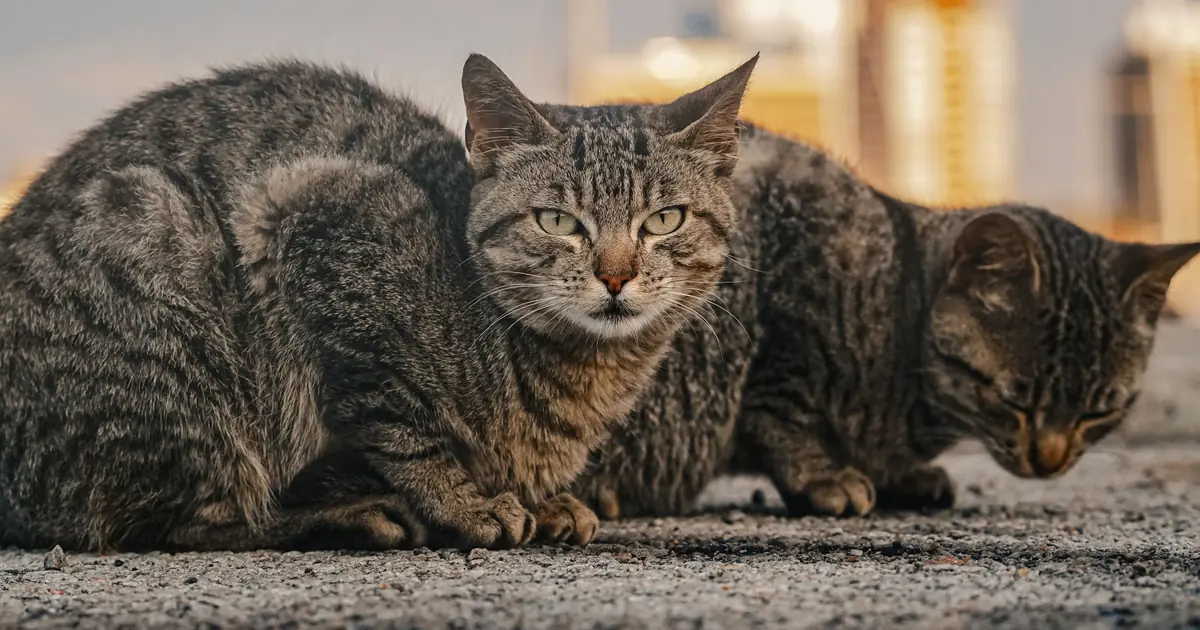
If you’ve ever watched two cats curl up together every night and thought, “aw, they must be soulmates,” you’re not alone. It’s an easy story to tell. Cats snuggle, they groom each other, they seem to pick favorites. Surely that means something like a marriage, right?
Not quite. Cats don’t pair off for life the way swans or wolves sometimes do. Their mating system is built for something else entirely: getting as many kittens born and surviving as possible. Let’s get into how it actually works, and why the “soulmate” story, while sweet, isn’t how a cat’s brain is wired.
- Cats do not mate for life and are not monogamous; both males and females mate with multiple partners.
- A single litter can have kittens from different fathers, a phenomenon called superfecundation.
- Female cats are induced ovulators, meaning mating itself triggers the release of eggs, usually within 24 to 50 hours.
- Father cats play no role in raising kittens; the mother cat raises the litter entirely on her own.
- Cats can form real social bonds with each other and grieve a companion’s absence, even though mating itself is not romantic.
Do Cats Mate for Life?
No, cats do not mate for life. Unlike some birds and a handful of mammals that stick with one partner for years, cats are polygamous breeders. A female cat (called a queen) in heat will typically mate with more than one male during a single heat cycle, and a male cat (called a tom) will mate with as many receptive females as he can find. There’s no courtship ritual building toward a lasting pair, and no cat “waits” for a specific partner to come back around.
This isn’t a character flaw. It’s just how the species reproduces. Feral and free-roaming cat colonies show this clearly: toms roam wide territories looking for queens in heat, and queens will accept multiple males over a few days, sometimes within the same hour.
How Does Cat Mating Actually Work?
Cat mating is short, frequent, and driven by biology rather than choice in the way people mean it. Female cats are what’s called induced ovulators, meaning they don’t release eggs on a regular monthly schedule the way humans do. Instead, the physical act of mating triggers a hormone surge that causes ovulation, usually within a day or two of mating.
Because of this, a single mating often isn’t enough. According to VCA Animal Hospitals, most queens need three to four matings within a 24-hour window before ovulation reliably occurs. That’s exactly why a female in heat mates repeatedly, often with more than one tom, over the course of a few days. Her heat cycle itself lasts about a week on average, though it can run anywhere from one to three weeks if she isn’t bred.
If you want the full rundown on what heat looks and sounds like, and how to help a cat through it, see our guide on what to do when your cat is in heat.
Can One Litter Have Kittens From Different Fathers?
Yes. A single litter of kittens can have more than one father, a real biological phenomenon called superfecundation. Because a female cat often mates with multiple males during one heat cycle, and each mating can trigger the release of a fresh batch of eggs, sperm from different toms can fertilize different eggs in the same pregnancy.
This is one reason a litter can look so mismatched: one kitten might be a tabby, another solid black, another a totally different size or coat length, all born on the same day to the same mother. It’s not unusual. It’s just genetics doing exactly what it’s built to do in a species that doesn’t pair-bond for mating.
This is also part of why so many kittens end up needing homes so quickly. If you’re curious how early this cycle can start, our article on how young cats can get pregnant covers just how fast an unspayed kitten can join the breeding pool. And if you’ve heard the myth that a neutered male can’t cause a pregnancy right after surgery, our piece on whether a neutered male cat can still get a female pregnant clears up the timeline.
Do Cats Form Bonds With Each Other at All?
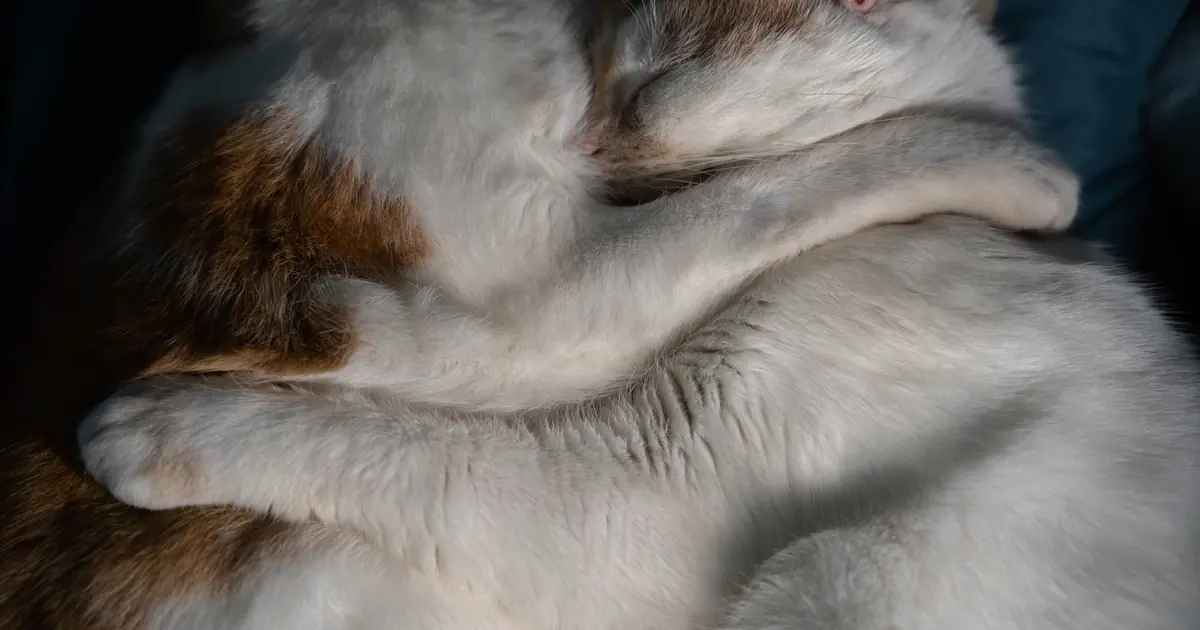
Yes, cats absolutely form real bonds, just not romantic ones tied to mating. Cats that grow up together, especially littermates or a mother and her kittens, often stay close for life if they’re allowed to. You’ll see it in mutual grooming, sleeping curled up together, and one cat noticeably relaxing around a specific companion.
These bonds are social, not sexual. A neutered male and a spayed female can be the closest of companions for a decade with zero mating behavior involved, because the bond isn’t built on reproduction. It’s built on familiarity, shared territory, and comfort. Cats also bond with the humans in their lives in a similar way, through routine, scent, and trust, not through anything resembling romance.
Do Father Cats Help Raise the Kittens?
No, father cats do not help raise kittens. Once mating happens, the male’s involvement ends there. The mother cat handles the pregnancy, the birth, and every bit of raising the litter alone: feeding, cleaning, teaching, and protecting the kittens until they’re weaned around 8 weeks old.
In fact, an unneutered tom can be a real risk around a litter, since some males will act aggressively toward kittens that aren’t recognized as their own. Responsible breeders and shelters generally keep intact males separated from a queen and her newborns for this reason.
Do Bonded Cats Grieve or Miss Each Other?
Yes, cats that share a close bond can show real signs of grief or distress when a companion is gone, whether from separation or death. This can look like reduced appetite, more vocalizing, searching familiar spots, or a noticeable drop in energy for days or weeks. It’s not proof of romantic love, but it is proof that the bond was real and mattered to that cat.
If you’ve noticed a change in your cat since losing a companion, our full guide on whether cats grieve walks through the signs and how long it typically lasts.
Myth vs. Reality: How Cat Mating and Bonding Really Work
| The Myth | The Reality |
|---|---|
| Cats mate for life with one partner. | Cats are not monogamous; a female often mates with several males in one heat cycle. |
| A litter always has one father. | Superfecundation means a single litter can have kittens from multiple fathers. |
| Cats choose a mate based on affection. | Mating is driven by hormones and induced ovulation, not emotional preference. |
| Father cats help raise the kittens. | The mother cat raises the litter entirely on her own; toms play no parenting role. |
| If cats don’t pair-bond, they can’t form real bonds at all. | Cats do form genuine social bonds with other cats and people, they’re just not romantic or mating-based. |
Why Does Spaying and Neutering Matter?
Spaying and neutering matters because unaltered cats roam farther, fight more, and produce far more kittens than shelters and rescues can place. A single unspayed female can have two or more litters a year, averaging around four kittens each, according to the ASPCA. Multiply that across a neighborhood of intact cats and it’s easy to see how community cat populations explode so fast.
Beyond population control, altering your cat cuts down on heat-driven yowling, spraying, and the urge to escape outside looking for a mate. Neutered males are also far less likely to roam into traffic or fight over territory. Most vets recommend the procedure between 4 and 6 months of age, though it can be done later too. Our guide on how old a cat needs to be to get fixed breaks down the timing in more detail.
This is general education, not a substitute for your own vet’s advice. Talk to a licensed veterinarian about the right timing and approach for your specific cat.
FAQ: Do Cats Mate for Life?
Q: Do cats have one mate for their whole life?
No. Cats are not monogamous and don’t stick with a single mate. A female in heat typically mates with multiple males, and a male will mate with multiple females he encounters.
Q: Can a litter of kittens have more than one father?
Yes, this is called superfecundation. Because mating triggers ovulation in cats and a female often mates with several toms during one heat cycle, different kittens in the same litter can come from different fathers.
Q: Do male and female cats form a bond after mating?
Not typically. Once mating is over, the male usually moves on and has no further involvement with the female or the resulting kittens. Any lasting bond between two cats comes from shared living space and familiarity, not from mating.
Q: Why do cats mate more than once during a heat cycle?
Cats are induced ovulators, meaning the act of mating itself triggers the release of eggs. Most queens need three to four matings within about 24 hours before ovulation reliably happens, which is why repeated mating is normal.
Q: Do father cats ever help raise their kittens?
No. The mother cat raises the litter on her own, from birth through weaning around 8 weeks old. Father cats play no role in feeding, cleaning, or protecting the kittens.
Q: Can two cats be bonded without ever mating?
Yes. Spayed and neutered cats, littermates, and even unrelated cats that grow up together can form close, lasting bonds built on familiarity and comfort, with no mating involved at all.
Q: How long does a cat’s heat cycle last?
A cat’s heat, or estrus, generally lasts about a week on average, though it can range from a few days up to three weeks if she isn’t bred. If she isn’t mated, the cycle typically repeats every two to three weeks during breeding season.
Q: Does spaying or neutering stop mating behavior for good?
Yes, in the vast majority of cases. Spaying removes a female’s reproductive organs so she no longer goes into heat, and neutering removes a male’s testes, which sharply reduces roaming, spraying, and mating drive within a few weeks of the procedure.

Hello and welcome to The Ideal Cat!
We are some passionate cat owners from different professions. We love our cats and have a lot of experience in how to care for our pets. We are incredibly excited to share our knowledge, experience, and research with you. So you can take good care of your loving cat. We will answer most of the common questions about owning cats, taking care of them, etc. If you have any question contact with us. Thanks for visiting! Enjoy the content.
