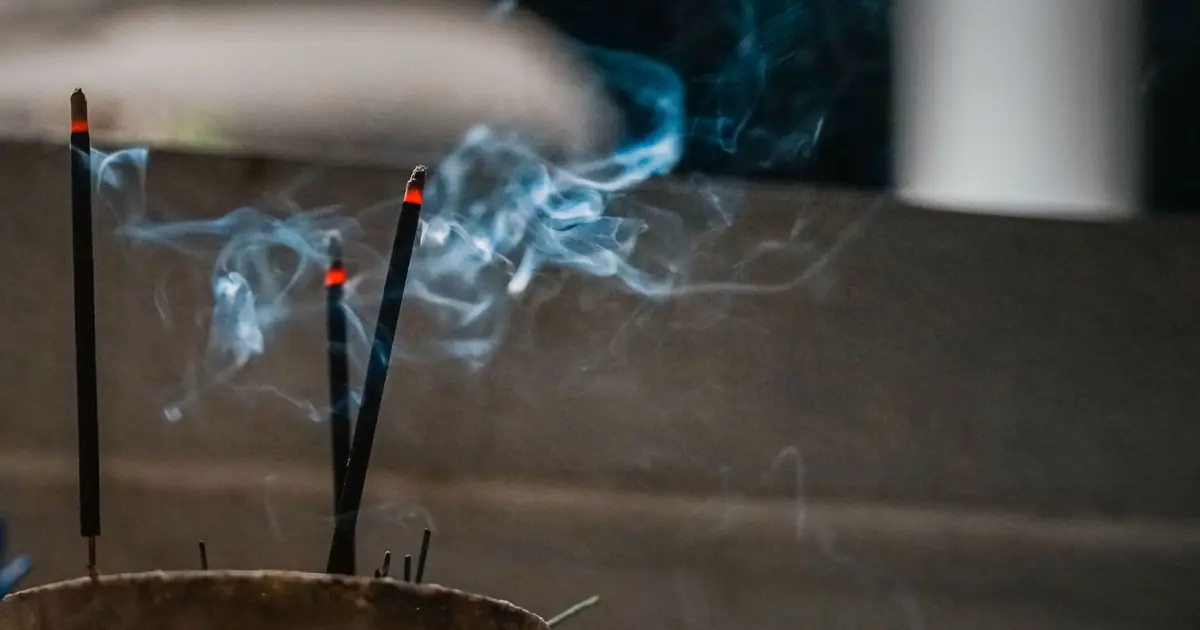
There’s something nice about lighting a stick of incense after a long day. The smoke curls up, the room smells like sandalwood or lavender, and for a minute everything feels calmer. Then you look over and your cat is sneezing on the windowsill, or has quietly left the room altogether.
If you’ve ever wondered whether that habit is actually okay for your cat, you’re asking the right question. Cats share our homes, but their bodies handle smoke and fragrance very differently than ours do. Here’s what’s actually going on, and how to enjoy a little scent in your home without putting your cat’s lungs at risk.
- Incense smoke contains fine particulate matter that can irritate a cat’s airways, similar to how secondhand smoke affects people.
- Cats lack a liver enzyme needed to break down many compounds found in essential oils, so scented incense can be more toxic to them than to humans.
- Feline asthma affects roughly 1 to 5 percent of cats, and smoke or fragrance is a common trigger for flare-ups.
- Cats are obligate nasal breathers, meaning they breathe through their nose almost all the time, so airborne irritants reach their lungs directly.
- Coughing, wheezing, watery eyes, sneezing, and lethargy after incense use are signs your cat needs a smoke-free room and, if symptoms continue, a vet visit.
Are Incense Bad for Cats?
Yes, incense can genuinely be bad for cats. When incense burns, it releases smoke made up of fine particles and gases, plus whatever fragrance oils were used to scent the stick or cone. Cats inhale that smoke into airways that are much smaller and more reactive than ours. Even short, occasional exposure can cause irritation, and regular use in the same room your cat lives in can lead to ongoing respiratory problems over time.
This doesn’t mean one stick of incense will send your cat to the emergency vet. It means incense carries real risk that’s easy to overlook, especially in a small apartment or a room your cat can’t easily leave.
Why Are Cats So Sensitive to Incense Smoke?
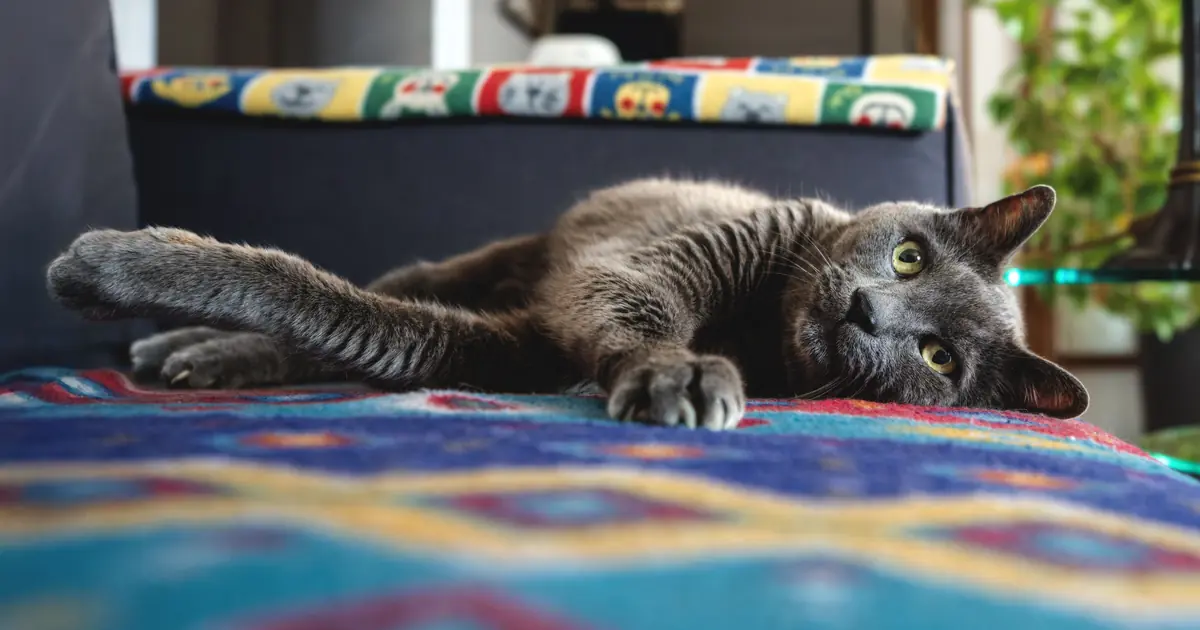
Cats are more sensitive to incense smoke because of how their bodies are built. A few things stack the deck against them.
- Smaller lungs, faster breathing. Cats have a much smaller lung capacity than humans, so they breathe more times per minute and take in proportionally more of whatever is in the air.
- Obligate nasal breathers. Cats almost always breathe through their nose rather than their mouth, so smoke and airborne particles go straight into their respiratory tract with every breath.
- An extremely sensitive nose. A cat’s sense of smell is far more powerful than ours, which means strong fragrance can overwhelm and irritate them at levels a person wouldn’t even notice.
- Grooming spreads the exposure. Smoke particles and oil residue settle on a cat’s fur and whiskers. Cats groom themselves constantly, so they end up ingesting some of what landed on their coat, not just inhaling it.
Put together, a cat in an incense-filled room is getting a bigger, more direct dose of smoke than a person standing right next to them.
Can the Essential Oils in Incense Poison Cats?
Yes, the essential oils used to scent some incense can poison cats, not just irritate their airways. Cats are missing a liver enzyme called glucuronyl transferase, which most mammals use to break down and clear certain plant compounds, including many essential oils. Without it, those compounds can build up in a cat’s body instead of being safely processed.
According to the ASPCA, essential oils commonly linked to poisoning in cats include tea tree oil, eucalyptus, pine, cinnamon, clove, citrus (d-limonene), wintergreen, and pennyroyal. Incense scented with these oils, or heavily concentrated synthetic versions of them, can pose the same risk, especially in a small, poorly ventilated room. Cats can also be sensitive to certain plants used in fragrance blends, which is one reason many cat parents ask whether lavender is safe to have around cats in the first place.
Which Cats Are Most at Risk From Incense?
Cats with existing respiratory or health conditions are most at risk from incense smoke, though no cat truly benefits from breathing it in. A few groups deserve extra caution.
| Cat | Why They’re More Vulnerable |
|---|---|
| Cats with asthma | Smoke and fragrance are known triggers for airway inflammation and coughing flare-ups |
| Senior cats | Aging lungs and hearts have less reserve capacity to cope with irritants |
| Kittens | Small, still-developing airways are more easily irritated by smoke and strong scent |
| Flat-faced breeds (Persians, Himalayans, Exotic Shorthairs) | Already narrower airways make any added irritation harder to manage |
| Cats with heart disease | Reduced ability to compensate for breathing stress or low oxygen |
If your cat falls into any of these groups, it’s worth being especially careful, and worth a call to your vet if you notice any changes in breathing after burning incense.
What Are the Symptoms of Incense Smoke Irritation in Cats?
Coughing, wheezing, sneezing, watery eyes, and drooling are the most common signs of incense irritation in cats. These symptoms usually show up during or shortly after exposure, while your cat is still in or near the smoky room.
- Coughing or a hoarse-sounding cough
- Wheezing or noisy breathing (a sign that shouldn’t be ignored, and one worth reading up on if you notice your cat wheezing after any scented product)
- Sneezing or a runny nose
- Watery, red, or squinting eyes
- Drooling, especially after essential oil exposure
- Lethargy or hiding more than usual
- Reduced appetite
Symptoms that come on more suddenly, like vomiting, tremors, wobbliness, or open-mouth breathing, point toward possible essential oil poisoning rather than simple smoke irritation, and need faster attention.
This article is educational and isn’t a substitute for veterinary care. If your cat is coughing hard, breathing with an open mouth, wheezing, drooling excessively, or acting weak after exposure to incense smoke or oils, call your vet or an emergency animal hospital right away. Blue-tinged or pale gums are always an emergency.
Incense vs. Candles vs. Diffusers: Which Is Safest for Cats?
None of the common ways people scent a home are completely risk-free for cats, but the level of risk and the fix aren’t the same across the board. Here’s how the main options compare.
| Scent Product | Risk to Cats | Safer Approach |
|---|---|---|
| Incense | Releases smoke and fine particles directly into the air, plus any essential oils used to scent it | Burn only in a well-ventilated room your cat can’t enter, or skip it |
| Scented candles | Produces smoke and soot, and some are made with fragrance oils that can irritate airways | Choose unscented or lightly scented candles, burn in ventilated spaces away from your cat |
| Essential oil diffusers | Disperses concentrated oil droplets into the air that cats can inhale or that settle on fur | Avoid diffusers in cat households, or use only vet-approved oils in a room cats can’t access |
| Wax melts | No open flame or smoke, but still releases concentrated fragrance into the air | Use sparingly in a ventilated room, keep cats out while melting |
The VCA Animal Hospitals lists air fresheners, perfume, essential oil diffusers, and cigarette smoke among the known triggers for feline asthma and bronchitis, which puts incense smoke in the same risk category.
How Can You Burn Incense Safely Around Your Cat?
The safest option is honestly to skip incense entirely if you share your home with a cat, especially one with any history of breathing trouble. If you’re not ready to give it up, a few habits lower the risk quite a bit.
- Keep your cat out of the room. Close the door and burn incense somewhere your cat genuinely can’t get to, not just somewhere they usually avoid.
- Open a window or run an exhaust fan. Good airflow clears smoke and particles out of the room much faster than a closed space ever will.
- Skip oils known to be risky. Avoid incense scented with tea tree, eucalyptus, pine, citrus, cinnamon, or clove.
- Burn it for less time. A shorter burn means less smoke building up in the air overall.
- Watch your cat’s behavior. If your cat leaves the room, sneezes, or seems unsettled, that’s your cat telling you the air quality bothers them. Listen to it.
- Choose cat-safer alternatives. A HEPA air purifier, an unscented candle, or a diffuser made specifically for cats (like a pheromone-based one) scents or freshens a home without smoke or strong essential oils.
If your cat tends to hide or go off their food whenever you burn incense, that’s worth paying attention to on its own. Cats that consistently avoid a room, or seem off afterward, may be telling you something even before other symptoms show up, and it’s the same instinct behind a lot of the concern people have when a cat starts hiding and skipping meals.
What Other Symptoms Should Make You Call the Vet?
Persistent coughing, nasal discharge, or breathing changes that don’t clear up once the smoke is gone are reasons to call your vet, not just wait it out. Feline asthma affects an estimated 1 to 5 percent of cats, according to the Cornell Feline Health Center, and repeated exposure to smoke or strong fragrance is one of the environmental triggers linked to flare-ups. A cat with an ongoing cough or runny nose deserves a proper checkup, since those signs can also point to something unrelated to incense, like a respiratory infection or chronic nasal irritation that needs its own treatment plan.
Frequently Asked Questions
Q: Is incense toxic to cats?
Incense itself isn’t automatically toxic, but the smoke it produces can irritate a cat’s airways, and some incense is scented with essential oils that are genuinely toxic to cats because they can’t break the oils down efficiently.
Q: Can incense smoke hurt a cat’s lungs?
Yes. Incense smoke contains fine particles that can settle in a cat’s airways and cause irritation, coughing, or wheezing. Repeated exposure in the same room a cat lives in can contribute to ongoing respiratory irritation over time.
Q: What incense scents are safe for cats?
No incense scent is fully risk-free for cats because of the smoke itself, but scents made without tea tree, eucalyptus, pine, citrus, cinnamon, or clove oil carry less added toxicity risk. Burning it away from your cat still matters most.
Q: Can I burn incense if my cat has asthma?
It’s best to avoid it. Smoke and strong fragrance are common triggers for feline asthma flare-ups, and cats with asthma have airways that are already inflamed and more reactive than a healthy cat’s.
Q: How long should I keep my cat away from incense smoke?
Keep your cat out of the room for the entire time incense is burning and until the smoke has fully cleared, which usually means at least an hour with a window open or a fan running afterward.
Q: Are Nag Champa or sandalwood incense bad for cats?
They carry the same basic smoke risk as any incense, since the burning process itself produces irritating particles regardless of the specific scent. Sandalwood oil isn’t on the most commonly cited toxic list, but the smoke still isn’t something a cat should breathe regularly.
Q: What should I do if my cat inhaled incense smoke?
Move your cat to a smoke-free, well-ventilated room right away. Watch for coughing, wheezing, drooling, or lethargy over the next several hours, and call your vet if any of those symptoms show up or don’t settle down on their own.
Q: Are there cat-safe alternatives to incense?
Yes. A HEPA air purifier, an unscented or lightly scented candle burned away from your cat, or a cat-specific pheromone diffuser can freshen a room without the smoke or concentrated oils that make traditional incense risky.

Hello and welcome to The Ideal Cat!
We are some passionate cat owners from different professions. We love our cats and have a lot of experience in how to care for our pets. We are incredibly excited to share our knowledge, experience, and research with you. So you can take good care of your loving cat. We will answer most of the common questions about owning cats, taking care of them, etc. If you have any question contact with us. Thanks for visiting! Enjoy the content.
