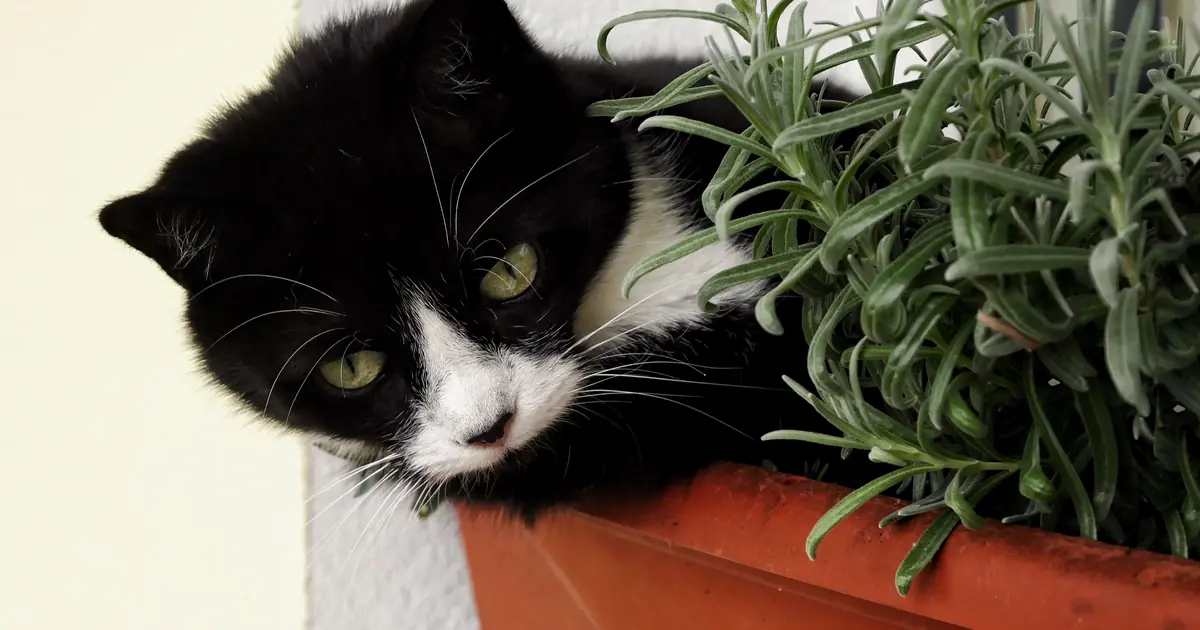
So you picked up a lavender diffuser to help you unwind after a long day, and now you’re wondering if it’s doing the same for your cat curled up on the couch. Lavender is everywhere: candles, room sprays, dryer sheets, that little sachet tucked in your sock drawer.
Here’s the thing though. What relaxes you can genuinely hurt your cat. Cats process scent, and anything that touches their skin or fur, very differently than we do. Let’s walk through what’s actually going on, and what to do if your cat’s already gotten into it.
- Lavender (Lavandula angustifolia) is classified as toxic to cats by the ASPCA Animal Poison Control Center.
- The toxic compounds are linalool and linalyl acetate, which cats cannot break down efficiently because their livers lack certain metabolizing enzymes.
- Most cats show no interest in lavender’s scent at all, and many actively avoid it.
- Lavender essential oil is far more concentrated and far more dangerous than the fresh or dried plant.
- Symptoms of lavender toxicity include drooling, vomiting, low appetite, lethargy, and in serious cases, tremors or trouble breathing.
Do cats like lavender?
No, most cats do not like lavender. Unlike catnip, which triggers a euphoric response in about 50 to 70% of cats thanks to a compound called nepetalactone, lavender doesn’t tap into that same reward pathway. A cat’s nose is roughly ten to fourteen times more sensitive than a human’s, and strong floral scents like lavender tend to read as overwhelming rather than pleasant to them. If you’ve ever noticed your cat wrinkle their nose and walk away from a lavender candle or sachet, that’s a completely normal reaction. You can read more about what makes catnip such a different experience for cats if you’re curious why one plant gets cats rolling around and another gets ignored.
Is lavender safe or toxic to cats?

Lavender is toxic to cats, not safe. The plant itself, and especially the essential oil pressed from its flowers, contains linalool and linalyl acetate. These give lavender its calming smell, and cats lack enough of the liver enzyme (glucuronyl transferase) needed to break them down. Dogs and humans metabolize these compounds fairly well; cats don’t, so they build up in the body instead of clearing out. The ASPCA lists lavender as toxic to cats on its official plant database, and that classification covers the whole plant, not just the oil.
Why are lavender essential oils and diffusers especially risky?
Essential oils and diffusers are more dangerous than the raw plant because the oil is a concentrated dose of the exact compounds cats can’t process. A single drop of lavender essential oil can contain far more linalool than a cat would ever encounter by walking past a lavender bush in the garden. Diffusers make it worse in three ways:
- Inhalation: Diffused oil droplets get breathed directly into a cat’s lungs and absorbed through the respiratory tract.
- Skin absorption: Oil that settles on fur, bedding, or furniture can soak into a cat’s skin, especially on the thinner skin of the paws and belly.
- Grooming: Cats groom constantly. Any oil residue on their coat gets licked off and swallowed, which adds a direct ingestion route on top of everything else.
The Pet Poison Helpline and veterinary toxicology groups specifically warn against essential oil diffusers, reed diffusers, and “waterless” oil warmers in homes with cats, since there’s no way to stop a curious cat from breathing the air or grooming the residue off their fur.
What form of lavender is the most dangerous to cats?
Essential oil and diffused oil are the most dangerous forms of lavender for cats, while the fresh or dried plant is comparatively lower risk in small, incidental amounts. Here’s how the common forms stack up.
| Lavender form | Risk level to cats | Notes |
|---|---|---|
| Fresh or dried lavender plant | Low to moderate | A nibble may cause mild stomach upset. Still best kept out of reach. |
| Lavender essential oil | High | Highly concentrated. Ingestion or skin contact can cause serious symptoms. |
| Essential oil diffuser | High | Continuous inhalation exposure. Not recommended in any home with cats. |
| Lavender-scented cleaning products or sprays | Moderate | Usually a smaller concentration of oil, but residue on floors or fabric can still be licked. |
| Lavender candles | Low (scent), separate fire/soot risk | Burning candles pose their own hazards; unburned wax is low risk if not eaten. |
| Dried lavender sachets | Low to moderate | Risk mainly if a cat chews through the sachet and eats the dried buds. |
What are the symptoms of lavender poisoning in cats?
Symptoms of lavender toxicity in cats include drooling, vomiting, low appetite, and lethargy, with more severe cases involving difficulty breathing or tremors. Watch for these signs if you know or suspect your cat has been exposed to lavender oil or a large amount of the plant:
- Drooling more than usual
- Vomiting
- Loss of appetite or refusing food
- Lethargy or seeming unusually tired and withdrawn
- Uncoordinated movement or wobbliness
- Skin irritation or redness where oil made contact
- Tremors (a red-flag symptom that needs urgent care)
- Difficulty breathing (a red-flag symptom that needs urgent care)
These signs overlap with other feline health issues, so timing matters. If your cat starts drooling or acting off shortly after you diffused lavender oil or they were chewing on a lavender plant, treat it as a possible poisoning, not just an upset stomach that will pass on its own.
What should you do if your cat is exposed to lavender?
If your cat is exposed to lavender, remove them from the area right away, ventilate the room, and contact your veterinarian or an animal poison control line for guidance. Here’s the step-by-step:
- Move your cat away from the lavender plant, oil, or diffuser immediately.
- Open windows or turn on a fan to clear the air.
- If oil got on your cat’s fur or skin, don’t use scented soap. Call your vet first for the correct way to remove it.
- Don’t induce vomiting on your own; it can make some poisonings worse and should only happen under veterinary direction.
- Note how much lavender or oil your cat was exposed to, and roughly when.
- Call your vet, an emergency animal hospital, or a poison control hotline right away, especially with drooling, vomiting, tremors, or breathing trouble.
This article is educational and not a substitute for a licensed veterinarian’s advice. Don’t wait to see if symptoms pass. Call your vet or a poison control line the same day you notice a problem, and get to an emergency vet immediately if your cat has tremors or trouble breathing.
What are safe alternatives for calming a stressed cat?
Cat-safe pheromone products, not essential oils, are the safer way to help a stressed or anxious cat settle down. Synthetic feline facial pheromones (the kind found in Feliway-brand diffusers and sprays) mimic the natural pheromones cats release when they rub their face on furniture to mark territory as safe, and contain no essential oils. If your cat has been extra jumpy, hiding, or over-grooming lately, our guides on signs of stress in cats and how to calm a scared cat cover approaches that don’t involve any oils at all, and our best cat pheromone diffuser roundup is a good product-specific starting point. If the anxiety came on suddenly, our piece on why a cat gets scared all of a sudden covers the common triggers worth ruling out first.
Skip essential oil diffusers entirely, even ones marketed as “cat safe,” unless you’ve confirmed the product with your vet. Before bringing any new plant into a home with cats, check it against a list like our cat-safe house plants guide, since lavender isn’t the only common plant that looks harmless but isn’t.
The safety information in this article reflects current veterinary toxicology guidance from organizations like the ASPCA Animal Poison Control Center and the Pet Poison Helpline. It’s meant to inform, not replace, a conversation with your own veterinarian. If you ever suspect your cat has been poisoned, treat it as urgent and reach out to a professional right away rather than waiting to see how things go.
Frequently Asked Questions
Q: Can cats be around lavender plants safely?
A cat walking past or briefly sniffing a growing lavender plant is unlikely to have serious problems, but the plant is still classified as toxic by the ASPCA. It’s safest to keep lavender out of reach of curious cats, especially kittens who tend to chew on greenery.
Q: What happens if my cat licks lavender essential oil?
Licking lavender essential oil can cause drooling, vomiting, and lethargy, and in more serious cases, tremors or breathing difficulty, because a cat’s liver can’t efficiently process the linalool and linalyl acetate in the oil. Contact your veterinarian or an animal poison control line right away if this happens.
Q: Is lavender scent toxic to cats, or just the plant and oil?
Passive exposure to a light lavender scent, like a sealed candle in another room, carries a lower risk than direct contact with the plant or oil. Continuous exposure from a running essential oil diffuser is a different story and is considered high risk because cats inhale it and absorb it through their skin over hours.
Q: Are lavender-scented cat products, like sprays or shampoos, safe?
Products marketed specifically for cats should be formulated to avoid unsafe concentrations of essential oils, but it’s still worth checking the label and asking your vet before use. General-purpose lavender-scented human products, like room sprays or lotions, are not formulated with cat safety in mind and should be kept away from your cat.
Q: Why doesn’t lavender affect cats the same way catnip does?
Catnip contains nepetalactone, a compound that binds to receptors in a cat’s nose and triggers a short euphoric response in most cats. Lavender doesn’t contain nepetalactone, so it doesn’t trigger that same reaction, and its strong floral scent tends to be off-putting to a cat’s sensitive nose rather than appealing.
Q: What should I do if I think my cat ate lavender?
Move your cat away from any remaining plant material, note roughly how much they may have eaten, and call your veterinarian or an animal poison control hotline for guidance. Watch closely for drooling, vomiting, or lethargy over the next several hours, and seek emergency care immediately if you see tremors or trouble breathing.
Q: Can I use a lavender diffuser if my cat isn’t in the room?
It’s still not recommended, because diffused oil particles travel through the air and settle on furniture, floors, and fabric throughout the house, not just in the room where the diffuser is running. A cat can pick up residue on their paws or fur later and ingest it while grooming, even if they were never in the room during diffusing.
Q: Are there any cat-safe scents I can diffuse instead of lavender?
The safest option is to avoid essential oil diffusers altogether in a home with cats, since many common oils beyond lavender are also unsafe for them. For calming purposes, synthetic feline pheromone diffusers are specifically formulated for cats and don’t carry the same toxicity risk as essential oils.

Hello and welcome to The Ideal Cat!
We are some passionate cat owners from different professions. We love our cats and have a lot of experience in how to care for our pets. We are incredibly excited to share our knowledge, experience, and research with you. So you can take good care of your loving cat. We will answer most of the common questions about owning cats, taking care of them, etc. If you have any question contact with us. Thanks for visiting! Enjoy the content.
