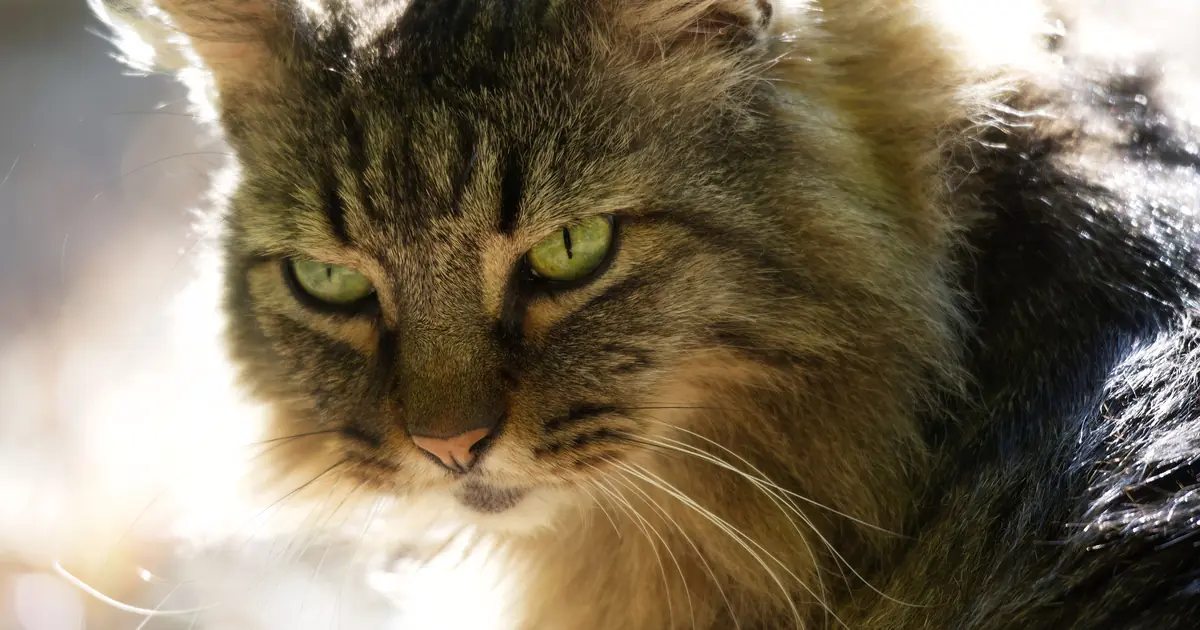
There’s something about a Maine Coon that makes you want to keep them around forever. Maybe it’s the way they thump down the hallway like a tiny lion, or how they chirp instead of meow. Once you love a Maine Coon, how long you get to keep them starts to matter a lot.
The good news: Maine Coons are generally sturdy, hardy cats for their size. The honest news: being the biggest domestic cat breed comes with a few tradeoffs, and lifespan is one of them. Here’s what actually shapes how long your Maine Coon lives, and what you can do about it.
- Maine Coons typically live 10 to 15 years, with well-cared-for cats often reaching the higher end or beyond.
- Hypertrophic cardiomyopathy (HCM), the most common heart disease in cats, shows up more often in Maine Coons than in most other breeds.
- Indoor Maine Coons generally live significantly longer than cats with regular outdoor access.
- Genetic testing from a reputable breeder, regular vet checkups, and a healthy weight are the biggest levers you have over your cat’s lifespan.
- Spinal muscular atrophy (SMA) is a Maine Coon-specific genetic condition, but cats with it can still live long, full lives with some adjustments.
How long do Maine Coons live?
Maine Coons typically live 10 to 15 years, and it’s not unusual for a well-cared-for one to reach 15 to 18. A large Swedish insurance study tracking thousands of cats found the median lifespan for Maine Coons was just over 12.5 years, with roughly three-quarters making it to at least 10.
That range sits a touch below the average for cats overall. Indoor cats as a whole commonly live 13 to 17 years. The gap isn’t huge, but it’s real, and it mostly comes down to the breed’s size and its higher rate of heart disease, which we’ll get into below.
Do Maine Coons live shorter lives than other cats?
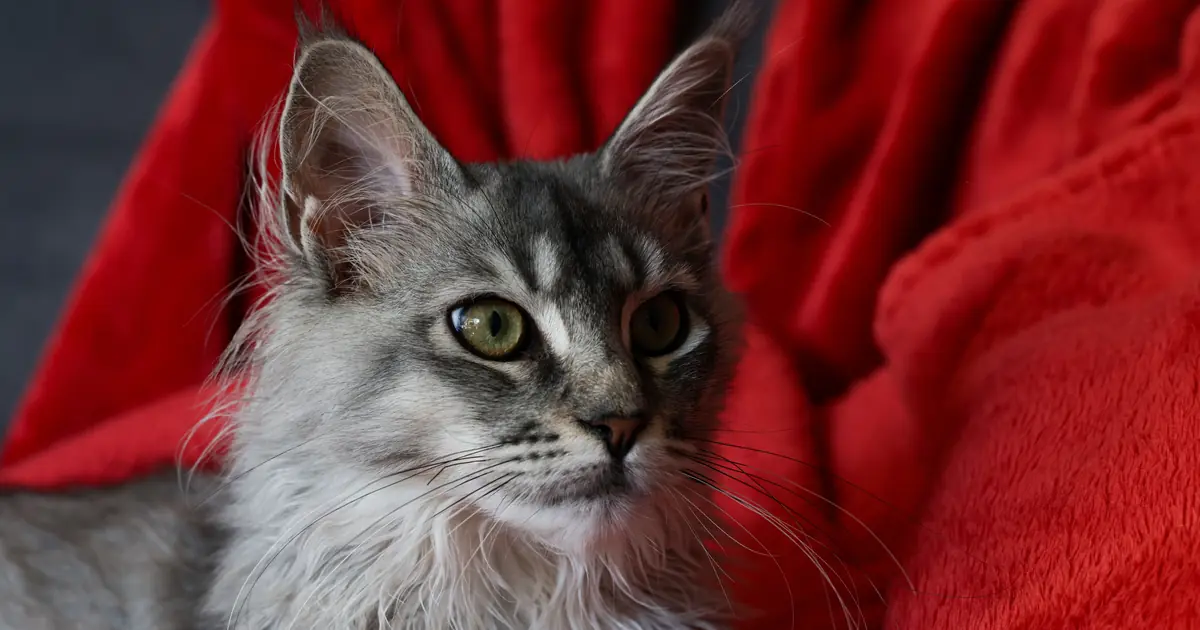
Yes, slightly. Maine Coons tend to fall a little short of the average feline lifespan, mainly because of their genetic predisposition to hypertrophic cardiomyopathy and their large body size. Big-bodied breeds, in cats and dogs alike, tend to run a bit shorter-lived than smaller ones, and Maine Coons follow that pattern.
Keep it in perspective, though. A “slightly shorter” lifespan for a Maine Coon still usually means over a decade of life. This breed doesn’t even reach full physical maturity until age 3 to 5. You’re not getting a short-lived cat. You’re getting a slow-growing, long-living gentle giant with a couple of extra things to watch for.
Does living indoors or outdoors change a Maine Coon’s lifespan?
Indoor Maine Coons live substantially longer than ones allowed to roam outside. Cats with regular outdoor access face car strikes, predators, fights, parasites, poisons, and infectious diseases like FeLV and FIV, all of which cut into their odds of reaching old age. Indoor cats skip most of that risk entirely, and years down the road that adds up to a real shot at a long, comfortable senior life.
If your Maine Coon loves fresh air, a secure “catio,” a leash and harness for supervised time outside, or a screened porch gives you the best of both worlds without the traffic and predator risk.
What health issues affect a Maine Coon’s lifespan?
A handful of breed-linked conditions are the main reason Maine Coons don’t always reach the top end of the feline lifespan range.
| Health issue | Effect on lifespan | What helps |
|---|---|---|
| Hypertrophic cardiomyopathy (HCM) | The leading cause of early death in Maine Coons; can lead to heart failure or sudden blood clots | Genetic testing, annual heart screening, prompt vet care for breathing changes |
| Hip dysplasia | Rarely fatal, but chronic pain and reduced mobility lower quality of life | Healthy weight, joint supplements when recommended by a vet, orthopedic bedding |
| Spinal muscular atrophy (SMA) | Causes hind-leg muscle weakness starting around 3 to 4 months old, but isn’t painful or shortening on its own | Indoor-only living, ramps instead of high jumps, buying from SMA-tested breeders |
| Polycystic kidney disease (PKD) | Fluid-filled cysts gradually damage kidney function, sometimes leading to kidney failure in middle age | Genetic testing in breeding lines, routine bloodwork to catch kidney changes early |
| Obesity | Adds strain to the heart and joints and shortens lifespan across nearly every breed | Portion control, a quality diet, and daily play |
Hypertrophic cardiomyopathy is the one to take most seriously. It’s the most common heart disease in cats overall, and it shows up more often in Maine Coons, Ragdolls, and a handful of other breeds. Genetic studies have found that roughly 30 to 40% of Maine Coons carry at least one of two known MYBPC3 gene mutations linked to HCM risk, though not every cat with the mutation develops the disease. According to the Cornell Feline Health Center, HCM thickens the heart’s muscular walls, which can eventually lead to congestive heart failure or dangerous blood clots.
Spinal muscular atrophy sounds scary on paper, but it’s worth a gentler note. Cats with SMA lose some hind-limb strength as kittens and may walk with a wobble, yet according to PetMD, most go on to live long, happy, indoor lives with a few accommodations like ramps and low-sided litter boxes.
How can you help your Maine Coon live longer?
You have more control over this than you might think. Genetics load the gun, but daily care decides a lot of what happens next.
- Buy from a breeder who genetically tests. Reputable breeders test breeding cats for the HCM-linked MYBPC3 mutations, SMA, and PKD, and can show you the results.
- Schedule regular vet checkups. Adult Maine Coons should see a vet at least once a year, twice a year once they hit senior age, so heart murmurs or kidney changes get caught early.
- Ask about a heart screening. An annual echocardiogram or vet-recommended cardiac screening can catch HCM before symptoms appear.
- Keep your cat at a healthy weight. Maine Coons are already big-boned, so extra pounds strain the heart and hips. Not sure where your cat stands? This guide on telling if a cat is underweight is a good starting point, and your vet can confirm a healthy target either way.
- Feed a quality diet. A nutritionally complete food suited to your cat’s life stage supports muscle, joints, and organ health. Our guide to choosing the best cat food covers what to look for on the label.
- Keep them indoors, or supervised outdoors. This alone is one of the biggest lifespan factors you control.
- Stay on top of dental care. Dental disease lets bacteria into the bloodstream, which can affect the heart and kidneys, the same organs already under watch in this breed.
What are the signs of aging in a Maine Coon?
Maine Coons are generally considered senior around age 10 to 11, a bit later than smaller breeds since they mature slowly to begin with. Watch for slower jumps onto favorite perches, more sleeping, weight changes in either direction, cloudier eyes, stiffness after naps, and less interest in play. None of these mean something is wrong on their own, but they’re worth mentioning at your cat’s next checkup.
A sudden change is a different story than a gradual one. A Maine Coon who slowly stops climbing the cat tree over several months is aging normally. One who suddenly can’t jump, seems short of breath, or collapses needs a vet visit right away.
When should you see a vet about your Maine Coon’s health?
This article is meant to help you understand what shapes a Maine Coon’s lifespan, not to replace a licensed veterinarian. Breed-specific screening for HCM and routine bloodwork for kidney health make a real difference, and only a vet can interpret those results for your cat.
Get your Maine Coon seen the same day if you notice open-mouth breathing, rapid or labored breathing, sudden hind-leg weakness, collapse, a swollen belly, or loss of appetite lasting more than a day. These can point to heart failure, blood clots, or other emergencies where early treatment matters most.
Frequently Asked Questions
Q: What is the oldest recorded age for a Maine Coon?
Individual Maine Coons have been reported living into their twenties, well beyond the typical 10 to 15 year range, though this usually reflects a mix of genetics, indoor living, and excellent veterinary care.
Q: Do male or female Maine Coons live longer?
There’s no strong, consistent evidence that sex alone changes a Maine Coon’s lifespan. Spaying or neutering matters more, since it lowers certain cancer and reproductive health risks in both males and females.
Q: Can a Maine Coon with HCM still live a long life?
Yes, many cats with hypertrophic cardiomyopathy live for years with mild, well-managed disease, especially when it’s caught early through screening. Severity varies a lot from cat to cat.
Q: Does neutering or spaying affect a Maine Coon’s lifespan?
Spaying and neutering generally support a longer lifespan by lowering the risk of certain reproductive cancers and cutting out roaming behavior that puts unneutered cats at higher risk outdoors.
Q: Is a Maine Coon’s large size the reason they don’t live as long as other cats?
Size plays a role, since larger-bodied cats tend to have somewhat shorter lifespans than smaller ones, but the bigger factor for Maine Coons specifically is their higher rate of hypertrophic cardiomyopathy.
Q: How often should a Maine Coon get a heart checkup?
Many vets recommend an annual cardiac screening for Maine Coons given their breed risk for HCM, starting in young adulthood, though your vet may suggest a different schedule based on your cat’s history.
Q: What’s the difference between Maine Coon lifespan and Maine Coon mix lifespan?
Maine Coon mixes often live slightly longer on average than purebred Maine Coons, since mixed breeding can dilute the concentration of breed-specific mutations like the HCM-linked MYBPC3 gene.
Q: At what age is a Maine Coon considered a senior cat?
Most vets consider a Maine Coon senior starting around age 10 to 11, slightly later than many smaller breeds, fitting their generally slower growth and maturity timeline.
Every Maine Coon is one of a kind, and yours deserves the full picture, not just lifespan numbers. If you want the complete rundown on temperament, grooming, size, and everything else that makes this breed so beloved, our Maine Coon cat guide covers it all. And if you’re curious just how big these cats can get, the story of the world’s largest Maine Coon on record is a fun read, as is a closer look at the striking black Maine Coon coat variety.

Hello and welcome to The Ideal Cat!
We are some passionate cat owners from different professions. We love our cats and have a lot of experience in how to care for our pets. We are incredibly excited to share our knowledge, experience, and research with you. So you can take good care of your loving cat. We will answer most of the common questions about owning cats, taking care of them, etc. If you have any question contact with us. Thanks for visiting! Enjoy the content.
