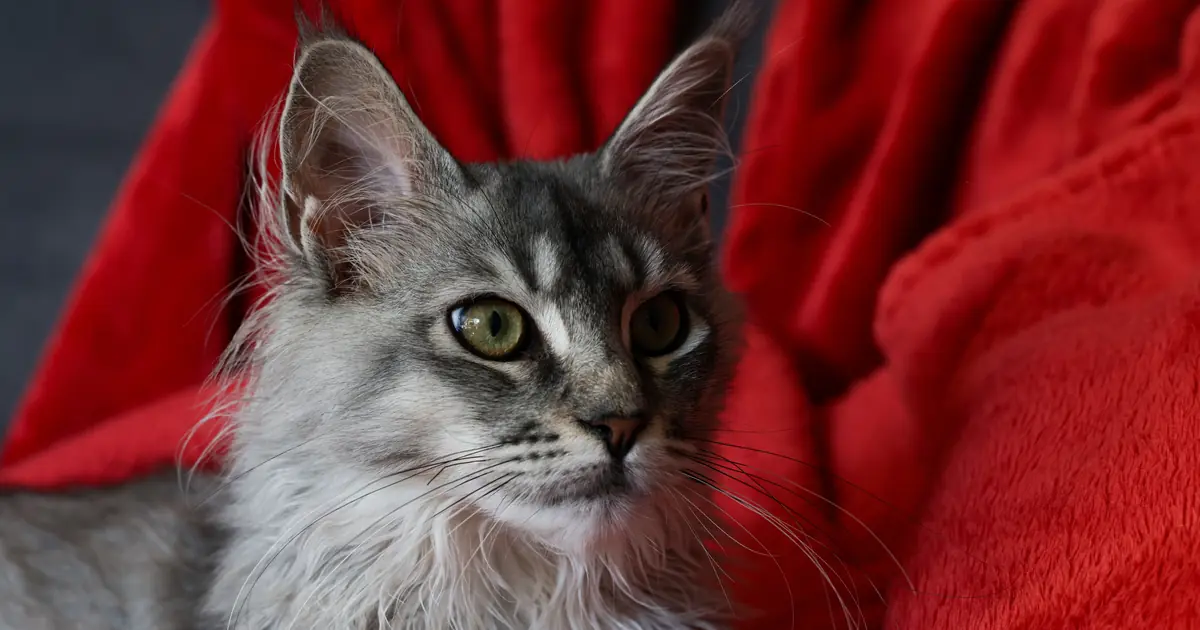
If you’ve ever watched a Maine Coon stroll into a room like it owns the place, paws the size of a bear cub’s, you’ve probably wondered what would happen if that cat ever tangled with a dog. It’s a fair question. These cats are genuinely huge for a house cat, and the internet loves a good “biggest cat breed” story.
Here’s the thing though: size alone doesn’t make a killer. A Maine Coon is still a cat, built for pouncing on mice and chasing feather toys, not for taking down an animal that outweighs it three or four times over. If you want the full rundown on this breed, our Maine Coon cat guide covers everything from history to personality. For now, let’s look at the real numbers and the real temperament behind this breed, and figure out what actually happens when cats and dogs get into it.
- Maine Coons typically weigh 8 to 18 pounds, big for a cat but small next to most dogs.
- A Maine Coon killing a dog is extremely rare and would require a very unusual set of circumstances, such as a tiny, defenseless puppy and no human intervention.
- Maine Coons are known as “gentle giants” with calm, dog-friendly, sociable personalities, not aggressive or territorial by nature.
- A Maine Coon’s claws and teeth can still cause real injury, especially to a small dog, and any bite wound needs a vet’s attention because cat bites infect easily.
- In most cat-versus-dog conflicts, the cat is the one more likely to get seriously hurt, since even a friendly dog can outweigh and outrun it.
Can a Maine Coon Actually Kill a Dog?
Realistically, no. It’s extremely unlikely for a Maine Coon to kill a dog, even a small one. Maine Coons aren’t predators of dogs, and their whole behavior pattern is built around avoiding fights, not winning them. A cat’s survival strategy is to flee or bluff first, and fight only as a last resort.
Could a freak scenario exist, like a defenseless newborn puppy left alone with an unsocialized cat? In theory, yes. But that’s a fluke, not something that reflects how this breed actually behaves around dogs. If you’re picturing a Maine Coon squaring off with your Labrador and winning, you can relax. That’s not how this goes.
How Big Do Maine Coons Really Get?
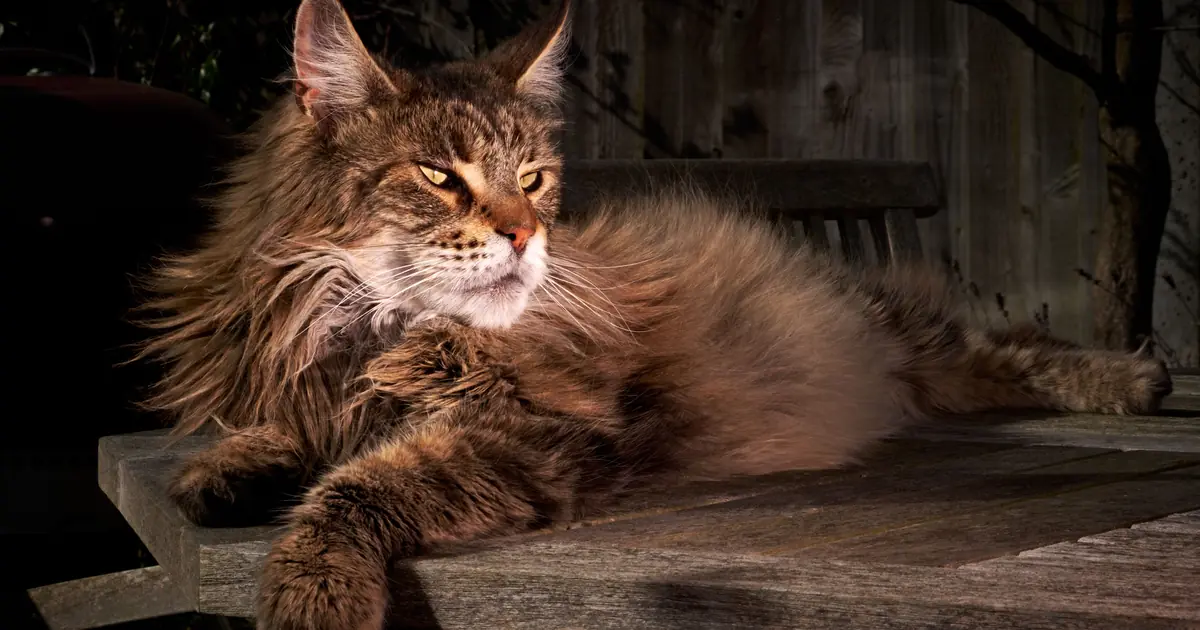
Maine Coons typically weigh 8 to 18 pounds, with males usually landing on the heavier end and females a bit lighter. They’re often called the biggest domestic cat breed, and body length backs that up: the record for the world’s longest Maine Coon stretches over 4 feet from nose to tail tip.
Even so, “big for a cat” is still small next to most dogs. An 18-pound Maine Coon is roughly the size of a small dog breed, like a Beagle or Cocker Spaniel, and nowhere close to a Labrador, German Shepherd, or Rottweiler, which routinely weigh 50 to 100+ pounds. According to the Cat Fanciers’ Association breed profile, Maine Coons are prized for their large, muscular, rectangular build and well-tufted paws, not for aggression. Size gets this breed noticed. It doesn’t make it a fighter.
What Is the Maine Coon Temperament Really Like?
Maine Coons are famous for being gentle, easygoing, and unusually sociable, earning them the nickname “gentle giants” among breeders and vets alike. This isn’t marketing fluff. It’s a consistently reported trait across the breed, from show cats to backyard rescues.
These cats tend to be curious rather than defensive, and many owners say their Maine Coon acts more like a dog than a typical cat: following people room to room, greeting guests at the door, and tolerating handling that would make a more skittish cat bolt. A cat with this kind of confident, unbothered temperament has little motivation to pick a fight with a dog in the first place. If your Maine Coon has a distinctive dark coat, you’ll notice the same laid-back attitude in black Maine Coons too. Coat color doesn’t change personality.
Can a Maine Coon Still Hurt a Dog?
Yes. A Maine Coon can absolutely hurt a dog, even without any intent to kill. Cats have sharp, curved claws and needle-like teeth built for quick, precise strikes, and a startled or cornered cat will use both without hesitation. A swipe across the nose or eye, a defensive bite, these are common outcomes when a curious dog gets too close too fast.
Small dogs and puppies are more at risk here simply because of size. A single well-placed scratch that a Golden Retriever barely notices could do real damage to a Chihuahua or a young puppy still figuring out the world. This kind of injury almost always happens in self-defense, not because the cat went looking for a fight. A scared or cornered cat is a defensive cat, not an aggressive one.
When Does a Cat and Dog Conflict Turn Dangerous?
Cat and dog conflicts get dangerous when there’s a big size mismatch, high prey drive, or no escape route for the cat. These three factors show up again and again in the rare incidents where a pet gets seriously hurt. A large dog with strong prey drive, think terriers bred to hunt, or sighthounds built to chase, can see a fleeing cat as something to catch rather than a housemate to tolerate.
Unsupervised first meetings raise the risk the most. A cat with no tall furniture or doorway to retreat to may panic and lash out, or a dog may lunge before anyone can step in. Realistically, the cat is usually the one more likely to get seriously hurt here, not the dog. A 15-pound Maine Coon has no real chance against an 80-pound dog that decides to chase. Both animals can get hurt, but the physics favor the bigger, faster animal almost every time. The Cornell Feline Health Center notes that fear of unfamiliar animals is a common trigger for defensive aggression in cats, which is exactly why escape routes matter so much during introductions.
| Scenario | Likely Outcome / Risk |
|---|---|
| Maine Coon vs. small dog (under 15 lbs) | Closer to an even match in size; risk of scratches or bites to either animal if scared or cornered, but killing is still very rare. |
| Maine Coon vs. large dog (50+ lbs) | The cat is at far greater risk of serious injury; a chase or grab from a big dog can easily overpower even an 18-pound cat. |
| Maine Coon vs. puppy | The puppy is more vulnerable due to size and inexperience; supervision is essential since puppies often don’t read cat warning signals well. |
Do Maine Coons Get Along With Dogs?
Yes, Maine Coons are known for getting along well with dogs, often better than many other cat breeds do. Their social, adaptable temperament makes them one of the more dog-friendly cat breeds around, and plenty of Maine Coon owners also have dogs in the house without any drama.
This doesn’t mean every introduction goes smoothly on day one. Even the friendliest Maine Coon needs time to size up a new dog, and body language between the two species doesn’t always translate cleanly. A wagging tail means something very different to a dog than a swishing tail does to a cat, which is part of why cats and dogs sometimes misread each other during those first few interactions. Give it time, and most Maine Coons settle into peaceful, even affectionate, relationships with resident dogs.
How Do You Introduce a Maine Coon and a Dog Safely?
You introduce a Maine Coon and a dog safely by going slow, using scent first, and always supervising direct contact. Rushing this process is the single biggest cause of avoidable cat-dog conflict.
- Keep them separated for the first few days, letting each animal smell the other through a closed door.
- Swap bedding or a blanket between rooms so both animals get used to each other’s scent before they meet face to face.
- Set up tall cat furniture, shelves, or a cat tree so your Maine Coon always has a high escape route.
- Keep the dog on a leash for the first few visual introductions, in a calm, quiet room.
- Reward calm behavior from both animals with treats and a relaxed, upbeat tone.
- Never force interaction. Let the cat approach the dog on its own terms, not the other way around.
- Increase time together gradually over one to two weeks, watching closely for signs of stress like flattened ears, hissing, or stiff posture.
International Cat Care recommends this same gradual, scent-first approach for introducing cats and dogs, since rushing it is what usually turns a manageable adjustment period into a lasting conflict.
A quick safety note: never let a cat and dog fight it out, even “just to establish who’s boss.” Always supervise early introductions, give your cat a way to escape upward, and if either animal ends up with a bite or scratch wound, get it checked by a vet. Cat bites in particular can abscess and infect quickly, even when they look minor at first. This article is educational, not a substitute for advice from your veterinarian or a certified animal behaviorist.
Frequently Asked Questions
Q: Are Maine Coons aggressive toward other animals?
No, Maine Coons are known for a calm, easygoing temperament and are not considered an aggressive breed. Most conflicts with other pets come from fear or feeling cornered, not from natural aggression.
Q: How much bigger is a Maine Coon than an average cat?
Maine Coons typically weigh 8 to 18 pounds, compared to 8 to 10 pounds for an average domestic cat. They’re also noticeably longer, with some individuals measuring over 3 feet from nose to tail.
Q: Can a large dog kill a Maine Coon?
Yes, this is unfortunately more realistic than the reverse. A large dog with strong prey drive can seriously injure or kill a cat during a chase, which is exactly why supervised introductions and safe escape routes matter so much.
Q: Do Maine Coons act like dogs?
Many owners say yes. Maine Coons are known for following their people around the house, greeting guests, and tolerating handling in a way that feels more dog-like than typical cat behavior.
Q: What should I do if my Maine Coon and dog get into a fight?
Separate them safely without putting your hands between the animals, then check both for scratches or bite wounds. Any puncture wound from a bite should be seen by a vet promptly, since cat bites can become infected quickly.
Q: How long does it take for a Maine Coon to adjust to a new dog?
Most cats need one to two weeks of gradual, supervised introductions before settling in, though some take longer. Going slowly with scent swapping and short supervised visits speeds up the process.
Q: Is it safe to leave a Maine Coon alone with a dog?
Only once both animals have shown consistently calm, relaxed behavior together over time. Even friendly pairs benefit from supervision early on, since body language between cats and dogs doesn’t always translate the same way.
Q: Do Maine Coons live longer than other cat breeds?
Maine Coons have a solid average life expectancy of about 12 to 15 years, which is in line with many other healthy, well-cared-for cat breeds.

Hello and welcome to The Ideal Cat!
We are some passionate cat owners from different professions. We love our cats and have a lot of experience in how to care for our pets. We are incredibly excited to share our knowledge, experience, and research with you. So you can take good care of your loving cat. We will answer most of the common questions about owning cats, taking care of them, etc. If you have any question contact with us. Thanks for visiting! Enjoy the content.
