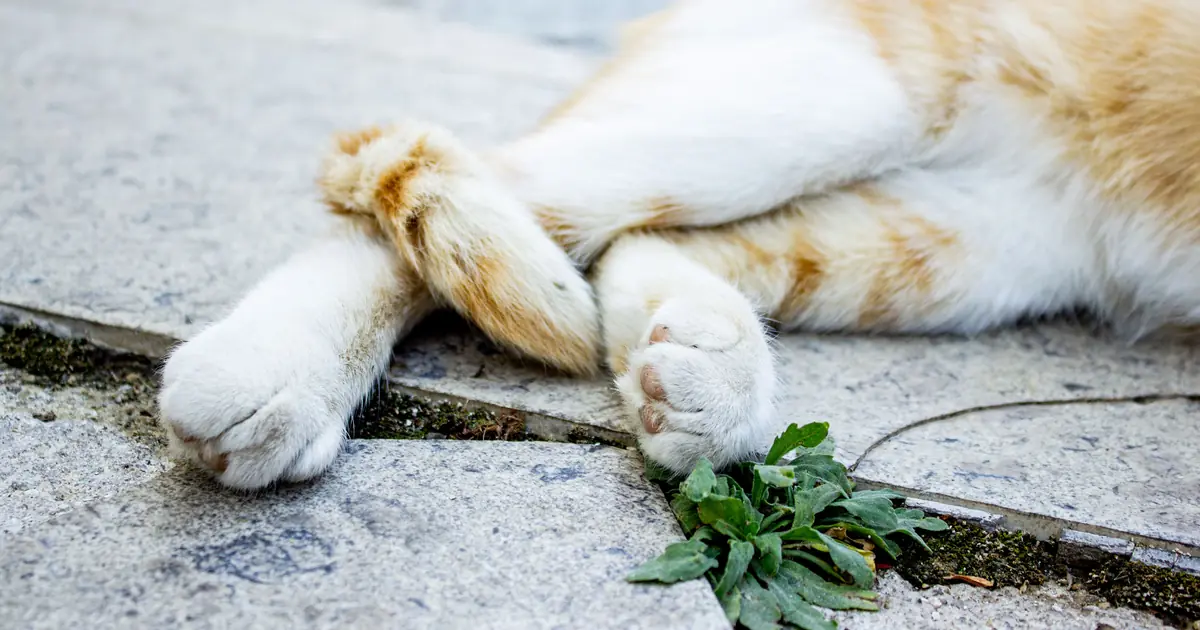
You walk into the living room and there she is: paws crossed at the wrist like she’s posing for a portrait. It’s the kind of pose that makes you grab your phone for a photo before she moves. Cat parents call it the “prim and proper” pose, and honestly, it’s one of the most photogenic things a cat does.
But is your cat actually being polite, or is something else going on? Good news: crossed paws are about as low-stakes as cat behavior gets. It’s not a secret signal, a health issue, or a personality quirk that needs decoding. It’s just a comfortable way to rest, and we’ll walk through exactly why cats do it, what it says about their mood, and when (rarely) a paw position is worth a second look.
- Cats cross their front paws mainly for comfort, not for any hidden emotional or communication purpose.
- The crossed-paw pose is a sign of a relaxed, secure cat that doesn’t feel the need to stay ready to bolt.
- Crossed paws are one of many relaxed resting postures, alongside the classic loaf position and paw-tucking.
- There’s no breed or personality link, some individual cats simply prefer this position and others never use it.
- Crossed paws are always harmless, but a cat that suddenly limps, favors a paw, or won’t put weight on it needs a vet visit, since that’s a pain signal, not a resting pose.
Why Do Cats Cross Their Front Paws?
Cats cross their front paws because it’s a comfortable, natural way to rest that also happens to feel secure. Stacking one paw over the other takes pressure off both legs while the body settles in and goes still. There’s no mystery message in it, it’s closer to how a person crosses their ankles on the couch: it just feels good.
Cats sleep 12 to 16 hours a day on average, according to the Cornell Feline Health Center, and a lot of that time goes toward finding the comfiest position available. Crossed paws is one of dozens of resting shapes a cat can settle into, right alongside curling into a ball or tucking into a loaf.
What Does the Crossed-Paw Pose Say About Your Cat’s Mood?
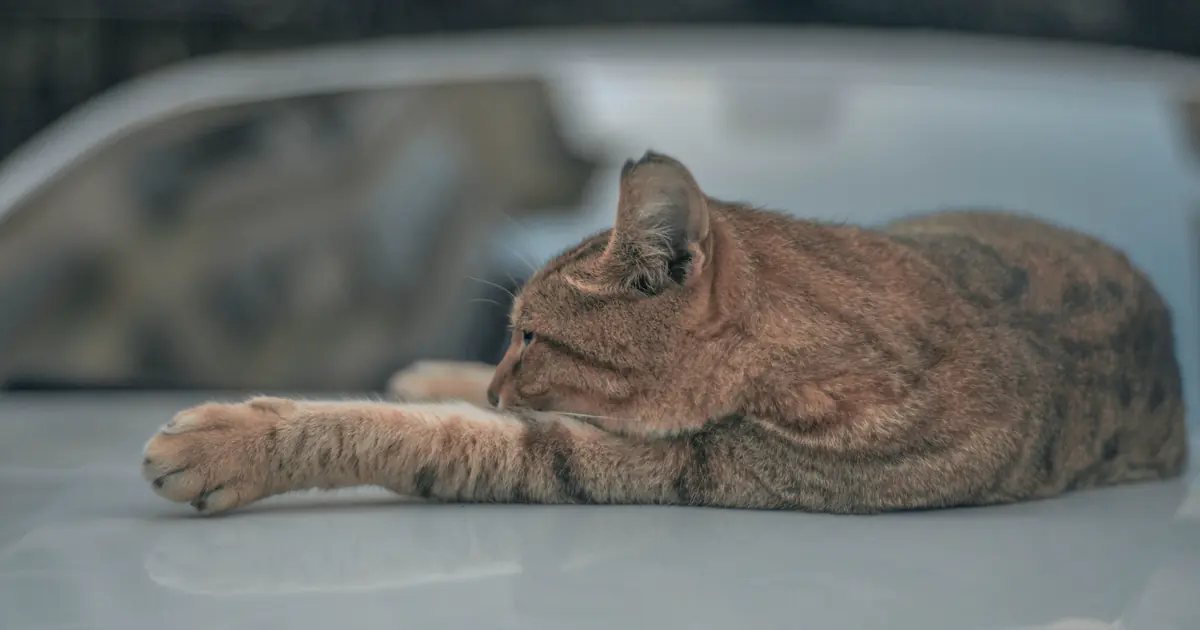
A cat with crossed paws is telling you, in body language, that they feel calm and unthreatened. The pose keeps the front legs loosely folded and out of “ready to run” position, something a nervous or alert cat rarely does. Cats that feel unsafe keep their paws tucked and ready to push off. Crossed paws is the opposite: a cat that’s fully clocked out of guard duty.
Think of it as one more sign in the bigger picture of relaxed cat body language, alongside a loose tail, half-closed eyes, and a soft, quiet purr. Stacked together, these signs paint a picture of a cat who’s genuinely comfortable in that spot.
Is Crossing Paws Just Comfort, or Does It Mean Something More?
For the vast majority of cats, crossing their paws really is just comfort, not a coded message. It’s habit and physical preference, the same way some people always cross their legs when they sit and others never do. A few things make it more likely:
- Lying on a soft, flat surface like a bed or sofa cushion, where there’s room to stack the paws.
- Resting for a long stretch rather than a quick pause between activities.
- Being fully at ease in a familiar spot, like a favorite windowsill or your lap.
- Simple physical comfort, some cats find it keeps their paws warmer or eases weight off the wrists.
If your cat crosses her paws every afternoon on the same sunny patch of carpet, that’s a comfort habit, not a message she’s trying to send you.
How Does Crossed Paws Fit Into Your Cat’s Relaxed Body Language?
Crossed paws is one resting pose among several, and comparing it to the others shows why cats switch between them at all. A cat that’s relaxed but wants extra warmth often tucks into the classic loaf shape instead, hiding the paws under the body (our guide on what it means when a cat loafs covers that pose in full). Crossed paws and the loaf aren’t competing signals, they’re just two ways of expressing the same feeling: I’m safe here, and I’m not going anywhere.
The International Cat Care charity notes that relaxed cats show loose, soft body postures with no muscle tension, which lines up with what a crossed-paw pose looks like. A tense, worried cat holds its body tight and compact. A crossed-paw cat does the opposite: sprawled out, unbothered, taking up space.
| Paw Pose | What It Usually Means |
|---|---|
| Crossed paws (one paw over the other) | Fully relaxed and comfortable, no plans to move any time soon |
| Tucked loaf (paws hidden under the body) | Relaxed but staying warm, and can still move quickly if needed |
| One paw raised or hovering | Curiosity, hesitation, or in some cases early discomfort worth watching |
| Kneading with the front paws | Contentment, a comfort habit left over from nursing as a kitten |
Curious about that kneading motion too? Our guide to why cats knead covers it in more detail, another paw behavior that looks unusual but is really just about comfort.
Does Crossed Paws Mean My Cat Trusts Me?
A crossed-paw pose is a good sign your cat feels secure in that moment, though it’s not proof of trust in you specifically unless your cat chooses to do it right next to you or on your lap. Cats show trust through a cluster of behaviors: slow blinks, sleeping near you, exposing their belly, and yes, a relaxed crossed-paw nap on your bed. For the fuller picture of affection signals, see does my cat love me.
Do Certain Cats Cross Their Paws More Than Others?
Some cats cross their paws often and others almost never do, and that comes down to individual preference, not breed or age. There’s no research linking the pose to a specific breed, size, or personality type. A chunky orange tabby and a sleek Siamese are equally likely to strike it, based purely on what feels comfortable to that cat’s body.
What seems to matter more is how settled a cat feels in your home. Cats who feel secure in their environment tend to show more relaxed postures overall, crossed paws included, simply because they have more chances to fully let their guard down. A jumpy, newly adopted cat may take weeks or months before you catch them doing it, and that’s completely normal.
Is Crossed Paws Ever a Sign of a Problem?
No, the crossed-paw pose itself is completely harmless and never a symptom of illness or injury. It’s a resting position, not a diagnostic clue. This article is meant to help you understand normal cat behavior, and it’s not a substitute for advice from a licensed veterinarian.
Just don’t confuse a relaxed crossed-paw pose with a cat favoring a paw. If your cat suddenly holds a paw at an odd angle, limps, won’t put weight on a leg, or seems reluctant to walk or jump, that’s pain or injury, not a cute resting habit. The VCA Animal Hospitals guide on limping cats recommends watching how your cat walks and getting them checked out if the limp doesn’t clear up within a day.
What Other Cute Paw Poses Do Cats Strike?
Crossed paws is just one entry in a long list of resting shapes cats enjoy:
- The loaf: paws and tail tucked neatly under the body, like a little bread loaf.
- The airplane: lying on the belly with both back legs stretched flat out behind, like tiny wings.
- Paws over the eyes: blocking out light while napping in a bright spot.
- The sploot: belly flat on the ground with all four legs splayed to the sides.
If your cat also likes to lick or shake out their paws between naps, those are separate, equally normal habits covered in our guides on why cats lick their paws and why cats shake their paws.
Frequently Asked Questions
Q: Why does my cat cross its paws when lying down?
Your cat crosses her paws because it’s a comfortable resting position, not because she’s trying to communicate anything specific. It usually happens on soft, flat surfaces where there’s room to stack the front paws while the rest of the body settles in for a long nap.
Q: Is crossing paws a sign my cat is happy?
It’s a sign your cat is relaxed and comfortable in that moment, which usually goes hand in hand with being content. Look at the whole picture, loose tail, soft eyes, relaxed ears, rather than reading the crossed paws on their own as proof of happiness.
Q: Do all cats cross their paws?
No, some cats cross their paws often and others rarely or never do it. It comes down to individual comfort preference, not breed, age, or personality type.
Q: Is crossed paws different from the loaf position?
Yes. In the loaf position, a cat tucks its paws underneath the body so they’re hidden from view, while crossed paws means the front paws are visible and stacked one over the other. Both are relaxed resting poses, they just look different.
Q: Should I worry if my cat suddenly stops crossing its paws?
Not on its own. Cats switch between dozens of resting positions depending on the surface, temperature, and mood, so there’s no need to read anything into one pose disappearing for a while. Only worry if you notice signs of pain, limping, or reluctance to move.
Q: Can kittens cross their paws too?
Yes, kittens can and do cross their paws just like adult cats. It’s a comfort-based resting position that isn’t tied to age, so you might spot it even in very young kittens once they’re settled and relaxed.
Q: Does crossed paws mean my cat trusts me specifically?
It’s a good sign your cat feels secure, but trust in you specifically is better measured by things like slow blinking, sleeping near you, or seeking out your lap. A crossed-paw nap on the far end of the couch just means the couch is comfortable.
Q: What should I do if my cat won’t put weight on a paw?
A cat that won’t put weight on a paw, limps, or holds a leg at an odd angle needs a veterinary check, since that points to pain or injury rather than a resting pose. Watch how your cat walks and contact your vet promptly if the limp lasts more than a day.

Hello and welcome to The Ideal Cat!
We are some passionate cat owners from different professions. We love our cats and have a lot of experience in how to care for our pets. We are incredibly excited to share our knowledge, experience, and research with you. So you can take good care of your loving cat. We will answer most of the common questions about owning cats, taking care of them, etc. If you have any question contact with us. Thanks for visiting! Enjoy the content.
