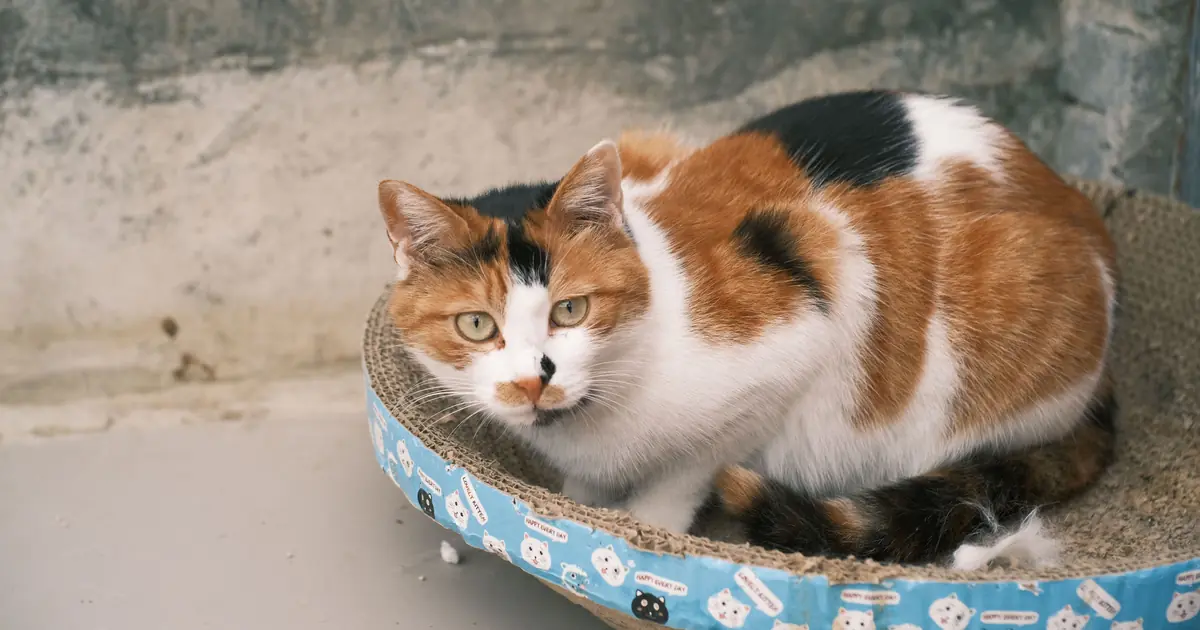
If you’ve ever looked over and found your cat sitting with all four paws tucked under, looking exactly like a warm loaf of bread, you’re not alone. It’s one of the most adorable things cats do. And most of the time, it’s a great sign. But the loaf can also mean something a little more important, so let’s walk through what your cat is really telling you.
- A cat loaf is a position where a cat sits with all four paws and its tail tucked neatly under its body, resembling a loaf of bread.
- Loafing most often means a cat feels relaxed, content, warm, and safe enough to relax its guard.
- Cats loaf to conserve body heat, since tucking the paws and tail under the body reduces heat loss.
- A relaxed loaf looks soft and settled, while a pain-related “loaf” looks hunched and tense with squinted eyes and a head held low.
- See a vet if your cat’s loaf looks rigid or hunched and comes with hiding, appetite loss, vomiting, or litter box changes.
What is a cat loaf?
A cat loaf is a sitting position where a cat tucks all four paws and its tail underneath its body, forming a compact, rounded shape that looks like a loaf of bread. The paws disappear, the tail wraps in close, and the head usually stays upright. People also call it “loafing,” “bread loafing,” or sitting in “bread loaf position.”
The pose got its nickname for an obvious reason: a loafing cat would fit neatly into a bread pan. It’s so common and so cute that it has its own internet fan club. But behind the cuteness, the loaf is real body language, and it tells you how your cat is feeling.
What does it mean when a cat loafs?
When a cat loafs, it most often means your cat feels relaxed and secure. A cat that tucks its paws away is a cat that doesn’t feel the need to bolt at a moment’s notice. Here are the main reasons cats loaf.
1. Your cat feels relaxed and content
The most common reason cats loaf is simple contentment. A loafing cat is settled, calm, and at ease. Laid-back cats tend to loaf far more than anxious or high-energy cats, so a regular loafer is usually a happy one.
2. Your cat feels safe with you
When a cat loafs near you, it’s a quiet sign of trust. Tucking the paws away means giving up the quick “ready to run” stance, and cats only do that when they feel safe. If your cat chooses to loaf at your feet or beside you on the couch, take it as a compliment.
3. Your cat is staying warm
Cats loaf to conserve body heat. Tucking the paws and tail under the body traps warmth and reduces heat loss through the extremities, a bit like putting your hands in your pockets on a cold day. You’ll often spot loafing in cooler spots or after a cat moves off a sunny patch.
4. Your cat feels comfortable but stays a little alert
Loafing is a relaxed pose, but not a fully off-guard one. With its paws tucked, a cat is comfortable yet can still pop up quickly if something interesting happens. It’s the feline version of being cozy on the couch but still ready to investigate the kitchen.
5. Your cat is protecting its body
By tucking its paws and tail in, a cat shields its softer parts and limbs. This makes the loaf a mildly protective posture. It’s why some cats loaf in unfamiliar places, like the vet’s office, where they want to feel a little less exposed.
6. Your cat is just settling in for a rest
Sometimes a loaf is simply the comfortable middle ground between sitting up and lying down. A cat may loaf for a short nap, then stretch out fully once it drifts off deeper. The loaf is a low-effort, cozy resting pose.
7. Sometimes, your cat is hiding discomfort
Here’s the part most cute articles skip: a loaf-like posture can occasionally mask pain. Cats are experts at hiding illness, and a hunched, tense version of the loaf can be a cat trying to protect a sore belly. This is the exception, not the rule, but it’s worth knowing the difference, which we’ll cover next.
Relaxed loaf vs concerning hunch: how to tell the difference
The difference between a happy loaf and a worried one is mostly about tension. A relaxed loaf looks soft and settled, while a pain-related posture looks stiff, hunched, and shut down. Cats with belly pain sometimes hold a tucked posture because it eases pressure on a sore area, so context matters. Use this table to read your cat.
| Relaxed, happy loaf | Concerning hunch (see a vet) |
|---|---|
| Body looks soft and rounded | Body looks tense, stiff, or rigid |
| Head held up, eyes calm or slow-blinking | Head held low, eyes squinted or half-closed |
| Paws tucked neatly underneath | Hunched over with the back arched, paws often not fully tucked |
| Responsive, purring, alert to you | Withdrawn, hiding, slow to respond |
| Eating, drinking, and using the litter box normally | Eating less, vomiting, or litter box changes |
| Loafs in cozy, comfortable spots | Sits hunched for long stretches and won’t settle |
If your cat loafs comfortably most days and bounces up to greet you, you’re looking at a content cat. If the loaf turns into a low, hunched crouch that won’t relax, pay closer attention.
Why does my cat loaf when sick?
A sick cat may sit in a loaf-like position because the tucked posture can ease discomfort, especially belly pain. Cats with abdominal pain often curl tight to reduce pressure on the sore area, which can look like an unusually hunched, tense loaf. Common conditions linked to this include gastrointestinal upset, urinary tract infections, pancreatitis, and kidney disease.
The key signal isn’t the loaf itself, it’s how the cat looks while doing it. A sick cat’s “loaf” tends to come with a hunched back, a head held low, squinted eyes, and a general unwillingness to move, stretch, or interact. Healthy loafing looks loose and content; painful posturing looks guarded.
This article is educational and isn’t a substitute for veterinary care. If something feels off about your cat, your vet is the best person to check.
When should I worry about my cat’s loafing?
You should worry about loafing when it looks hunched and tense and comes with other signs of illness. A relaxed loaf on its own is never a problem. It’s the combination of a stiff posture plus changes in behavior or body function that calls for a vet visit.
Call your veterinarian if your cat’s loaf or hunch comes with any of these red flags:
- A rigid, hunched posture the cat holds for hours and can’t seem to relax
- Head held low, eyes squinted, or a generally “shut down” look
- Hiding more than usual or sudden personality changes
- Eating or drinking less, or refusing food
- Vomiting, diarrhea, or straining in the litter box
- Trouble breathing, open-mouth breathing, or rapid breathing
- Reluctance to jump, climb, or be touched
Trouble breathing or repeated straining in the litter box with no urine are emergencies, so call a vet right away. If your cat seems otherwise stable but the hunched posture and discomfort don’t ease, it’s still smart to book a vet appointment within 12 to 24 hours. You can read more from trusted sources like the Cornell Feline Health Center.
What are the different types of cat loaf?
Cats have a few signature loaf variations, and most are just adorable spins on the relaxed pose. Here’s a quick guide to the styles you’ll spot.
| Loaf type | What it looks like |
|---|---|
| Classic loaf | Head upright, all four paws and tail tucked neatly underneath, fully relaxed. |
| Partial loaf | Only the paws partly tucked, slightly alert and ready to move if needed. |
| Sphinx loaf | Head and ears up with the front paws stretched out front, alert but at rest. |
| Double loaf | Two cats loafing side by side, a bonus in multi-cat homes. |
None of these variations are cause for concern on their own. They’re just personal preferences. What matters for your cat’s health is the level of tension and any signs of discomfort, not which loaf style your cat favors.
Should I let my cat loaf as much as it wants?
Yes, you should let your cat loaf as much as it wants, because relaxed loafing is healthy, normal cat behavior. A cat that loafs often is usually a calm, comfortable cat, and the pose helps it stay warm and feel secure. There’s no need to interrupt a happy loaf.
The only time to step in is if the loaf looks like the concerning hunch described above. In that case, the move isn’t to disturb the cat, it’s to watch closely for other symptoms and call your vet if you see them. Otherwise, enjoy the loaf, snap the photo, and let your cat be a bread.
Frequently Asked Questions
Q: Is it a good sign when a cat loafs?
Yes, in most cases a cat loaf is a good sign. It usually means your cat feels relaxed, warm, and safe enough to tuck its paws away. The exception is a tense, hunched loaf with squinted eyes, which can signal discomfort.
Q: Why does my cat loaf next to me?
When a cat loafs next to you, it’s showing trust and comfort. Tucking its paws means it doesn’t feel the need to stay ready to run, so choosing to loaf beside you is a quiet sign of a strong bond.
Q: Can a cat loaf mean my cat is in pain?
Occasionally, yes. A hunched, tense posture that looks like a loaf can mean a cat is guarding belly pain. The clue is tension: a painful posture looks stiff with a low head and squinted eyes, while a happy loaf looks soft and settled.
Q: Why does my cat loaf with its paws not tucked in?
A loaf with paws partly out is usually just a partial loaf, meaning your cat is relaxed but staying a little alert and ready to move. If the paws are untucked because your cat looks hunched and stiff, watch for other signs of discomfort instead.
Q: Do cats loaf when they are cold?
Yes, cats often loaf to stay warm. Tucking the paws and tail under the body traps heat and reduces heat loss, much like putting your hands in your pockets. Loafing in cooler spots is completely normal.
Q: Why do cats loaf at the vet?
Cats may loaf at the vet because the tucked pose feels mildly protective. By pulling its paws and tail in, a cat shields its body and feels a little less exposed in an unfamiliar, stressful place.
Q: How can I tell a happy loaf from a sick loaf?
A happy loaf looks soft, rounded, and relaxed, with the head up and the cat responsive. A sick loaf looks stiff and hunched, with a low head, squinted eyes, and often hiding or appetite changes. Tension and extra symptoms are the warning signs.
Q: How long do cats stay in a loaf position?
There’s no set time. Cats may loaf for a few minutes or settle in for a longer rest, then stretch out for a deeper nap. A cat holding a hunched, tense posture for hours without relaxing is the version worth watching.
So, what does it mean when a cat loafs? Nearly always, it means your cat feels relaxed, warm, and safe with you, and that’s a lovely thing to see. Just keep an eye on the rare hunched, tense loaf, and when in doubt, check in with your vet.

Hello and welcome to The Ideal Cat!
We are some passionate cat owners from different professions. We love our cats and have a lot of experience in how to care for our pets. We are incredibly excited to share our knowledge, experience, and research with you. So you can take good care of your loving cat. We will answer most of the common questions about owning cats, taking care of them, etc. If you have any question contact with us. Thanks for visiting! Enjoy the content.
