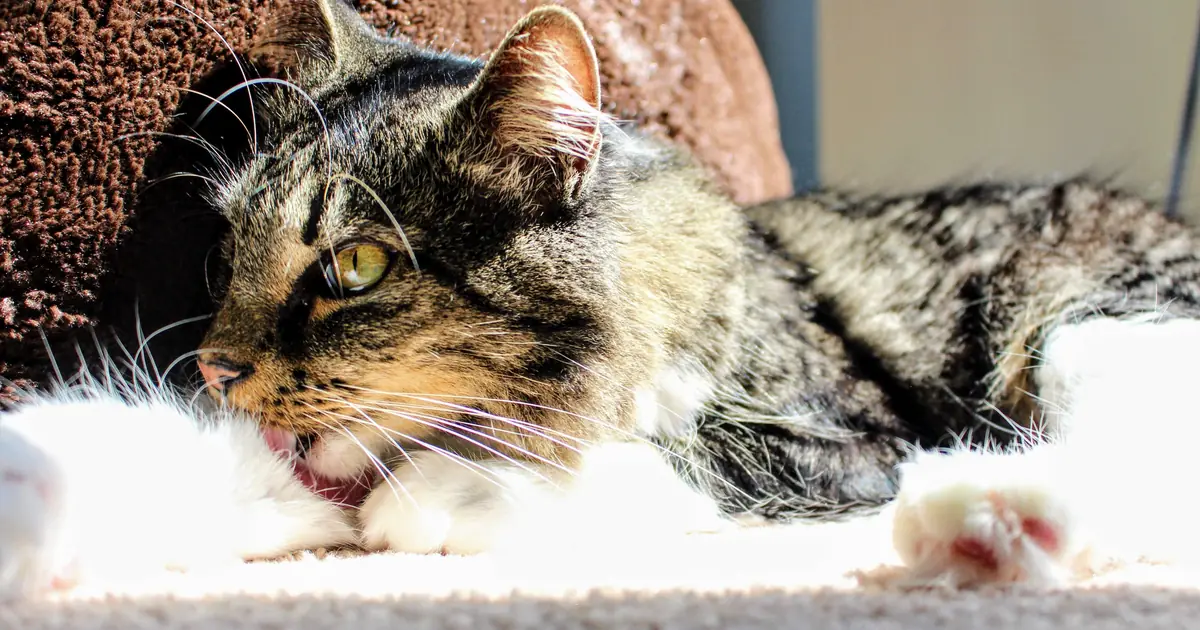
Watch your cat after dinner and you’ll usually see the same little ritual. A quick lick of one paw, a swipe over the ear, another lick, another swipe. It looks almost ceremonial, and in a way it is. This is your cat’s version of washing up after a meal.
Here’s the thing: paw-licking isn’t a quirky habit. It’s a core piece of feline hygiene, wired in from kittenhood, and most cats do it several times a day without any problem at all. The trick is knowing what normal paw-licking looks like so you can spot the moment it turns into something worth watching more closely.
- Cats spend roughly 30 to 50 percent of their waking hours grooming, and paw-licking is a regular part of that routine.
- Cats use a wet paw like a washcloth to clean their face, ears, and head because their tongue can’t reach those spots directly.
- Paw-licking after meals or after using the litter box removes food residue, dirt, and stray litter from the fur and pads.
- A typical grooming session lasts about 2 to 10 minutes and usually works through all four paws in turn.
- Constant licking focused on one paw, limping, swelling, or missing fur is not normal grooming and is worth a vet visit.
Why Do Cats Lick Their Paws?
Cats lick their paws because it’s the most efficient grooming tool they have. A cat’s tongue is covered in tiny, hooked structures called papillae, which work great as a built-in brush for reachable fur, but they can’t do much for the face, ears, or top of the head. So cats improvise: they wet a front paw with saliva and use it as a hand towel for the spots the tongue can’t reach on its own.
This isn’t unique to any one cat. It’s a species-wide habit found in kittens, adults, and senior cats alike, regardless of breed or coat length. According to the Cornell Feline Health Center, cats typically spend 30 to 50 percent of their waking hours grooming themselves, and paw-licking is woven through nearly all of it.
How Do Cats Use a Paw Like a Washcloth to Wash Their Face?
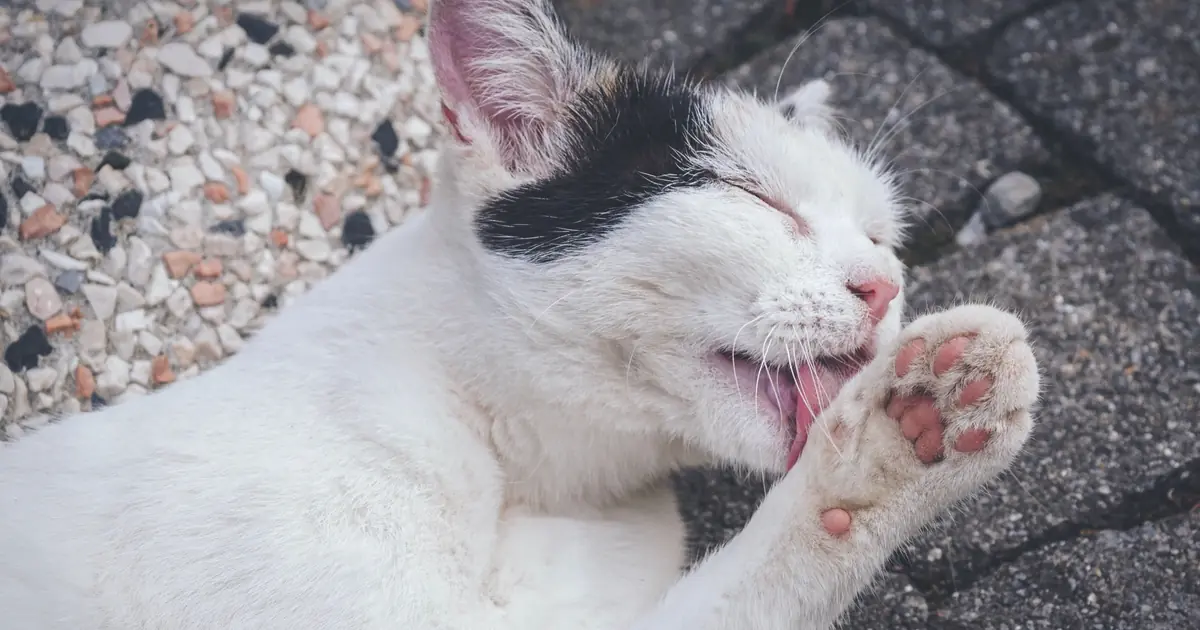
Cats lick a paw wet, then drag it over the face, ears, eyes, and head in a repeating pattern. The routine tends to follow a set order: lick the paw, wipe one side of the face and around the ear, lick the paw again, wipe the same spot or move to the other side. Cats often work through both sides of the face and both ears before moving on.
A full session usually lasts 2 to 10 minutes and touches all four paws at different points, since the cat needs to reach different angles of the face and head. It’s why you’ll see a cat pause mid-nap, lick a paw twice, wipe its face once, then go right back to sleep. Quick maintenance, not a deep clean.
Why Do Cats Lick Their Paws After Eating or Using the Litter Box?
Cats lick their paws after meals and after using the litter box to clean off food residue, dirt, and litter granules. A paw that’s touched wet food, gravy, or a dusty scoop of clumping litter picks up debris fast, and a cat’s instinct is to deal with that mess immediately rather than walk around with sticky or gritty toes.
It looks deliberate because it is. Your cat isn’t being fussy for the sake of it; it’s removing something it can feel or smell on its paw. If this happens every time after meals, that’s completely typical and nothing to worry about.
Do Cats Lick Their Paws to Self-Soothe?
Yes, cats lick their paws partly to self-soothe and relieve mild stress. The repetitive motion of licking can have a calming effect, similar to how some people tap a foot or twirl their hair when they’re thinking or a little anxious. A cat settling into a new room, adjusting after a vet visit, or winding down before a nap may lick a paw a few extra times as part of that settling process.
This kind of licking is usually short, spread across both front paws, and paired with relaxed body language like slow blinking or a loosely curled tail. It only becomes a red flag when it’s constant, focused on one spot, or replacing normal activity like eating and playing.
What Makes a Cat’s Tongue So Good at This Job?
A cat’s tongue is covered in hundreds of tiny, backward-curving hooks called papillae, made of keratin, the same protein in claws and hair. These hooks work like a fine-toothed comb, pulling loose fur, dirt, and dander out of the coat and into the wet paw during grooming. If you’ve ever felt a cat’s tongue on your hand, you already know how rough it can feel, and you can read more about why cats’ tongues are rough for the full picture.
The papillae grab onto whatever is stuck to the paw fur and help transfer it away with each swipe. A cat’s saliva also has mild antibacterial properties, part of why all this daily licking doesn’t make cats sick; our guide on how cats avoid getting sick from licking themselves covers that in more detail. Paws do more than get licked, too. Cats sometimes shake a paw after stepping in something unpleasant, a separate habit covered in our guide on why cats shake their paws.
When Does Paw-Licking Cross From Normal Into a Problem?
Paw-licking is normal when it’s brief, spread across multiple paws, and tied to grooming, eating, or settling down. It becomes a concern when a cat fixates on one paw, licks it raw, or starts limping, since that pattern usually points to pain, an injury, an allergy, or stress-driven over-grooming rather than routine hygiene.
The table below breaks down the difference side by side.
| Sign | Normal Paw-Licking | Concerning Paw-Licking |
|---|---|---|
| Which paw | Both front paws, used interchangeably | One specific paw, licked over and over |
| How often | A few short bursts a day, tied to grooming or meals | Near-constant, interrupts sleep or play |
| Fur and skin | Fur stays smooth and intact | Fur thinning, bald patches, or raw pink skin |
| Other signs | Relaxed posture, normal appetite and activity | Limping, swelling, redness, or avoiding weight on the paw |
| Likely cause | Routine hygiene | Injury, allergy, parasite, or stress-related over-grooming |
If the licking spreads to the belly and legs instead of staying focused on one paw, that pattern points more toward compulsive over-grooming than a physical wound. Our guide to why cats over-groom covers the stress and skin triggers behind that behavior. International Cat Care notes over-grooming can stem from fleas, food allergies, or anxiety, so a vet visit is the fastest way to narrow down the cause.
When Should You Take Your Cat to the Vet for Paw-Licking?
Take your cat to the vet if one paw is being licked constantly, if your cat is limping or favoring a paw, or if you spot swelling, redness, a wound, or hair loss. These signs point to something physical going on, not routine cleaning, and a vet can usually check for the cause in a quick, simple exam.
Before you call the vet, take a quick look at the paw yourself if your cat will let you. Check between the toes and across the pad for:
- Cuts, scrapes, or a torn paw pad
- Foreign objects like a splinter, thorn, or piece of glass
- Cracked, dry, or split pads
- Litter clumps or debris stuck between the toes
- Swelling, discoloration, or a spot that’s warm to the touch
VCA Hospitals notes that excessive licking at one paw, paired with limping, is one of the clearest signs of a footpad injury. Heavy bleeding, a puncture wound, or a split pad all warrant an immediate vet visit rather than a wait-and-see approach.
This article is educational, not a substitute for a hands-on exam. If you’re ever unsure whether what you’re seeing is normal, a licensed veterinarian is the safest call.
Frequently Asked Questions
Q: Is it normal for cats to lick their paws every day?
Yes, daily paw-licking is normal. Cats groom for 30 to 50 percent of their waking hours, and using a wet paw to clean the face is part of that routine, often happening several times a day without any cause for concern.
Q: Why does my cat lick its paws after eating?
Cats lick their paws after eating to remove food residue that touched the fur while eating from a bowl. The paw acts as a washcloth to wipe the face clean of any leftover food, gravy, or crumbs.
Q: Why does my cat lick one paw more than the other?
Occasional preference for one paw isn’t unusual, similar to how people favor a dominant hand. But if one paw is being licked far more than the other, especially to the point of hair loss or redness, it’s worth checking that paw for an injury, splinter, or allergic reaction.
Q: Can allergies cause a cat to lick its paws excessively?
Yes, food allergies, environmental allergies, and flea allergies can all cause a cat to lick its paws more than usual. The licking is a response to itching or irritation, and a vet can help identify the specific allergen through diet trials or testing.
Q: How long should a normal cat grooming session last?
A typical grooming session lasts about 2 to 10 minutes and usually involves all four paws at different points, since the cat repositions to reach different parts of its face and body.
Q: Does paw-licking mean my cat is stressed?
It can, but not always. Short bouts of paw-licking during settling-in moments are a mild self-soothing behavior. Constant, focused licking that replaces normal eating, play, or sleep is more likely tied to stress or anxiety and is worth mentioning to your vet.
Q: What does it mean if my cat’s paw is swollen and they keep licking it?
A swollen paw that’s being licked constantly usually points to an injury, insect sting, abscess, or infection. This combination of signs calls for a vet visit rather than home monitoring, since swelling can indicate pain or a wound that needs treatment.
Q: Is it safe for cats to lick litter off their paws?
Most clumping and clay litters are not meant to be ingested in large amounts, but a small amount of litter dust from normal paw-licking is common and rarely a problem for healthy cats. If your cat is eating noticeable amounts of litter or licking paws obsessively after every litter box trip, mention it to your vet, since it could point to an attractant sensitivity or a compulsive habit.

Hello and welcome to The Ideal Cat!
We are some passionate cat owners from different professions. We love our cats and have a lot of experience in how to care for our pets. We are incredibly excited to share our knowledge, experience, and research with you. So you can take good care of your loving cat. We will answer most of the common questions about owning cats, taking care of them, etc. If you have any question contact with us. Thanks for visiting! Enjoy the content.
