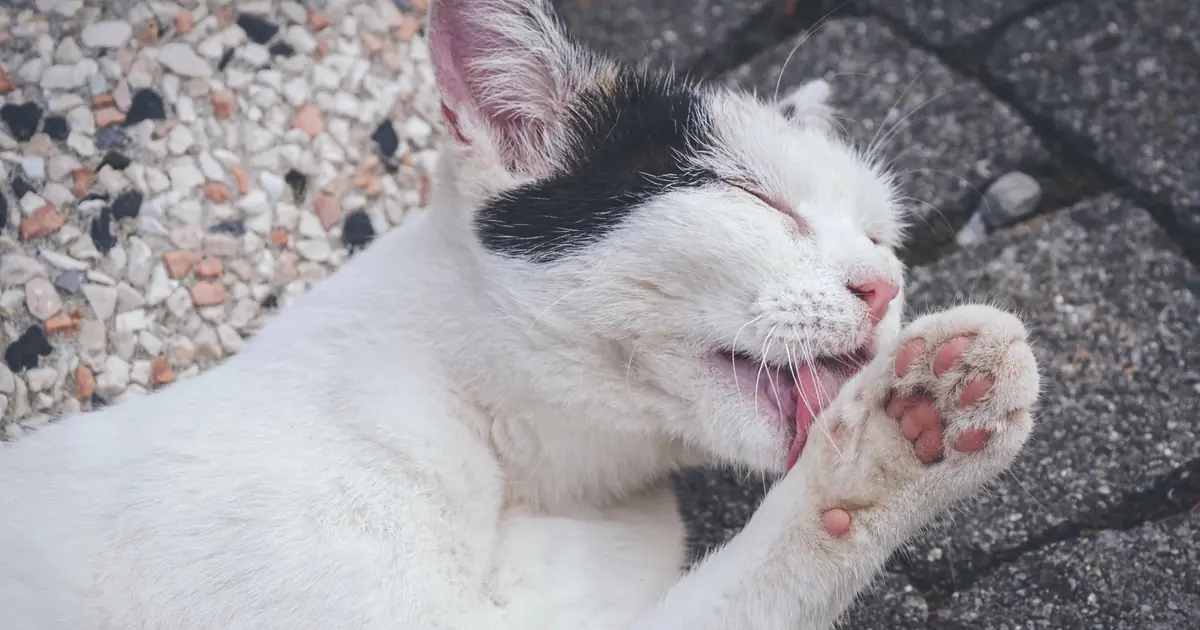
Picture your cat mid-bath. One leg pointed at the ceiling, tongue going like a tiny windshield wiper, totally unbothered. Then it hits you: she licks every inch of herself, several times a day, and never seems to get sick from it. If you tried that, you’d be at the doctor by noon. So how do cats not get sick from licking themselves?
The short version? Their whole self-cleaning system is built for the job. A cat’s tongue, saliva, stomach, and immune system all work together to make grooming safe, most of the time. But it’s not magic, and there are a few real exceptions worth knowing. Let’s break down how it actually works, and where it can go wrong.
- Cats groom their own fur, which carries their own normal bacteria that their immune system is already adapted to.
- A cat’s saliva has mild antibacterial properties, and grooming physically removes dirt, loose hair, and parasites.
- A cat’s strong stomach acid breaks down swallowed hair and small bits of debris without making them sick.
- Cats can still get tapeworm from swallowing infected fleas while grooming, plus hairballs from ingested fur.
- A cat can be poisoned by licking a toxic substance off its coat, so never let a cat groom off chemicals, dog flea treatment, or antifreeze.
Why doesn’t grooming make cats sick?
Grooming usually doesn’t make cats sick because they’re cleaning a surface that’s already relatively clean and covered in their own familiar microbes. A healthy cat’s coat and skin carry that cat’s normal bacteria, the ones its immune system has lived alongside since kittenhood. Swallowing a few of your own everyday bacteria is very different from swallowing something foreign. Cats have basically co-evolved with the microbes on their own bodies, so their systems shrug them off.
There’s also a defense stack working in the background. Cat saliva carries mild antibacterial and cleaning properties, and one interesting bit of science: nitrite in saliva can convert to nitric oxide on the skin, which is antimicrobial. Grooming also does real physical work, sweeping away dirt, loose fur, and parasites like fleas. So it’s not just tidying. It’s a little maintenance routine that keeps the coat healthier. This ties into your cat’s wider grooming and body language, since a relaxed, thorough bath is often a sign of a content, comfortable cat.
How does a cat’s tongue keep them clean?
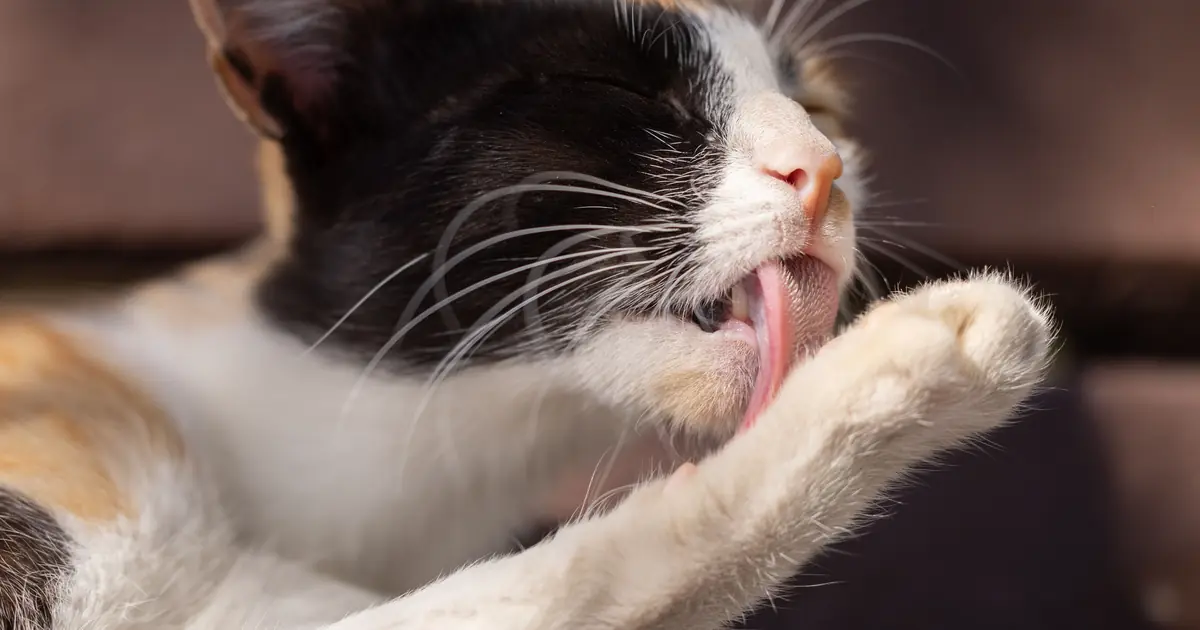
A cat’s tongue keeps them clean because it’s covered in tiny backward-facing barbs called papillae that work like a built-in comb. These little hooks, made of keratin (the same stuff as your fingernails), grab loose fur, detangle knots, and pull dirt and debris out of the coat. They also spread natural skin oils (sebum) down each hair, which is part of why a well-groomed cat has that sleek, shiny look.
Those same barbs drag out fleas and flecks of dirt as your cat licks. It’s a surprisingly good cleaning tool, and it’s one reason cats rarely need baths. If you want to help the process along, especially with long-haired cats, the right cat brush for loose hair takes real pressure off their tongue and cuts down on how much fur they swallow.
Does a cat’s stomach handle the fur and germs they swallow?
Yes, a cat’s stomach handles most of the fur and germs it swallows thanks to strong stomach acid and a digestive system built for the job. Cats are obligate carnivores, and their gut is designed to break down raw prey, bones, feathers, and fur included. That same acidic environment neutralizes small amounts of bacteria and debris that come along for the ride during grooming.
Swallowed hair is the interesting one. Most of it passes right through and leaves in the litter box, no drama. Cats swallow a lot of fur precisely because those tongue barbs point toward the throat, so loose hair gets funneled down as they groom. In healthy amounts, their body deals with it. It only becomes a problem when too much fur clumps up faster than it can pass, which brings us to hairballs.
When does grooming actually make a cat sick?
Grooming makes a cat sick in a handful of specific situations, even though the everyday version is safe. The self-cleaning system is impressive, but it has limits. Here are the real exceptions cat parents should know.
| Grooming-related risk | What happens |
|---|---|
| Tapeworm from fleas | A cat swallows an infected flea while grooming, and the tapeworm develops in the gut. You may spot rice-like segments near the tail or in the litter box. |
| Hairballs | Too much swallowed fur clumps in the stomach instead of passing. The cat retches up a wet cigar-shaped wad, or worse, risks a blockage. |
| Licking toxins off the coat | A cat grooms a harmful substance off its fur and ingests it: spot-on flea meds made for dogs, household chemicals, or antifreeze. |
| Over-grooming | Stress, allergies, pain, or skin issues drive excessive licking, leading to bald patches and irritated skin. |
The tapeworm one surprises a lot of people. Cats are such careful groomers that swallowing an infected flea is the single most common way they pick up tapeworm. So flea control isn’t just about itching. It’s about stopping a parasite pipeline. According to the Cornell Feline Health Center, intestinal parasites like tapeworm are common in cats, and prevention beats treatment every time.
Why should you never let a cat groom something dangerous off its fur?
You should never let a cat groom something dangerous off its fur because their instinct to clean turns a skin problem into a poisoning. If a spill, chemical, or the wrong flea product lands on your cat’s coat, that fastidious tongue will pull it straight into the stomach within minutes. Cats can’t tell “safe to lick” from “toxic,” so their grooming reflex works against them here.
A big one: flea and tick spot-on treatments made for dogs. Many contain permethrin, which is highly toxic to cats and can cause tremors or seizures. Antifreeze is another, sweet-tasting and deadly in tiny amounts. If your cat gets any suspicious substance on its fur, don’t let it groom. Gently confine your cat, keep it from licking, and call your vet or an animal poison line right away. This is also why coat and skin issues matter, and a resource like our guide on cat dandruff and skin health can help you spot when something’s off.
When does grooming behavior signal a health problem?
Grooming becomes a warning sign when it changes suddenly, either ramping up into constant licking or dropping off completely. Both directions tell you something. A cat that suddenly grooms one spot raw may be dealing with fleas, allergies, pain, or stress. A cat that stops grooming and looks greasy or matted is often sick, in pain, or dealing with dental problems, arthritis, or obesity.
Watch for these red flags and check in with your vet:
- Bald patches, broken hairs, or raw, irritated skin from over-licking
- A sudden stop in grooming, with a dull, matted, or greasy coat
- Rice-like segments near the tail, or worms in the stool
- Frequent hairballs (more than about one or two a month) or repeated retching with nothing coming up
- Constant scratching, scabs, or visible fleas and flea dirt
Over-grooming in particular is worth taking seriously, since it often points to an underlying itch, pain, or anxiety rather than a habit. If you notice thinning fur, our guide on why a cat may be going bald walks through the common causes. Groups like International Cat Care and the ASPCA also offer solid, vet-backed advice on normal versus worrying grooming.
This article is educational and isn’t a substitute for veterinary care. Grooming is usually harmless, but swallowed parasites, too much ingested fur, or licking something toxic off the coat can genuinely make a cat sick. If your cat is over-grooming, refusing to groom, or may have licked a dangerous substance, contact a licensed veterinarian.
Frequently asked questions
Q: Is cat saliva actually clean?
Cat saliva isn’t sterile, but it does have mild antibacterial and cleaning properties that help during grooming. It’s well suited to a cat’s own body and normal bacteria. It’s not clean by human standards, though, and cat bites or licks on broken human skin can transmit bacteria, so it’s a cat-only cleaning system.
Q: Can a cat get sick from licking its own butt?
Cats rarely get sick from grooming their rear because it’s covered in their own familiar bacteria, and their immune and digestive systems handle it. The bigger risk is swallowing an infected flea in the process, which can cause tapeworm. Good flea control is the best protection.
Q: How do cats get tapeworm from grooming?
Cats get tapeworm by swallowing a flea infected with tapeworm larvae while grooming. It’s the most common route of infection because cats are such thorough self-cleaners. Signs include rice-like segments near the tail or in the litter box. Ask your vet about deworming and flea prevention.
Q: Why do cats swallow so much of their own fur?
Cats swallow fur because the barbs on their tongue point toward the throat, funneling loose hair down as they groom. Most passes through digestion normally. Too much fur can clump into a hairball, so regular brushing helps cut down how much your cat ingests.
Q: What happens if my cat licks a toxic substance off its coat?
If a cat licks a toxic substance off its coat, it can be poisoned, since its grooming instinct pulls the chemical straight into the stomach. Common dangers include dog flea treatments with permethrin, household cleaners, and antifreeze. Keep your cat from licking and call your vet or a pet poison hotline immediately.
Q: Is it normal for my cat to groom several times a day?
Yes, grooming several times a day is completely normal, and cats spend up to about half their waking hours cleaning themselves. Healthy grooming looks calm and balanced. Worry only when it becomes constant licking of one spot, causes bald patches, or stops altogether.
Q: Can grooming spread germs from a sick cat to a healthy one?
Mutual grooming between cats can spread some parasites and infections, like fleas and their tapeworm, or certain skin conditions such as ringworm. Healthy cats sharing a home generally handle each other’s normal bacteria fine. If one cat is sick or has skin issues, check with your vet.
Q: Do hairballs mean my cat is grooming too much?
Occasional hairballs are normal, especially in long-haired cats, and don’t mean over-grooming on their own. But frequent hairballs, more than one or two a month, can signal excessive grooming from stress, allergies, or skin problems. Regular brushing and a vet check help sort out the cause.

Hello and welcome to The Ideal Cat!
We are some passionate cat owners from different professions. We love our cats and have a lot of experience in how to care for our pets. We are incredibly excited to share our knowledge, experience, and research with you. So you can take good care of your loving cat. We will answer most of the common questions about owning cats, taking care of them, etc. If you have any question contact with us. Thanks for visiting! Enjoy the content.
