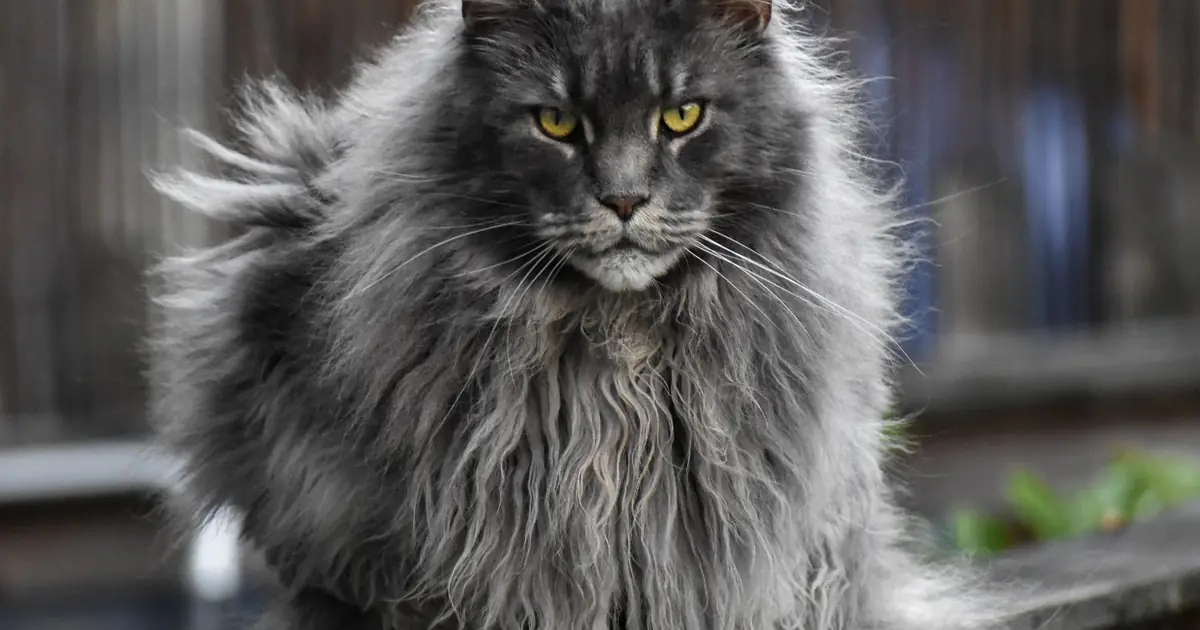
Picture a cat that jumps onto your lap and knocks the wind out of you. A tail like a feather boa. Paws the size of a toddler’s fist. If you’ve ever met a truly big cat, you already know they land somewhere between “house pet” and “small bobcat.” Stand one up and the numbers surprise people, which is why how tall cats are standing up comes up so often.
So which breed actually takes the crown? The short answer is the Maine Coon. But the full story is more fun than that, because “biggest” depends on whether you mean heaviest, longest, or tallest. Let’s sort it out.
- The Maine Coon is the largest non-hybrid domestic cat breed, with males weighing 15 to 25 pounds and reaching up to 40 inches long including the tail.
- The Savannah cat, a domestic-and-serval hybrid, can be taller and heavier than a Maine Coon in early (F1 to F2) generations.
- The Ragdoll and Norwegian Forest Cat are among the heaviest pure breeds, with big males hitting 20 pounds or more.
- The longest domestic cat on record was a Maine Coon named Stewie at 48.5 inches, verified by Guinness World Records.
- Big cats grow slowly, often not reaching full size until 3 to 5 years old, and need sturdy furniture and careful portion control.
What is the biggest cat breed?
The biggest cat breed is the Maine Coon, generally recognized as the largest domestic cat breed that isn’t a wild-cat hybrid. Adult males typically weigh 15 to 25 pounds, females run 12 to 15 pounds, and the longest ones reach close to 40 inches from nose to tail tip. They also grow slowly, so a Maine Coon keeps filling out until age 3 to 5, long after most cats have stopped.
Here’s the catch. “Biggest” isn’t one number. A cat can be heavy without being long, or tall without being heavy. The Maine Coon wins on overall length and mass among pure breeds. But the Savannah cat, which is part African serval, can out-tall and out-weigh a Maine Coon in its earliest generations. So the honest answer depends on how you’re measuring.
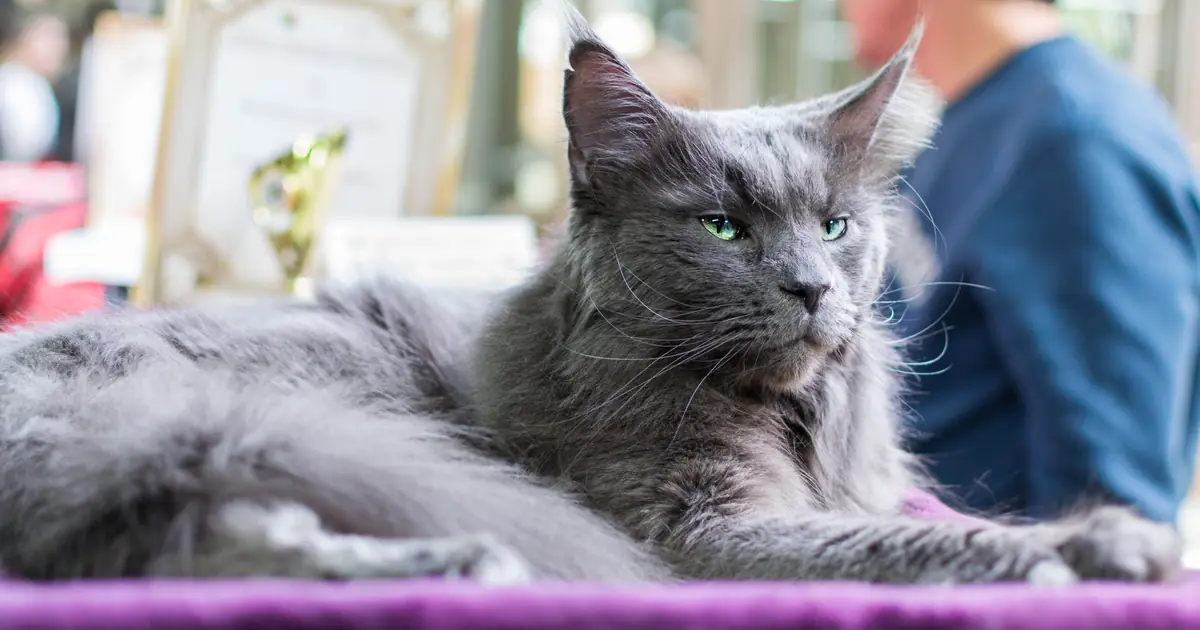
Biggest by weight vs length vs height
Different breeds win different size contests. The Maine Coon is the all-around largest pure breed, the Savannah is the tallest, and hybrids like the Chausie can tip the scales highest. Here’s how the titles split up:
- Heaviest: Early-generation Savannahs and Chausies (both wild-cat hybrids) can hit 25 to 30 pounds. Among pure breeds, big Maine Coons and Ragdolls lead at 20 to 25 pounds.
- Longest: The Maine Coon, thanks to its long body and famously bushy tail. The record holder measured 48.5 inches.
- Tallest at the shoulder: The Savannah, whose long legs give it a lanky, leggy build unlike any pure breed.
For an everyday pet cat you can adopt at a normal shelter or breeder, the Maine Coon is the practical answer to “biggest.” Savannahs and Chausies are exotic, pricey, and often restricted by local laws.
Largest cat breeds compared (size chart)
The largest domestic cat breeds range from around 10 pounds on the small end to 25-plus pounds for the giants. This table lines up the big names by weight, length, and what makes each one special. Weights are for healthy adults, with males at the top of each range.
| Breed | Typical weight | Length (nose to tail) | Notes |
|---|---|---|---|
| Maine Coon | 12 to 25 lb | Up to 38 to 40 in | Largest pure breed; slow to mature (3 to 5 yrs); holds the length record |
| Savannah | 12 to 25 lb (F1 to F2 highest) | Up to ~45 in in tall lines | Serval hybrid; tallest breed; leggy; often legally restricted |
| Chausie | 15 to 26 lb | Long, athletic build | Jungle-cat hybrid; lean and very active |
| Ragdoll | 10 to 20 lb | Up to ~40 in | One of the heaviest pure breeds; docile and floppy |
| Norwegian Forest Cat | 13 to 22 lb | Long, sturdy frame | Thick double coat; strong climber |
| Siberian | 10 to 20 lb | Medium-long, muscular | Powerful, agile; triple-layered coat |
| British Shorthair | 8 to 17 lb | Cobby, compact | Dense and stocky rather than long; teddy-bear build |
| Turkish Van | 7 to 20 lb | Long, broad-chested | Large, athletic; famous for liking water |
Why the Maine Coon still wins overall
The Maine Coon takes the overall crown because it combines length, mass, and a giant tail in a single pure breed you can actually adopt. A big male stretches long, carries real muscle, and finishes growing years after other cats stop. Add the ruff around the neck, the tufted ears, and the plume of a tail, and a Maine Coon simply looks enormous. If you want the full rundown on the breed, our Maine Coon cat guide covers personality, coat care, and what to expect at every age.
Record-holding giant cats
The biggest individual cats on record have shattered the average, and most of the length records belong to Maine Coons. These aren’t typical pets, but they show just how big the breed can get.
- Longest domestic cat ever: A Maine Coon named Stewie measured 48.5 inches (123 cm) from nose to tail tip, verified by Guinness World Records.
- Longest living cat (more recent): Barivel, an Italian Maine Coon, measured about 3 feet 11 inches (120 cm).
- Tallest domestic cat ever: A Savannah named Arcturus stood 19.05 inches at the shoulder and weighed around 30 pounds.
- Tallest living cat: Fenrir, another Savannah, stands about 18.8 inches tall.
Want the deep dive on the giants of the breed? We break down the numbers in our piece on the world record for the largest Maine Coon cat.
Are big cats good pets?
Yes, big cats make wonderful pets, and many of the largest breeds are famous for being some of the friendliest. Maine Coons, Ragdolls, Norwegian Forest Cats, and Siberians tend to be gentle, sociable, and almost dog-like. A lot of big-breed owners describe a cat that follows them room to room, chats back, and flops down for belly rubs.
Still, size comes with a few extra responsibilities. A 20-pound cat needs furniture that won’t tip, food measured with care, and joints that get watched as it ages. Wild-cat hybrids like the Savannah and Chausie are a different commitment entirely: high energy, high cost, and restricted or banned in many areas, as International Cat Care explains. For most families, a big-but-mellow pure breed is the sweet spot. If you’re weighing an exotic look, our Bengal cat guide covers another spotted, active breed worth understanding first.
Care needs for large cat breeds
Large cats need sturdier gear and closer weight monitoring than the average house cat. A little planning keeps a big cat healthy and comfortable. Focus on these:
- Get heavy-duty furniture. Choose extra-large, well-anchored cat trees, scratching posts, and litter boxes rated for big cats.
- Measure meals. Big breeds gain weight easily, and extra pounds strain joints and the heart. Portion by your vet’s guidance, not by the bowl.
- Support the joints. Give ramps or steps to favorite perches so a heavy cat isn’t always landing hard.
- Watch breed-specific health. Maine Coons and Ragdolls can be prone to hypertrophic cardiomyopathy (a heart condition), and some large breeds to hip dysplasia. Keep up with vet checkups.
- Groom the coat. Long, thick-coated giants like Maine Coons and Norwegian Forest Cats need regular brushing to prevent mats.
This article is educational and isn’t a substitute for veterinary care. For breed-specific health questions, talk with your veterinarian.
Biggest cat breeds FAQ
Q: What is the largest domestic cat breed?
The Maine Coon is the largest domestic cat breed that isn’t a wild-cat hybrid. Males typically weigh 15 to 25 pounds and can reach nearly 40 inches from nose to tail. They also grow slowly, reaching full size around 3 to 5 years old.
Q: Is a Savannah cat bigger than a Maine Coon?
It depends how you measure. Early-generation Savannahs (F1 and F2) can stand taller and weigh more than a Maine Coon because of their African serval ancestry. But the Maine Coon is generally longer and is the largest non-hybrid breed, so among ordinary pet cats it wins.
Q: How much does the biggest cat breed weigh?
A large male Maine Coon usually weighs 15 to 25 pounds, and females weigh 12 to 15 pounds. That’s roughly double the size of an average 10-pound house cat. Wild-cat hybrids like the Chausie can reach 26 pounds.
Q: What is the longest cat ever recorded?
The longest domestic cat ever recorded was a Maine Coon named Stewie, at 48.5 inches (123 cm) from nose to tail, verified by Guinness World Records. More recently, an Italian Maine Coon named Barivel measured about 3 feet 11 inches.
Q: Which big cat breed is the friendliest?
Maine Coons and Ragdolls are widely considered the friendliest large breeds. Both are known for being gentle, affectionate, and dog-like, often following their owners around and enjoying being handled. Norwegian Forest Cats and Siberians are also sociable and family-friendly.
Q: Are big cat breeds high maintenance?
Not extremely, but they do need bigger gear and careful feeding. Large cats benefit from heavy-duty cat trees, measured portions to prevent weight gain, and regular vet checks for breed-specific issues like heart disease. Long-haired giants also need frequent brushing.
Q: How long does it take a Maine Coon to reach full size?
Maine Coons grow slowly and usually reach their full size between 3 and 5 years of age. Most other cat breeds finish growing by about 1 year, so a Maine Coon’s long, gradual growth is part of why the breed gets so big.
Q: What is the biggest cat breed for families with kids?
The Maine Coon and Ragdoll are top picks for families. Both are large, patient, and tolerant, and they tend to handle the noise and handling of kids well. As with any pet, supervise young children and give the cat a quiet escape space.
Bottom line: if you want the biggest cat you can genuinely bring home, the Maine Coon is your breed. Gentle, gorgeous, and built like a small couch cushion with legs. Just clear some space on the cat tree, because this one’s going to need it.

Hello and welcome to The Ideal Cat!
We are some passionate cat owners from different professions. We love our cats and have a lot of experience in how to care for our pets. We are incredibly excited to share our knowledge, experience, and research with you. So you can take good care of your loving cat. We will answer most of the common questions about owning cats, taking care of them, etc. If you have any question contact with us. Thanks for visiting! Enjoy the content.
