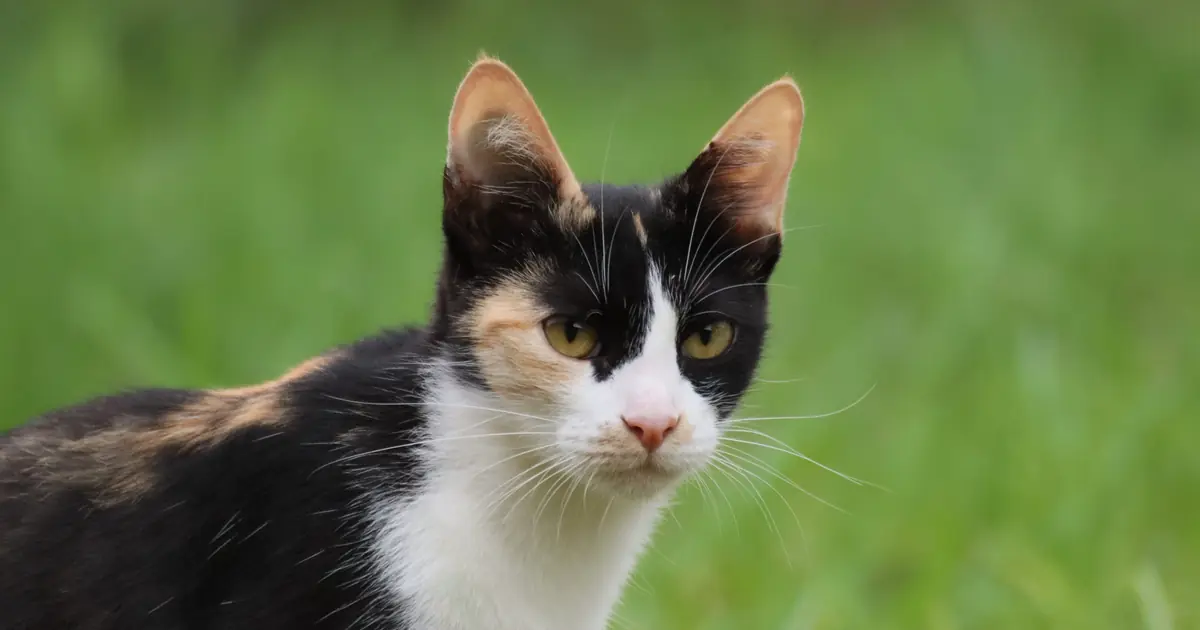
Your cat bolts under the bed for no reason you can see, and ten minutes later a thunderstorm rolls in. Or she suddenly won’t leave your side the week before you get sick. It’s easy to wonder if your cat has some kind of secret radar.
She kind of does, just not a magical one. Cats hear sounds we can’t, smell things we’ll never notice, and feel vibrations through their whiskers and paws that pass us by completely. That combination lets them pick up on danger cues long before a human would. Let’s break down exactly what’s going on, and where the line sits between real feline superpowers and wishful thinking.
- Cats can hear frequencies up to roughly 64,000 Hz, well beyond the 20,000 Hz limit of human hearing, which lets them detect sounds humans can’t.
- A cat’s nose has about 200 million scent receptors, roughly 14 times more than a human’s, so cats notice faint smells like smoke or gas far sooner than people do.
- Cats can pick up on storms and possibly earthquakes through pressure changes, low-frequency vibrations, and ground tremors that occur before humans feel anything.
- There is no scientific proof cats have psychic abilities; what looks like a sixth sense is almost always sharp hearing, smell, and vibration sensing at work.
- Sudden, persistent fear in a cat with no obvious trigger is worth a vet visit, since it can signal pain or illness rather than a real external threat.
Can cats really sense danger?
Yes, cats can genuinely sense many types of danger before humans do. This isn’t a mystical gift. It comes down to biology: a cat’s hearing, sense of smell, whiskers, and paw pads all pick up information at levels far below what a human body can detect. When a cat reacts to “nothing,” she’s usually reacting to something real that you simply can’t perceive yet.
That’s an important distinction. A cat hiding before a storm isn’t predicting the future. She’s hearing thunder from much farther away, feeling the barometric pressure drop, and noticing the wind pick up outside, all before you’ve glanced at a weather app. It’s a similar sensory story to why people wonder if cats can see ghosts when they stare at an empty corner: usually a sharp sense picking up something ordinary, not something supernatural.
What super senses give cats this danger-sensing ability?
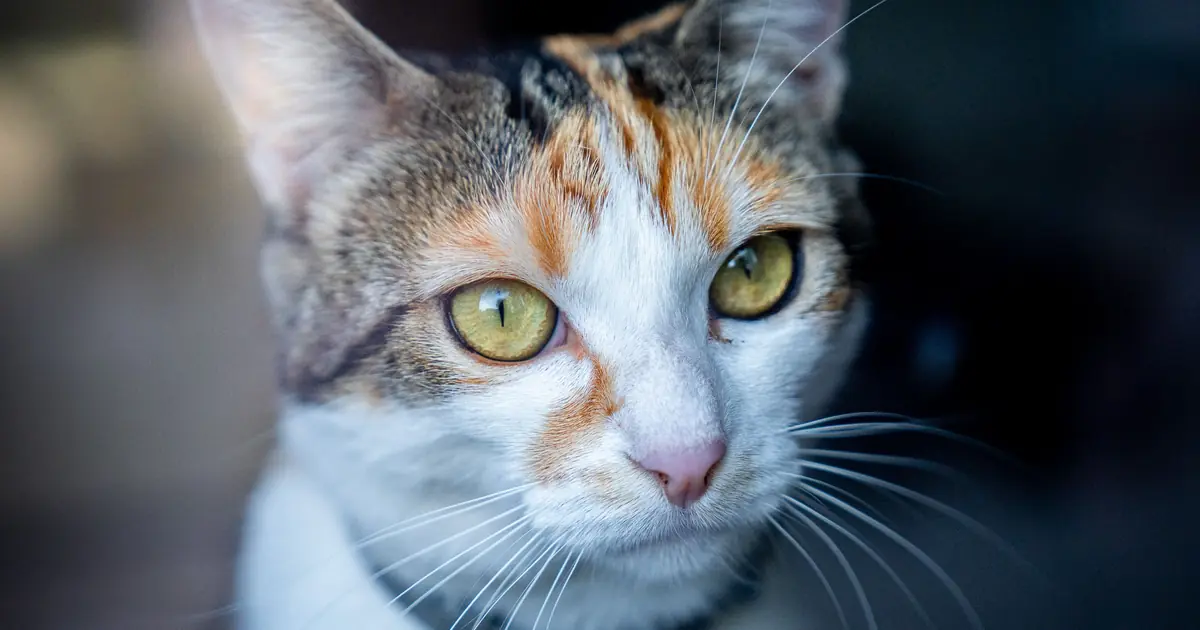
Cats detect danger mainly through four heightened senses: hearing, smell, whisker sensitivity, and pressure perception. Each one works far beyond what humans can manage on our own.
- Hearing: Cats can hear frequencies up to about 64,000 Hz, compared to roughly 20,000 Hz for people. That means they catch sounds from far greater distances than we can hear, along with distant thunder and the ultrasonic squeaks of prey (or trouble) that never reach our ears.
- Smell: A cat’s nose holds around 200 million scent receptors, about 14 times what humans have, according to International Cat Care. That’s how a cat can notice smoke, gas, or a change in a person’s body chemistry at concentrations you’d never register.
- Whiskers and paw pads: A cat’s whiskers, called vibrissae, are packed with nerve endings that sense tiny shifts in air currents. Paw pads are similarly sensitive and can pick up faint ground vibrations, which is part of why cats sometimes react to distant tremors or heavy trucks rumbling blocks away.
- Pressure sensitivity: Many vets believe a cat’s inner ear can detect the drop in barometric pressure that comes before a storm, which is why cats often get restless or hide hours before bad weather hits.
The Cornell Feline Health Center notes that cats rely heavily on these senses for survival in the wild, where noticing a threat a few seconds sooner can be the difference between life and death. Domestic cats never lost that wiring, even from the couch.
Can cats sense storms and earthquakes before they hit?
Cats often do react to storms and earthquakes before humans notice anything, but this comes from sensory detection, not prediction. Storms bring falling air pressure, distant thunder, and shifting winds, all things a cat’s ears and inner ear pick up early. Earthquakes are murkier. Some researchers think animals may sense the faster-moving P-waves that precede the shaking S-waves we actually feel, or notice ground vibrations and gas releases from rock stress right before a quake.
Here’s the honest part: the science isn’t settled. The U.S. Geological Survey has studied claims of animals predicting earthquakes for decades and hasn’t found reliable, repeatable evidence that it works. Cats hiding before a quake is a real and common report, but it’s most likely a reaction to something already happening underground, not a forecast made hours in advance.
Can cats smell smoke, gas, or fire before you do?
Yes, a cat’s nose can pick up the smell of smoke or a gas leak well before a human notices anything. With around 14 times the scent receptors humans have, cats can catch faint traces of smoke, burning wiring, or the odorant added to natural gas long before the smell is strong enough for you to detect it. Their sharp hearing helps too, since cats can pick up the crackle of an early fire or a hissing gas line from another room.
This doesn’t mean you should treat your cat as your fire alarm. She might act agitated, pace, or try to get your attention, and that’s genuinely worth investigating. It’s the same nose that lets a cat find a treat bag from across the house, just pointed at a less pleasant smell. But a cat’s nose is a bonus warning, not a safety system. Always keep working smoke and carbon monoxide detectors in your home regardless of how alert your cat seems.
Can cats sense illness, pain, or emotional distress in people?
Cats can often notice when a person is sick, in pain, or upset, mostly by picking up on scent changes, body language, and shifts in routine. Illness alters a person’s body chemistry, including subtle changes in sweat, breath, and skin odor that a cat’s nose can detect. Cats also watch us closely and notice when we move differently, sleep more, or lose our usual energy.
One of the most cited real-world examples is Oscar, a cat living in a Rhode Island nursing home, who reportedly curled up with residents in the hours before they died, a case documented in a 2007 essay in the New England Journal of Medicine. Nobody knows for certain what tipped Oscar off, but the leading theory is scent: dying patients’ bodies release chemical changes a cat could plausibly smell. It’s a striking story, but it’s one well-documented case, not proof that every cat can sense death.
Dogs have been trained to detect specific medical events like seizures or low blood sugar in diabetics, and cats have similar sensory equipment, though far less formal research exists on cats doing this job. If your cat suddenly becomes clingy or unusually watchful around you, it’s worth paying attention, but it’s not a substitute for medical care or a diagnosed alert animal.
Can cats sense “bad” people or negative energy?
Cats don’t sense “bad energy” in any supernatural sense, but they are excellent at reading body language, tone of voice, and scent cues that humans often miss. A person who is nervous, aggressive, or trying to hide something usually gives off physical signals: tense posture, a raised voice, quick movements, or the scent of stress hormones in their sweat. Cats pick up on all of that instantly.
So when your cat hisses at a particular visitor or refuses to come out for someone, she’s likely reacting to real behavioral cues, not a mystical judgment of someone’s character. It’s still worth trusting that reaction. A cat who’s normally social but suddenly avoids one specific person is telling you she’s noticed something about how that person is acting, even if you haven’t consciously clocked it yet. Learning to spot the general signs of stress in cats makes it much easier to tell a genuine warning apart from your cat just having an off day.
| Danger type | How cats likely detect it |
|---|---|
| Storms | Falling barometric pressure, distant thunder (via hearing up to 64,000 Hz), and shifting wind patterns |
| Earthquakes | Possible sensitivity to early ground vibrations or P-waves through paw pads and whiskers, though evidence is inconclusive |
| Fire or gas leaks | Smell (roughly 14 times more scent receptors than humans) and hearing faint hissing or crackling sounds |
| Human illness or distress | Scent changes from altered body chemistry, plus close observation of body language and routine |
How do cats act when they sense danger, and should you trust it?
A cat who senses danger usually shows it through a cluster of clear behaviors: hiding, sudden alertness, dilated pupils, fleeing the room, vocalizing more than usual, or general agitation like pacing and refusing to settle. You might also notice her ears swivel toward a sound you can’t hear, or her body freeze mid-motion while she stares at something.
Your cat’s warnings are worth paying attention to. If she’s suddenly frantic to hide before you can hear any storm, or she won’t stop pawing at you and acting strange, treat it as useful information rather than something to brush off. Still, don’t rely on her as your only safety system. Keep smoke and carbon monoxide detectors in your home, follow official weather and earthquake alerts, and don’t skip a doctor’s visit just because your cat seems calm.
One more thing worth knowing: sudden, persistent fear in a cat isn’t always about an outside threat. It can also be a sign of pain, illness, or anxiety in the cat herself. If your cat is suddenly scared for no obvious reason and it doesn’t pass in a day or two, it’s worth a vet check rather than assuming she’s picked up on some external danger. This article is educational and not a substitute for veterinary advice; a licensed vet can rule out medical causes for sudden fear or behavior changes.
Frequently Asked Questions
Q: Can cats sense death?
Cats can sometimes sense the physical changes that happen as a person nears death, most likely through scent and altered body chemistry. The best-documented case is Oscar, a nursing home cat who reportedly stayed with residents in their final hours, described in a 2007 New England Journal of Medicine essay. It’s a real and striking case, not proof every cat has this ability.
Q: Can cats sense earthquakes before they happen?
Cats often act unsettled right before or during an earthquake, but the U.S. Geological Survey has found no reliable scientific evidence that animals can predict quakes hours in advance. It’s more likely cats are reacting to early ground vibrations or P-waves seconds before people feel the main shaking.
Q: Can cats smell a gas leak?
Yes, a cat’s nose has roughly 14 times more scent receptors than a human’s, which can help her notice the odorant added to natural gas before you do. Never rely on a cat instead of a carbon monoxide or gas detector, since detectors respond consistently and cats don’t.
Q: Do cats know when their owner is sick?
Many cats notice when their owner is sick by picking up on scent changes from altered body chemistry and shifts in daily routine, like sleeping more or moving differently. Cats may become more clingy or watchful during illness, though this is based on sharp senses and observation rather than medical diagnosis.
Q: Can cats sense negative energy in a person?
Cats can’t sense “negative energy” in a mystical sense, but they’re highly skilled at reading body language, tone of voice, and stress-related scent cues. A cat avoiding a specific visitor is usually responding to real behavioral signals, not intuition about someone’s character.
Q: Why does my cat suddenly act scared for no reason?
Sudden fear in a cat can come from a sound, smell, or vibration too faint for you to notice, but it can also signal pain, illness, or anxiety in the cat herself. If the fear is intense or lasts more than a day or two, a vet visit is the safest next step.
Q: Can cats sense a storm coming?
Yes, cats often react to storms before humans do because they can hear distant thunder up to 64,000 Hz and sense the drop in barometric pressure that comes before bad weather. This is why many cats hide, pace, or seek a quiet spot hours before a storm actually arrives.
Q: Is a cat’s ability to sense danger a sixth sense?
No, there’s no scientific evidence cats have a supernatural sixth sense. What looks like one is really a combination of hearing up to 64,000 Hz, a sense of smell about 14 times stronger than a human’s, and whiskers that detect tiny vibrations and air currents.

Hello and welcome to The Ideal Cat!
We are some passionate cat owners from different professions. We love our cats and have a lot of experience in how to care for our pets. We are incredibly excited to share our knowledge, experience, and research with you. So you can take good care of your loving cat. We will answer most of the common questions about owning cats, taking care of them, etc. If you have any question contact with us. Thanks for visiting! Enjoy the content.
