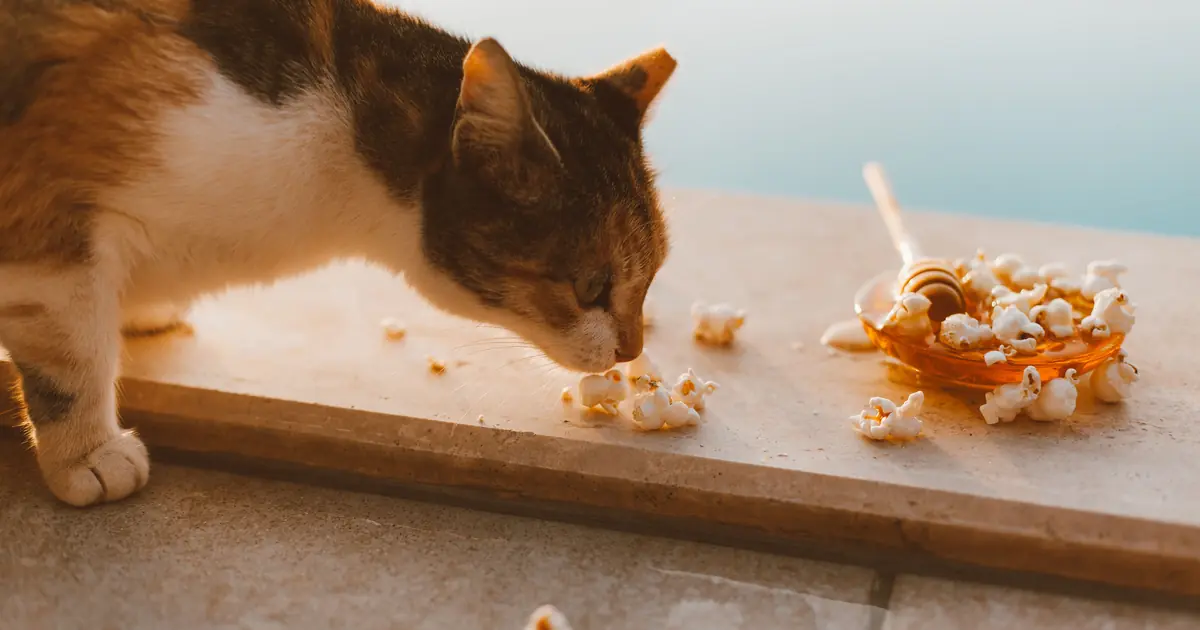
Ever notice how your cat magically appears the second you crack open a can of tuna, even from two rooms away? That’s not a coincidence, and it’s not mind reading either. It’s nose power, the same sense behind the way your cat sniffs you.
Cats live in a world built out of smells. Long before they see your treat bag or hear the crinkle of a wrapper, their nose has already done the work. In this guide, we’ll break down exactly how far a cat can smell food, why their nose is so much sharper than yours, and what to watch for if your cat suddenly seems to lose interest in meals.
- Cats have about 200 million scent receptors in their nose, compared to roughly 5 million in humans, which makes their sense of smell around 14 times stronger than ours.
- Outdoors, a hungry cat can often pick up food odors from several hundred feet away, though the exact distance shifts with wind and how strong the food smells.
- A cat’s nose is impressive, but a dog’s nose is generally considered even sharper, with some estimates putting dogs at up to 300 million scent receptors.
- Cats lean on smell far more than taste when deciding what to eat, since they have only around 470 to 500 taste buds and cannot taste sweetness at all.
- The vomeronasal organ, also called Jacobson’s organ, lets cats “taste-smell” certain scents through the flehmen response, that funny open-mouthed grimace some cats make.
How Far Away Can a Cat Actually Smell Food?
There’s no single lab-verified number for this, but most animal behavior experts estimate a cat can detect a strong food smell from several hundred feet away outdoors when the wind is carrying the scent toward them. Indoors, that job gets a lot easier: a cat can usually smell food from anywhere in the house, especially something oily or fishy like tuna or salmon.
Here’s the honest part nobody likes to admit: nobody has strapped a tuna can to a drone and measured the exact moment a cat’s whiskers twitch. Smell distance depends on too many moving pieces, wind speed, humidity, the shape of the food, how hungry the cat is, to pin down one universal figure. What we do know for certain is the hardware behind the nose, and that part is very well documented.
How Powerful Is a Cat’s Sense of Smell, Really?
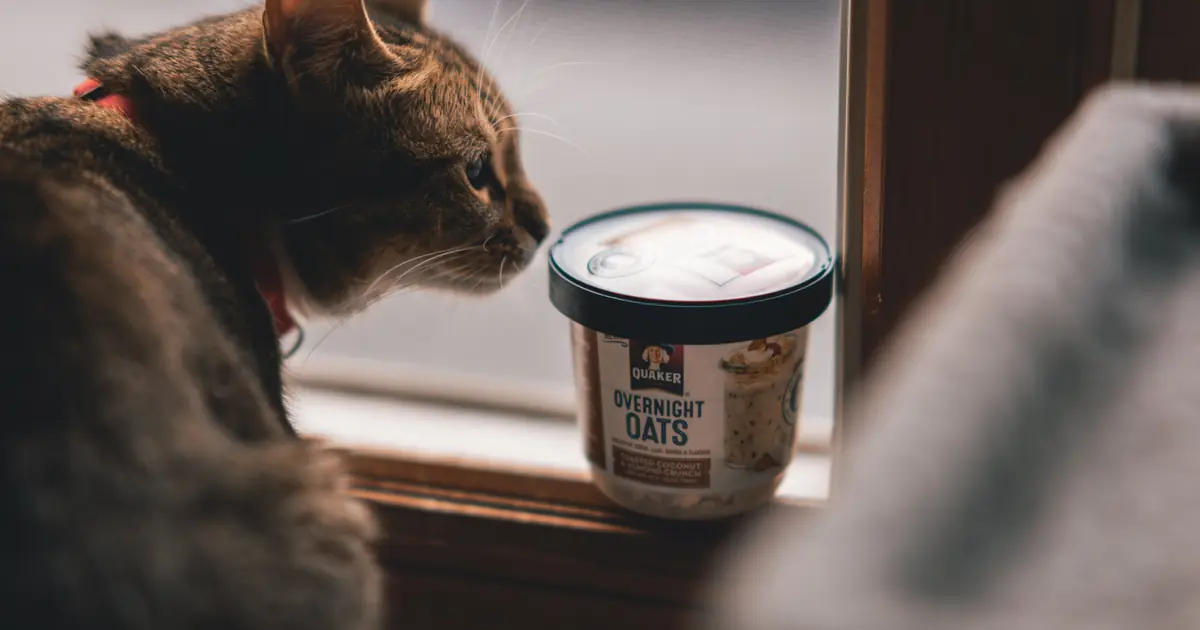
A cat’s nose holds about 200 million scent receptors, compared to a human’s roughly 5 million, giving cats a sense of smell that’s estimated to be about 14 times stronger than ours. That gap is a big reason your cat can find the one crumb of chicken you dropped behind the fridge three days ago.
Still, cats aren’t the undisputed champions of the animal kingdom here. Dogs, especially scent-driven breeds like bloodhounds, are generally believed to have even more scent receptors, sometimes estimated near 300 million. According to VCA Animal Hospitals, cats may actually be better than many dogs at telling similar smells apart, even with fewer total receptors. So think of your cat less as an underdog and more as a specialist.
What Affects How Far a Cat Can Smell Food?
A handful of real-world factors decide whether your cat catches a whiff from across the yard or only when the bowl hits the floor.
- Wind direction: Scent travels on air currents. A breeze carrying food smell toward your cat massively extends the distance they can detect it. A breeze blowing the other way can shrink that range to almost nothing.
- How strong the smell is: Oily, fishy foods like tuna, salmon, and sardines carry much further than dry kibble. If you’ve ever watched a cat go feral over a can opener but ignore plain dry food, that’s why cats like fish so intensely: the smell is loud and unmistakable.
- Freshness: Freshly opened, warm, or slightly warmed food releases more odor molecules into the air than cold, sealed, or stale food.
- Indoors versus outdoors: Indoors, smells get trapped and concentrated in a smaller space, so your cat can often smell dinner from another room even without any wind at all.
What Is the Vomeronasal Organ, and Why Does My Cat Make That Weird Face at Food?
The vomeronasal organ, also known as Jacobson’s organ, is a small scent-detecting structure located on the roof of a cat’s mouth, just behind the front teeth. It works alongside the regular nose to pick up pheromones and heavy scent molecules that a normal sniff might miss.
When a cat opens its mouth slightly, curls its lips back, and goes still for a second or two, that’s called the flehmen response. Your cat is pulling air across the vomeronasal organ to get a fuller “read” on a smell, almost like tasting it with their nose. Cats mostly use this for pheromones and other cats’ scents, but you might occasionally catch it happening around an especially intense food smell too. According to PetMD, this odd little grimace is completely normal and isn’t a sign of pain or illness.
Why Does Smell Matter So Much to Cats at Mealtime?
Smell is doing most of the decision-making before a cat ever takes a bite. Cats have only about 470 to 500 taste buds, compared to roughly 9,000 in humans, and they lack the working gene needed to taste sweetness at all. With taste playing such a small role, smell becomes the main way a cat judges whether food is worth eating.
This is exactly why warming up refrigerated wet food, or adding a splash of warm water to kibble, often gets a picky cat interested again: heat releases more aroma. As PetMD explains, cats evolved as obligate carnivores, so a strong sense of smell for detecting protein and fat mattered far more to their survival than tasting sugar ever would. It’s the same sharp-senses toolkit that helps cats manage without much light, similar to how cats see in the dark using senses tuned for hunting rather than daylight browsing.
Why Might a Cat With a Stuffy Nose Stop Eating?
A cat with a blocked or runny nose often loses interest in food, and it’s almost always about smell, not appetite itself. If a cat can’t smell their meal, their brain doesn’t get the usual “this is food, eat it” signal, even if the bowl is right in front of them.
This shows up a lot with upper respiratory infections, sinus congestion, dental disease, or simply old age, since smell can fade slightly as cats get older. If your cat has a runny nose along with skipped meals, treating the congestion often brings the appetite right back. But if your cat is hiding and refusing to eat for more than 24 hours, that’s not something to wait out at home.
This article is meant to help you understand what’s normal, not to replace a vet visit. A cat that goes a full day without eating, especially alongside lethargy, hiding, vomiting, or nasal discharge, needs to see a licensed veterinarian. Cats can develop a serious liver condition called hepatic lipidosis after even a short stretch without food, so don’t just wait and hope appetite comes back on its own.
How Do Cats Use Smell to Find Food and Hidden Treats?
Cats hunt and forage with their nose leading the way, sniffing along the ground or air before ever spotting prey visually. That same instinct is what makes puzzle feeders and treat-hiding games so satisfying for them: they’re not just playing, they’re doing what their nose was built for.
If you’ve ever hidden a treat under a cup or inside a cardboard box and watched your cat track it down within seconds, you’ve seen this system in action. It’s also why a cat can wake up from a dead sleep the moment you open a specific cabinet, the one with the treat bag in it, while ignoring every other cabinet in the kitchen.
Cat vs. Human vs. Dog: Comparing the Sense of Smell
| Species | Approximate Scent Receptors | Smell Strength vs. Humans |
|---|---|---|
| Cat | About 200 million | Roughly 14 times stronger |
| Human | About 5 million | Baseline |
| Dog | Up to 300 million (varies widely by breed) | Estimated 10,000 to 100,000 times stronger, depending on breed |
FAQ: Common Questions About Cats and the Smell of Food
Q: How far can a cat smell food from outside?
Estimates suggest a cat can detect a strong food smell from several hundred feet away outdoors, especially with the wind blowing in their favor. There’s no exact lab-confirmed distance, but their 200 million scent receptors make long-range detection very possible.
Q: Can cats smell food through a closed door?
Yes, cats can usually smell food through a closed door, since scent molecules travel through gaps under doors and through vents. This is why cats often scratch or meow at a closed kitchen or pantry door right around mealtime.
Q: Why does my cat come running the second I open a treat bag?
Your cat recognizes both the sound and the sudden burst of released scent the moment a bag opens. With around 200 million scent receptors, cats pick up that smell almost instantly, even from another room.
Q: Do cats have a better sense of smell than dogs?
Not exactly. Dogs generally have more scent receptors, with some estimates near 300 million compared to a cat’s 200 million, so dogs likely edge cats out overall. Cats may still be sharper at telling very similar smells apart.
Q: Why does my cat sniff food and then walk away from it?
A cat’s nose does most of the “should I eat this” decision-making, so if a food smells off, stale, or simply unappealing, they may reject it after one sniff without ever tasting it. This is also common if food is too cold, since cold food releases less aroma.
Q: Can a cat lose its sense of smell?
Yes, upper respiratory infections, nasal congestion, dental disease, and age can all reduce a cat’s sense of smell. Since smell drives appetite so strongly in cats, a cat with a blocked nose often stops eating even though food is right in front of them.
Q: Why do cats seem to like strong-smelling food like tuna and fish?
Oily, strong-smelling proteins like tuna and salmon release far more odor molecules than dry kibble, and that intensity is exactly what grabs a cat’s nose. It taps into the same smell-driven instincts that helped their wild ancestors track down fresh prey.
Q: Can cats smell food inside a refrigerator or sealed container?
Cats generally cannot smell food that’s fully sealed in an airtight container or closed fridge, since there’s no scent leaking out. That’s why cats usually only react once a container is opened or a fridge door swings open and releases the trapped smell.

Hello and welcome to The Ideal Cat!
We are some passionate cat owners from different professions. We love our cats and have a lot of experience in how to care for our pets. We are incredibly excited to share our knowledge, experience, and research with you. So you can take good care of your loving cat. We will answer most of the common questions about owning cats, taking care of them, etc. If you have any question contact with us. Thanks for visiting! Enjoy the content.
