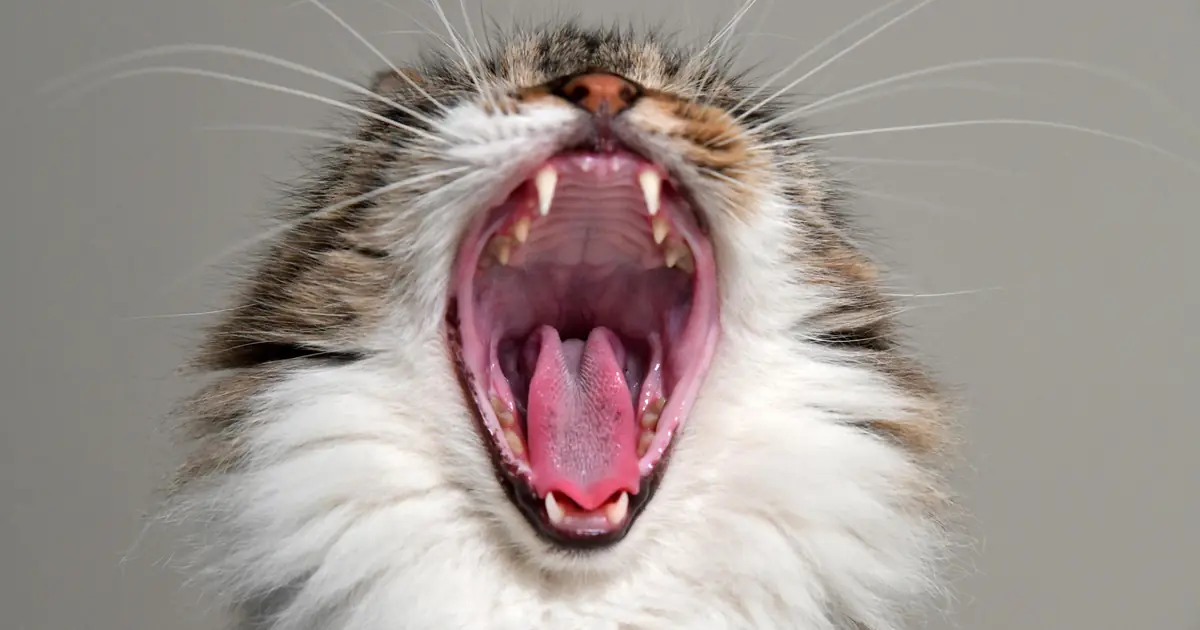
You catch your cat frozen mid-sniff, mouth hanging slightly open in what looks like a tiny grimace of disgust. It’s a little unsettling the first time. Is he okay? Did he smell something awful?
Usually it’s a completely normal, even fascinating, behavior. But a few mouth-open situations are serious. Here’s how to tell the everyday from the urgent.
Why does my cat open his mouth after smelling something?
That open-mouth, slightly grimacing pause is the flehmen response, and it’s totally normal. Your cat is using a special scent organ, the vomeronasal or Jacobson’s organ, located on the roof of the mouth, to analyze interesting smells, especially pheromones from other cats. By holding the mouth open and curling the lip, he channels scent molecules onto that organ for a “deeper” sniff. The MSD Veterinary Manual describes it as a lip curl that wafts interesting smells into the vomeronasal organ, a normal part of how cats read their world.
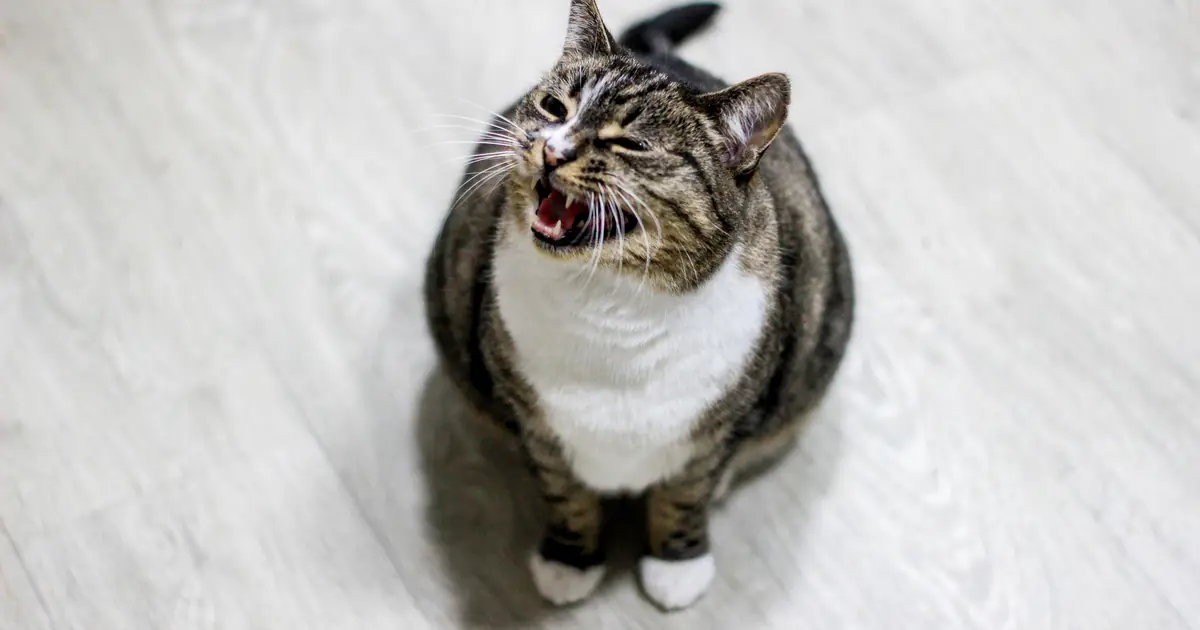
It often happens after your cat sniffs another animal, your shoes, urine marks, or catnip. That funny “stink face” is actually intense concentration, not disgust. We cover the same expression in do cats smile, where the flehmen grimace often gets mistaken for a smirk.
What are the harmless reasons a cat opens his mouth?
Several everyday, non-emergency situations cause mouth-opening. If your cat is otherwise acting normal, these are the usual suspects:
- Flehmen response: analyzing a scent, the number-one cause.
- Brief panting: after zoomies, play, stress, or a hot day, it should settle within minutes.
- Yawning or stretching: a wide-open mouth as your cat wakes up.
- Grooming or a hairball working up: often paired with licking or gagging.
- Investigating a strong smell: food, litter, another pet.
When is an open mouth a warning sign?
An open mouth becomes concerning when it’s paired with distress, pain, or breathing effort. Use this quick guide to sort normal from worrying.
| Cause | What it looks like | What to do |
|---|---|---|
| Flehmen response | A brief grimace with the lip curled, right after sniffing | Nothing, it’s normal |
| Panting after play or heat | Fast open-mouth breaths that settle within a few minutes of rest | Let your cat cool down; call your vet if it doesn’t stop |
| Yawning | A wide-open mouth for a second or two, often after a nap | Nothing |
| Hairball or nausea | Gulping, lip-licking, gagging, or drooling | Vet visit within a day or two if it keeps happening or your cat stops eating |
| Dental disease or mouth injury | Drooling, bad breath, dropping food, pawing at the face | Book a vet visit within a few days |
| Breathing trouble | Open-mouth breathing at rest, blue or pale gums, fast shallow breaths | Emergency vet now |
Could it be dental pain or nausea?
Yes. If your cat opens his mouth along with drooling, bad breath, dropping food, or pawing at the face, dental disease or a mouth injury may be to blame, and these are common and painful. Repeated lip-licking, gulping, or gagging can also point to nausea. Dental trouble is common: the Cornell Feline Health Center estimates that 50 to 90 percent of cats older than four have some form of dental disease. These aren’t emergencies in the way breathing trouble is, but they do need a vet exam within a few days, since cats hide oral pain well.
Why is open-mouth breathing an emergency?
Open-mouth breathing at rest is a red-alert sign in cats. Unlike dogs, healthy cats almost never breathe through their mouths unless they’ve just exerted themselves hard. Persistent open-mouth or labored breathing can signal asthma, heart disease, fluid in the chest, or heatstroke. Asthma alone affects between 1 and 5 percent of cats, and the Cornell Feline Health Center lists open-mouthed breathing among its signs. If your cat is breathing with an open mouth while calm, has blue or pale gums, or is breathing fast and shallow, treat it as an emergency and get to a vet immediately. Our guide on whether cats can breathe through their mouths explains why this matters so much, and the VCA on feline breathing difficulty lays out the warning signs. This article is educational and not a substitute for urgent veterinary care.
Cat open mouth questions
Q: Why does my cat open his mouth and look like he’s grimacing?
That’s the flehmen response. Your cat is drawing a scent onto the vomeronasal organ in the roof of his mouth to analyze it, often after sniffing another animal, urine, or catnip. It’s normal and harmless.
Q: Is it normal for a cat to pant with his mouth open?
Brief panting after hard play, heat, or stress can be normal if it stops within a few minutes of rest. Panting that continues, or open-mouth breathing while calm, is not normal and needs emergency care.
Q: Could my cat’s open mouth mean tooth pain?
Yes. Dental disease is common and painful. Watch for drooling, bad breath, dropping food, pawing at the mouth, or reluctance to eat, and have your vet examine the teeth and gums.
Q: When should I rush my cat to the vet for open-mouth breathing?
Immediately. Open-mouth or labored breathing at rest, blue or pale gums, or fast shallow breathing are emergencies that can indicate asthma, heart disease, or fluid in the chest. Don’t wait.
Q: Do cats open their mouths when they smell catnip?
Often, yes. Catnip and other strong scents commonly trigger the flehmen response, so you may see the open-mouth grimace as your cat processes the smell. It’s part of enjoying the experience.

Hello and welcome to The Ideal Cat!
We are some passionate cat owners from different professions. We love our cats and have a lot of experience in how to care for our pets. We are incredibly excited to share our knowledge, experience, and research with you. So you can take good care of your loving cat. We will answer most of the common questions about owning cats, taking care of them, etc. If you have any question contact with us. Thanks for visiting! Enjoy the content.
