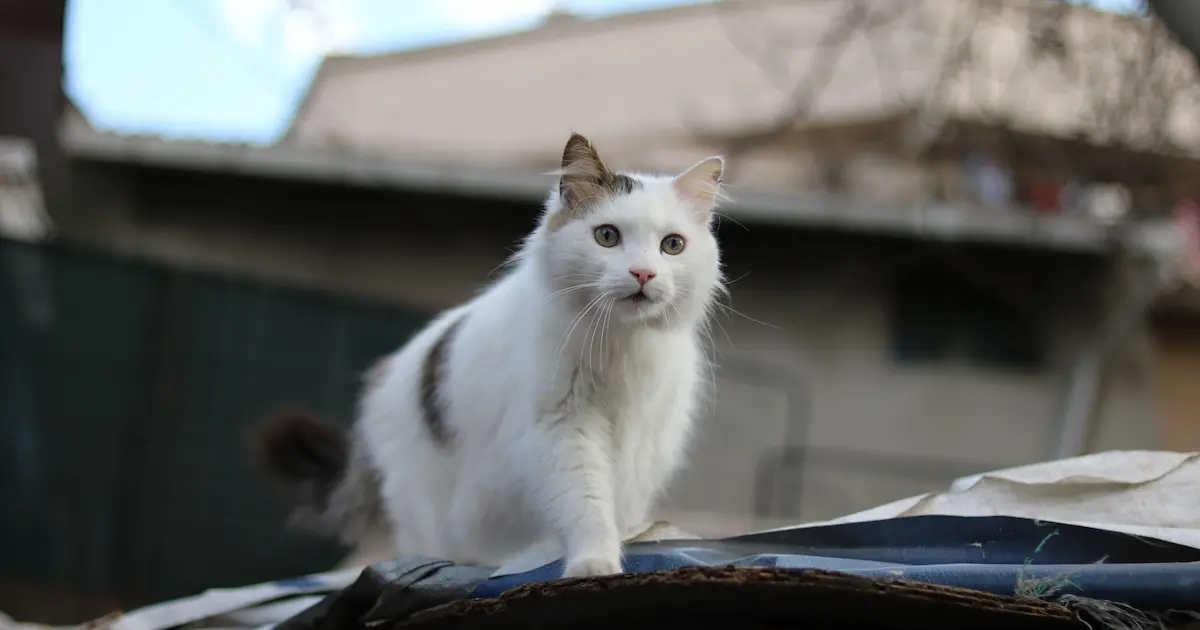
Picture this. You’re soaking in a warm bath after a long day, and your cat does not flee the room in horror. Instead, she sits on the edge of the tub, dips a paw in, and looks at you like she’s deciding whether to join.
That’s a Turkish Van. While most cats treat a full bathtub like a crime scene, this one might climb in with you.
But here’s the thing nobody tells you upfront: the swimming cat is only half the story. The Turkish Van is also a muscular, fearless, slightly chaotic athlete who will treat your refrigerator as a launchpad and your faucets as toys. If you came here picturing a serene white fluffball curled in your lap, stick around. We need to talk.
| Origin | Turkey (Lake Van region), ancient breed |
| Weight (Male) | 10 to 20 lbs |
| Weight (Female) | 7 to 12 lbs |
| Lifespan | 12 to 17 years |
| Coat | Semi-long, single coat, cashmere-like, no undercoat |
| Colors | White body with colored head and tail (auburn, cream, black, blue, tabby, tortoiseshell) |
| Energy Level | High |
| Grooming Needs | Low to Moderate |
| Good With Kids | With supervision (older kids best) |
| Good With Other Pets | Yes, with a slow intro (often rules the house) |
| Average Price | $800 to $1,500+ from breeders |
Where the Turkish Van Comes From
The Turkish Van isn’t a lab creation or a recent designer breed. It’s old. Really old. These cats developed naturally around Lake Van, a huge salt lake in the rugged mountains of eastern Turkey, where bitter winters and hot summers shaped a hardy, water-tolerant cat over many centuries.
Nobody sat down and designed this breed. It just happened, slowly, through natural selection. That matters more than it sounds, and we’ll come back to it when we talk about health.
The Western story starts in 1955, when two British travel writers, Laura Lushington and Sonia Halliday, were gifted a pair of these cats during a trip through Turkey. They bred them back home, found the kittens came out beautifully consistent, and a breed program was born. The Governing Council of the Cat Fancy recognized the Turkish Van in 1969. TICA followed in 1985, and the Cat Fanciers’ Association granted full championship status in 1994.
In Turkey, this cat is a genuine national treasure. Locals call it the “Van Kedisi,” and a research center at a university near Lake Van works to preserve the original bloodlines. So when you hear a Van is rare, that’s not marketing. Turkey guards them closely.
What a Turkish Van Looks Like
The first thing you notice is the color, or rather, the lack of it almost everywhere. A classic Turkish Van is chalk-white over most of its body, with color showing up in just two places: a patch on the head, usually between the ears, and a fully colored tail.
This look is so distinctive that it got its own name. When breeders talk about “Van pattern” in any cat, they’re borrowing the term from this breed. The colored bits can be auburn, cream, black, blue, or patterned like tabby or tortoiseshell.
Then there are the eyes. A Van’s eyes can be amber, blue, or one of each. That odd-eyed look, one blue and one amber, is striking and fairly common in the breed.
The coat is a treat to touch. It’s semi-long and feels like cashmere, partly because there’s no woolly undercoat underneath. It’s also somewhat water-resistant, which makes more sense once you’ve seen one go for a swim. The coat shifts with the seasons too. Winter brings a thicker, fuller coat with a fancy ruff around the chest, then much of that sheds out for summer.
These are big, athletic cats. Males commonly hit 10 to 20 pounds, females land around 7 to 12. And they’re slow growers. Don’t expect your kitten to reach full size until somewhere between three and five years old. That gangly teenager phase lasts a while.
The Turkish Van Personality
Here’s where Turkish Vans win hearts and occasionally break dishes.
This is one of the most active, athletic cats you can bring home. They jump high, climb everything, and tear around the house in bursts of pure energy. Vetstreet wasn’t joking with the advice to put your breakables away. Counters, the top of the fridge, that shelf you thought was safe? All fair game.
Vans are also famously dog-like. They bond hard with their people and tend to follow their favorite human from room to room. Many learn to fetch and will bring a toy back for you to throw, over and over. They’re smart enough to get bored, so they need things to do.
They’re talkers too, though usually with soft, pleasant voices rather than the loud yowling some breeds are known for. Expect commentary on your day.
Now the honest part. A Turkish Van is loving, but it’s often not a cuddler. Many Vans enjoy being near you and getting some petting, yet dislike being scooped up and held against their will. If your dream cat is a purring lap-warmer, this breed may frustrate you. They show love by being involved in your life, not by going limp in your arms.
Do Turkish Vans Really Swim?
Short answer: many do, but not all of them, and you shouldn’t buy one expecting a furry Olympic swimmer.
The legend is real at its core. Vans genuinely tolerate and often enjoy water in a way that baffles other cats. Local stories from the Lake Van region describe them paddling to cool off in summer heat. Plenty of modern owners report Vans who dunk toys in the water bowl, paw at the bathtub, splash in the toilet, and figure out how to turn on faucets.
But here’s the honest bit you rarely see. Water interest varies a lot cat to cat. Some Vans are bold paddlers. Others just like to bat at running water and would rather not get soaked. Personality, early exposure, and plain individual preference all play a part.
So if a swimming cat is your whole reason for getting one, slow down. You might get a paddler. You might get a cat who thinks the tub is fascinating from a safe distance. Either way, never force a Van into water, and always supervise any water play. A wet cat in a deep tub can panic, and that ends badly.
Turkish Van vs Turkish Angora: Settling the Confusion
People mix these two up constantly, and it’s easy to see why. Both come from Turkey. Both can be white. Both are gorgeous semi-longhaired cats with a national-treasure reputation back home.
But they’re different cats. The Turkish Van is the bigger, more heavily muscled of the two, built like an athlete with a sturdy frame. The Turkish Angora is smaller, finer-boned, and more delicate looking.
Coat is another tell. A true Van is mostly white with color only on the head and tail (that Van pattern again). Angoras are commonly solid white all over, though they come in other colors too. Vans also have that water obsession that Angoras generally lack.
One more difference matters for health, and we’ll cover it next: the deafness picture isn’t the same for both breeds, even though they look related.
Is a Turkish Van Right for You?
Let’s be real with each other for a minute. A Turkish Van is a fantastic cat for the right person and a recipe for frustration for the wrong one.
A Turkish Van is a great match if you:
- Want an interactive, playful, almost dog-like companion
- Are home often, or have another pet to keep your cat company
- Have vertical space (cat trees, shelves) and don’t mind an athletic cat exploring up high
- Enjoy a chatty cat that’s involved in everything you do
- Are patient enough to wait for a kitten, sometimes for months
A Turkish Van is probably the wrong fit if you:
- Dream of a calm lap cat who naps all day and loves being held
- Travel constantly and leave your cat alone for long stretches
- Live somewhere with no room to climb, jump, and burn energy
- Want a low-engagement, set-and-forget pet
- Have very young kids who grab and squeeze (Vans don’t tolerate rough handling)
The good news is that Vans tell you exactly who they are. They’re honest cats. If their energy and independence sound delightful rather than exhausting, you’ll be a happy match.
Health Issues to Know About
Because the Turkish Van developed naturally rather than through heavy selective breeding, it tends to be a sturdy, healthy breed. That’s a real advantage. Still, no cat is bulletproof, so here’s what to watch.
Hypertrophic cardiomyopathy (HCM). This is the most common heart disease in cats overall, and Vans can be affected. It thickens the heart muscle and often shows no obvious early signs, which is exactly why it’s dangerous. Responsible breeders screen their breeding cats, and your vet can monitor your cat’s heart over time. Caught early, it can be managed with medication for a good quality of life.
The deafness question. This one gets garbled online, so let’s untangle it. There’s a well-known rule that around 80% of white, blue-eyed cats are deaf, tied to the dominant white gene. Here’s the twist: white, blue-eyed Turkish Vans are often considered an exception and are typically not prone to hereditary deafness the way the similar-looking Turkish Angora can be. Sources don’t all agree perfectly, so the smart move is simple. Ask any breeder for BAER hearing test results, and remember that a deaf cat, kept safely indoors, can still live a full and happy life.
Obesity. Vans love food, and after spaying or neutering the pounds can creep on. Extra weight invites arthritis, diabetes, and joint trouble. Portion control and play are your best friends here.
Dental disease. Like most cats, Vans are prone to dental problems with age. Regular brushing at home plus professional cleanings keep their mouths healthy.
Grooming and Coat Care
Good news for the busy among you. That gorgeous coat is surprisingly low-maintenance.
Because the Turkish Van has a single coat with no woolly undercoat, it doesn’t mat the way double-coated breeds do. A thorough brush once or twice a week is plenty for most of the year, mostly to pull out loose hair and keep that cashmere texture looking its best.
Expect a heavier shed when the seasons change, especially as the thick winter coat lets go in spring. Brush a bit more often during those weeks and you’ll keep the fur tumbleweeds under control.
The rest is standard cat care: trim nails every couple of weeks, peek in the ears for dirt, and brush those teeth as often as your cat will tolerate. And thanks to the water thing, some Vans don’t even mind the occasional bath.
Feeding and Diet
There’s no exotic breed-specific diet for a Turkish Van. What they need is what most cats need: a high-quality, protein-forward food built around real animal protein like chicken, turkey, or fish.
The one thing to stay on top of is portions. Vans are enthusiastic eaters and they grow slowly, so it’s easy to overfeed a “still-growing” cat well past the point where they actually need it. Feed measured meals at regular times rather than leaving a bowl out all day.
Keep fresh water available everywhere, and don’t be shocked if your Van treats the bowl like a splash pad. A wide, heavy bowl helps cut down on the mess.
Exercise and Enrichment
This is the section to take seriously, because a bored Van is a destructive Van.
These cats need real daily activity, both physical and mental. Tall cat trees and wall shelves give them the vertical territory they crave (and may save your countertops). Puzzle feeders keep their clever brains busy. Wand toys let them show off those acrobatic leaps.
Fetch is a genuine option here, not a gimmick. Many Vans will chase and retrieve a small toy happily, so lean into it. You can also teach simple tricks, which tires out the mind as much as a play session tires the body.
If your cat enjoys water, supervised play with a trickling faucet or a shallow basin can be great enrichment. Just keep it safe and never forced.
Living With Kids, Dogs, and Other Cats
A well-socialized Turkish Van can fit beautifully into a busy household, with a few honest caveats.
Kids. Vans usually enjoy attention from children, but they don’t put up with tail-pulling or rough handling, and they’ll make that clear. Older kids who understand gentle play are the sweet spot. With toddlers, supervise closely.
Dogs. Often a great combo, since Vans match a dog’s energy and playfulness. The trick is a slow, patient introduction. A Van that feels secure (and usually in charge) tends to become genuine playmates with a friendly dog.
Other cats. Vans can get along with other cats, but they often want to be the boss. Introduce new animals gradually and respect the pecking order your Van establishes. Two confident Vans can be a lot of cat for one house, so plan for the energy.
Lifespan and Aging Tips
With good care, a Turkish Van commonly lives 12 to 17 years, and plenty reach the upper end of that range. Keeping yours indoors, lean, and well-exercised stacks the odds in your favor.
In the kitten and young-adult years, focus on burning energy and protecting joints by keeping weight in check. Through the middle years, annual vet visits matter, especially heart checks given the HCM risk. As your Van ages, watch for stiffness, dental trouble, and shifts in appetite or activity, and switch to twice-yearly vet visits so small problems get caught early.
One gentle reminder: a slowing senior Van still wants to be part of the action. Keep a low cat tree or a cozy perch within easy reach so they can stay involved without straining to climb.
How Much Does a Turkish Van Cost?
A Turkish Van kitten from a reputable breeder usually runs somewhere around $800 to $1,500, and it can climb higher depending on bloodline, location, and availability. Given how few are born each year, you’re paying for genuine rarity, not just a fancy coat.
That kitten price is only the start. Budget for the first-year basics: vaccinations, spay or neuter, microchipping, quality food, litter, and a sturdy cat tree this athlete will actually use. Realistically, plan for several hundred dollars on top of the purchase price in year one, plus ongoing vet care after that.
One red flag to burn into your memory. If a “breeder” offers a suspiciously cheap Van with no paperwork, no health testing, and no questions about your home, walk away. Real Vans are rare and responsible breeders are careful. A bargain-bin price usually means corners were cut somewhere that’ll cost you later, in vet bills or heartbreak.
Where to Find a Turkish Van Ethically
Finding a Turkish Van takes patience. They’re one of the rarest breeds going, so there’s no walking into a pet store and picking one up.
Start with breed registries. The CFA and TICA maintain breeder directories, and in the UK the GCCF and the Turkish Van breed club keep listings. A good breeder will happily show you health testing (HCM screening, and BAER hearing tests where relevant), let you meet the kitten’s environment, and ask you plenty of questions about your home. That back-and-forth is a sign they care where their kittens land.
Expect a waitlist. Months is normal. Sometimes longer.
Rescue is worth a look too, though purebred Vans rarely turn up in shelters. Breed-specific rescues and tools like Petfinder occasionally have them or close lookalikes. Just know that shelters sometimes label any white, fluffy cat a “Turkish Van” when it’s really a mixed-breed sweetheart, which is no bad thing if you’re open to it.
Similar Breeds to Consider
- Turkish Angora: The Van’s elegant, finer-boned cousin, often all-white, also Turkish, slightly less water-obsessed.
- Maine Coon: Another big, friendly, sometimes water-curious cat if you love a gentle giant.
- Norwegian Forest Cat: Hardy, semi-longhaired, and outdoorsy in spirit, great for cold climates.
- Abyssinian: If it’s the high energy and dog-like engagement you want, in a short-haired package.
- Bengal: Athletic, intensely playful, and another cat that genuinely enjoys water.
Common Myths and Misconceptions
Myth: All Turkish Vans love to swim. Many enjoy water, but it varies cat to cat. Some paddle, some just like to splash from the edge.
Myth: White, blue-eyed Vans are usually deaf. The general white-cat deafness rule doesn’t map cleanly onto this breed. Vans are often an exception. Ask for hearing test results to be sure.
Myth: A Turkish Van is just a white Turkish Angora. Different cats. The Van is bigger and more muscular, with color only on the head and tail.
Myth: They’re high-maintenance because of the long coat. The single coat is actually easy to care for and doesn’t mat easily.
Myth: Vans are cuddly lap cats. They’re loving and people-bonded, but most prefer being near you over being held.
Frequently Asked Questions
Q: Are Turkish Van cats rare?
Yes, very. Only a small number are registered each year worldwide, and in Turkey they’re a protected national treasure. Expect a waitlist of months to find a kitten from a reputable breeder.
Q: Do Turkish Vans really like water?
Many do, which is how they earned the “swimming cat” nickname. But it varies by individual. Some happily paddle, others just enjoy pawing at running water. Always supervise water play.
Q: Are Turkish Vans good with kids?
They usually enjoy older, gentle children but won’t tolerate rough handling like tail-pulling. With young toddlers, supervise closely and teach calm, respectful play.
Q: How big do Turkish Van cats get?
They’re large and muscular. Males often weigh 10 to 20 pounds and females 7 to 12. They mature slowly, reaching full size around three to five years of age.
Q: Are Turkish Van cats hypoallergenic?
No cat is truly hypoallergenic, and the Turkish Van is no exception. They still produce the Fel d 1 protein that triggers allergies, though their single coat may mean less loose fur around the house.
Q: Is a Turkish Van a lap cat?
Not usually. They bond closely and love to follow you around, but most prefer being beside you rather than held or sitting in your lap. They show affection through involvement, not cuddling.
Q: How long do Turkish Van cats live?
Typically 12 to 17 years, with many reaching the higher end. Indoor living, a healthy weight, and regular vet care all help them live a long, full life.
Q: What’s the difference between a Turkish Van and a Turkish Angora?
The Van is larger and more muscular, with white fur and color only on the head and tail, plus a love of water. The Angora is smaller and finer-boned, often all-white, and generally less water-obsessed.
Final Verdict: Should You Get a Turkish Van?
If you’ve read this far and you’re grinning instead of worrying, you might be exactly the right person for a Turkish Van.
This is not a quiet, low-key cat. It’s a smart, athletic, water-curious bundle of personality that wants to be part of your daily life, leaps onto things it shouldn’t, chats with you, and bonds like a loyal little shadow. In return, you get one of the most engaging and entertaining cats you’ll ever share a home with.
What you don’t get is a sleepy lap cat, and that’s the whole deal in a sentence. Go in clear-eyed about that, give this rare beauty the space, play, and attention it craves, and a Turkish Van will reward you with years of joyful, slightly chaotic companionship. Honestly? For the right home, there’s nothing else quite like them.

Hello and welcome to The Ideal Cat!
We are some passionate cat owners from different professions. We love our cats and have a lot of experience in how to care for our pets. We are incredibly excited to share our knowledge, experience, and research with you. So you can take good care of your loving cat. We will answer most of the common questions about owning cats, taking care of them, etc. If you have any question contact with us. Thanks for visiting! Enjoy the content.
