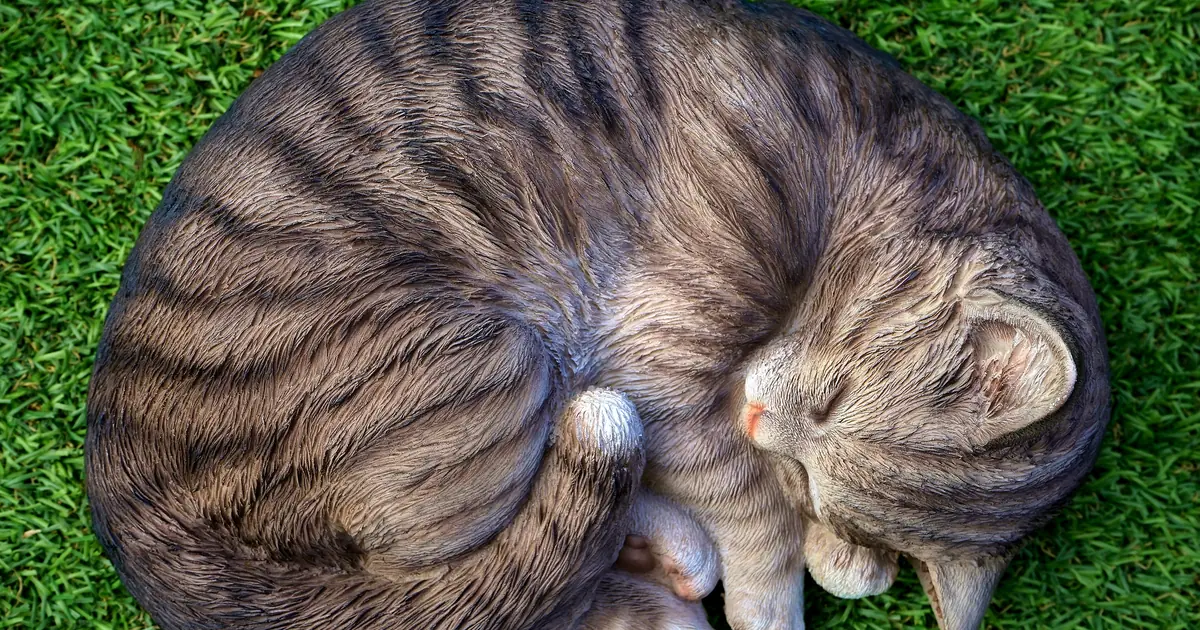
You’re mid-conversation, your cat is sitting on the arm of the couch, and then you glance over and she’s out cold. No warning, no yawning fit, no tossing and turning. Just off, like someone hit a switch.
It looks like a magic trick, but it’s really just good design. Cats fall asleep fast because sleeping is basically their full-time job between meals and hunts, and their bodies are built to slip into it the second they feel safe. Here’s what’s actually going on under all that fur.
- Cats sleep 12 to 16 hours a day, and much of it is light sleep they can wake from instantly.
- Cats evolved as ambush predators who hunt in short, intense bursts, so their bodies default to resting and conserving energy in between.
- About 75 percent of a cat’s sleep is light dozing, while the remaining 25 percent is deep REM sleep, where twitching and dreaming happen.
- A cat that feels safe and unstressed can drop into light sleep within seconds, almost anywhere.
- Fast, frequent napping is normal cat behavior, but a sudden spike in sleep or trouble waking your cat is worth a vet visit.
How do cats fall asleep so fast?
Cats fall asleep quickly because their nervous system is built for short, efficient rest cycles rather than one long, deep sleep like ours. A cat’s brain doesn’t need to power down slowly the way a human brain does. Instead, it shifts into a light resting state almost immediately, ready to snap back to full alertness the instant something interesting happens.
Think of it less like flipping off a light switch and more like a dimmer that’s already set low most of the day. Cats spend so much of their lives in a semi-rested state that dropping the rest of the way into sleep takes almost no effort at all.
Why do cats sleep so much in the first place?
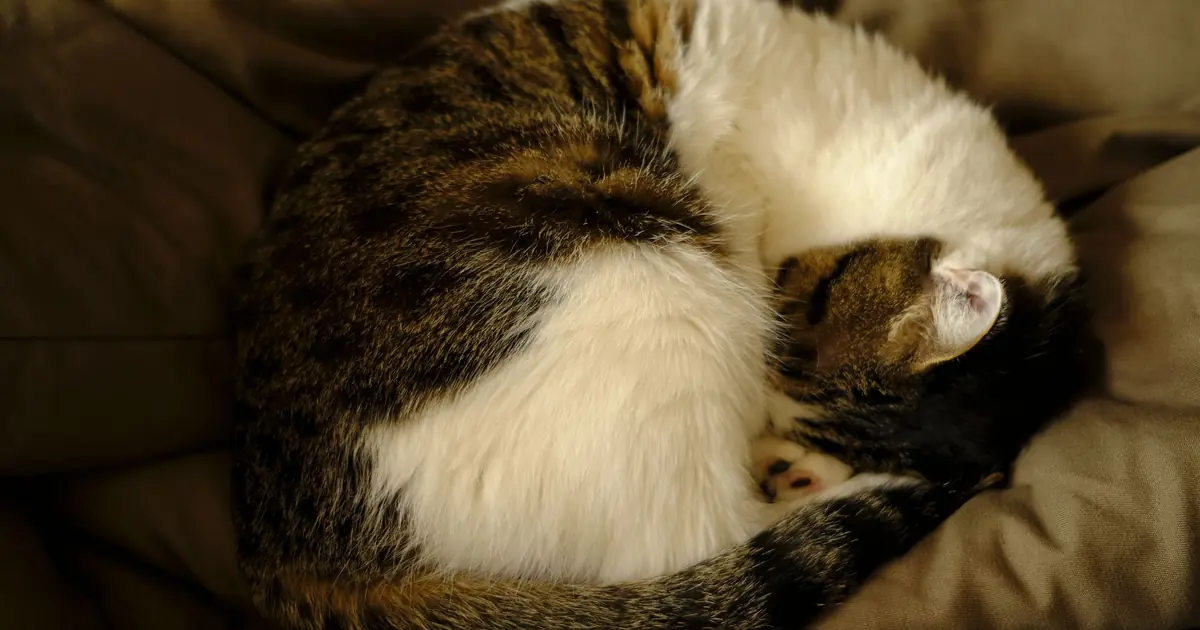
Cats sleep so much because their bodies evolved around short, high-energy hunts rather than steady, all-day activity. Wild cats and their domestic descendants hunt small prey like mice and birds, which means a lot of stalking, a short sprint, and then recovery. That pattern only works if the cat rests hard in between.
A single hunt can burn a surprising amount of energy for a small body. Cats make up for that by resting between attempts, whether the “hunt” is a real mouse or a shoelace across the living room floor. Napping isn’t laziness. It’s fuel management. If your indoor cat still seems to nap constantly with zero mice in sight, you’re not imagining it, and you can read more about it in our piece on why your cat seems so lazy.
How much sleep do cats actually need?
Cats need about 12 to 16 hours of sleep a day, and some sleep even more. Kittens and senior cats often sleep closer to 18 to 20 hours, since growing bodies and aging joints both demand extra downtime. An adult cat in its prime tends to land in the middle of that range, mixing naps with bursts of play and exploring.
That’s roughly two-thirds of your cat’s entire life spent asleep. If you added it up over a 15-year lifespan, your cat would be sleeping for around 10 of those years. Wild, right?
What’s the difference between light sleep and deep sleep in cats?
Light sleep is where cats spend most of their napping time, and it’s the kind that lets them wake up almost instantly. Deep sleep, also called REM sleep, is shorter and comes with actual dreaming, twitching whiskers, and the occasional little paw kick.
Roughly 75 percent of a cat’s sleep is this light, easily-interrupted kind. Their ears stay tuned in, muscles stay loosely ready, and one loud noise or an opened treat bag can pull them right out of it. The other 25 percent or so is deep REM sleep, where your cat’s brain activity looks a lot like it does when they’re awake. This is when you’ll catch the twitching feet, fluttering eyelids, or the odd little chirp mid-dream. Curious what’s actually happening in their head during that phase? We cover it in cats sleep so much.
| Sleep Type | Share of Total Sleep | What It Looks Like |
|---|---|---|
| Light catnap | About 75% | Ears twitch at sounds, eyes may stay half open, wakes instantly, easy to rouse |
| Deep REM sleep | About 25% | Whiskers or paws twitch, eyes flutter, breathing changes, harder to wake, dreaming likely |
Why can cats fall asleep almost anywhere?
Cats can fall asleep almost anywhere because feeling safe, not feeling tired, is what actually triggers sleep for them. A cat curled up in a cardboard box, draped over a bookshelf, or wedged into a sink isn’t picking the comfiest spot. It’s picking the spot that feels the most secure at that moment.
Domestic cats also live a pretty low-stress life compared to their wild relatives. No predators stalking them, food shows up on schedule, and the biggest daily threat is usually the vacuum cleaner. That kind of safety net means a cat’s guard rarely has to stay fully up, so sleep can come fast whenever the mood strikes. It’s also part of why so many cats love napping pressed up against their favorite person. If you’ve wondered why your cat picks your lap, chest, or the space right between your legs, our guides on why cats like sleeping with their owners and why cats sleep between your legs dig into that bond.
Do cats really fall asleep in seconds?
Yes, a relaxed cat can genuinely drop into light sleep within seconds. It’s not an exaggeration or a trick of the eye. Because that first stage of sleep requires so little mental shutdown, a cat that already feels calm and safe can close its eyes and be dozing almost immediately.
You’ll usually notice it happens fastest right after a meal, after a good play session, or in a warm sunny spot. All three lower a cat’s guard and body temperature demands just enough to tip them straight into a nap.
Is falling asleep that fast actually healthy?
Yes, fast and frequent napping is completely normal and healthy for cats. It’s simply how their biology is built, and it’s not a sign of boredom, sadness, or poor health on its own. A cat that naps 14 hours a day and still plays, eats, and greets you with energy is doing exactly what cats are supposed to do.
The distinction worth paying attention to is between napping and lethargy. A napping cat wakes up interested in food, toys, or you. A lethargic cat stays flat, disinterested, and hard to engage even when you try to coax them up. According to International Cat Care, this heavy sleep pattern is a normal trait shared with other predators that hunt in short bursts, not a red flag by itself.
When is too much sleep a cause for concern?
A sudden jump in how much your cat sleeps, real trouble waking them, or extra sleep paired with other symptoms like appetite loss or hiding is worth a vet visit. Normal napping looks light and easily interrupted. A concerning change tends to look heavier, harder to break, and out of step with your cat’s usual pattern.
Watch for these signs alongside increased sleep:
- Skipping meals or drinking noticeably less water
- Hiding more than usual or avoiding interaction
- Limping, stiffness, or reluctance to jump
- Vomiting, diarrhea, or weight loss
- Slow or labored breathing while resting
This article is meant to help you understand normal cat sleep, not replace a professional opinion. If your cat’s sleep pattern shifts suddenly or shows up alongside any of these signs, it’s worth a call to your veterinarian rather than waiting it out. The Cornell Feline Health Center is a solid resource if you want to read more on typical feline health baselines before your appointment.
What are some fun facts about how cats sleep?
Cats have a few genuinely fun quirks packed into all that sleeping. Here are some worth knowing:
- Cats do dream, and researchers believe most of it happens during REM sleep, similar to humans.
- The classic “cat loaf” position, paws tucked under the body, is a light-sleep-ready pose that keeps muscles slightly engaged.
- Cats often choose sunny spots to nap because warmth helps them use less energy keeping their body temperature steady.
- A sleeping cat’s whiskers, paws, or tail twitching usually means they’ve slipped into deep REM sleep.
- Many cats sleep in a tight curl to conserve body heat, especially in cooler rooms.
Wondering what that loaf pose or the specific spot your cat picks on the bed actually says about them? We break both down in what it means when a cat loafs and where your cat sleeps on your bed.
Frequently Asked Questions
Q: Why does my cat fall asleep so suddenly, mid-play or mid-pet?
Cats can shift into light sleep within seconds once they feel calm and safe, so a sudden nap after play or petting is completely normal. Their nervous system doesn’t need a slow wind-down like ours does.
Q: How many hours a day do cats sleep on average?
Adult cats sleep about 12 to 16 hours a day on average. Kittens and senior cats often sleep even more, sometimes reaching 18 to 20 hours as their bodies focus energy on growth or recovery.
Q: Do cats dream when they sleep?
Yes, cats likely dream during their REM, or deep, sleep phase, which makes up about 25 percent of their total sleep. You’ll often see twitching paws, fluttering whiskers, or small sounds during this stage.
Q: Is it normal for a cat to fall asleep in a weird position?
Yes, cats often nap in odd-looking positions like sinks, boxes, or half-hanging off furniture because they’re chasing a feeling of security over comfort. As long as your cat can stretch and move normally afterward, unusual sleep spots are just personality.
Q: Why does my cat sleep more when I’m home versus away?
Many cats relax and sleep more deeply when their favorite person is nearby because it reinforces their sense of safety. A cat that stays more alert while home alone is simply keeping more of its guard up.
Q: Can a cat sleep too much?
A cat can sleep too much if the increase is sudden or paired with symptoms like appetite loss, hiding, or trouble waking up. Regular heavy napping without those signs is normal cat behavior, not a health problem.
Q: Why do cats twitch while sleeping?
Cats twitch their paws, tails, or whiskers during REM sleep because their brain activity closely mirrors being awake, likely tied to dreaming. This twitching phase usually lasts just a few minutes at a time.
Q: Do older cats sleep differently than younger cats?
Yes, senior cats tend to sleep more total hours than adult cats, often 18 hours or more, and may wake more easily due to joint stiffness or reduced hearing. Kittens sleep heavily too, but for growth rather than aging.

Hello and welcome to The Ideal Cat!
We are some passionate cat owners from different professions. We love our cats and have a lot of experience in how to care for our pets. We are incredibly excited to share our knowledge, experience, and research with you. So you can take good care of your loving cat. We will answer most of the common questions about owning cats, taking care of them, etc. If you have any question contact with us. Thanks for visiting! Enjoy the content.
