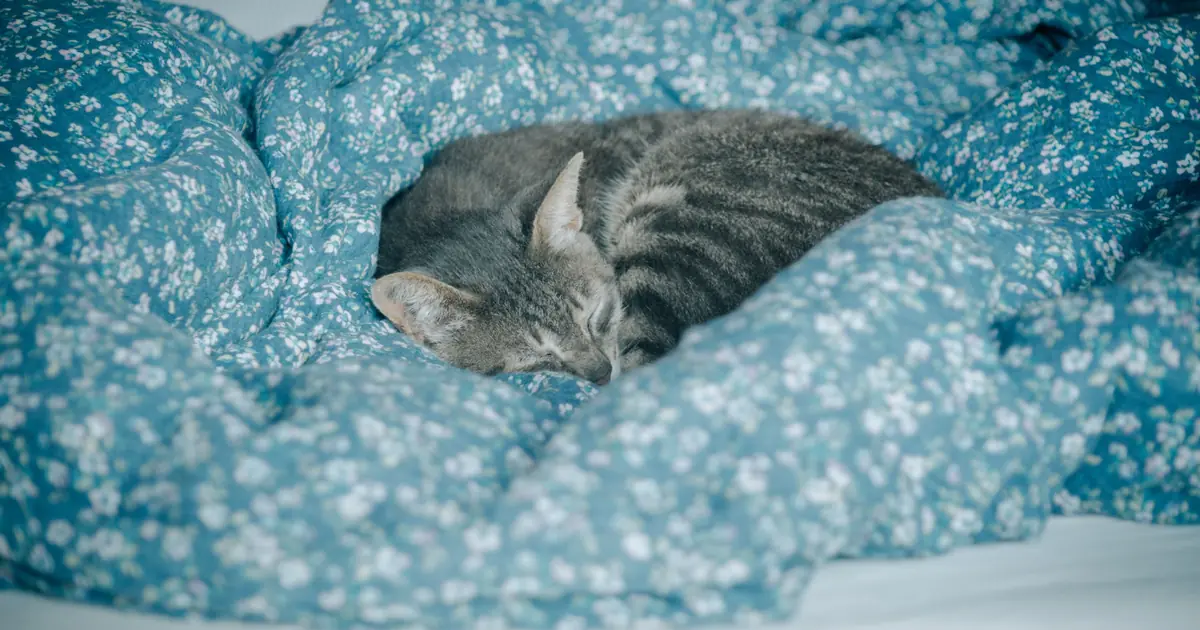
If your cat treats your bed like assigned seating every night, you’re not imagining things. Cats are picky about where they sleep, and choosing you over a perfectly good cat bed across the room means something.
Cats spend 12 to 16 hours a day asleep, more than almost any other mammal. So when they use a chunk of that time curled up against you instead of alone, it’s not random. It’s a mix of biology and genuine affection, and once you understand the reasons, the whole habit makes a lot more sense.
- Cats sleep 12 to 16 hours a day on average, and sleeping with you is a choice, not a default behavior.
- Sleeping close to a person requires trust, because cats are at their most vulnerable while unconscious.
- Your body heat, usually around 98.6°F, makes you one of the warmest spots in the house.
- A cat’s sense of smell is roughly 14 times stronger than a human’s, which is why your scent feels reassuring to them.
- Where a cat sleeps on your body (chest, legs, near your head) can offer clues about how bonded or secure they feel with you.
Why Do Cats Like to Sleep With Their Owners?
Cats sleep with their owners because it checks every box on a cat’s short list of needs: warmth, safety, and closeness to someone they trust. Cats are also social sleepers when they bond with someone, despite their reputation as loners. A cat curling up next to you at night is choosing your company over sleeping solo, and for a species that guards its vulnerability closely, that’s a real vote of confidence.
It’s not one single reason either. It’s usually several working together: your warmth, your familiar smell, the safety of a person they trust nearby, and the comfort of routine. Strip any one of those away and a cat might still sleep with you, just maybe not in the same spot or with the same enthusiasm.
Do Cats Sleep With Owners for Warmth?
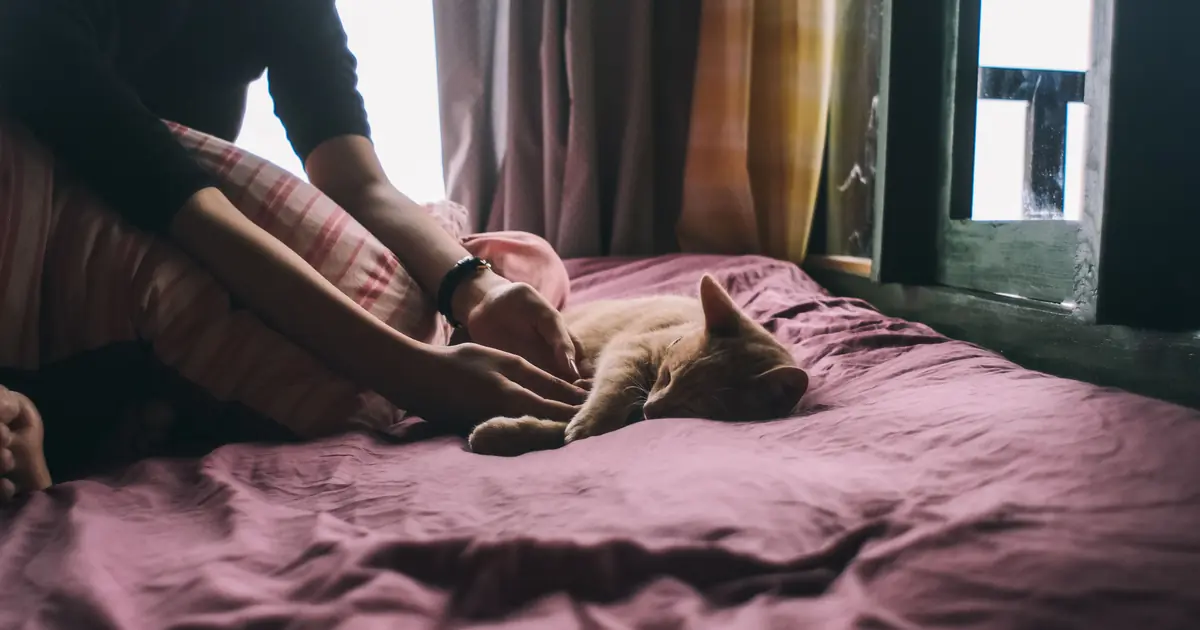
Yes, warmth is a big part of it. Cats run hotter than we do, with a normal body temperature between 100.5°F and 102.5°F, and they’re drawn to anything that helps them hold onto that heat. A sleeping human, radiating a steady 98.6°F under a blanket, is basically a heated cat bed that also happens to love them back.
This is also why you’ll notice your cat gravitating toward you more in winter, or picking the spot closest to your torso rather than your feet. Cats are famous for chasing sunbeams and curling up on top of laptops and radiators for the same reason. You’re just a warm spot that also moves, purrs back, and doesn’t mind sharing the blanket (most nights, anyway).
Does Sleeping With You Mean My Cat Feels Safe?
Sleeping next to you is one of the clearest signs a cat feels safe with you. Sleep is when cats are least able to react to danger, so a cat that settles into deep sleep beside a person is telling you, without words, that they don’t see you as a threat. In the wild, a cat caught off guard while sleeping is an easy target, so this kind of vulnerability doesn’t come cheap.
According to International Cat Care, cats rely heavily on feeling secure in their environment, and a trusted person can become part of that sense of safety. A cat who sleeps pressed against you, rather than a few feet away, is placing a lot of trust in you to keep watch while they’re out cold.
Why Does My Cat’s Sleeping Spot Change Based on Scent and Bonding?
Your scent plays a bigger role than most owners realize. A cat’s sense of smell is estimated to be about 14 times stronger than a human’s, and your smell is one of the most familiar, reassuring scents in your cat’s world. Sleeping in your bed, on your pillow, or tucked against your side means your cat is surrounded by that scent all night.
This works both ways too. Cats have scent glands on their cheeks, chin, and paws, and when they knead, rub against you, or curl up close, they’re depositing their own scent on you as well. Cornell’s Feline Health Center notes that scent marking is a normal part of how cats build familiarity with people and spaces. Sleeping together essentially mixes your scents into one shared “safe” smell, which cats find comforting.
Does My Cat Sleeping With Me Mean They Love Me?
Yes, in cat terms, sleeping with you is one of the strongest signals of trust and attachment a cat can give. Cats don’t show affection quite the way dogs do, but choosing to sleep against you, especially in a deep, relaxed position with their belly exposed or eyes fully closed, is about as close as it gets to a cat saying “I trust you completely.”
If you’re wondering just how attached your cat is to you day to day, our guide on signs your cat actually loves you breaks down the other behaviors worth watching for, from slow blinks to following you room to room.
What Does It Mean If My Cat Sleeps on My Chest, Legs, or Head?
The exact spot your cat picks usually comes down to warmth, access to your scent, and personal habit, though each position has its own small story. A cat on your chest is often chasing your heartbeat and body heat while staying close to your face and voice. A cat wedged between your legs tends to be after a warm, enclosed pocket that feels secure on all sides. A cat curled by your head is usually drawn to your breath and scent, and to being near the part of you they associate most with attention and affection.
We’ve covered these specific positions in more depth elsewhere. If your cat always ends up between your legs, our post on why cats sleep between your legs digs into that habit specifically. And if you want to know what different spots on the bed reveal about your bond, check out where your cat sleeps on your bed and what it means. For chest sleepers, there’s also why your cat lays on your chest.
| Reason | What It Says About Your Cat |
|---|---|
| Warmth | Your cat is drawn to your body heat, especially in cooler weather or a chilly room. |
| Safety | Your cat feels protected enough to fully relax and enter deep sleep near you. |
| Scent | Your cat finds your familiar smell calming and wants to be surrounded by it. |
| Bonding | Your cat sees you as a trusted companion, not just a source of food. |
| Routine | Your cat has built a nightly habit around you and feels most settled sticking to it. |
Is It Safe or Healthy to Sleep With Your Cat?
For most healthy adults, sleeping with a cat is safe and can even feel comforting. There are a few situations where it’s worth being more careful, though. People with cat allergies may wake up congested or itchy from dander in the bedding. Some owners find their sleep gets disrupted by a cat that likes to walk across the bed, groom loudly at 3am, or demand attention before sunrise (we’ve all been there).
The ASPCA also recommends extra caution with very young kittens, since they can get too warm or accidentally injured under blankets, and with anyone who is immunocompromised, since good litter box hygiene and regular hand washing matter more in that case. Keeping your cat’s claws trimmed and staying current on parasite prevention also cuts down on any real risk.
How Do I Encourage or Gently Discourage My Cat From Sleeping With Me?
You can shape this habit either way with a little consistency. To encourage it, keep your cat’s favorite blanket on your bed, offer a treat when they settle down near you at night, and avoid startling them awake, since a bad experience can make them wary of trying again.
To discourage it gently, here’s what actually works:
- Close your bedroom door at a consistent time each night so your cat learns the routine.
- Set up an equally warm, cozy bed elsewhere in the house, ideally somewhere they already like to nap.
- Add a heated cat bed or a blanket with your scent on it in that new spot, so it competes with your bed on comfort.
- Stay consistent for at least two to three weeks, since cats adjust to new routines slowly and mixed signals only confuse them.
Don’t punish your cat for trying to get back in, though. That just damages trust without changing the behavior.
One quick note: if your cat suddenly becomes clingy at bedtime, or their sleeping habits change out of nowhere, it’s worth paying attention. Sudden changes can sometimes point to stress or an underlying health issue. This article is meant to inform, not replace a vet visit, so if something feels off and doesn’t pass in a few days, a checkup is a smart move.
Frequently Asked Questions
Q: Why does my cat sleep with me every night?
Your cat sleeps with you every night because it’s become a trusted routine built on warmth, safety, and your familiar scent. Once a cat finds a sleeping arrangement that feels secure, they tend to stick with it out of habit as much as preference.
Q: Is it bad for my cat to sleep with me?
No, it’s not bad for a healthy adult cat to sleep with you. The main exceptions are people with cat allergies, very young kittens who can overheat under blankets, and immunocompromised owners, where a vet’s input on hygiene is worth getting.
Q: Why does my cat only sleep with me and not other family members?
Cats often bond most closely with whoever feeds them, plays with them, or spends the most calm one-on-one time with them. That person’s scent and presence end up feeling the safest, which is usually why one household member gets picked over the others.
Q: Do cats sleep with their owners because they’re cold?
Cold is one factor but rarely the only one. Cats run warmer than humans, with a normal body temperature between 100.5°F and 102.5°F, so they’re naturally drawn to warm spots, and a person in bed is one of the warmest, most reliable heat sources in the house.
Q: Should I let my cat sleep in my bed?
Letting your cat sleep in your bed is a personal choice, and it’s safe for most healthy adults. If it disrupts your sleep or you have allergies, you can gently retrain your cat to use a bed of their own without damaging your bond.
Q: What does it mean if my cat used to sleep with me but stopped?
A cat that stops sleeping with you may be reacting to a change in routine, a new pet or person in the house, or simply picking a warmer or quieter spot. If the change is sudden and paired with other shifts in behavior, it’s worth mentioning to your vet, since it can occasionally signal stress or illness.
Q: Do cats prefer sleeping with one specific person in a multi-person household?
Yes, many cats do bond more closely with one person and prefer sleeping with them specifically. This usually comes down to who spends the most relaxed, positive time with the cat, rather than any single factor like feeding alone.
Q: Can sleeping with my cat affect my own sleep quality?
It can, for some people. Cats are naturally more active at dawn and dusk, so a cat moving around, grooming, or wanting attention overnight can interrupt an owner’s sleep, even if the cat itself sleeps 12 to 16 hours a day in total.

Hello and welcome to The Ideal Cat!
We are some passionate cat owners from different professions. We love our cats and have a lot of experience in how to care for our pets. We are incredibly excited to share our knowledge, experience, and research with you. So you can take good care of your loving cat. We will answer most of the common questions about owning cats, taking care of them, etc. If you have any question contact with us. Thanks for visiting! Enjoy the content.
